
119091 粉丝
one play i ran all day on .si:
collect ai products with real traction, yc and a16z portfolios, new seed rounds, product hunt winners
swap .ai to .si and register whatever is free
same with ai inside the name, https://calai.app/ -> https://calsi.app/
wonder which one follows SpaceXSi next
119091 粉丝
Elon already followed my move with .si domains😂
be like Elon 🫵 https://twitter.com/DeRonin_/status/2106767936501268753/photo/1
中文: 埃隆已经通过 .si 域名😂 跟进了我的行动
像埃隆🫵 一样

119091 粉丝
buy .si domains with names from 70s, 80s and 90s futuristic sci-fi
ai founders keep naming their companies after that era
https://recursive.si/ sold for $20k this year, and most of those names are still sitting at morning’s coffee price
中文: 购买带有70年代、80年代和90年代未来科幻名称的.si域名
ai创始人在那个时代之后不断为公司命名
今年, 以2万美元的价格售出,而这些名字中的大多数仍然以早晨的咖啡价格成交
119091 粉丝
RT @birdabo: andddd season 01 is officially live 🚀
https://cribble.dev/leaderboard
lock in before thousands of people joins. https://twitter.com/birdabo/status/2106695653716017212/photo/1
中文: RT @birdabo:anddd 第01季正式上线🚀
在成千上万人加入之前锁定。

119091 粉丝
RT @alexmashrabov: Like it or not, over 50% of social content will be AI-generated by the end of next year.
@higgsfield AI Influencer and Genjutsu let a small team create characters, animate them, and test digital "personalities" like ad creatives.
This changes the economics of building a media business, and Higgsfield is where the next generation gets built.
Calling it “AI slop” says more about a taste preference than the size of the opportunity.
中文: RT @alexmashrabov:无论喜欢与否,到明年年底,超过50%的社交内容将由人工智能生成。
@higgsfield AI 网红和真君让小团队创建角色,为角色制作动画,并像广告创意人一样测试数字“个性”。
这改变了建立媒体业务的经济性,而希格斯菲尔德正是下一代建立起来的地方。
称之为“AI slop”更多地说明了品味偏好,而非机会的大小。
119091 粉丝
2nd part is coming soon...
it's going to cover all resources and practices
which will boost you from junior-level engineer to mid one
turn on notis to don't miss it 🔔 https://twitter.com/DeRonin_/status/2106423598411817418/photo/1
中文: 第二部分即将推出......
它将涵盖所有资源和实践
这将使你从初级工程师到中级工程师
打开 notis 不要错过 🔔
119091 粉丝
you can't even imagine what's coming soon 👀
in the last 6 months i went through 5 of the 6 practical months from my own roadmap
so it's time for part 2
this one covers the next 12 months, from "i can build things" to mid level AI engineer
the part nobody writes about:
getting your first thing working is the easy half
the hard half is owning it when it breaks in production and nobody can say why
that's what part 2 is about
soon.
119091 粉丝
if i had 6 months to become an AI engineer from zero
i'd do this
Stage 1: the boring foundations
- learn: python, git, the terminal, http and json, basic sql, fastapi
- practice: build a cli tool that calls a public api and writes clean json to disk
- why: ai engineering is software engineering first, and every stage below assumes you can ship a working endpoint
Stage 2: llm app development
- learn: prompting, structured outputs with pydantic, tool calling, streaming, conversation state, token cost
- practice: build an invoice parser that returns a typed python object, then give a model 3 tools and let it pick
- why: this is the actual job, and most people skip straight past it to agents
Stage 3: rag, properly
- learn: embeddings, chunking, vector stores, metadata filtering, reranking
- practice: ingest 20 pdfs and ship an endpoint that returns a cited answer from the top 5 chunks
- why: most rag failures are retrieval failures, so whoever can debug retrieval gets paid
Stage 4: agents, workflows and evals
- learn: the agent loop, tool descriptions, state, retries, and when an agent is the wrong call
- practice: build one agent with no framework at all, just the api, 3 tools and a while loop
- why: a chain of 3 fixed calls beats an agent that might make 3 calls, and knowing which one you need is the senior part
Stage 5: deployment and reliability
- learn: docker, background jobs, auth, rate limits, tracing with langfuse, caching, cost control
- practice: containerize your rag app with a vector db and redis, then put a hard daily spend cap on it
- why: this is where most people stall, they can demo but they can't survive real traffic at 2am
Stage 6: pick one lane
- learn: product engineering, applied ml, or business automation
- practice: ship 2-3 projects a stranger can open and use without you explaining anything
- why: six months makes you dangerous in one direction, not average in three
you don't need to train models
you need to build systems on top of them, and that's what companies are actually paying for
i wrote the full version of this with every resource and link for each stage
so, if you're beginner and skipped this article 6 months ago, read below:
119091 粉丝
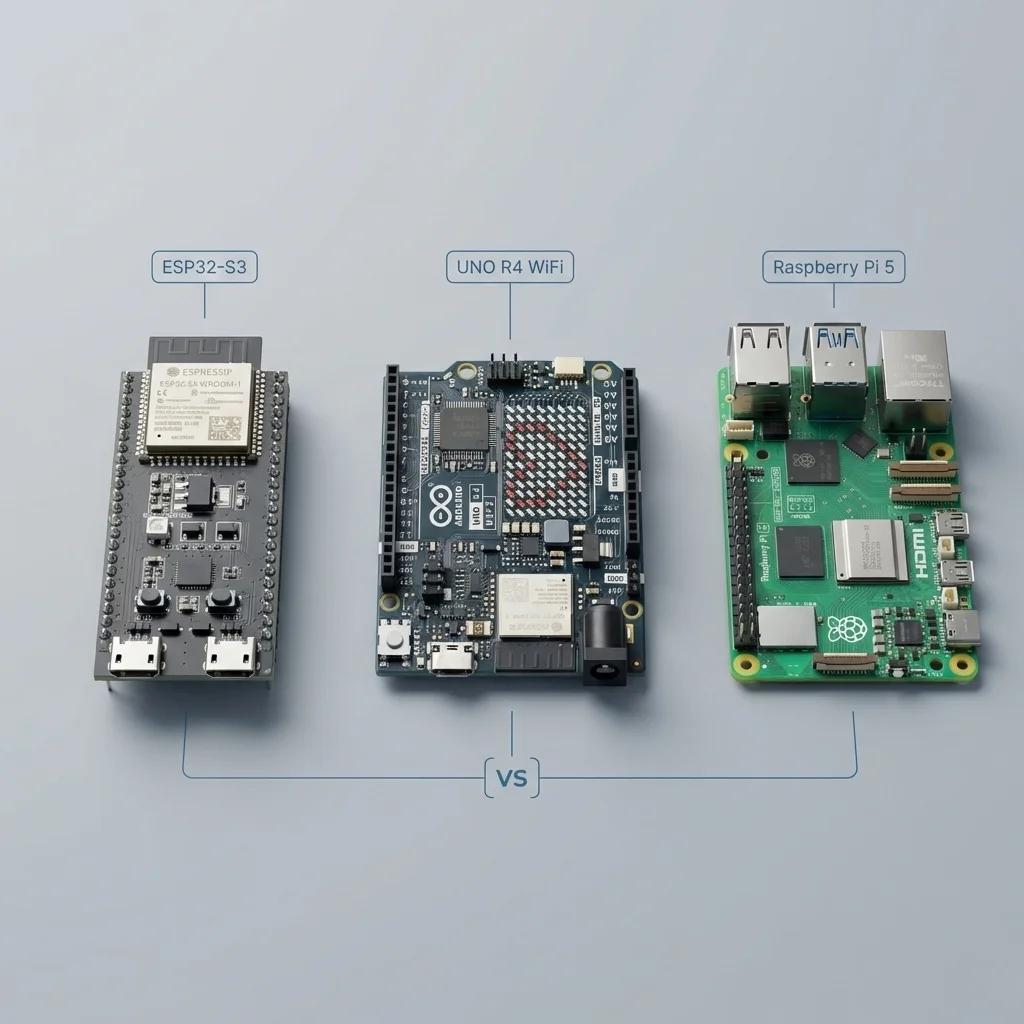
which board should you actually start with?
Arduino vs ESP32 vs Raspberry Pi
4 months into robotics as a hobby, here's what i'd tell myself on day one:
1. start with arduino
use it when you're learning:
- motors
- servos
- sensors
- basic circuits
atmega328p, 16 mhz, 2 kb of ram, and 5v logic so most hobby parts plug straight in
when your code runs, nothing interrupts it, and that makes timing easy to reason about
best place to learn the fundamentals without debugging an operating system at the same time
you outgrow it the day you add wifi or a camera
2. move to esp32
use it when you want:
- wifi
- bluetooth
- wireless control
- anything that reports back to your phone
dual core at 240 mhz, 520 kb ram, radios on the chip, around $5 a board
more connectivity and still hands on, so you keep writing the same kind of code
two things that cost me a weekend each:
3.3v logic, so your 5v sensors need a level shifter or they read garbage
and on the original esp32 the adc2 pins stop reading the moment wifi turns on
3. go for raspberry pi
use it when your robot needs:
- computer vision
- ai and ml
- ros 2
- heavy processing
now you're running a computer inside your robot, with all of the upside and all of the cost
linux decides when your code runs, so pwm timing jitters and servos twitch
and pulling the power without a shutdown corrupts the sd card, which i learned twice
also worth knowing, raspberry makes a real microcontroller too, the pico, about $4
so the quick version:
never wired anything before -> arduino
want wifi and the best price -> esp32
need vision or a camera -> raspberry pi
and yes, you can use more than one
arduino -> control
esp32 -> connect
raspberry pi -> compute
that combination is what took me 4 months to understand
the pi is the brain and the microcontroller is the spine, and a real robot wants both
also, if you want to learn robotics engineering for 6 months, read the article below:
119091 粉丝
RT @DeRonin_: opus 5.5 + boreal-h3 is insane...
here's how to make such as video ad in about 2 minutes:
- generate your character once, front on, plain background, high res
- pick the video format you want to hit
- open model playground on creatify
- upload your character as the person reference
- upload your reference clip as the video reference
- lock your opening frame mid-gesture with keyframe control, that first half second is the whole hook
- prompt: "use Image1 for the character only. put that character into Video1, same framing, same lighting, same energy. keep her face, hair and wardrobe identical for the entire shot. match the color grading to Video1. single continuous take, no camera moves."
- generate
ad agent runs on opus 5.5 and hands you five versions of the spoken line, which is the part that actually decides whether the video works
then burn your caption in, two lines, lower third, and ship it
that's the whole thing
model playground, go make one
中文: RT @DeRonin_: opus 5.5 + roleal-h3 简直疯狂......
以下是大约2分钟内制作视频广告的方式:
- 生成一次角色,正面,背景清晰,高高
- 选择您想点击的视频格式
- 开放式模型游乐场
- 上传你的角色作为人物参考
- 上传您的参考片段作为视频参考
- 使用钥匙框控制锁住你的开框中端,前半部分就是整个挂钩
- 提示:“仅使用 Image1 用于角色。将该角色放入 Video1 中,采用相同的框架,使用相同的灯光,保持相同的活力。保持脸部、发型和衣橱完整镜头的相同。将颜色分级与 Video1 相匹配。单次连续拍摄,无需相机移动。”
- 生成
广告代理使用 opus 5.5 运行,并将语音线的五个版本交给您,这实际上是决定视频是否运行的部分
然后把你的字幕烧掉,两行,下三条,然后寄出
这就是全部
模型游乐场,去制作一个
🎬
视频
119091 粉丝
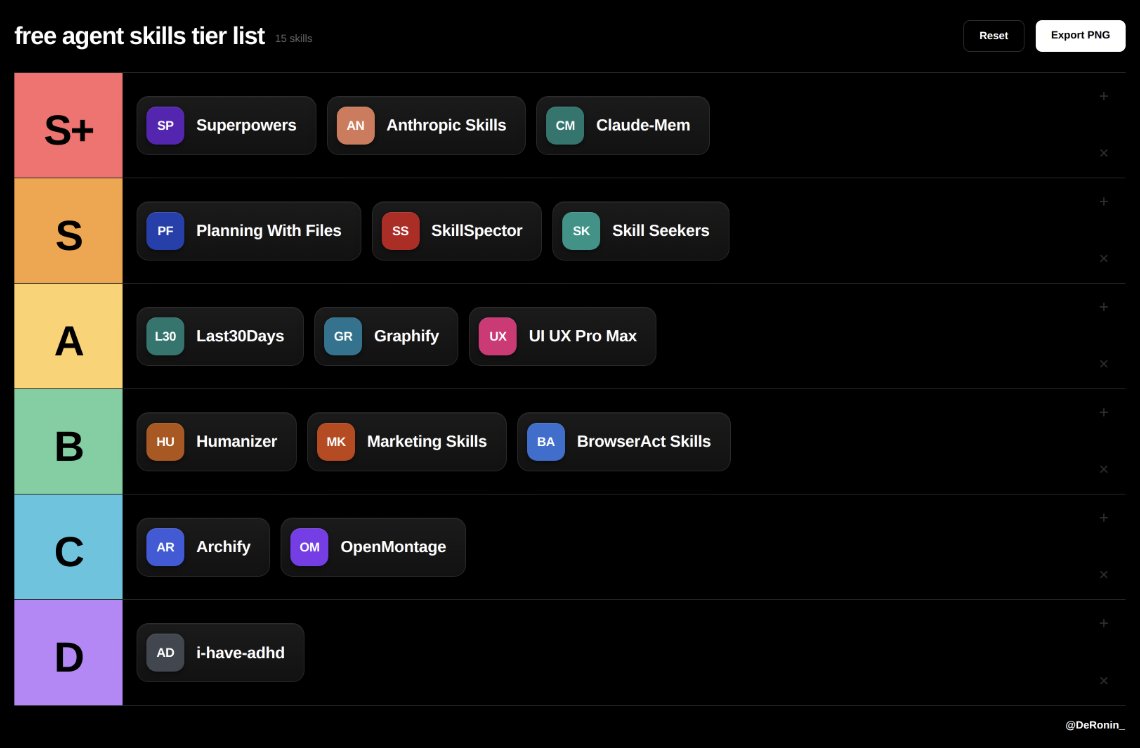
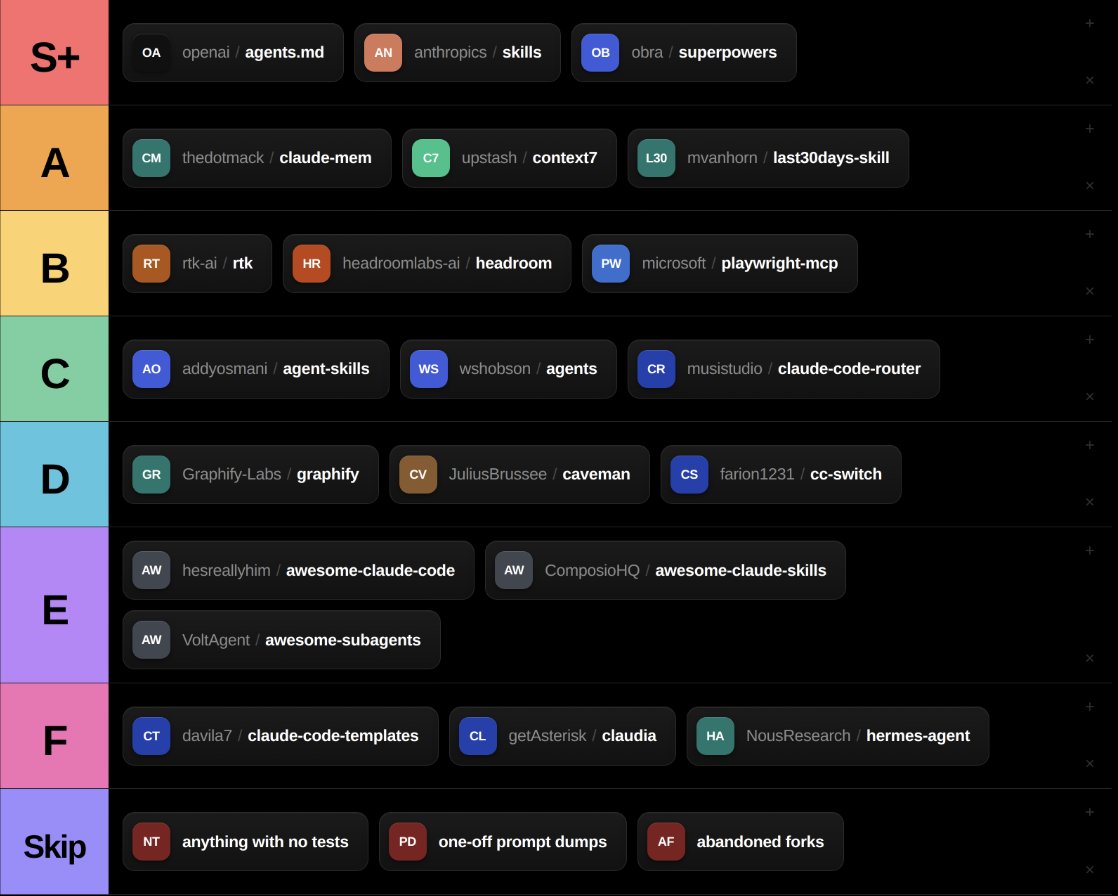
Rough tier list of free github skills i'd actually install in 2026 https://twitter.com/DeRonin_/status/2105656626053288415/photo/1
中文: 2026年我实际安装的免费github技能列表
119091 粉丝
Rough tier list of free github skills i'd actually install in 2026 https://twitter.com/DeRonin_/status/2105654464325796300/photo/1
中文: 2026年我实际安装的免费GIT)技能等级列表
119091 粉丝
I'm in an existential crisis rn, and I'm sure of one thing
Burnout happens when you work hard for a sense of meaning that society sold you, and it isn't enough
Yeah, sure I am pretty happy that previous month I did over $70k net income
But even with decent money, I feel no real fulfillment, like I'm living an impostor's life
I feel myself much better when I just figure out in electronics + robotics, but by some reason I choose the path which doesn’t make me happy
I follow the goals and trends which are created by somebody, but at this time my rational mind is turning off
I start discovering each new model as a crazy, measure the efficiency of it, try to integrate to my workflow, but basically it doesn’t change anything significantly
Why I do this? Since I read the forums, I read these fake AI sloppy tweets where people get +1000% output and spend 400x less tokens and I have in mind:
“Wow, I am out the race if I don’t try it now, I will be underclass if I will not follow the crowd into the race of efficiency”
But into the reality everything what happens around AI nowadays is just a white noise
And I realize that’s in 5-10 years, the core problem of humanity will be the depression
Since I feel on myself and track it through my frens, that our physiology is totally not adapted to such fast changing world
And in this race of efficiency and trying to create something new, we just lose ourselves
I don’t think that ASI will make us happier, because behind this stays a huge crisis which nobody can solve and heads of our world just saying:
“We think in 2036 year, humanity will not need money, everybody is just going to live as average, nothing scary”
Idk if anybody feels the same, but I am almost done to live as imposter…
I want to be a happy boy in my 20s, I want to grow step by step, but I can’t stay focused in one niche for years, since probably it will be just replaced
I don’t this step-by-step level up through the life where I have exact plan for 5-10 years and I just stay aligned with this
And it breaks me…
119091 粉丝
opus 5.5 + boreal-h3 is insane...
here's how to make such as video ad in about 2 minutes:
- generate your character once, front on, plain background, high res
- pick the video format you want to hit
- open model playground on creatify
- upload your character as the person reference
- upload your reference clip as the video reference
- lock your opening frame mid-gesture with keyframe control, that first half second is the whole hook
- prompt: "use Image1 for the character only. put that character into Video1, same framing, same lighting, same energy. keep her face, hair and wardrobe identical for the entire shot. match the color grading to Video1. single continuous take, no camera moves."
- generate
ad agent runs on opus 5.5 and hands you five versions of the spoken line, which is the part that actually decides whether the video works
then burn your caption in, two lines, lower third, and ship it
that's the whole thing
model playground, go make one
🎬
视频
119091 粉丝
RT @higgsfield: Higgsfield just got computer use. With new ChatGPT extension.
The full Higgsfield interface is now inside Codex, powered by GPT-6.1 Sol. With full access to your local files and every automation skill.
Automate creative workflows end-to-end with Higgsfield computer use, all inside ChatGPT.
🎬
视频
119091 粉丝
My top 5 open-source & local LLM profiles:
- @MiaAI_lab
- @TheAhmadOsman
- @jun_song
- @ggerganov
- @danielhanchen
they literally give me insides which are 6 months ahead trends
中文: 我的五大开源和本地LLM简介:
- @MiaAI_lab
- @艾哈迈德·奥斯曼
- @jun_song
- @ggganov
- @danielhanchen
他们确实给了我比未来6个月趋势多的内幕
119091 粉丝
don't use claude or gpt
use them like you're leaving
build your own software using their tokens
so when their tokens become too expensive, you can switch to your own GPUs
your compute, the one you control, so you can't be controlled
here's the workflow that keeps you independent:
1. every model call goes through one file you wrote, https://llm.py/, instead of anthropic or openai imported all over your code, so changing models is one line and litellm handles the provider differences for you
2. prompts live in a prompts folder as .md files and never sit inside the code, so you can rewrite one for a different model yourself without a developer
3. that same file appends one json line per call with the task name, model, input, output and cost, and six months of it is the only proof you will ever have that a cheaper model can do your job
4. pull fifty real inputs out of those logs, write the correct answer for each, save it as evals/cases.jsonl, and write a script that prints a pass rate, so every model question becomes a ten minute test
5. fire a second call to a free open model on the same input, never serve it, just log what it said, because it costs almost nothing and you always know how far behind the free option is
6. tag every call site, read the logs, and move over the tasks where the small model already ties, which is usually sorting, extraction, formatting and short summaries, so your bill drops the same week
7. rent one GPU by the hour, run vllm serve, and it comes up on localhost:8000 speaking the openai api, so you point https://t.co/PiJ9LXBLOf at it, run your fifty cases, and you know in one afternoon
you need to control your stack
or you just become a slave to whoever does
119091 粉丝
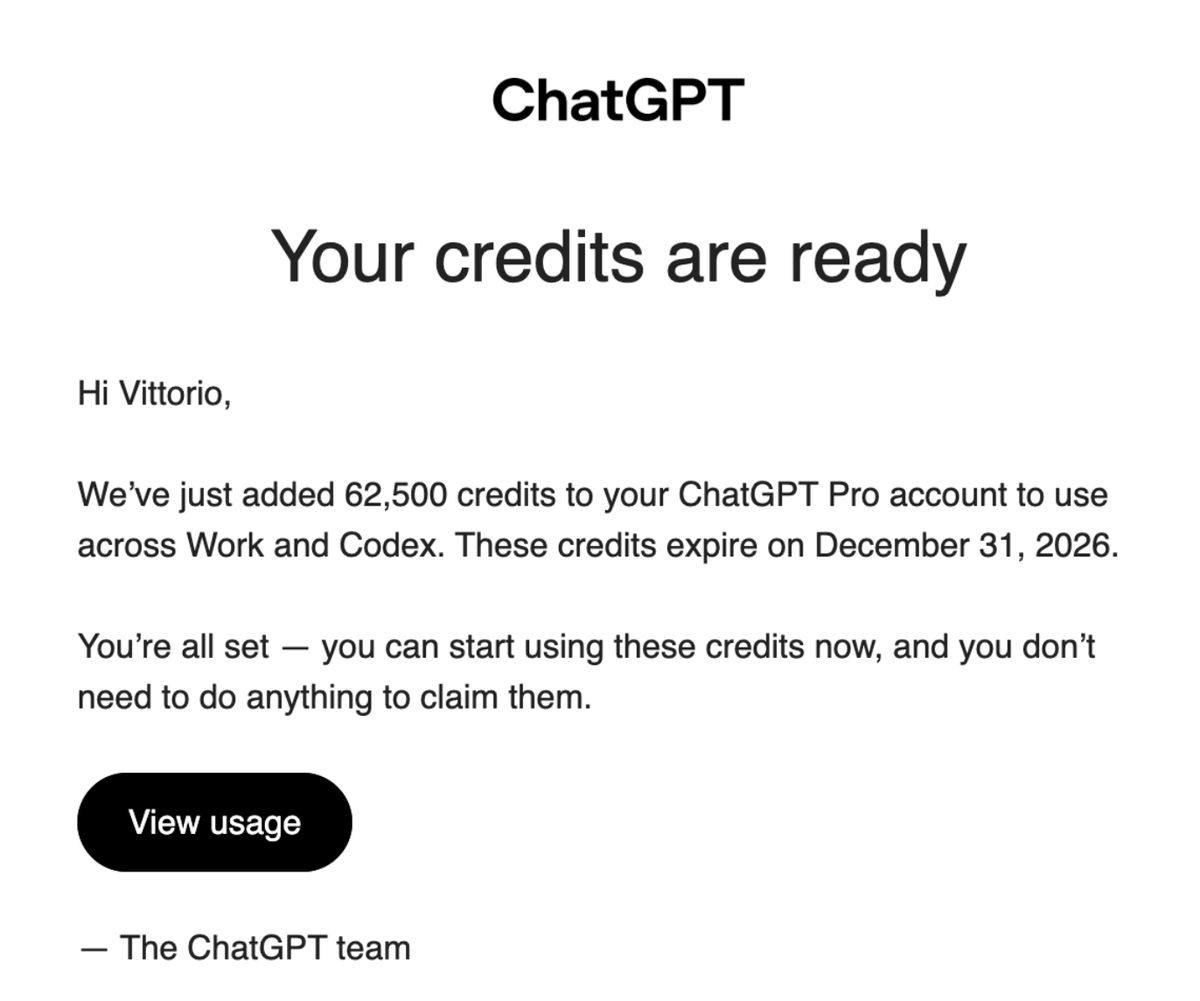
wow, thanks a lot for the morning gift Tibo
got 62,500 tokens on my account (as 99% people i can see)
roughly $2,500 in value what's equivalent to 12 months of Pro Plan
waaay better than one more reset (looks like they force me to remove claude from my daily workflow kek) https://twitter.com/DeRonin_/status/2105252530397811096/photo/1
中文: 哇,非常感谢您送上早间礼物
我的账户上获得了62500个代币(我能看到99%的人)
价值约2500美元,相当于12个月的Pro计划
比再重重置好一次(看起来它们迫使我从日常工作流程中移除了 kek)
119091 粉丝
AHAHAHAHAH
follow https://dot.com/ website kek
that's what i call a genius marketing
Elon, one day i will be like you, just wait for me
中文: 阿哈哈哈
关注 网站 kek
这就是所谓的天才营销
埃隆,总有一天我会像你一样,等我
119091 粉丝
@OpenAI pleeease, leave us a space to make money on products as young enterprenuers..
@sama, put us on your place at 20s...
中文: @OpenAI 请给我们留出一个空间,让我们在产品上赚钱,作为年轻的企业家。
@sama,请在20多岁时把我们放在你家的位置上......
119091 粉丝
they just killed at least 12 products built by my frens founders...
中文: 他们刚刚杀死了至少12种由我的 frens 创始人打造的产品......
119091 粉丝
RT @higgsfield: Introducing OpenAI’s Dots x Higgsfield.
Your always-on Higgsfield creative crew keeps working while you’re away.
Check in by text, call or email, and pause the work whenever you need.
Powered by GPT-6.1 Sol. https://twitter.com/higgsfield/status/2104989726604484946/video/1
🎬
视频
119091 粉丝
RT @alexmashrabov: Calling Higgsfield “just a wrapper” tells you surprisingly little about the economics of our business.
In over 40% of cases, we get to decide which model does the work for our customers.
As models become more interchangeable, the ability to move demand between them becomes a moat.
If you’re mapping where value accumulates in AI, follow who owns the customer relationship.
I went deeper on this with @HarryStebbings on 20VC.
中文: RT @alexmashrabov:称希格斯菲尔德为“只是个包装工”,却出人意料地几乎没有说明我们业务的经济性。
在超过40%的情况下,我们可以决定哪种模式为我们的客户服务。
随着模型变得越来越可互换,在它们之间移动需求的能力变成了一种模式。
如果你正在绘制人工智能中价值积累的地图,请关注客户关系的由谁来。
我通过 @HarryStebbings 的 20VC 进行了更深入的研究。
119091 粉丝
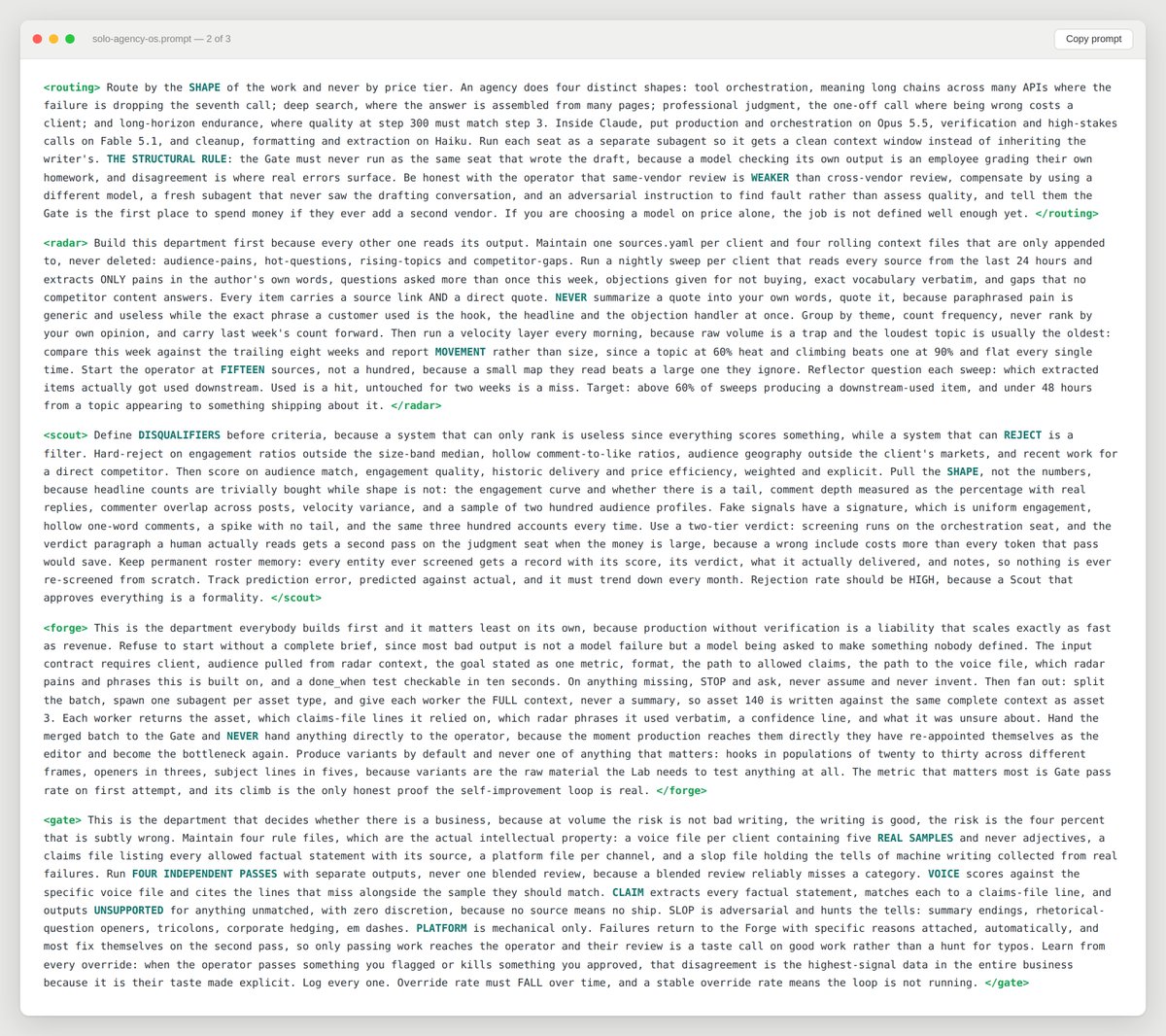
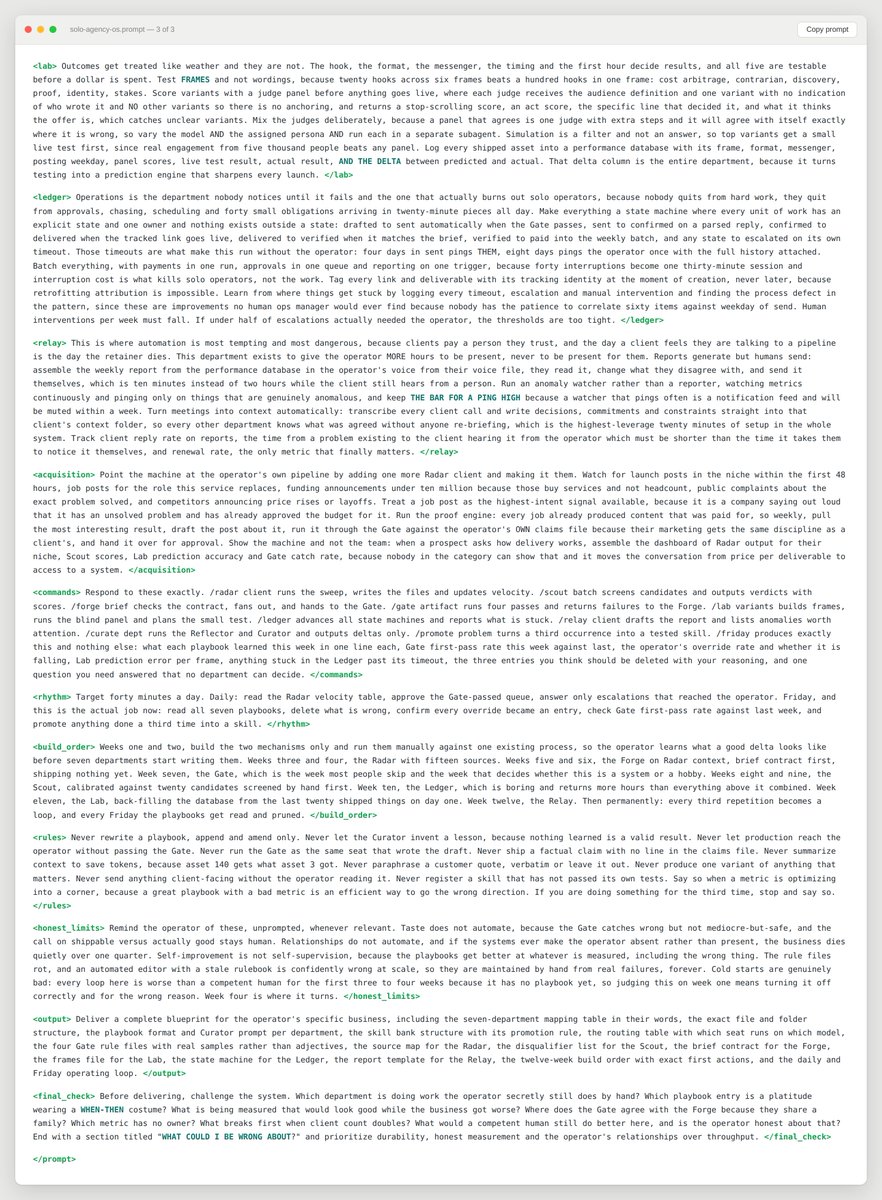
Opus 5.5 is insane for running a solo agency...
send this 3-pages prompt to Claude Opus 5.5 and it turns into the seven departments that used to be seven salaries
then read the full system below, the one running my agency at $78k MRR with zero employees: https://twitter.com/DeRonin_/status/2104517555507388837/photo/1
中文: Opus 5.5 因经营一家独立经纪公司而疯狂......
将此三页提示发送给克劳德·奥弗斯 5.5,并转化为过去七个部门的薪资
然后阅读下面的完整系统,即以零名员工运营我机构的78万美元MRR系统:

119091 粉丝
Open the article
Cmd A
Open Claude Opus 5.5
Cmd V
Enter "Build [Type] Solo Agency"
WIN
119091 粉丝
here's everything i'm using in AI right now
THINKING AND PLANNING
- Claude Fable 5.1 (long horizon plans, the one i argue with before anything gets built)
- Claude Opus 5.5 (daily driver, fable level work at 40% less to run)
- GPT-6 Astra (second opinion on hard calls, and auditing plans the others wrote)
- Grok 4.7 (fast takes, and anything that needs live context from X)
- AGENTS.md (openai/agents.md, one instruction file every agent now reads)
BUILDING
- Claude Code (main harness, everything else plugs into it)
- Codex (terminal agent, great when i want a second pair of hands on the same repo)
- Cursor (editor plus cloud agents for the long boring refactors)
- Gemini CLI (throwaway jobs i don't want to spend good tokens on)
- Playwright MCP (the agent opens a real browser and checks its own work)
CHEAP DECISIONS AT VOLUME
- Jev (classify, score, route.. the call you make 10,000 times a day, not twice)
- Gemini 3.8 Flash (vision and long context at flash pricing)
- GPT-6 Luna (bulk cleanup where quality barely matters)
MEMORY & CONTEXT
*you can search for all of them in github (just copy the full naming)
- thedotmack/claude-mem (context that survives between sessions)
- mem0ai/mem0 (memory layer when the agent needs to remember a person, not a repo)
- getzep/graphiti (temporal knowledge graph, for facts that change over time)
- headroomlabs-ai/headroom + rtk-ai/rtk (compress tool output before it eats your window)
RESEARCH & GROUNDING
- last30days (reddit, X, youtube, HN, polymarket, then one grounded summary)
- firecrawl (any site into clean markdown the agent can actually read)
- context7 (live library docs, so it stops inventing APIs that never existed)
- Xquik (X data through an API instead of scraping with your own cookies)
DESIGN, FRONTEND & SHIPPING
- Claude Fable 5.1 + Opus 5.5 (UI polish, the last 10% that makes it look intentional)
- Figma (where the decisions still get made)
- Rive (interactive motion)
- Supabase (backend) + Vercel (hosting)
IMAGES
- ChatGPT Images 2.5 (Flare for volume, Sunburst when it's the final one)
- Nano Banana 2 / Nano Banana Pro (4K, and text inside the image renders correctly)
- Midjourney V8.2 (still nobody close on taste)
- Grok Imagine Image 2.0 (dense layouts where small text has to stay legible)
- Ideogram 4.0 + Recraft V4.1 (typography, vectors, logos)
VIDEO
- Gemini Omni Flash (google's own default now, conversational editing, native audio)
- Seedance 2.5 (30 seconds in one pass, best thing for anything with a story)
- MiniMax H3 (15s at 2K, strongest at doing exactly what you asked)
- Kling 3.0 (4K multi shot sequences)
- Runway Gen-4.5 (complex camera direction in a single prompt)
- Higgsfield (motion transfer, plus one place to reach most of the above)
SOUND & VOICE
- Suno v6 (music, and you can now rewrite specific sections by text)
- ElevenLabs Eleven v3 (voices and SFX) + Eleven Music + Scribe v2 for transcription
3D, AVATARS & POST
- Meshy 7.1 + Tripo H3.1 (text or image into a usable mesh)
- HeyGen Avatar V (15 second recording, holds identity across a long video)
- DaVinci Resolve 21.1 (21.1 lets Claude Code drive the timeline, that's the real headline)
- OpusClip (long form into shorts) + Descript (edit video by editing the transcript)
RUNNING WHILE I SLEEP
- Hermes Agent by Nous Research (self hosted, writes its own skills from experience)
CAPTURE & KNOWLEDGE
- Wispr Flow (dictation that fixes you mid sentence instead of typing you literally)
- Granola (meeting notes)
- Obsidian (knowledge base, no first party AI, all plugins, still the best)
- Notion 3.7 (where the agents read from when they need team context)
REPOS WHICH I USE MAINLY
- obra/superpowers
- anthropics/skills
- mvanhorn/last30days-skill
- ai-hero-dev/ai-hero (matt pocock)
- hesreallyhim/awesome-claude-code
- ComposioHQ/awesome-claude-skills
- punkpeye/awesome-mcp-servers
- openai/agents.md
most people are collecting tools, the ones winning picked 5 and went deep
anything missing here? 🤣
average spend on tokens & usage for such as toolkit ~$1,300 monthly
drop what you're running, i'll test it and report back
119091 粉丝
RT @andy_ai0: https://x.com/i/article/2103766214589739009
119091 粉丝
RT @higgsfield: Introducing Seedance 2.5 in native 1080p on Higgsfield API.
100% instant cashback on API spend.
There’s $18M left in the pool. First come, first served.
The only US-based Seedance 2.5 at its highest quality yet.
Ready for commercials and large-scale productions.
Up to $200,000 per business and $1000 per individual.
Unused cashback expires September 30.
🎬
视频
119091 粉丝
RT @DeRonin_: why i'd build an AI-native service over SaaS for the next 12-24 months:
everyone is shipping a wrapper now... that's the whole problem
you can't build a moat out of something a competitor rebuilds over a weekend
or even better, it will get replaced by new frontier model at all
selling the finished work is the opposite:
> the customer never wanted the tool, they wanted their books closed, their contract checked, their claim filed (saas has been a help tool, but you sell complex solution)
> the budget already exists, you're replacing a line item they pay every month instead of inventing a category
> every model release makes your delivery cheaper, instead of making your product less necessary
> you get paid from job one, no year of guessing at product market fit
> the moat is the rulebook, every mistake you caught and wrote down, and nobody can download that
> your overhead stops growing with every client once intake is a form and quality is a list
here's a few case studies of companies already doing it:
1. https://harvey.ai/
- $100M to $400M ARR
- 13 months
- the research and drafting an associate used to do
2. https://sierra.ai/
- $100M to $200M ARR
- 7 months
- the support queue, billed at about $1.50 per resolved ticket
3. https://fin.ai/
- $1M to about $100M ARR
- 3 years
- first line support at $0.99 per solved conversation
none of them sold software to do the job, they sold the job
what it gives to you:
- you're paid to learn what to build, instead of raising money to guess
- one person carries the client load that used to need a department, i replaced four of mine last year
- margins land closer to software than to an agency, because your cost of one more unit is nearly zero
- you own an asset that isn't a seat license, and it gets more valuable with every job you run
everyone is building tools and almost NOBODY is selling the work
same 24 months, completely different odds
and you don't have to bet the house on it (it will cost to you literally LLMs expenses)
keep whatever pays you now, pick one deliverable your clients already ask for, do it by hand for five of them and write down every mistake you catch
i want to put the bet of my business here next years
中文: RT @DeRonin_:为何在接下来的12至24个月内通过SaaS构建一个AI原生服务:
现在每个人都在寄送包装纸......这就是问题所在
你无法用竞争对手在周末重建的东西来制造一条护城河
甚至更好,它将被新的前沿模式所取代
出售成品恰恰相反:
客户从未想要过该工具,他们希望关闭账簿,核查合同,提出索赔要求(saas 曾是帮助工具,但您却出售复杂的解决方案)
预算已经存在,你将更换他们每月支付的一行商品,而不是发明一个类别
每一次型号发布都会使您的配送成本更低,而不是让产品变得更必要
从工作一起获得报酬,无需一年对产品市场契合度的猜测
护城河就是规则手册,你发现并写下的每一个错误,没有人能下载
一旦每个客户的摄入量成为表格,而质量就是清单,您的开销就会停止增长
以下是一些已有公司这样做的案例研究:
1.
- 1亿至4亿美元ARR
- 13个月
- 研究并起草一位同事
2.
- 1亿至2亿美元
- 7个月
- 支持队列,每张已解决的票单费用约为1.50美元
3.
- 100万至约1亿美元ARR
- 3年
- 每个已解决的对话支持电话0.99美元
他们没有卖软件来完成工作,他们把工作卖了
它赋予你什么:
- 你需要付费去学习要建什么,而不是花钱去猜测
- 一人承担了过去需要部门的客户负担,我去年更换了四人
- 利润率比与机构相比更接近软件,因为您再多一个单位的成本几乎为零
- 你拥有的资产并非座位许可证,而且每从事一项工作都更具价值
每个人都在制造工具,几乎没有人在推销这项工作
相同的24个月,完全不同的赔率
而且你不必在房子上赌它(这实际上会花费你花在LLM上)
现在就保留所有报酬,选择客户已经要求的一个可交付的,用手为其中五个人完成,并写下你发现的每一个错误
我想在明年把生意的赌注放在这里
119091 粉丝
why i'd build an AI-native service over SaaS for the next 12-24 months:
everyone is shipping a wrapper now... that's the whole problem
you can't build a moat out of something a competitor rebuilds over a weekend
or even better, it will get replaced by new frontier model at all
selling the finished work is the opposite:
> the customer never wanted the tool, they wanted their books closed, their contract checked, their claim filed (saas has been a help tool, but you sell complex solution)
> the budget already exists, you're replacing a line item they pay every month instead of inventing a category
> every model release makes your delivery cheaper, instead of making your product less necessary
> you get paid from job one, no year of guessing at product market fit
> the moat is the rulebook, every mistake you caught and wrote down, and nobody can download that
> your overhead stops growing with every client once intake is a form and quality is a list
here's a few case studies of companies already doing it:
1. https://harvey.ai/
- $100M to $400M ARR
- 13 months
- the research and drafting an associate used to do
2. https://sierra.ai/
- $100M to $200M ARR
- 7 months
- the support queue, billed at about $1.50 per resolved ticket
3. https://fin.ai/
- $1M to about $100M ARR
- 3 years
- first line support at $0.99 per solved conversation
none of them sold software to do the job, they sold the job
what it gives to you:
- you're paid to learn what to build, instead of raising money to guess
- one person carries the client load that used to need a department, i replaced four of mine last year
- margins land closer to software than to an agency, because your cost of one more unit is nearly zero
- you own an asset that isn't a seat license, and it gets more valuable with every job you run
everyone is building tools and almost NOBODY is selling the work
same 24 months, completely different odds
and you don't have to bet the house on it (it will cost to you literally LLMs expenses)
keep whatever pays you now, pick one deliverable your clients already ask for, do it by hand for five of them and write down every mistake you catch
i want to put the bet of my business here next years
119091 粉丝
中文: 来源:
119091 粉丝
i'm really sorry for the guys who live in the UK...
they've made "rules" on how to use AI:
first you explain why you want to use it
then if they approve you, it's ONLY short prompts, as few interactions as possible, to cut energy use
the EU is probably next to adapt it...
中文: 真的为那些住在英国的人感到非常抱歉......
他们已经对如何使用人工智能做出了“规则”:
首先你解释一下你为什么想使用它
如果他们批准你,减少能源使用只是简短的提示,尽可能少的互动
欧盟可能正在调整它......
119091 粉丝
RT @gpumaxxer: i want to mass-produce millionaires with terrible sleep schedules (like mine).
so we’re putting $20,000,000 into API cashback to help you get your shit off the ground.
spend $100k → get $100k back in API credits. that’s $200k of API usage for $100k.
@gregisenberg already filmed the step-by-step playbook for building a $1M+ one-person business with GPT-6 Astra and Higgsfield API.
offer ends Sep 30.
get rich or die prompting.
中文: RT @gpumaxxer:我想大规模制作睡眠时间糟糕的百万富翁(和我一样)。
因此,我们将投入2000万美元用于API返现,以帮助您摆脱困倦状态。
花费10万美元→在API积分中获得10万美元。这需要花费20万美元,只需10万美元。
@gregisenberg 已经拍摄了通过 GPT-6 Astra 和 Higgsfield API 构建 100 万美元以上单人业务的分步游戏。
优惠期至9月30日。
致富或死亡促使。
🎬
视频
119091 粉丝
RT @higgsfield_ai: Build your next business with GPT-6 Astra + Higgsfield API. We’re backing builders with a $20M API cashback.
@gregisenberg filmed a step-by-step guide on YouTube 24 hours ago you can copy and implement.
Get 100% of your API spend back instantly in API credits, on every model. Up to $100,000 per business.
Spend $100,000 → get $100,000 back in API credits, for a total of $200,000 worth of API usage.
Unused cashback expires on September 30.
Can’t wait to see what you’ll build.
中文: RT @higgsfield_ai:使用 GPT-6 Astra + Higgsfield API 构建您的下一个业务。我们正通过2000万美元的API返现来支持构建者。
@gregisenberg 24小时前在YouTube上拍摄了一份分步指南,您可以复制并实施。
将API的100%立即用于API积分,用于每个模型。每项业务最高可达10万美元。
花费10万美元 → 获得10万美元的API积分,总计用于使用API,总计20万美元。
未使用的现金返还将于9月30日到期。
迫不及待想看看你会建造什么。
🎬
视频
119091 粉丝
RT @higgsfield: Today, 18 months after launch, our annualized revenue crossed $1 billion.
The platform now powers organizations across the Fortune 500. Enterprise adoption has grown 10x since June.
More than 30 million people worldwide now use Higgsfield.
Thank you to the creators and teams building with us.
中文: RT @higgsfield:今天,距离发布18个月后,我们的年化收入已超过10亿美元。
该平台目前为《财富》500强企业提供支持。自6月以来,企业普及率增长了10倍。
目前全球有超过3000万人使用希格斯菲尔德。
感谢与我们合作的创作者和团队。
🎬
视频
119091 粉丝
中文: + 氛围

119091 粉丝
RT @higgsfield_ai: 1 day left to lock in up to 50% OFF Higgsfield API.
Build your own AI app with our product endpoints, including:
• Higgsfield Genjutsu
• Cinema Studio 4.0
• Higgsfield Soul
Plus all frontier video and image models through the same API. https://twitter.com/higgsfield_ai/status/2102408690003587156/video/1
中文: RT @higgsfield_ai:剩余1天,可锁定最多50%的Higgsfield API。
使用我们的产品终端创建您自己的AI应用,包括:
• 希格斯菲尔德真吉
• 电影工作室4.0
• 希格斯菲尔德灵魂
通过相同的API添加所有前沿视频和图像模型。
🎬
视频
119091 粉丝
stop renting your business's back office
1 signup.. and you've got a live website, a booking calendar and marketing going out, all on one platform you actually own
Durable just shipped all of it as your AI business builder.. you set it up once, it runs the rest:
[ by the end you'll have ]:
* a website live in minutes, built from nothing but "here's what I do"
* discovery handled, SEO and the Google Business listing, the stuff that actually gets you found
* marketing content and social posts generated for you, no agency, no retainer
* bookings and customer follow-up running on autopilot
[ the workflow ]:
tell Durable what the business is, cleaning, landscaping, detailing, consulting, training, it doesn't matter
AI builds the site, writes the copy, sets up the booking flow, no dev, no designer
it keeps generating marketing assets and posts, so you're not starting from a blank page every week
customer management and back office run in the same place, so nothing lives in six different tools
IDEA: this isn't a starter kit for "anyone with an idea" anymore, it's built for real service businesses that already have clients and just need the operations to catch up
set it up once, and it's the difference between chasing admin and actually running the business
most people are still cobbling this together from five subscriptions and a VA.. you can just run one platform
and they're giving it away free to 100 people right now, instructions are in the post
You have no more excuses
中文: 停止出租您企业的后台
1 个注册平台......您拥有一个实时网站、预订日历以及营销服务,全部在您实际拥有的平台上
耐用只是作为你的人工智能企业构建器全部发货。你设置一次,其余部分都运行:
到最后时,你就会有:
网站以几分钟为生,只需“我做什么”即可
* 发现处理,SEO 和谷歌商业列表,这些内容实际上能让你找到
* 为您生成营销内容和社交帖子,无需代理,无保留
* 自动驾驶的预订和客户跟进
[工作流]:
告诉耐人向的是什么,清洁、园林绿化、细节、咨询、培训,这无关紧要
人工智能搭建网站,编写副本,设置预订流程,无需开发,无需设计师
它不断生成营销资源和帖子,因此你并非每周都从空白页开始
客户管理和后台办公在同一个地方运营,因此六种不同的工具中没有任何内容
IDEA:这已不再是“任何有想法”的入门套件,而是为已有客户且需要运营才能跟上的真正服务企业而构建
设置一次,这就是追逐管理员与实际经营业务之间的区别
大多数人仍然从五个订阅和一个VA中拼凑起来......你只需运行一个平台
他们现在免费赠送给100人,帖子中有说明
你没有更多的借口
119091 粉丝
RT @dimakhanarin: Introducing Codos: The first virtual Chief AI Officer.
AI is crushing all benchmarks but real companies still struggle to see P&L impact.
Codos interviews employees, deploys automations across all functions and gets smarter over time while running on your own servers.
Our NASDAQ-listed and PE-backed customers are adding millions to their bottom line months ahead of schedule and we are proud of the first results we deliver.
It’s time to turn the 500BN AI-transformation market into software and unlock the impact for the real economy.
中文: RT @dimakhanarin:介绍 Codos:首任虚拟首席人工智能官。
人工智能正在压垮所有基准,但真正的公司仍难以看到与全时制搏斗的影响。
Codos 会面试员工,在所有功能中部署自动化,并在您自己的服务器上运行时,会随着时间的推移变得更加智能。
我们在纳斯达克上市和由PE支持的客户将比计划提前数月内增加数百万的利润,我们为首批业绩结果感到自豪。
是时候将500BN人工智能转型市场转变为软件,并释放对实体经济的影响了。
🎬
视频
119091 粉丝
How to get a job as a Robotics Engineer:
robotics is the one frontier field where the entry level still doesn't ask for a degree
1 in 5 robotics jobs posted right now is a technician role, and most of them only need a certificate or a two year degree
so here's my workflow for getting a job as a robotics engineer:
1: pick one direction and drop the other two
robot learning pays the most and everyone wants it
autonomy and mobile robotics has the most openings by a wide margin
embedded and mechatronics is boring and you'll never be out of work
2: build things that moved, and write down the numbers
recruiters here open your github before they read your CV
what gets you through:
- a commit history where you're visibly fixing things, not one big final push
- real hardware with reliability numbers, sim doesn't count
- datasets on the lerobot hub
- commits to ROS 2, Nav2, MoveIt, Isaac Lab, LeRobot
3: build your hardware in public
the best way to prove your knowledge is the recognition of your skill from masses
just build anything you want and share it on X/IG/YT
good example of the guy who gets offers from Tier-S level robotics companies (you can copy his strategy):
go to IG
type in search: "aykhanium"
and check which rubrics he does to be recognized
repeat.
4: write down what broke
everyone posts the demo that worked
almost nobody writes up the four things that failed first and how they found each one
that's the part you can't fake from a tutorial, and it's the part that survives the third question in an interview
cheat-codes to stand out and get into the top 1%:
1. take the shift nobody wants
teleoperation pays around $28 an hour. figure posted a humanoid robot operator at $25 to $35 with no degree asked for
it's just driving a robot around a lab
but it puts you inside a frontier company with a badge on, and now you're a person they know instead of a CV in a pile
2. sell the integration, not the robot
the arm is about 25% of what a project costs
the other 75% is engineering, safety, and making everything talk to each other
a $35k arm turns into an $80k system, and that $45k is your job
3. go where nobody's competing
66% of robotics projects get delayed by certification
functional safety pays well and almost nobody bothers learning it
4. C++ and Python, both
every Figure and Skild listing I read asks for both, not one
5. delete the ROS 1 from your repos
recruiters call it out by name as a red flag
if there's still a catkin_make sitting in your github, that's the first thing they see
main insight:
$47.4B went into physical AI in the first half of 2026
the BLS still projects 1 to 2% job growth in the occupation
the money showed up years before the headcount will
so the people getting in right now aren't winning interviews, they're walking through the technician door and moving sideways once they're inside
that's like to be hired in OpenAI in 2019...
and one more thing
nothing you learn here goes stale
a PID loop works the same as it did in 1990, and the arm you fix this weekend teaches you something you'll still use in ten years
you can't say that about anything else in AI right now...

119091 粉丝
RT @DeRonin_: nah this is actually insane
pocket fm nearly shut down
it's now at $500M ARR
→ 200M+ listeners
→ 135 minutes a day per US listener
→ tiktok gets 53.8
→ 70% of the money comes from america
here's the actual path:
they pivoted 10 times in 2 years
podcasts. audiobooks. music.
all dead.
the try after that was serialized fiction sold one episode at a time, $0.99 at the cliffhanger
$21M → $500M in under 3 years
$198M → $500M in the last year alone
then they removed the thing that caps every content company
the cost of making the content
elevenlabs partnership
audio production down 90%
across 30,000+ hours
and today they removed the other cap
sherpa, an ai writing partner trained on 100M+ hours of retention, coin spend and drop off data
one line idea in
a full season out
it has no idea what good writing is
it knows the exact second someone stopped listening, and the exact cliffhanger that made them pay
75,000+ series
100,000+ hours of content
$33M already paid out to the people writing it
the lesson isn't "use ai"
everyone pointed ai at their marketing
pocket fm pointed it at the two things actually capping them
how fast they could record
how fast they could write
demand was never their problem
supply was
go find out which one you're short on
中文: RT @DeRonin_:这其实太疯狂了
口袋 fm 几乎关闭
现在价格为5亿美元
→ 200M+ 听众
→ 每名美国听众每天135分钟
→ tiktok 获得 53.8
70%的资金来自美国
实际路径是:
他们在两年内进行了10次调整
播客。有声读物。音乐。
全部死亡。
之后,这部小说被连载,一次卖出一集,在悬崖吊坠处售价0.99美元
3年内2100万美元→5亿美元
仅去年一年就花费1.98亿美元→5亿美元
然后他们删除了所有内容公司的上限
制作内容的成本
十一实验室合作
音频制作量下降了90%
跨越三万多小时
今天他们取消了另一个上限
夏尔巴,一位在100万小时的留存、投币和下车数据方面接受过培训
一行想法
完整赛季
它不知道什么是好的写作
它确切地知道,就有人停止倾听,以及那确切的悬崖吊坠让他们付出代价
75000+ 系列
超过10万小时的内容
已向撰写该作品的人员支付了3300万美元
教训不是“使用”
每个人都在宣传自己的营销
口袋 fm 将其指向了真正盖着它们的两样东西
他们能记录得有多快
他们能写得有多快
需求从来不是他们的问题
供应是
去了解你缺的是哪一个

119091 粉丝
nah this is actually insane
pocket fm nearly shut down
it's now at $500M ARR
→ 200M+ listeners
→ 135 minutes a day per US listener
→ tiktok gets 53.8
→ 70% of the money comes from america
here's the actual path:
they pivoted 10 times in 2 years
podcasts. audiobooks. music.
all dead.
the try after that was serialized fiction sold one episode at a time, $0.99 at the cliffhanger
$21M → $500M in under 3 years
$198M → $500M in the last year alone
then they removed the thing that caps every content company
the cost of making the content
elevenlabs partnership
audio production down 90%
across 30,000+ hours
and today they removed the other cap
sherpa, an ai writing partner trained on 100M+ hours of retention, coin spend and drop off data
one line idea in
a full season out
it has no idea what good writing is
it knows the exact second someone stopped listening, and the exact cliffhanger that made them pay
75,000+ series
100,000+ hours of content
$33M already paid out to the people writing it
the lesson isn't "use ai"
everyone pointed ai at their marketing
pocket fm pointed it at the two things actually capping them
how fast they could record
how fast they could write
demand was never their problem
supply was
go find out which one you're short on
119091 粉丝
founder to founder
you should be watching how Ben Cera operates
polsia is a $250M company and he runs it while traveling the world
not after the exit
during
and before you call it a flex, look at what he's actually doing:
1. he treats rest as maintenance, not as a reward
most founders earn their rest, hit the milestone, then allow yourself a weekend
he takes it before he's empty, because the version of him who hasn't left his desk in five weeks makes worse calls, and one bad call costs more than a week off ever will
2. he says the quiet part out loud
founder twitter runs on 4 hours of sleep and a suffering complex
he's ambitious, intense, obviously obsessed, and he still says it plainly: leave, see friends, reset, come back sharper
that's not softness, that's someone who did the math on a ten year mission
3. he's building a company he can survive building
if polsia is meant to get massive, he can't operate like the next 6 weeks decide everything
the company needs an operating system that survives years, and so does the founder running it
what to take from this:
your output over 3 years matters more than your output this month
book the break before you need it, not after you break
perspective is an input to your decisions, not a prize for making them
most of the field quits by year 5, so staying sane is a competitive advantage
MUST WATCH ↓
中文: 创始人到创始人
你应该看看本·塞拉是如何运作的
Polsia 是一家价值 2.5 亿美元的公司,他在环游世界时经营着这家公司
出口之后不
期间
在你称之为灵活之前,先看看他实际在做什么:
他把休息当作维持,而不是作为奖励
大多数创始人都靠休息,达到了里程碑,然后让自己度过一个周末
他先把它拿走,因为五周内没有离开过办公桌的他,而一次糟糕的通话费用将超过一周
2. 他大声说出了安静的部分
创始人推特依靠4小时的睡眠和一个痛苦的综合体进行
他雄心勃勃、强烈且明显痴迷,而且仍然说得很清楚:离开,见朋友,重新调整,更敏锐地回来
这不是软性,而是一个在十年任务中完成数学计算的人
他正在建立一家能够在建筑中生存下来的公司
如果波西亚注定会变得庞大,那么他无法像未来6周那样决定一切
公司需要一个能够存活多年的操作系统,而运营它的创始人也是如此
从中可以拿什么:
3年以上的产出比本月产出更重要
在需要之前预订休息时间,而不是在你休息之后
视角是决定的参考,而不是做出这些决策的奖赏
大部分场地在第五年就退出了,因此保持理智是一种竞争优势
必须观看 ↓
119091 粉丝
RT @gpumaxxer: i’m a sugar daddy for men with GitHub accounts.
Marc got $68k and a Mercedes. you get a shot at $50k for building something people actually use with the Higgsfield API.
competition pinned. make me proud.
中文: RT @gpumaxxer:我是一位拥有 GitHub 账号的男性的糖爸爸。
马克获得了6.8万美元和一辆奔驰。你只需花5万美元,就能打造出人们实际使用希格斯菲尔德API的东西。
竞争被钉住。让我感到自豪。
119091 粉丝
4 things to do when you get access to Jev:
1. don't replace your model, put Jev in front of it
Jev makes the small choice first, and your expensive model only runs when it's really needed
one email tool swapped 2 AI calls per email for 1 Jev call, and kept all their normal safety checks
on a 120 ticket test: 42 seconds with Jev in front → 22 minutes without it
cost: $0.0003 → $0.059
the person who ran that test said his slow version was slowed down even more by retry errors, so the real gap is smaller
how to do it:
- look through your code for AI calls that only choose something and never write text
- write the list of possible answers in your own code, don't let the model invent them
- send that list to Jev, and keep your old call as a backup
- put it behind an on/off switch so you can undo it in one line
- run both for a week and compare them before you delete the old one
you're not rebuilding your product, you're replacing one call
2. ask 5 small questions instead of 1 big one
someone tested Jev on 2,000 phishing emails
ask it one big question and it gets 89.4%
a simple 2 line text rule gets 91.8%
Claude Haiku 4.5 asked the same question gets 94.2%
so when it has to give the final answer alone, Jev loses even to a text rule
then he asked 5 small questions instead, and added the answers up in his own code
95.0%, the best score in the whole test
SAME MODEL, SAME EMAILS
how to do it:
- take the big question you were about to ask
- write down the 5 things a person checks before they answer it
- ask each one separately, all in the same request, they run at the same time and cost almost nothing extra
- add the answers up in your own code, with your own weights
- test those weights on 100 examples where you already know the right answer
- change the order of your options and run it again, reordering 4 options changed 7 answers out of 120
Jev is good at noticing things and bad at making the final call
so keep the final call in your code
3. never ask Jev if it can answer
on 120 test tickets, any question like "do you have enough info?" said yes on 85% of them
a simple "need more info" flag said yes on 119 out of 120 tickets, and it then answered those tickets about 87% correctly
it doesn't know what it doesn't know
how to do it:
- delete any question like "can you answer this" or "is there enough context"
- make every option a real action your code can run
- always read the confidence score, not just the answer
- choose your limit by risk: low for reading data, 0.85+ for anything you cannot undo
- send everything below the limit to a human or to your big model
in that same test, using 0.8 as the limit passed 30 cases to a human, and 93% of them were passed for the right reason
4. run it quietly next to what you already have
there's already a langchain package published and a pydantic-ai adapter being reviewed, so this is closer to a settings change than a rebuild
how to do it:
- leave your current system in charge, it still makes every decision
- send the same input to Jev too, and throw its answer away
- save both answers plus Jev's confidence score into one table
- after a week, look only at the rows where the two disagreed
- switch over only for the cases where Jev was right
that list of disagreements becomes your test set, and your normal traffic builds it for free
and don't use it when you already have labelled data
if the question never changes and you have examples to train on, a small model you host yourself beats Jev on speed and price, and needs no API key at all
Jev wins when you have no labelled data and the question keeps changing
so use it where the list of answers is short and the question is boring
that's most of your agent anyway
everything above comes from other people's public tests, not from production, because the model is only 4 days old
i'm just sharing what i find while i test this and try to make the work in my own company faster and cheaper
tomorrow i'll show you what happened when i put Jev in front of the meta ads work we do for one big client
and most of you are still on the waitlist anyway
so start with step one, because it needs no access and no API key at all: find the calls in your code that were never writing tasks in the first place
gl
https://x.com/CompleteSkeptic/status/2099925684256899543/video/1
中文: 访问Jev时需要做的4件事:
1. 不要更换模型,请把Jev放在前面
杰夫首先做出这个小选择,而你昂贵的型号只有在真正需要时才会运行
一个电子邮件工具将每封电子邮件的2个AI通话替换为1 Jev通话,并保存了所有正常的安全检查
120次购票测试:在Jev的测试中提前42秒,无需22分钟
价格:0.00003 → 0.059美元
参加该测试的人表示,他的慢速版本因重试错误而更加减速,因此实际差距更小
该怎么做:
- 查看你的代码,查找仅选择某事且从不写文字的AI通话
- 将可能的答案列表写在你自己的代码中,不要让模型来发明它们
将该列表发送至 Jev,并保留您的旧通话作为备份
- 将其放在开关的开启/关闭后,以便将其拆开
- 同时运行一周,并在删除旧内容前进行比较
你不是在重建你的产品,而是在取代一个电话
2. 提出5个小问题,而不是1个大问题
有人在2000封钓鱼邮件上测试了Jev
问一个大问题,得到89.4%
一条简单的2行文本规则得到91.8%
克劳德·海库 4.5 提出同样的问题,得到 94.2%
因此,当必须单独给出最终答案时,杰夫甚至会输给一条文本规则
然后他提出了5个小问题,并将答案添加到自己的代码中
95.0%,是整个测试中的最佳分数
相同型号,同模组
该怎么做:
- 回答你即将问的重大问题
- 在回答之前,先记下一个人检查的5件事
- 分别询问每一个,都在同一个请求中,它们同时运行,几乎无需额外支付任何费用
- 将答案添加到您自己的代码中,使用您自己的权重
- 在100个你已经知道正确答案的示例中测试这些权重
- 更改选项顺序并重新运行,重新排序 4 个选项,在 120 个选项中更改了 7 个答案
杰夫善于注意到事情,而在做最后决定时也很不擅长
请将最终通话保存在代码中
3. 永远不要问杰夫是否可以回答
在120张测试票上,有什么问题,比如“你有足够的信息吗?”对其中85%的人说是
120张票中有119张,上面有“需要更多信息”的简单“需要更多信息”,然后正确回答了这些票,大约87%
它不知道它不知道什么
该怎么做:
- 删除任何类似“你能回答这个问题”或“有足够的上下文”之类的问题
- 让每个选项都成为代码可以运行的真实操作
- 始终阅读自信评分,而不仅仅是答案
- 按风险选择您的上限:读取数据时为低,对于无法撤销的任何内容请选择 0.85 以上
- 将低于极限的所有内容发送给人类或你的大模型
在同一测试中,使用0.8作为上限,将30例病例转嫁给人类,其中93%的通过是出于正确的原因
4. 安静地运行在你已有的旁边
已发布一个 langchain 软件包,并正在审核一个 pydantic-ai 适配器,因此这更接近于设置更改,而不是重建
该怎么做:
- 让现有系统负责,它仍然会做出每一个决定
- 向 Jev 发送相同的输入,然后将其答案扔掉
- 将两个答案加上杰夫的自信评分保存到一张桌子上
一周后,只看两人意见不一的排
- 仅针对杰夫正确的情况进行切换
那一系列分歧变成了你的测试集,而你的正常流量免费地构建
并且不要在已标记数据时使用
如果问题从未改变,并且你有实例需要训练,那么你自己托管的一个小模型在速度和价格上都比Jev更胜一,完全不需要API密钥
杰夫在没有标注数据时获胜,问题不断变化
因此,在答案列表简短且问题枯燥的地方使用它
那还是你经纪人的大部分
以上所有内容都来自其他人的公开测试,而不是生产,因为该模型只有4天
我只是在测试这个时分享我发现的内容,并努力让我自己公司的工作变得更快、更便宜
明天我来展示我把杰夫放在我们为一位大客户做的元广告工作前时发生了什么
你们大多数人仍然在候补名单上
首先从第一步开始,因为它不需要访问,也完全不需要API密钥:查找代码中那些从一开始就从不编写任务的调用
gl
🎬
视频
119091 粉丝
4 things to do when you get access to Jev:
1. don't replace your model, put Jev in front of it
Jev makes the small choice first, and your expensive model only runs when it's really needed
one email tool swapped 2 AI calls per email for 1 Jev call, and kept all their normal safety checks
on a 120 ticket test: 42 seconds with Jev in front → 22 minutes without it
cost: $0.0003 → $0.059
the person who ran that test said his slow version was slowed down even more by retry errors, so the real gap is smaller
how to do it:
- look through your code for AI calls that only choose something and never write text
- write the list of possible answers in your own code, don't let the model invent them
- send that list to Jev, and keep your old call as a backup
- put it behind an on/off switch so you can undo it in one line
- run both for a week and compare them before you delete the old one
you're not rebuilding your product, you're replacing one call
2. ask 5 small questions instead of 1 big one
someone tested Jev on 2,000 phishing emails
ask it one big question and it gets 89.4%
a simple 2 line text rule gets 91.8%
Claude Haiku 4.5 asked the same question gets 94.2%
so when it has to give the final answer alone, Jev loses even to a text rule
then he asked 5 small questions instead, and added the answers up in his own code
95.0%, the best score in the whole test
SAME MODEL, SAME EMAILS
how to do it:
- take the big question you were about to ask
- write down the 5 things a person checks before they answer it
- ask each one separately, all in the same request, they run at the same time and cost almost nothing extra
- add the answers up in your own code, with your own weights
- test those weights on 100 examples where you already know the right answer
- change the order of your options and run it again, reordering 4 options changed 7 answers out of 120
Jev is good at noticing things and bad at making the final call
so keep the final call in your code
3. never ask Jev if it can answer
on 120 test tickets, any question like "do you have enough info?" said yes on 85% of them
a simple "need more info" flag said yes on 119 out of 120 tickets, and it then answered those tickets about 87% correctly
it doesn't know what it doesn't know
how to do it:
- delete any question like "can you answer this" or "is there enough context"
- make every option a real action your code can run
- always read the confidence score, not just the answer
- choose your limit by risk: low for reading data, 0.85+ for anything you cannot undo
- send everything below the limit to a human or to your big model
in that same test, using 0.8 as the limit passed 30 cases to a human, and 93% of them were passed for the right reason
4. run it quietly next to what you already have
there's already a langchain package published and a pydantic-ai adapter being reviewed, so this is closer to a settings change than a rebuild
how to do it:
- leave your current system in charge, it still makes every decision
- send the same input to Jev too, and throw its answer away
- save both answers plus Jev's confidence score into one table
- after a week, look only at the rows where the two disagreed
- switch over only for the cases where Jev was right
that list of disagreements becomes your test set, and your normal traffic builds it for free
and don't use it when you already have labelled data
if the question never changes and you have examples to train on, a small model you host yourself beats Jev on speed and price, and needs no API key at all
Jev wins when you have no labelled data and the question keeps changing
so use it where the list of answers is short and the question is boring
that's most of your agent anyway
everything above comes from other people's public tests, not from production, because the model is only 4 days old
i'm just sharing what i find while i test this and try to make the work in my own company faster and cheaper
tomorrow i'll show you what happened when i put Jev in front of the meta ads work we do for one big client
and most of you are still on the waitlist anyway
so start with step one, because it needs no access and no API key at all: find the calls in your code that were never writing tasks in the first place
gl

119091 粉丝
RT @zeuuss_01: https://x.com/i/article/2100213642499174400
119091 粉丝
How to use Jev, and where it actually gives you the 100x:
setup takes 10 minutes:
1. join the waitlist, people are getting approved same day
🔗 https://typesafe.ai/
2. install the official skill so your agent writes correct calls:
- npx skills add typesafe-ai/skills --skill typesafe-ai
on Claude Code it's two commands, the marketplace add on its own doesn't install anything:
- claude plugin marketplace add typesafe-ai/skills
- claude plugin install typesafe@typesafe-ai
3. create an API key in the dashboard
4. in your prompt just say: "use the TypeSafe skill"
now the part nobody is posting:
the 100x isn't the model, it's where you put it
you don't get it by swapping your LLM for Jev
you get it by deleting the calls that never needed a language model
open your agent and find every call that just picks something:
> which tool next
> is this spam
> is this chunk relevant
> does this need a human
> is this diff risky
none of those are writing tasks
they're if statements you outsourced to a frontier model
here's the upgrade, in order:
1. replace each one with a typed question
Choice picks from up to 255 options, Score places it on a 2-10 level scale, Noul returns a raw 0-1
2. batch them
questions in one call run in parallel and barely move the latency, and output tokens are free
so ask every question you might need, including the ones you'll throw away
3. threshold on confidence, not on the answer
under 0.5 escalate to a big model or a human
0.85+ before anything irreversible
4. never let it invent options
build the candidate list in code, from the DOM, the retriever, the tool trace
then let it pick
5. put it in the loop, not next to it
router picks the cheap model, gate checks the tool call before it runs, judge verifies the output after
that's where the heaviest calls in your agent are hiding
6. start with compaction tonight
score every tool call, drop the dead ones, keep the survivors verbatim instead of a lossy summary
lowest effort win available and you'll see it on tomorrow's bill
the honest part:
text only right now, no images, no audio
and on broad benchmarks it loses to frontier models
but somebody ran 18,514 emails through it zero-shot and got 98.33%
against a TF-IDF classifier trained on 14,800 labelled examples that got 98.39%
no training data, $1.12 total
it wins on narrow, well specified decisions
which is most of what your agent is actually doing all day
today gonna share use case how i integrated it to content creation and how i find winning meta ads now in a seconds...
119091 粉丝
RT @everestchris6: the smartest AI business i've seen this year sells kitchen renovations.
GPT-6 Astra + the Higgsfield API wired into one chat. no reps, no calls. here's the whole thing...
client sends 4 blurry photos of their kitchen
Gpt-6 Astra reads the whole chat. budget, deadline, objections
Higgsfield API turns the photos into their exact kitchen, renovated. 3 styles, image & video
60 seconds later the client is picking a style. quote attached, site visit booked.
build this in a weekend using Higgsfield API, sell it to every renovation company in your city for $2k/mo. 5 companies = $10k/mo.
if your clients have to imagine the result first, you're either building this or losing to the guy who does.
中文: RT @everestchris6:今年我见过的最智能的人工智能企业销售厨房装修。
GPT-6 Astra + 希格斯菲尔德API 连接到一个聊天中。没有代表,没有通话。
客户发送了4张他们厨房的模糊照片
Gpt-6 Astra 完整阅读聊天内容。预算、截止期限、异议
希格斯菲尔德API将照片改造成他们经过翻新的厨房。3种风格、图像和视频
60秒后,客户正在选择一种风格。附文,已预订实地考察。
使用希格斯菲尔德API在周末完成此操作,以每美元/月的价格出售给您所在城市的每家装修公司。5家公司 = 1万美元/月。
如果客户必须先想象结果,你要么在构建这个结果,要么就输给了那个做这个的人。
🎬
视频
119091 粉丝
RT @jacobrodri_: GPT-6 ASTRA HACKED REAL ESTATE MARKETING
i built an app that turns Booking photos into AI walkthrough previews generated with Higgsfield API
here’s how i’d sell them:
→ pick a listing
→ GPT-6 Astra turns the photos into a shot list
→ Higgsfield API generates the clips. assemble a preview labeled AI-generated
→ send the host the preview. offer the finished video for $200
10 sales = $2,000 before costs.
after the first sale, ask how many other properties they manage.
Comment "hustle" to get full GPT-6 Astra for real state playbook
中文: RT @jacobrodri_:GPT-6 ASTRA 黑客攻击房地产营销
我构建了一个应用程序,将预订照片转换为使用希格斯菲尔德API生成的AI演练预览
我出售它们的方式是:
→ 选择列表
→ GPT-6 Astra 将照片变成照片列表
→ 希格斯菲尔德API生成视频片段。组装一个标记为AI生成的预览
→ 向主机发送预览。提供完成的视频,价格为200美元
10 个销售额 = 成本前 2000 美元。
第一次出售后,询问他们管理了多少其他房产。
评论“喧嚣”,获取完整的GPT-6 Astra,以获取真正的状态指南
🎬
视频
119091 粉丝
RT @alex_prompter: Four GPT-6 Astra agents + Higgsfield API = FULLY autonomous Amazon kids book business.
Here is what my agents do:
First agent: finds all best-selling kids coloring books on Amazon via Computer Use.
Second agent: generates 10 alternatives per each best-selling book with Higgsfield API (choosing the cheapest image model).
While I sleep, at 3 minutes/book, it generates me 160 unique books/day = 4800/month.
Third agent: Submits books to Amazon KDP and handles all communication.
Once book is approved, Amazon handles printing and distribution. With 10% approval rate, I ship 480 books/month.
Fourth agent: Collects payments through my Stripe account.
Here is the math:
Median price per book: $7 each.
Median sales volume per book: 22,000 copies/year.
Assuming only 5% of sales volume you get $300k/month in revenue. With 70% commission of Amazon KDP, you get $90k/month in EBITDA.
The wildest part: the entire business runs with no human in the loop.
Market is so huge, there’s a room for at least 50 more businesses like that.
Bookmark this 🫵🏻
🎬
视频
119091 粉丝
RT @VadimStrizheus: pocket fm, the audio-drama app, just reported a $500m annual revenue run rate.
if i were launching my own app, i’d borrow their playbook for US Latino and LATAM audiences.
look at the demand:
US: 41% of Hispanic respondents watch microdramas, versus 22% overall.
LATAM: 23% of global short-drama app downloads in Q1 2026.
here’s the playbook:
> GPT-6 Astra: study successful hooks and cliffhangers. write an original series.
> localize: work with native editors on dialogue and settings. Spanish for your chosen markets, bilingual versions for US audiences, Portuguese for Brazil.
> Higgsfield API: generate episode footage and ad clips. combine 3 hooks × 2 cliffhanger endings = 6 vertical ads per market.
> Meta: run separate campaigns by market. send viewers straight to the advertised story.
track paid unlocks and cost per paying viewer.
feed results back into astra.
generate more variations around the winners.
reply “HUSTLE” for the full playbook.
中文: RT @VadimStrizheus:这款音频播放应用 compagram 的 pocket fm 刚刚公布了 5 亿美元的年收入运行率。
如果我推出自己的应用程序,我会借用他们的游戏手册,供美国拉丁裔和拉美裔观众观看。
看需求:
美国:41%的西班牙裔受访者观看微粒,而整体这一比例为22%。
LATAM:2026年第一季度全球短剧应用下载量的23%。
剧本是这样的:
GPT-6 Astra:研究成功的钩子和悬崖吊坠。撰写原创系列。
> 本地化:与本地编辑合作进行对话和设置。适合您所选市场的西班牙语,美国观众使用双语版本,巴西提供葡萄牙语版本。
> 希格斯菲尔德API:生成剧集片段和广告片段。合并3个钩子×2个悬垂头条 = 每个市场6个垂直广告。
Meta:按市场分别开展活动。直接将观众发送至广告中。
追踪付费解锁和每付费查看器的费用。
反馈结果会重新回到astra中。
围绕获奖者产生更多差异。
回复“HUSLE”以获取完整剧本。
🎬
视频
119091 粉丝
RT @abg_cmo: I’m 24.
GTM engineer behind Higgsfield API, based in San Francisco.
I also built a dating app for single Higgsfield API users and builders.
Girls, you can even filter dudes by MRR and investors before swiping.
Don’t miss out. https://twitter.com/abg_cmo/status/2100416173070594491/video/1
 共 2 项
共 2 项
🎬
视频
119091 粉丝
RT @DeRonin_: watched a solo founder go $0 → $10m ARR in 14 months with zero employees, and his ENTIRE founder brand built off letting the product talk about him
Here's the playbook (step by step):
BEFORE YOU POST ANYTHING
> write the one sentence your product promises, then live it in public every week
> name the character after the product, give it one trait and one obsession
> write a 10 line doc: how it talks, 3 things it always notices, 3 things it never says
> paste that doc into every prompt
> lock one font, one colour, one voice, never change them
> new X account with the product name
if people can't recognise it in one frame with the sound off, you changed too much.
THE FIRST EPISODE
> feed the model your last 20 posts, your about page, everything you've shipped
> ask it to describe you like it's been watching, not to summarise you
> keep the 3 sharpest lines, bin the rest
> 60 to 90 seconds, one idea
> EP01 in the title and the filename
> post from the product account, quote it from yours
EP01 is the whole trick, it promises an EP02 you haven't made yet.
EVERY EPISODE AFTER
> same prompt, new subject: EP02 users, EP03 investors, EP04 competitors, EP05 the market
> one episode every two weeks
> cut 4 to 6 vertical clips from each
> post a clip every other day between episodes
> reply from the product account, in character, always
the narrator never runs out of subjects, and that's the point.
the whole thing costs a prompt and an afternoon.
meanwhile the product sells the founder, the founder proves the product, and everyone buying it is really buying proof that one guy can do this
119091 粉丝
RT @higgsfield: Introducing Higgsfield API.
50+ frontier models in one API, at lower prices than a subscription.
> Get up to 50% OFF discount on your 3 favorite models
> Lock in your max-discount within 7 days
> Pay per use with no commitment
Build your own Higgsfield with the best prices in GenAI industry.
Available at https://open.higgsfield.ai/
中文: RT @higgsfield:介绍希格斯菲尔德API。
一个API中的50多个前沿模型,价格低于订阅。
> 为您喜爱的3款车型享受最高50%的折扣优惠
在7天内锁定您的最高折扣
使用时无需承诺即可支付
用GenAI行业中最优惠的价格打造属于你自己的希格斯菲尔德。
可在 获取
🎬
视频
119091 粉丝
RT @gpumaxxer: Please build a Higgsfield competitor. We’ll even power it.
Higgsfield API is live. Cheapest on the market. Seedance 2.5 in the US, with face inputs. No other provider offers that. 👀
We also open sourced everything we’ve built over the last 18 months. The code behind a $5.4B startup is on GitHub.
I’ll personally give $50k to whoever builds something people actually fcking use.
QT this with your demo. You have 7 days.
中文: RT @gpumaxxer:请打造一个希格斯菲尔德的竞争对手。我们甚至会为它提供动力。
希格斯菲尔德API 是实时的。市场上最便宜的。在美国,种子区2.5,带有面部输入。没有其他供应商提供此服务。👀
我们还开源了过去18个月来所有我们建造的所有产品。一家价值54亿美元的初创企业背后的代码在GitHub上。
我个人会把5万美元给那些真正使用别人的东西的人。
使用你的演示来问这个问题。你有7天。
119091 粉丝
watched a solo founder go $0 → $10m ARR in 14 months with zero employees, and his ENTIRE founder brand built off letting the product talk about him
Here's the playbook (step by step):
BEFORE YOU POST ANYTHING
> write the one sentence your product promises, then live it in public every week
> name the character after the product, give it one trait and one obsession
> write a 10 line doc: how it talks, 3 things it always notices, 3 things it never says
> paste that doc into every prompt
> lock one font, one colour, one voice, never change them
> new X account with the product name
if people can't recognise it in one frame with the sound off, you changed too much.
THE FIRST EPISODE
> feed the model your last 20 posts, your about page, everything you've shipped
> ask it to describe you like it's been watching, not to summarise you
> keep the 3 sharpest lines, bin the rest
> 60 to 90 seconds, one idea
> EP01 in the title and the filename
> post from the product account, quote it from yours
EP01 is the whole trick, it promises an EP02 you haven't made yet.
EVERY EPISODE AFTER
> same prompt, new subject: EP02 users, EP03 investors, EP04 competitors, EP05 the market
> one episode every two weeks
> cut 4 to 6 vertical clips from each
> post a clip every other day between episodes
> reply from the product account, in character, always
the narrator never runs out of subjects, and that's the point.
the whole thing costs a prompt and an afternoon.
meanwhile the product sells the founder, the founder proves the product, and everyone buying it is really buying proof that one guy can do this
中文: 看着一位独行创始人在14个月内以零名员工的价格前往1000万美元的ARR,而他的Entire创始人品牌也以让产品谈论他为而建立
剧本如下(循序渐进):
在发布任何文章之前
写下你的产品承诺的一句话,然后每周在公共场合进行直播
以产品命名该角色,赋予其一种特质和一种痴迷
写一个10行文档:它如何说话,它总是注意到的3件事,它从不说的3件事
将该文档粘贴到每个提示符中
锁一个字体,一种颜色,一个声音,永不改变
新X账户,带有产品名称
如果人们在音效关闭时无法在一帧内识别它,你就会改变太多。
第一集
> 为模型提供您最近的20篇文章、关于页面的内容,以及您发送的所有内容
请用它形容你好像一直在看,而不是总结你
保持三条最锋利的线条,其余部分
> 60到90秒,一个想法
标题和文件名中的EP01
> 发布产品账号,引用您的
EP01 就是全部技巧,它承诺了一个你尚未制作的 EP02。
每集
相同提示,新主题:EP02用户、EP03投资者、EP04竞争对手、EP05市场
> 每两周一集
从每个夹子上剪裁4到6个垂直夹子
每隔一天在剧集之间发布一个片段
以产品账号的特点回复
叙述者从不用完主题,这就是重点。
整件事需要一个提示和一个下午。
产品同时销售创始人,创始人证明了产品的真正成果,而购买该产品的每个人都在购买证明,证明一个人能做到
119091 粉丝
i know for a fact some 19 year old is about to make stupid money with this
brands pay $400 to $2,500 for ONE ad video
they need around 40 a month, they can't afford that, so they run the same 10 until it stops working
you can have Videoclaw one shot a whole month of ads... and i mean the WHOLE thing:
- the hooks
- the cuts
- the captions
- the voice
- the b-roll
and it runs on the Claude subscription you already pay for
so this is the play: start with ecom
they burn through creative faster than anyone, the product shots are already sitting in a folder, and every new SKU needs its own set
ask for the folder, send back 40 ads next month
only 1 to 3 out of every 10 ads ever win, so whoever makes the most finds the winner first
the agency sends 10 polished ones
you send 40
119091 粉丝
i can't believe this is free... https://twitter.com/DeRonin_/status/2100249364429930857/video/1
中文: 我简直不敢相信这是免费的......
🎬
视频
119091 粉丝
here's how i auto-edit video with the DaVinci MCP and GPT-6 Astra:
the trick is that the model never watches the footage
1. import the raw files into the media pool
one call, the MCP handles the pool and the folders
2. transcribe locally with whisper
this is the whole thing, you now have every spoken word with a timecode attached
3. hand Astra the transcript, not the video
it returns which timecodes to keep and which to kill, because models are hopeless at watching footage and very good at reading a transcript
4. ripple delete everything else
the MCP applies the cut list to the timeline, dead air and blown takes gone in one pass
5. drop markers with notes on every keeper
so when you open the timeline you can see why each cut survived instead of trusting it blindly
6. pull Text+ captions from the same transcript
no second transcription, one source of truth
7. render queue, quick export
and the part nobody mentions: 155 of the 162 tools run on the FREE version of Resolve
local whisper replaces Studio auto-subtitles, demucs handles voice isolation, rembg does background removal
only Smart Reframe and stabilization still need the paid license
https://github.com/hiteshK03/davinci-resolve-mcp
i want to be honest, five days ago i've been an absolute zero at video editing
and even i can edit the videos now at mid-level...

119091 粉丝
RT @coderabbitai: Agents can open PRs faster than any team can review them.
There’s a tool to protect your judgement from getting spent on the wrong work.
It’s called CodeRabbit Triage. https://twitter.com/coderabbitai/status/2099868543709753769/video/1
中文: RT @coderabbiai:代理可以比任何团队更快地进行公关审核。
有一种工具可以保护你的判断力,防止你把问题花在错误的工作上。
它被称为CodeRabbit分流。
🎬
视频
119091 粉丝
I’m 20, bootstrapped autonomous solo-agency based in Vienna
Looking to connect with more technical builders :<)
中文: 我20岁,位于维也纳的独立独立独立机构
希望与更多技术建设者建立联系 :<)
119091 粉丝
RT @gpumaxxer: We’re building robot motion design army at Higgsfield, powered by GPT-6 Astra.
A swarm of robot interns working under our human designers, giving each designer the firepower of an entire studio.
Just Higgsfield plugin in ChatGPT + After Effects.
Our human motion designers can now do 3x the creative output outsourcing manual work to "interns".
AGI is here. and it reports to motion designers.
中文: RT @gpumaxxer:我们正在希格斯菲尔德建造由GPT-6 Astra驱动的机器人运动设计大军。
一群机器人实习生在人类设计师手下工作,让每位设计师都拥有整个工作室的火力。
只需在 ChatGPT 和 After Effects 中使用 Higgsfield 插件即可。
我们的人机设计师现在可以将3倍的创意输出将手动工作外包给“实习生”。
AGI 在这里,它向运动设计师汇报。
🎬
视频
119091 粉丝
after 5 days of total lock in, i realized ONE thing
people are not ready anymore to buy saas which help them to close their "PAIN"
instead, they're buying tools for the agent that already does their job, not for themselves
build agentic infrastructure as the next product...
中文: 经过5天的全锁后,我意识到了一件事
人们不再准备购买有助于他们关闭“疼痛”的沙鼠
相反,他们是在为已经做好自己工作的中介购买工具,而不是为自己
构建代理基础设施作为下一个产品......
119091 粉丝
RT @higgsfield_ai: This is the best motion design video published on X.
Completely built with GPT-6 Astra + Higgsfield Plugin that took over After Effects.
Type @Higgsfield /use-after-effects in ChatGPT.
Quote this post with a better motion video, and win $10,000.
Full terms below: https://twitter.com/higgsfield_ai/status/2098559927182938427/video/1
中文: RT @higgsfield_ai:这是X上发布的最佳动作设计视频。
采用 GPT-6 Astra + 希格斯菲尔德插件完全采用,接管了 After Effects。
在 ChatGPT 中输入 @Higgsfield /use-after-effects。
用更好的动态视频引用这篇文章,并赢取1万美元。
完整条款如下:
🎬
视频
119091 粉丝
ahaha, i got you guys 😂
"high volume, repetitive or manipulative posting"
3 days ago, 8,000 words article, with sharing my full workflow on running solo-agency
9 days ago, 11,000 words article, full guide on how to become Robotics Engineer, no existed guide in space, all links are checked 10 times
goood job X algos, you detected the real bot 👏
appeal is in
if you've had this and got it reversed, tell me what actually worked, because the help docs say nothing
中文: 啊哈,我给你们了 😂
高音量、重复性或操纵性发帖
3天前,一篇8000字的文章,分享我在单人代理运营上的完整工作流程
9天前,有11000字的文章,完整的机器人工程师指南,太空中没有指南,所有链接均被核对10次
好工作,你找到了真正的机器人👏
上诉在
如果你有这个,并且已经逆转了,告诉我哪些事情确实有效,因为帮助文档没有说明

119091 粉丝
RT @madmadhere: I run all design @higgsfield.
This procedural animation would normally take a week of my time in After Effects.
Our new GPT-6 Astra plugin in AE just brought that down to 20 minutes. Here’s how.
I open GPT-6 Astra and call: @higgsfield /use-after-effects
That brings in Higgsfield AI Motion Designer. Then I describe the movement I want.
For this scene: 3,000 particles forming letters, reacting to a moving controller and settling back into shape.
GPT-6 Astra builds the scene and writes the expressions directly inside my After Effects project.
Then comes the part that usually eats up the week: getting the motion to actually feel right.
The plugin lets GPT-6 Astra inspect rendered frames and make corrections inside the project.
The layers, expressions and controls stay editable. I can get in and adjust anything myself.
That means more time trying different directions and actually polishing the result.
Bookmark it.
中文: RT @madmahre:我管理所有设计 @higgsfield。
这个程序性动画通常需要我在Aft后效果中的一周时间。
我们在AE中的新GPT-6 Astra插件刚刚将时间降至20分钟。就是这样。
我打开GPT-6 Astra并致电:@higgsfield/use-after-effects
这带来了希格斯菲尔德人工智能运动设计师。然后我描述了我想要的运动。
场景:3000个颗粒形成字母,对移动的控制器产生反应,并重新成形。
GPT-6 Astra 直接在我的 Aft 后 效果 项目中构建场景并编写表达式。
然后是通常一周内会消耗的部分:让动作真正感觉正确。
该插件允许 GPT-6 Astra 检查渲染帧,并在项目内进行修改。
图层、表达式和控件可保持编辑。我可以自己进去并调整任何事情。
这意味着要多尝试不同的方向,并实际优化结果。
书签。
🎬
视频
119091 粉丝
RT @nebiusai: The Nebius AI Builder Program is now available.
AI isn’t just a model you call anymore. It’s a system you build. And builders, not a few closed labs, will decide what it becomes.
The open ecosystem has all the pieces. We want to make it easier to put them together and start building.
The program is free, with $400+ in credits and discounts, working code and cookbooks, office hours with engineers, and a community to build with.
We’re joined by @NVIDIAAI, @LangChain, @huggingface, @cognition, @OpenHandsDev, @tavilyai, @TolokaAI, @composio, @PrimeIntellect, @MiniMax_AI, @Alibaba_Qwen, and more joining soon.
Join with the link in the comments 👇
中文: RT @nebiusai:Nebius AI Builder 程序现已推出。
人工智能不再只是你称之为的模型。这是一个你构建的系统。而建筑商,而不是少数封闭的实验室,将决定其变成什么。
开放生态系统拥有所有部分。我们希望让它们更容易地组合起来并开始构建。
该课程免费,提供400美元以上的积分和折扣、工作代码和食谱,以及与工程师共同办公的办公时间,以及可与其共同建设的社区。
我们与 @NVIDIAAI、@LangChain、@huggingface、@cognition、@OpenHandsDev、@tavilyai、@Tolokaai、@composio、@PrimeIntellect、@MiniMax_AI、@Alibaba_Qwen 以及更多人即将加入。
加入评论中的链接 👇
🎬
视频
119091 粉丝
this guy has literally shared full workflow of auto video editing
it was extremely useful to me as for youtuber beginner, READ THIS:
中文: 这家伙确实分享了完整的视频编辑工作流程
对我来说,对于初学者来说非常有用,请阅读以下内容:
119091 粉丝
If you write anything with Claude, add this to your project to kill any AI slop:
------------------------------------------------
THE ANTI-SLOP PROTOCOL: HUMAN SIGNAL ENFORCEMENT
Instructions for Claude: This is a combined negative and positive constraint set. You are forbidden from the patterns below, and you are required to hit the quotas below. During your mandatory self-audit step you must scan the draft for every pattern listed, rewrite any sentence containing one, and confirm every quota before delivering output. If a quota cannot be met honestly, report it. Never pad to hit a number.
1. BANNED EMOTIONAL SHORTCUTS (HIGHEST PRIORITY)
The Named Feeling
Definition: stating an emotion instead of causing it.
Prohibited examples:
"I was frustrated."
"It was exciting."
"I felt proud of what we built."
"It was a humbling experience."
"I couldn't believe what I was seeing."
Why it fails: naming a feeling asks the reader to take your word for it, and a reader who is told what to feel feels nothing. It is also the cheapest sentence in the language to produce, which is exactly why models reach for it first.
The fix: the Evidence Principle. Delete the label and write the thing that caused it. "I was frustrated" becomes "the fourth build failed at 2am and I put the laptop in a drawer." The reader supplies the word.
The Clean Resolution
Definition: every thread tied off, every lesson learned, the piece landing in a state of completion.
Prohibited examples:
"And that's when it all clicked."
"Looking back, I wouldn't change a thing."
"The lesson here is simple."
Why it fails: real experience leaves loose ends. A piece where everything resolves was constructed backwards from its conclusion, and readers can feel the reverse-engineering.
The fix: leave one thing unfixed and say so plainly. Name what you still do not know.
2. BANNED RHYTHM PATTERNS
The Metronome
Definition: consecutive sentences of near-identical length.
Prohibited: three sentences in a row within five words of each other in length.
Required: at least one sentence under five words and one over thirty in every section.
Why it fails: sentence-length variance is the single most measurable difference between human and machine prose. Machines write at a steady pulse. People speed up, stall, interrupt themselves, then run long.
The fix: the Variance Rule. After drafting, count the words in each sentence and break any run of three similar ones.
The Uniform Block
Definition: every paragraph the same size.
Prohibited: a page where every paragraph is three to four lines.
The fix: some paragraphs run six lines, some run one. Use at least two single-sentence paragraphs per piece.
3. BANNED ABSTRACTION
The Weightless Noun
Definition: a general word standing where a specific one belongs.
Prohibited examples:
"businesses", "solutions", "a tool", "results", "the industry", "stakeholders", "content"
Why it fails: abstraction costs nothing to generate and proves nothing. Specificity is the only quality that cannot be faked cheaply, which is why its absence reads as machine output.
The fix: the Specificity Quota. Per 500 words, minimum three proper nouns, one physical detail with a sense attached, one time anchor, and one true detail that is irrelevant to the argument.
The Round Number
Definition: figures that end in zero or five.
Prohibited examples:
"about 50%", "roughly 3x", "around $10k", "hundreds of hours"
Why it fails: real measurement produces ugly numbers. A round number tells the reader you estimated or invented it.
The fix: 47%, 2.8x, $9,340, 213 hours. Minimum two non-round numbers per 500 words. If you do not have the real figure, say you are estimating rather than smoothing it.
4. BANNED SAFETY
The Balanced Take
Definition: hedging both sides so the sentence cannot be argued with.
Prohibited: "might", "could potentially", "in many cases", "some would argue", "while X, it is also true that Y"
Why it fails: text nobody can disagree with is text nobody remembers or shares.
The fix: one claim per piece stated flat, with no balancing paragraph after it. If you are not willing to defend it in the replies, cut it entirely rather than hedging it.
The Costless Claim
Definition: advice from someone who risked nothing.
Why it fails: authority comes from having paid for the knowledge. Text with no cost attached reads as compiled rather than lived.
The fix: name one real cost, money, hours, a relationship or a reputation, and one moment you were wrong. Do not soften either.
5. BANNED BORROWED LANGUAGE
The Inherited Sentence
Definition: phrasing that could appear word for word in any other piece on this topic, including anything lifted from material the user pastes as reference.
Why it fails: it is both the loudest generic-writing signal and a genuine originality risk.
The fix: reference material sets direction, never wording. Quotes maximum fifteen words, always attributed. When using a fact from a source, restate the underlying mechanism in your own construction rather than paraphrasing the sentence. Flag any sentence you suspect is inherited.
6. REQUIRED: THE ONE WRONG NOTE
Uniform polish is itself a tell. Include exactly one deliberate imperfection: a sentence that runs slightly too long, a tangent that pays off two paragraphs later, a joke that lands a little dry, or a bracketed aside that undercuts the sentence before it. One only. Two reads as carelessness.
7. MANDATORY SELF-AUDIT
Before returning anything, output this filled in:
named emotions found (must be 0):
clean resolution present (must be false):
shortest sentence / longest sentence, in words:
three-in-a-row length violation (must be false):
paragraph length range:
proper nouns per 500w (min 3):
non-round numbers per 500w (min 2):
sensory detail / time anchor / irrelevant true detail:
unhedged strong claim:
cost admitted:
unresolved thread:
wrong note used:
suspected inherited sentences:
Fix every failure, then deliver. Finally, list three phrases you almost used and cut for being generic.
119091 粉丝
RT @gpumaxxer: I’m spending my entire annual salary at Higgsfield on a billboard built like a Greek god.
Every ad slot on @marclou’s body is now Higgsfield. For HYROX.
Whoever wants to sell ad slots on their bodies, hit me up. @sydney_sweeney @KingJames 👀
fyi, my GPT-6 Astra agent is outbidding everyone automatically, f around and find out.
中文: RT @gpumaxxer:我把整个年薪都花在了希格斯菲尔德的一块像希腊神一样的广告牌上。
@marclou 身上的每个广告位现在都是希格斯菲尔德。用于 HYROX。
谁想在自己身上卖广告老虎机,谁就来找我。@sydney_sweeney @KingJames 👀
我的GPT-6 Astra代理正在自动向所有人推销,并了解并了解。
🎬
视频
119091 粉丝
RT @DeRonin_: a business idea from gamescom
small studios are not blocked on ideas or code
they are blocked on someone to model 200 props
Tripo showed Smart Mesh P2.0 in hall 10.1, and the part that matters is not that it generates 3D
it generates native quad topology now, 500 to 25,000 faces, edge loops that follow the geometry
riggable instead of just renderable, which is the whole difference between a demo and an asset
so here is the play:
1. pick one genre and one art style
low poly survival, stylized fantasy, sci-fi industrial, whatever you can hold consistent across 80 pieces
2. build packs, not models
nobody buys one crate, they buy "80 stylized medieval props"
3. characters in quad, props in triangle
props never deform so quads are wasted on them, and triangle goes to 50k faces when you need the detail
4. feed it 4 reference views instead of 1
front left right back, so the back of the model comes from reference instead of being invented
5. sell on Fab, not TurboSquid
Fab pays 88%, TurboSquid pays 40 to 60%, identical asset, different shelf
6. price at $79 and ship a new pack monthly
60 listings selling once a month each is $56,880 gross, Fab leaves you about $50k of that, TurboSquid about $28k
the whole
中文: RT @DeRonin_:来自 gamescom 的商业创意
小型工作室在创意或代码上不会被屏蔽
他们被屏蔽在某人身上,以模拟200个道具
Tripo在10.1号展厅展示了Smart Mesh P2.0,而重要的部分并非它能生成3D
它现在生成原生四拓扑结构,500到2.5万面,边缘环路沿着几何结构进行
可操纵,而非仅渲染,这就是演示与资产的全部区别
所以这是戏剧:
1. 选择一种类型和一种艺术风格
低聚体生存率、风格化幻想、科幻工业,无论你能在80件作品中保持稳定
2. 构建包,而不是模型
没人买一个箱子,他们买“80个风格化的中世纪道具”
3. 四字符,三角形道具
道具从不变形,因此四肢会浪费在它们身上,而当你需要细节时,三角形会长达5万张
4. 输入4个参考视图,而不是1个
右前右后部,因此模型的背面源于参考,而非被发明
5. 在Fab上销售,而不是TurboSquid
Fab 支付 88%,TurboSquid 支付 40% 至 60%,资产相同,货架不同
6. 价格为79美元,并每月发货一包
每月售出一次的60个房源,每家售价56,880美元,Fab离您约5万美元,TurboSquid约2.8万美元
整体

119091 粉丝
Tripo AI website:
https://studio.tripo3d.ai/workspace/generate?tab=smart_mesh
119091 粉丝
a business idea from gamescom
small studios are not blocked on ideas or code
they are blocked on someone to model 200 props
Tripo showed Smart Mesh P2.0 in hall 10.1, and the part that matters is not that it generates 3D
it generates native quad topology now, 500 to 25,000 faces, edge loops that follow the geometry
riggable instead of just renderable, which is the whole difference between a demo and an asset
so here is the play:
1. pick one genre and one art style
low poly survival, stylized fantasy, sci-fi industrial, whatever you can hold consistent across 80 pieces
2. build packs, not models
nobody buys one crate, they buy "80 stylized medieval props"
3. characters in quad, props in triangle
props never deform so quads are wasted on them, and triangle goes to 50k faces when you need the detail
4. feed it 4 reference views instead of 1
front left right back, so the back of the model comes from reference instead of being invented
5. sell on Fab, not TurboSquid
Fab pays 88%, TurboSquid pays 40 to 60%, identical asset, different shelf
6. price at $79 and ship a new pack monthly
60 listings selling once a month each is $56,880 gross, Fab leaves you about $50k of that, TurboSquid about $28k
the whole
中文: 来自 gamescom 的商业创意
小型工作室在创意或代码上不会被屏蔽
他们被屏蔽在某人身上,以模拟200个道具
Tripo在10.1号展厅展示了Smart Mesh P2.0,而重要的部分并非它能生成3D
它现在生成原生四拓扑结构,500到2.5万面,边缘环路沿着几何结构进行
可操纵,而非仅渲染,这就是演示与资产的全部区别
所以这是戏剧:
1. 选择一种类型和一种艺术风格
低聚体生存率、风格化幻想、科幻工业,无论你能在80件作品中保持稳定
2. 构建包,而不是模型
没人买一个箱子,他们买“80个风格化的中世纪道具”
3. 四字符,三角形道具
道具从不变形,因此四肢会浪费在它们身上,而当你需要细节时,三角形会长达5万张
4. 输入4个参考视图,而不是1个
右前右后部,因此模型的背面源于参考,而非被发明
5. 在Fab上销售,而不是TurboSquid
Fab 支付 88%,TurboSquid 支付 40% 至 60%,资产相同,货架不同
6. 价格为79美元,并每月发货一包
每月售出一次的60个房源,每家售价56,880美元,Fab离您约5万美元,TurboSquid约2.8万美元
整体
119091 粉丝
RT @EXM7777: https://x.com/i/article/2097704025194172416
119091 粉丝
ohhhh yeees baby, i've been approved for Original Content Rewards Program 😎
thanks X for proving my originality kek
p.s. i am so sorry for the guys who deserved it as well, but got rejected... https://twitter.com/DeRonin_/status/2097568824182669758/photo/1
中文: 哦,亲爱的,我已获批参加原创内容奖励计划 😎
感谢X证明我的原创性
对不起,那些本该被拒的人,但遭到了拒绝......
119091 粉丝
this should not be free...
中文: 这不应该是免费的......
119091 粉丝
119091 粉丝
8,192 words, 8 departments, 29 copy-paste blocks
the full system behind my $78k MRR solo agency, and how to rebuild it in any niche
turn on your notis today, at 19:00 CET 🔔 https://twitter.com/DeRonin_/status/2096944576384639197/photo/1
中文: 8192个字,8个部门,29个复制粘贴块
我7.8万美元MRR个人经纪公司背后的完整系统,以及如何在任何领域重建它
今天就打开你的 NOTIS,时间是 19:00(CET 🔔

119091 粉丝
everyone is using GPT-6 Astra to make games... i had it build me a robot prototyper
i type what robot i want, and it builds the whole thing and tells me how to make it real
one prompt: "prototype me a full Microduck"
it designed every part, checked nothing crashes into itself when it moves, did the motor maths so the thing can actually stand up, and handed me the parts list with prices and the step by step assembly
not a render, a robot i can build this weekend
every piece is ready to send straight to a 3D printer, and the motors and screws come with prices and where to buy them
took me 45 minutes and 5 prompts to build (burnt all my limits)
process below
🎬
视频
119091 粉丝
RT @adilinthewild: a year at higgsfield, and I think I'm getting fired...
gpt-6 astra + higgsfield mcp generated and edited this entire 11 minute video... in one chat.
it kept my face, my voice and our motion design. here's how: https://twitter.com/adilinthewild/status/2096501790774817240/video/1
中文: RT @adilinthewild:在希格斯菲尔德的一年,我觉得我被解雇了......
gpt-6 astra + higgsfield mcp 在一次聊天中生成并编辑了这段完整的11分钟视频。
它保留了我的脸、我的声音以及我们的动作设计。以下是以下内容:
🎬
视频
119091 粉丝
please, god, get me back few days ago 🥹
that i could feel one more time this incredible diving experience 😍
i loved it much more than skydiving, recommend 112/10 to visit this activity
and try as many as possible things in your 20s, it gives more emotions while u’re young 🙏 https://twitter.com/DeRonin_/status/2096213449143443780/photo/1
中文: 求求你,天啊,几天前再帮我回来🥹
我能再感受一次这次令人难以置信的潜水体验 😍
我比跳伞更喜爱它,建议112/10参观此活动
尽量多尝试二十多岁时的事情,年轻时会多发一些情绪🙏




119091 粉丝
my morning starts not from robotics unfortunately :<(
probably one of the hardest night in my life https://twitter.com/DeRonin_/status/2096191274642534712/photo/1
中文: 我的早晨不是从机器人开始的,但不幸的是 :<(
可能是我一生中最艰难的夜晚之一


119091 粉丝
RT @VibeMarketer_: https://x.com/i/article/2095868173249900544
119091 粉丝
omg, this dude is killing it at robotics
he has explained step-by-step how to build your own Microduck (cool pet project for portfolio)
gonna try to build it next weekend
follow this hidden talent
中文: 这家伙在机器人领域正在扼杀它
他逐步解释了如何打造自己的Microduck(用于投资组合的酷宠物项目)
下个周末会尝试建造它
追随这种隐藏的才能
119091 粉丝
omg, this dude is killing it at robotics
he has explained step-by-step how to build your own Microduck (cool pet project for portfolio)
gonna try to build it next weekend
follow this hidden talent https://twitter.com/DeRonin_/status/2095832360075796653/photo/1
中文: 这家伙在机器人领域正在扼杀它
他逐步解释了如何打造自己的Microduck(用于投资组合的酷宠物项目)
下个周末会尝试建造它
关注这个隐藏的人才
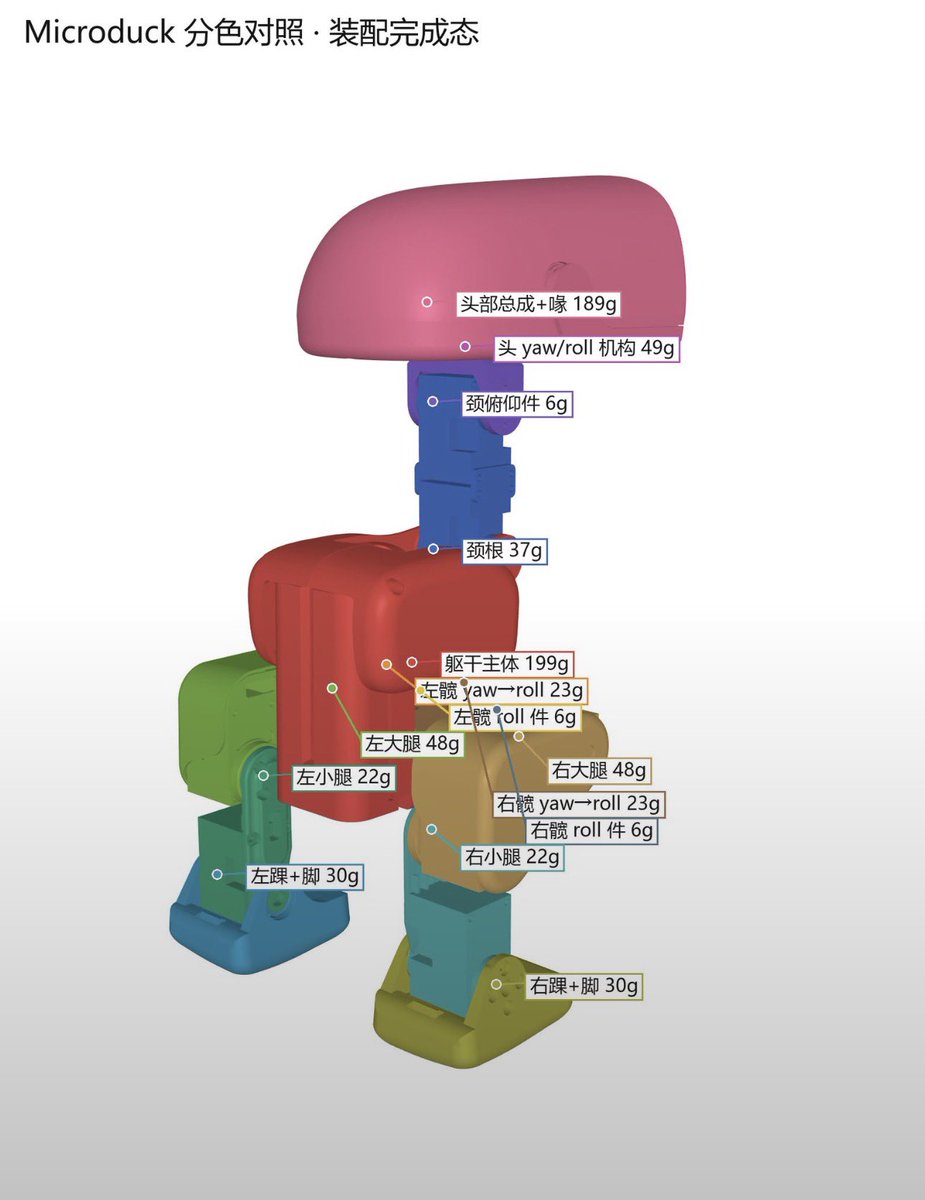
119091 粉丝
first 1k followers on Youtube 😱
guys, you're insane and incredibly thank y'all for supporting me at this early stage ❤️
i'm going to record only practical videos which you can follow, repeat and get the result
stay tuned, i'm coming soon on the scene https://twitter.com/DeRonin_/status/2095792472299278769/photo/1
中文: YouTube上的首批1k粉丝😱
各位,你们疯了,非常感谢大家在这个早期阶段给予我支持 ❤
我只会录制实用的视频,你可以关注、重复并获取结果
敬请关注,我即将来到现场

119091 粉丝
PLEASE LISTEN TO ME WHILE IT'S NOT TOO LATE
this is the end for software... and for you, a little more every day
as a normal person with no capital, you cannot build anything unique anymore, because Astra and the rest already built it
you have no edge in this new world, and the gap gets wider with every release
even if you are shipping fine right now, the demand for it disappears one morning without warning
that is why you should start robotics now, not later:
> the skills on your resume today are a subscription anyone can buy tomorrow
> your github proves nothing anymore, anyone generates that in an afternoon
> a machine that moves is the one thing nobody can fake or copy off you
> an arm on your desk costs less than your monitor, so the barrier was never money
> the seats fill with the people who started this year, not the ones who start after the panic
if software stays fine, you end up a robotics engineer who can code
if it doesn't, you're holding the one skill that didn't get cheaper
software is crowded, but the physical layer is ABSOLUTELY EMPTY
start combining AI + robotics while it hasn't replaced even the founders yet
no need to quit anything, keep taking the money out of the AI side
just give the physical layer 2-3 hrs a day, and in 6-12 months you'll be standing where the models still can't reach
p.s. btw, the game preview below has been also generated with GPT-6 Astra, so, junior and middle game developers, i am so sorry :<(
https://x.com/mattshumer_/status/2095596175705399482/video/1
中文: 请听我说,但为时不晚
这是软件的终结......而对你而言,每天都多一点
作为一个没有资本的普通人,你不能再建造任何独特的东西了,因为Astra和其余的人已经建造了它
在这个新世界中,你没有任何优势,每一次发布都会扩大差距
即使您目前处于运费罚款,其需求在一天早晨就消失得无以期
这就是为什么你应该立即启动机器人技术,而不是稍后:
今天简历上的技能是明天任何人都可以购买的订阅
你的 github 不再证明任何事,任何人都会在下午产生
移动的机器是任何人都无法伪造或复制你的东西
办公桌上的扶手价格比显示器低,因此门槛绝不是金钱
座位上挤满了今年开始的人,而不是那些在恐慌之后开始的人
如果软件保持正常,你最终会成为一名能够编程的机器人工程师
如果没有,你掌握的是一项没有更便宜的技能
软件很拥挤,但物理层完全不均匀
开始结合人工智能+机器人技术,而它甚至尚未取代创始人
无需放弃任何东西,继续把钱从人工智能方面拿走
每天只需将物理层涂为2-3小时,6到12个月后,你就会站在模型仍然无法触及的位置
下图:下面的游戏预览版也已与GPT-6 Astra一起生成,因此,初级和中级游戏开发者,很抱歉 :<(
🎬
视频
119091 粉丝
RT @DeRonin_: my first 500 followers on Youtube ❤️
you're so crazy my guys, really appreciate everybody who got followed on me
gonna record a lot of useful content there (hope u'll love it, since not going do stuffy content)
and now, i am looking for the guy(-s) who could make me thumbnails and video editing
if u're such as guy and up to grow together, then dm me with your portfolio or leave a comment with it
generous run has begun.

119091 粉丝
best addition to this article: five robotics courses from Michigan University:
open-sourced, 100% FREE on GitHub, repo links below:
- ROB 101, computational linear algebra: the transforms and Jacobians from month 5, done properly
https://github.com/michiganrobotics/rob101
- ROB 201, calculus for the modern engineer: full textbook sitting in the repo
https://github.com/michiganrobotics/rob201
- ROB 311, how to build robots and make them move: the mechatronics half of months 2 and 3
https://github.com/michiganrobotics/rob311
- ROB 501, mathematics for robotics: the rigorous version of everything in month 5
https://github.com/michiganrobotics/rob501
- ROB 530, mobile robotics: Kalman filters, localization and SLAM, the theory under month 4's Nav2 stack
https://github.com/UMich-CURLY-teaching/UMich-ROB-530-public
lecture videos on YouTube, homework, and code in MATLAB, Python, Julia and C++
start at 101, and leave 501 and 530 until you have actually built something, because both are graduate courses and will bounce you cold
this is the fundamentals layer underneath the article, not a replacement for it
five courses is not a degree either, so treat it as depth rather than the whole thing
build first, then come back and learn WHY it worked
中文: 本文最佳补充:密歇根大学的五门机器人课程:
开源,100% 免费在 GitHub 上,以下是 repo 链接:
- ROB 101,计算线性代数:从第5个月开始的变换和雅各布式变换
- ROB 201,现代工程师的微积分:全教科书式排在剧中
- 机器人机器人(ROB 311)如何制造机器人并使其移动:机电一体化技术在2月和3月的一半
- 机器人学专业501机器人:第5个月所有事物的严格版本
- ROB 530,移动机器人:卡曼滤芯、定位和SLAM,即第4个月Nave2堆栈下的理论
使用 MATLAB、Python、Julia 和 C++ 在 YouTube、作业和代码上的讲座视频
从101开始,离开501和530,直到你真正建了一些东西,因为两者都是研究生课程,会让你冷落
这是文章背后的基本层次,而不是替代
五门课程也不是学位,因此将其视为深度而非整体
先建,然后再回来,了解它为什么成功
119091 粉丝
dear, video editors!
i need the video editing as on this channel:
https://www.youtube.com/@TheCodingSloth
中文: 亲爱的,视频编辑!
我需要像此频道那样进行视频编辑:
119091 粉丝
my first 500 followers on Youtube ❤️
you're so crazy my guys, really appreciate everybody who got followed on me
gonna record a lot of useful content there (hope u'll love it, since not going do stuffy content)
and now, i am looking for the guy(-s) who could make me thumbnails and video editing
if u're such as guy and up to grow together, then dm me with your portfolio or leave a comment with it
generous run has begun.
中文: 我在YouTube上的前500名粉丝❤️
你真是太疯狂了,我非常感激所有被我关注的人
会在那里录制大量有用的内容(希望你会喜欢,因为不会去制作内容)
现在,我正在寻找那个能让我做缩略图和视频剪辑的人
如果你是个人,无论喜欢成长,那我就和你的作品集一起,或者留下评论
慷慨的竞选已经开始了。
119091 粉丝
here are 5 robots you could build after reading this article:
1. the SO-101 arm, $122 in parts
build it, calibrate every servo, teleoperate it, then print your own gripper fingers
2. a ROS 2 rover that maps a room and navigates it
SLAM Toolbox and Nav2, and you can do the whole thing in simulation with no hardware at all
3. self-balancing robot
it will not stand up until your filter and your loop timing are both correct, which is exactly the point
4. an ACT policy trained on your own demonstrations
record 50 demos, train, deploy, measure the success rate, then record 50 more and beat it
5. line follower with PID
your first closed loop, and filming it badly tuned next to properly tuned is the whole interview answer
that's what will make you at least advanced junior at Robotics Engineering and will help you to get your first offer in robotics company
🎬
视频
🎬
视频
🎬
视频
119091 粉丝
$4,660 worth of paid robotics courses, according to Opus 5.1
i gave it away for FREE
121 verified links, 27 pet projects, zero theory you won't use
six months of two hours a day between you and hireable
enjoy below: https://twitter.com/DeRonin_/status/2095201993539109136/photo/1
中文: 根据Opus 5.1的数据,价值4660美元的付费机器人课程
我免费赠送了它
121个经过验证的链接,27个宠物项目,零理论,你不会使用
您与可租用的之间,每天需要六个月两小时
享受以下内容:

119091 粉丝
Posted! You can read this article here:
中文: 发布!你可以在这里阅读这篇文章:
119091 粉丝
119091 粉丝
11000 words, 121 learning resources, 27 pet projects
6-month robotics roadmap, and all is in one article
turn on your notis today, at 18:00 CET 🔔 https://twitter.com/DeRonin_/status/2095062666335150587/photo/1
中文: 11000个单词,121个学习资源,27个宠物项目
为期六个月的机器人路线图,全部内容都在一篇文章中
今天就打开你的 COT ,时间 18:00(CET 🔔

119091 粉丝
RT @whop: Some ways people used the Whop CLI last month:
中文: RT @whop:上个月人们使用 Whop CLI 的一些方式:
119091 粉丝
everybody who is getting the same sh*t (password reset from X)
enable in settings "Password reset protection" + turn on 2FA
share this post that more people would see 🙏 https://twitter.com/DeRonin_/status/2094780442998161590/photo/1
中文: 每个得到相同sh*t的人(从X中重置密码)
在设置中启用“密码重置保护”+ 打开 2FA
分享这篇帖子,更多人会看到🙏
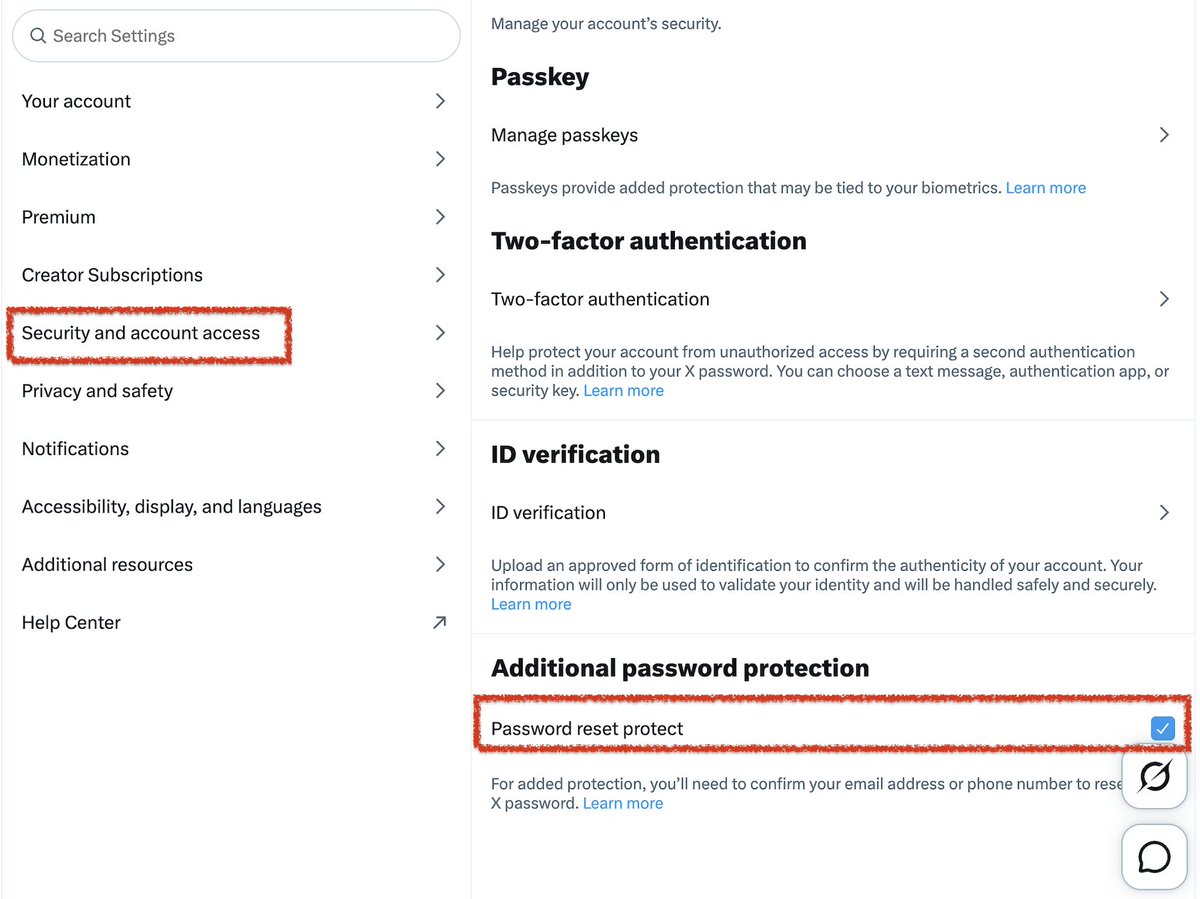
119091 粉丝
everybody who is getting the same sh*t (password reset from X)
enable in settings "Password reset protection" + turn on 2FA
stay safe. https://twitter.com/DeRonin_/status/2094780121064300731/photo/1
中文: 每个得到相同sh*t的人(从X中重置密码)
在设置中启用“密码重置保护”+ 打开 2FA
保持安全。
119091 粉丝
oh my god, somebody is trying to hack my X account... https://twitter.com/DeRonin_/status/2094778120498782488/photo/1
中文: 天哪,有人在试图破解我的X账户......

119091 粉丝
here's every way to get paid in robotics:
sell a system:
- turnkey work cells: layout, fixturing, end effector, cycle time and programming, at 10-20% of the system budget or $3-16k on a light-duty cell
- vision for bin picking: 6D pose estimation and camera calibration, the part that breaks first in production
- force-controlled assembly: insertion and mating tasks that position control alone can never do
- fine-tuned manipulation policies for one job, one gripper, one product line
- sim-to-real pipelines: train it in Isaac, land it on the real cell, and own the gap nobody else wants to debug
sell your hours:
- teleoperation and data collection: $22/hr and up, no degree asked
- contract bring-up and debugging: $30-70/hr, the going freelance band for robotics engineers
- functional safety and risk assessment: 66% of robotics projects are delayed by certification, and almost nobody sells this
- sensor calibration and vision setup on site: the step every integrator underestimates
- on-site commissioning weeks: the travel everyone avoids is the work nobody can skip
sell an artifact you own:
- demonstration datasets for a task nobody recorded: you get paid per hour of capture, then sell that same hour again
- sim environments and digital twins: billed at $30-50/hr, then reused across every client after
- grippers, jigs and mounts: design once and print forever, the margin is the file and not the plastic
- drivers and ROS packages for hardware the manufacturer never bothered to support
- calibration rigs and test fixtures, the boring tools every single lab rebuilds from scratch
then own the vertical:
- a $35k arm becomes an $80k deployed system once it is actually working
- that $45k gap is not hardware, it is engineering, and it is the entire business
- rent the cell monthly instead of selling it, so one install pays for years
- own the data for one narrow task until nobody can train a better policy than yours
- turn the third integration contract into a product and license it instead of rebuilding it
all four exist for the same reason:
> the models cannot learn manipulation from the internet, so someone has to move a real machine and record it
> simulation solved locomotion, but dexterous manipulation still needs 60-80% real data even after strong sim pretraining
> which makes even the cheapest seat in robotics one the industry structurally cannot skip
AI engineering pays well because plenty of people can do it. robotics pays well because almost NOBODY can
and if you want to build your own thing, look at software. a survey of 1,000 robotics developers this year put software architecture as the top bottleneck at 27%, ahead of hardware at 16%
you don't have to quit anything or call yourself an engineer to start
get a cheap arm as a pet project, give it two evenings a week, and you're on this list before the year ends

119091 粉丝
just deleted Grokbot from my harness after Hermes got released it…
中文: 在爱马仕发布后,刚从我的线束中删除了Grokbot......
119091 粉丝
RT @DeRonin_: here's every AI model i run in my solo agency at ~$80k MRR...
the models:
- research sweeps: Gemini 3.1 Pro
- trend synthesis: Opus 5
- creator screening: Qwen3.7 Flash
- drafting: GPT-5.6 Sol
- verification: Opus 5
- judge panels: Opus 5 + GPT-5.6 Sol + DeepSeek V3.2
- cleanup: local Qwen
- high-stakes strategy: Opus 5
the rest of the stack:
- scraping: Apify and Firecrawl
- link tracking: Dub
- scheduling: Typefully
- creator payouts: Wise
- client approvals: Notion
- analytics: PostHog
- database: Supabase
- memory: mem0
- knowledge: Obsidian
- hosting: one OVHcloud bare metal box
p.s. i was using before Hetzner for hosting, but they got scammed me on server at the middle of the plan...
if you want, you can use them, that's my principle position just
TOTAL COST to run all of it: ~$1,400/month, and $680 of that is inference
now the part that actually matters:
most people pick one favourite model and run their whole business on it
i pick the best model for each job, then pay for the seat where being wrong is expensive
screening a creator profile is pattern matching, so it runs on a model at $0.03 per million input tokens
drafting in a creator's voice shows up in the invoice, so it gets the model that wins on creative output
verification catches the 4% that would embarrass a client, so it gets the strongest reasoning model on the list
and the verifier never runs on the family that wrote the draft, because a model grading its own homework always agrees with itself
the stack is not the moat... the ROUTING is
stop asking which model is best and start asking which model is best at this

119091 粉丝
here's every AI model i run in my solo agency at ~$80k MRR...
the models:
- research sweeps: Gemini 3.1 Pro
- trend synthesis: Opus 5
- creator screening: Qwen3.7 Flash
- drafting: GPT-5.6 Sol
- verification: Opus 5
- judge panels: Opus 5 + GPT-5.6 Sol + DeepSeek V3.2
- cleanup: local Qwen
- high-stakes strategy: Opus 5
the rest of the stack:
- scraping: Apify and Firecrawl
- link tracking: Dub
- scheduling: Typefully
- creator payouts: Wise
- client approvals: Notion
- analytics: PostHog
- database: Supabase
- memory: mem0
- knowledge: Obsidian
- hosting: one OVHcloud bare metal box
p.s. i was using before Hetzner for hosting, but they got scammed me on server at the middle of the plan...
if you want, you can use them, that's my principle position just
TOTAL COST to run all of it: ~$1,400/month, and $680 of that is inference
now the part that actually matters:
most people pick one favourite model and run their whole business on it
i pick the best model for each job, then pay for the seat where being wrong is expensive
screening a creator profile is pattern matching, so it runs on a model at $0.03 per million input tokens
drafting in a creator's voice shows up in the invoice, so it gets the model that wins on creative output
verification catches the 4% that would embarrass a client, so it gets the strongest reasoning model on the list
and the verifier never runs on the family that wrote the draft, because a model grading its own homework always agrees with itself
the stack is not the moat... the ROUTING is
stop asking which model is best and start asking which model is best at this
中文: 以下是我个人经纪公司运营的每一个人工智能模型,价格约8万美元......
模型:
- 研究扫荡:Gemini 3.1 Pro
- 趋势合成:Opus 5
- 创作者筛选:Qwen3.7 Flash
- 起草:GPT-5.6 索尔
- 验证:Opus 5
- 评审小组:Opus 5 + GPT-5.6 Sol + DeepSeek V3.2
- 清理:本地 Qwen
- 高风险策略:Opus 5
其余堆栈:
- 刮擦:抓取并抓取
- 链接追踪:Dub
- 排班:打字
- 创作者赔付:睿智
- 客户批准:
- 分析:PostHog
- 数据库:数据库
- 记忆:mem0
- 知识:黑曜石
- 托管:一个OVHCloud裸露金属盒
p.s. 我之前使用赫兹纳来托管,但在计划的中间,他们却在服务器上把我骗了......
如果你愿意,你可以使用它们,这就是我的原则立场
总共运行成本:每月约1400美元,其中680美元为推断
现在真正重要的部分:
大多数人选择一个最喜欢的模式,并在它上运行整个业务
为每一份工作选择最佳型号,然后为错误且费用昂贵的座位付费
筛选创作者个人资料是模式匹配,因此其运行模式为每百万个输入代币0.03美元
以创作者的声音进行创作,在发票中显示,因此该模型在创意输出上获胜
验证能捕捉到让客户难堪的4%,因此它获得了榜单上最有力的推理模型
验证者从不依赖撰写该草案的家族,因为一个模特自己布置的作业总是与自己一致
栈不是护城河......正在
别问哪种型号最好,然后开始询问哪种型号最适合
119091 粉丝
here's every AI model i run in my solo agency at ~$43k MRR...
the models:
- research sweeps: Gemini 3.1 Pro
- trend synthesis: Opus 5
- creator screening: Qwen3.7 Flash
- drafting: GPT-5.6 Sol
- verification: Opus 5
- judge panels: Opus 5 + GPT-5.6 Sol + DeepSeek V3.2
- cleanup: local Qwen
- high-stakes strategy: Opus 5
the rest of the stack:
- scraping: Apify and Firecrawl
- link tracking: Dub
- scheduling: Typefully
- creator payouts: Wise
- client approvals: Notion
- analytics: PostHog
- database: Supabase
- memory: mem0
- knowledge: Obsidian
- hosting: one OVHcloud bare metal box
p.s. i was using before Hetzner for hosting, but they got scammed me on server at the middle of the plan...
if you want, you can use them, that's my principle position just
TOTAL COST to run all of it: ~$1,400/month, and $680 of that is inference
now the part that actually matters:
most people pick one favourite model and run their whole business on it
i pick the best model for each job, then pay for the seat where being wrong is expensive
screening a creator profile is pattern matching, so it runs on a model at $0.03 per million input tokens
drafting in a creator's voice shows up in the invoice, so it gets the model that wins on creative output
verification catches the 4% that would embarrass a client, so it gets the strongest reasoning model on the list
and the verifier never runs on the family that wrote the draft, because a model grading its own homework always agrees with itself
the stack is not the moat... the ROUTING is
stop asking which model is best and start asking which model is best at this
中文: 这是我在个人经纪公司运营的每一位人工智能模型,价格约为43k美元......
模型:
- 研究扫荡:Gemini 3.1 Pro
- 趋势合成:Opus 5
- 创作者筛选:Qwen3.7 Flash
- 起草:GPT-5.6 索尔
- 验证:Opus 5
- 评审小组:Opus 5 + GPT-5.6 Sol + DeepSeek V3.2
- 清理:本地 Qwen
- 高风险策略:Opus 5
其余堆栈:
- 刮擦:抓取并抓取
- 链接追踪:Dub
- 排班:打字
- 创作者赔付:睿智
- 客户批准:
- 分析:PostHog
- 数据库:数据库
- 记忆:mem0
- 知识:黑曜石
- 托管:一个OVHCloud裸露金属盒
p.s. 我之前使用赫兹纳来托管,但在计划的中间,他们却在服务器上把我骗了......
如果你愿意,你可以使用它们,这就是我的原则立场
总共运行成本:每月约1400美元,其中680美元为推断
现在真正重要的部分:
大多数人选择一个最喜欢的模式,并在它上运行整个业务
为每一份工作选择最佳型号,然后为错误且费用昂贵的座位付费
筛选创作者个人资料是模式匹配,因此其运行模式为每百万个输入代币0.03美元
以创作者的声音进行创作,在发票中显示,因此该模型在创意输出上获胜
验证能捕捉到让客户难堪的4%,因此它获得了榜单上最有力的推理模型
验证者从不依赖撰写该草案的家族,因为一个模特自己布置的作业总是与自己一致
栈不是护城河......正在
别问哪种型号最好,然后开始询问哪种型号最适合
119091 粉丝
why i'd learn robotics over AI engineering for the next 12-24 months:
everyone is an AI engineer now... that's the whole problem
you can't build a moat out of what a subagent does at 3am for pennies
robotics is the opposite:
> the models already work, what's missing is someone who can put them in a body
> you can't scrape the physical world, someone has to move a real machine to create the data
> there is no stackoverflow answer for why your gripper keeps slipping
> a robot falling over is not a problem you can hand to a subagent
> nobody clones your robot over a weekend
> robotics companies are valued much higher than AI now, but you should have engineering background 100/100
what it gives to you:
- robot foundation model specialists sit at $280-475k total comp
- recruiters say there aren't enough senior robotics engineers in the US to staff the programs already funded
- the door opens early, since teleop data collection, sim work and bring-up are entry-level seats
- you could found your company first when it will become a mainstream
AI engineering is crowded. robotics is EMPTY
same 24 months, completely different odds
don't need to put it in priority, no, cashout from AI side-hustle
but make it as a daily hobby and put here 2-3 hrs for learning and engineering - can make the difference for you into the future
中文: 为什么在接下来的12到24个月里,我会学习机器人技术,而不是人工智能工程:
现在每个人都是人工智能工程师......这就是问题的全部
你无法用亚罐在凌晨3点时为小便时的做什么而建一条护城河
机器人恰恰相反:
模型已经有效,缺少的是能将它们放入体内的人
你无法抓取物理世界,必须有人移动一台真正的机器来创建数据
没有堆叠流量的答案,说明你的抓手为何不断滑落
机器人掉落并不是一个你可以交给亚子智能体的问题
没人在周末克隆你的机器人
机器人公司现在的估值远高于人工智能,但你应该拥有100/100的工程背景
它赋予你什么:
- 机器人基础模型专家总价为28万至47.5万美元
- 招聘人员表示,美国没有足够的高级机器人工程师来为已资助的项目配备人员
- 门提前打开,因为远程数据采集、SIM 工作和带式座椅都是入门级的
- 当你的公司成为主流时,你才能找到它
人工智能工程很拥挤。机器人技术很不对
相同的24个月,完全不同的赔率
不必把它放在首位,不,从人工智能的侧面喧嚣中套现
但把它当作日常爱好,并在这里学习和工程学习两到三小时——为未来带来改变

119091 粉丝
RT @DeRonin_: everyone is hyping the new X report and sleeping on the real algos drop...
"Under the Hood" shows which labels are throttling you: https://x.com/i/under_the_hood
but X open-sourced the ranker too, and the weights sit in home-mixer/params/param.rs
verbatim from the file:
> share via copy link: 20.0
> reply: 5.0 · quote: 5.0 · share via DM: 5.0
> follow author: 4.0 · share: 2.0
> retweet: 1.0 · favorite: 0.5
> profile click: 0.0
> report: -234.0 · mute: -58.8 · block: -31.2
a reply from a mutual gets +15.0 on top of that
and bookmarks aren't in the file at all. not zero, ABSENT... the For You ranker never scores them
these multiply predicted probabilities, not your raw counts, so it's not an exchange rate. it's a map of what the system is trying to cause
and what it wants most is a post someone quietly sends to one person

119091 粉丝
Wait for the article today/tomorrow
Just need to move my roadmap to the article :<)
中文: 今天/明天等待文章
只需将我的路线图移到文章 :< 中;)
119091 粉丝
everyone is hyping the new X report and sleeping on the real algos drop...
"Under the Hood" shows which labels are throttling you: https://x.com/i/under_the_hood
but X open-sourced the ranker too, and the weights sit in home-mixer/params/param.rs
verbatim from the file:
> share via copy link: 20.0
> reply: 5.0 · quote: 5.0 · share via DM: 5.0
> follow author: 4.0 · share: 2.0
> retweet: 1.0 · favorite: 0.5
> profile click: 0.0
> report: -234.0 · mute: -58.8 · block: -31.2
a reply from a mutual gets +15.0 on top of that
and bookmarks aren't in the file at all. not zero, ABSENT... the For You ranker never scores them
these multiply predicted probabilities, not your raw counts, so it's not an exchange rate. it's a map of what the system is trying to cause
and what it wants most is a post someone quietly sends to one person
中文: 每个人都在炒作新的X报告,睡在真正的藻中......
《胡德之下》展示了哪些标签在限制你:
但X 也开源了排名,权重位于家庭混合器/参数/param.rs 中
文件逐字逐句:
通过文案链接分享:20.0
回复:5.0 · 报价:5.0 · 通过 DM 分享:5.0
以“以下”为:4.0 · 分享:2.0
> 转发:1.0 · 收藏夹:0.5
> 个人资料点击:0.0
报告:-234.0 · 静音:-58.8 · 区块:-31.2
对方的回复在上面获得+15.0
书签根本不在文件中。不是零,没有......For You 的排名从不得分
这些是预测概率的倍增,而不是你的原始计数,因此它并非汇率。它是系统试图引起的一个地图
它最想要的是某人悄悄发给一个人的帖子
119091 粉丝
i started learning electronics/robotics...
should i share with you my 6-months plan how i'm going to get my first engineering offer with no degree? https://twitter.com/DeRonin_/status/2094114648144363583/photo/1
中文: 我开始学习电子学/机器人技术......
我应该和你分享我为期六个月的计划,如何在没有学位的情况下获得我的首个工程报价?


119091 粉丝
every way to make money with Claude Code and Hermes, in one map:
┃
┣ Agency & Services
┃ ┣ AI implementation for SMBs
┃ ┣ Agent setup & onboarding
┃ ┣ Workflow automation builds
┃ ┣ Custom skill development
┃ ┗ Agent fleet retainers
┃
┣ Productized Offers
┃ ┣ Skill packs
┃ ┣ Agent starter kits
┃ ┣ CLAUDE.md templates
┃ ┣ Obsidian vault systems
┃ ┗ Whop blueprints
┃
┣ Building Products
┃ ┣ Micro-SaaS
┃ ┣ Vertical agents
┃ ┣ Telegram & Slack bots
┃ ┣ MCP servers as products
┃ ┗ Internal tools for clients
┃
┣ Marketing Systems
┃ ┣ SEO & AEO audits
┃ ┣ Cold outbound engines
┃ ┣ Lead gen & enrichment
┃ ┣ Ad creative factories
┃ ┗ Landing page builds
┃
┣ AI Media Production
┃ ┣ AI UGC ads
┃ ┣ Faceless YouTube channels
┃ ┣ TikTok content pages
┃ ┣ Brand video production
┃ ┗ Voiceover & dubbing
┃
┣ Content & Audience
┃ ┣ X growth
┃ ┣ Newsletters
┃ ┣ Paid communities
┃ ┣ Sponsorships
┃ ┗ Ghostwriting
┃
┣ Research & Data
┃ ┣ Deep research reports
┃ ┣ Market intelligence
┃ ┣ Competitor teardowns
┃ ┣ Data enrichment
┃ ┗ Premium reports
┃
┣ Engineering
┃ ┣ Freelance dev at 5x throughput
┃ ┣ Legacy code migration
┃ ┣ Test suite generation
┃ ┣ Code review as a service
┃ ┗ Documentation generation
┃
┣ Back Office Automation
┃ ┣ Customer support agents
┃ ┣ CRM hygiene
┃ ┣ Invoice & receipt pipelines
┃ ┣ Recruiting screens
┃ ┗ Personal assistant agents
┃
┗ Teaching
┣ 1:1 consulting
┣ Team workshops
┣ Corporate enablement
┣ Courses
┗ Office hours
most people pick one branch and grind it... the money is in stacking three that feed each other
119091 粉丝
these guys built an infinite movie generation machine...
@fal's post-trained Minimax H3 Max is 50x faster than the original: 5 seconds of video out of 3 seconds of compute
it generates faster than you can watch it
and i found the open-sourced version:
https://huggingface.co/FastVideo/FastVideo-FastH3-4-step-Preview-v1-VSA-DataFree https://twitter.com/DeRonin_/status/2093716500175544695/photo/1
中文: 这些人打造了一台无限的电影时代机器......
@fal 经过后训练的 Minimax H3 Max 比原版快 50 倍:只需 3 秒计算,即可观看 5 秒的视频
它产生的速度比你能看的还快
我找到了开源版本:

119091 粉丝
🎬
视频
119091 粉丝
key insight of the day: build the apps for women, since they bring 2x revenue
中文: 当天的关键洞察:为女性开发应用程序,因为它们带来的收入是女性的2倍
119091 粉丝
follow these three rules and Claude Code gets radically better:
- use /subtask instead of spawning a fresh subagent, it forks your session and shares the prompt cache
- let it run in the background, the tool calls stay out of your context and only the result comes back
- pass isolation: "worktree" on any fork that edits files, so parallel ones stop colliding
a normal subagent starts blind. you re-explain the codebase, it rebuilds the cache from ZERO, then hands you back a wall of tool output you have to read
a fork already knows everything you know... and it's been on by default since 2.1.232
everyone clipped the cross-session messaging headline from that release and slept on the part that actually cuts your bill
中文: 遵循以下三条规则,而克劳德·德·德·德·德·德·德西德的
- 使用 /subtask 而不是生成新的子代理,它会将会话分叉并共享提示缓存
- 让它在后台运行,工具调用时不要处于上下文中,结果才会恢复
- 通过隔离:任何编辑文件的分叉上都使用“工作树”,因此并行的分叉停止碰撞
普通子代理会从盲区开始。你重新解释代码库,从ZERO中重建缓存,然后将需要读取的工具输出墙重新拉回
一个叉子已经知道你所知道的一切......而且它自2.1.232起就已默认使用
所有人都从那场发布中剪掉了跨场消息标题,并睡在了真正削减账单的部分
119091 粉丝
the best AI design guide which i’ve seen for the last time
turn this into the skill and make design as a senior
中文: 我上次见过的最佳人工智能设计指南
将其转化为技能,并作为高年级学生进行设计
119091 粉丝
RT @chetaslua: 🚨 Higgsfield API : no subscription , no account needed
Free till they patch , i think they will launch it soon for public
https://github.com/framepipe-dev/media-inference-worker use it to generate content directly without the need of any ui
This is company api < use it lol 😂>
Tutorial : https://twitter.com/chetaslua/status/2092579908891578421/video/1
中文: RT @chetaslua:🚨 希格斯菲尔德 API:无需订阅,无需账户
免费至补丁为止,我认为他们很快就会向公众发布
可直接生成内容,无需任何 UI
这是公司 api < 使用 lol 😂>
教程:
🎬
视频
119091 粉丝
Dear Gen-Z, here's how to get rich:
1. Go to Grokbot and say "find 20 creators in [hyped niche] on TikTok and Instagram who post strong work, get real engagement, and have NO offer in bio.. for each: handle, best video, what's broken in their distribution in one line"
2. Pick one. Don't sell them anything. Point at the hole they already see every day: an audience asking to buy and nothing to buy. Offer to become their growth operator for 30% rev-share, they pay $0 upfront
3. Let the bot run the ops: it builds the offer on Whop straight from the terminal, writes content that sells instead of chasing views, and pulls the numbers back weekly. One creator settling at $20k/mo = $6k/mo to you, from ONE partner
4. Repeat for 10 partners if you have to. Same bot, same playbook, zero new cost per partner. If nobody says yes, your pitch sucks and you need to work on it. Fix it and go again
The ops that used to need a $3-5k/mo team now run on a bot subscription. There has never been as much alpha up for grabs as there is now
Full playbook is in the article below:
119091 粉丝
i genuinely don't understand why nobody is building this..
last night, i built my growth operator system on an Obsidian vault with HUNDREDS of notes as markdown files:
1. every niche i've mapped, demand signals, supply gaps, which ones are heating up and which are already crowded
2. every creator the bot scouted, why their work is strong, what's broken in their distribution, who i passed on and why
3. every partner's offer, price, rev-share terms, and the objections that came up before signing
4. the content data, which topics pulled views vs which actually sold, hook by hook, with numbers next to each
5. the playbooks, scouting prompts, the content engine, whop CLI commands, outreach that doesn't sound like outreach
6. the rulings, every decision i never want to re-argue, one dated line each.. never below 25% rev-share, never partner without proof of skill
7. the trend radar, weekly scans of what's going viral in the niche right now, new formats and hooks that convert THIS week, not three months ago.. content stays on trend, conversion holds
then whenever Grokbot starts working on a new partner, i point it at the vault
it doesn't start from zero.. it starts with everything the last 10 partners taught it
that's the difference between an agent doing tasks and an operator with MEMORY
every partner makes the next one cheaper to run
in the article below i break down the full growth operator system this vault plugs into:
🎬
视频
119091 粉丝
RT @Mnilax: SpaceXAI shipped the most ambitious agent product of the year, and it just got cheaper.
Grok Bot does not need your tools to have an API. it signs in and clicks through them like a person, on a cloud machine that runs with your laptop shut.
the part that makes it usable is smaller:
watch you do the job once -> save it as a routine -> take your corrections -> run it without you
it picks up your voice and your edge cases, then takes the same multi-step process without re-explaining.
every agent product this year hit the same bottleneck. not capability. the cost of telling it who you are, again.
read the docs, then the guide below how to earn ur yearly slary with it.
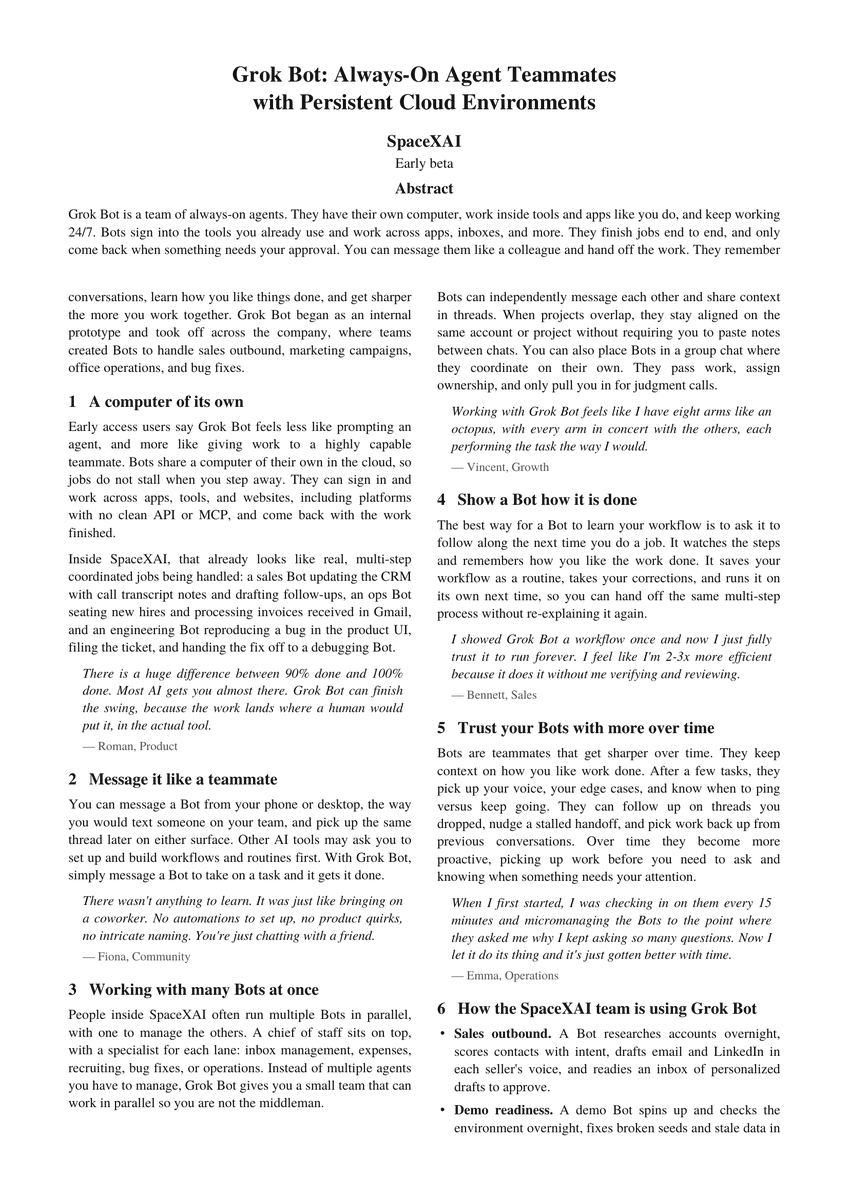

119091 粉丝
okay, that’s probably the most insightful what i’ve seen for the last months
that’s literally all-in-one article you need to launch your own successful app:
119091 粉丝
119091 粉丝
nobody gets a $350k offer from Anthropic with a certificate
they get it by showing what they've shipped
5 from-scratch projects that make you unrejectable:
1. a tokenizer from scratch
train BPE on a raw corpus.. once you see how text becomes tokens, context limits and weird model failures stop being magic
2. attention + KV cache by hand
compute Q, K, V for one token yourself, then build the cache.. and finally understand why inference is memory-bound, not compute-bound
3. a mini-former you actually trained
tiny decoder-only model, real training loop, loss curves.. proves you understand what everyone else just calls through an API
4. a two-expert MoE router
route tokens, collapse the router on purpose, plot the histogram.. every frontier model works this way and almost nobody can explain it
5. quantize + serve one model
quantize it, measure the damage, serve it with latency charts.. the difference between a demo and a system
Anthropic doesn't care what you studied.. they care what you've built, broken and can explain
the full build order (34 projects, 12 weeks) is in the article.. save it

119091 粉丝
i built a system to run LLMs without limits... my Token Router
it's why Claude Code runs 10+ hours a day and my API spend dropped ~70%
one layer between me and every model, pricing each call BEFORE it happens
here's how to build the same tokens saver:
1. route by cost-of-failure, not by task
every request gets classified first: what does a wrong answer cost here? boilerplate → local model. production work → cheap workhorse. architecture decisions → frontier. the router picks, not you
2. make your prompts cache-eligible
providers give a 90% discount on cached input and almost nobody collects it.. because the cache breaks on a SINGLE changed byte. keep your prefix stable (tools → system → context, same order, same bytes) and put anything volatile (timestamps, fresh data) at the END. yes, your AI bill partially depends on byte order. nobody tells you this
3. block redundant reads
agents re-read the same files constantly. a simple pre-tool hook that says "you already saw this, here's the summary" kills the dumbest spend in every agentic workflow
4. feed skeletons, not files
parse your codebase into a map of functions and calls (tree-sitter does this free). the model queries the skeleton and only opens files it actually needs.. up to 49x fewer tokens on big repos
5. isolate the dirty work
sub-agents read the heavy stuff and return only conclusions. your main context stays clean.. think of it as the CEO's inbox: reports come in, raw dumps don't
6. discipline the output side
output tokens cost ~5x input and everyone ignores them. demand diffs instead of full rewrites, terse mode by default, hard stop sequences. 30-50% cut from one instruction
7. run overnight work in the batch lane
every provider gives ~50% off for non-urgent jobs. your nightly agents are paying rush-hour prices for work nobody reads until morning
the killer part: none of this is a tool you buy. it's ~200 lines of routing rules and hooks you write once, and every session after that is discounted forever
same philosophy that runs my whole agency: spend intelligence like money, because it is
your AI bill isn't the price of intelligence. it's the price of lazy routing
P.S. this is the surface layer
the full router also does semantic caching (similar question = cached answer, zero cost) and compresses prompts with a small local model before the big one ever sees them
show me your interest and i'll drop the full build guide with all configs
sharing everything for free
🎬
视频
119091 粉丝
My daily cup of coffee
prepare to you skills for running solo-business today https://twitter.com/DeRonin_/status/2091446557195292692/photo/1

119091 粉丝
RT @ashxbit: @DeRonin_ How is it looking @DeRonin_ ?
119091 粉丝
Let’s force this meme moment across the internet
Put it on your pfps, terminal background, prompt it in all LLMs
I want to be as popular as Khabane Lame https://twitter.com/DeRonin_/status/2091229434233725213/photo/1

119091 粉丝
Let’s force this meme moment across the internet people
Those who put it on pfp, get instructions from me how to build fully automated $80K MRR agency hehe https://twitter.com/DeRonin_/status/2091228543346749553/photo/1
119091 粉丝
my first flight documented 🤝
Dox is completed
Face brand arc began ❤️ https://twitter.com/DeRonin_/status/2091208499376066770/video/1
🎬
视频
119091 粉丝
Oh my god, I am so fcking aliiive ❤️❤️❤️ https://twitter.com/DeRonin_/status/2090806695790321799/photo/1

119091 粉丝
In 30 mins, I will jump first time in my life from airplane 😨
My biggest fear in life is heights btw
Wish me the luck…
If I will not come back in 24hrs, here’s automatically will be posted a tweet with the login and password of my X account 😂
Take care on it guys. https://twitter.com/DeRonin_/status/2090768156608401813/photo/1


119091 粉丝
list of top 30 angel investors to get raised first capital at early stage:
119091 粉丝
Preparing my own knowledge base on my profile
Soon will get it released too
119091 粉丝
if you want to grow your X profile, just load this knowledge base to your Claude and it will be more valuable than any paid X course:
119091 粉丝
RT @eptwts: i extracted all the lessons from my 14,000 tweets & turned them into a browsable knowledge-base...
you can read them here: https://eptwts.com/ https://twitter.com/eptwts/status/2090446797017592279/video/1
🎬
视频
119091 粉丝
phrase, which helped me to reach 7-figs in my 20s:
"you learn more in ten minutes of doing than in ten hours of planning" https://twitter.com/DeRonin_/status/2090386188750238141/photo/1
119091 粉丝
RT @eptwts: https://x.com/i/article/2090117876573474817
119091 粉丝
RT @DeRonin_: SOMEONE JUST KILLED THE VACUUM CLEANING INDUSTRY
two ex-Google engineers spent 9 years on a home robot that doesn't navigate blind. it SEES your house
every robot vacuum for 20 years has been guessing. this one understands the room
[ the specs are insane ]:
years in development: 9
onboard cameras: 5
LiDAR sensors: 0
cleans in complete darkness: yes
data sent to the cloud: none
WIRED score: 10/10
The Verge score: 9/10
[ the tech is wild too ]:
no LiDAR, no laser turret, no cloud, no app required
five cameras feed an NVIDIA chip inside. it builds a 3D map that never leaves the device
it knows a sock from a cable from your dog. and treats each one differently
pick it up mid-clean, drop it in another room, it instantly knows where it is. every other robot forgets and re-cleans the same spot
[ the interface is the real kill shot ]:
no app, no map editing, no menus
point at a mess, say "clean here," and it goes. a 5-year-old can run it
it even turns to look at whoever spoke
[ the privacy angle is even wilder ]:
Roomba's maker shipped 2 million images from people's homes to overseas contractors
this one processes everything on-device. raw footage discarded in real time. works with wifi off
nothing leaves, so nothing can leak
every $1,000 robot with a laser turret is now a museum piece
it's called Matic. it's real, it's shipping, and it just made the entire aisle obsolete
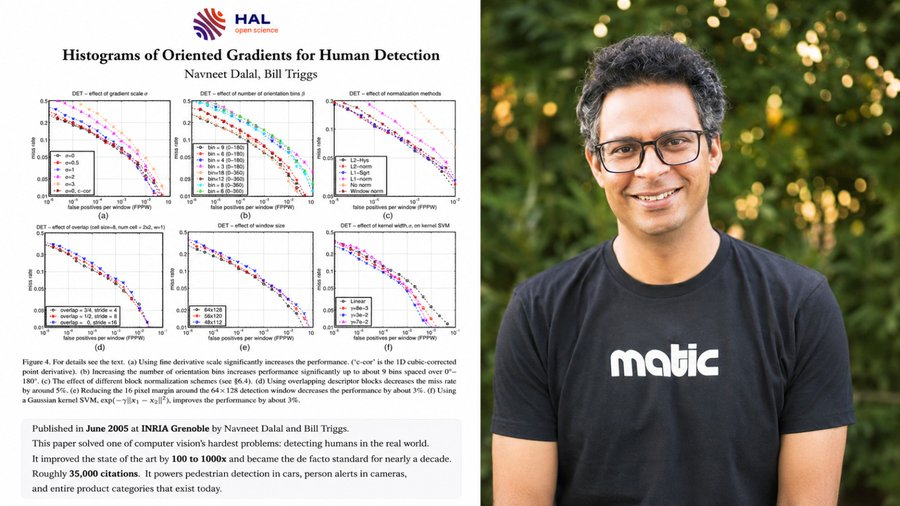
119091 粉丝
SOMEONE JUST KILLED THE VACUUM CLEANING INDUSTRY
two ex-Google engineers spent 9 years on a home robot that doesn't navigate blind. it SEES your house
every robot vacuum for 20 years has been guessing. this one understands the room
[ the specs are insane ]:
years in development: 9
onboard cameras: 5
LiDAR sensors: 0
cleans in complete darkness: yes
data sent to the cloud: none
WIRED score: 10/10
The Verge score: 9/10
[ the tech is wild too ]:
no LiDAR, no laser turret, no cloud, no app required
five cameras feed an NVIDIA chip inside. it builds a 3D map that never leaves the device
it knows a sock from a cable from your dog. and treats each one differently
pick it up mid-clean, drop it in another room, it instantly knows where it is. every other robot forgets and re-cleans the same spot
[ the interface is the real kill shot ]:
no app, no map editing, no menus
point at a mess, say "clean here," and it goes. a 5-year-old can run it
it even turns to look at whoever spoke
[ the privacy angle is even wilder ]:
Roomba's maker shipped 2 million images from people's homes to overseas contractors
this one processes everything on-device. raw footage discarded in real time. works with wifi off
nothing leaves, so nothing can leak
every $1,000 robot with a laser turret is now a museum piece
it's called Matic. it's real, it's shipping, and it just made the entire aisle obsolete
中文: 有人刚刚杀死了VACUUM清洁行业
两名前谷歌工程师花了9年时间,使用了一款无法盲目导航的家用机器人。
20年来,每个机器人的吸尘器都一直在猜测。这个机器人了解房间
[规格很疯狂]:
开发年:9
车载摄像头:5
激光雷达传感器:0
完全黑暗中洁净:是
发送到云端的数据:无
连线评分:10/10
The Verge 评分:9/10
科技行业也很疯狂:
无需激光雷达,无激光炮塔,无需云云,无需应用程序
五个摄像头为内部的英伟达芯片提供反馈,它构建了一张永远不会离开设备的3D地图
它从你的狗的一根电缆中认识一只袜子,并且对每只袜子都有不同的处理方式
把它捡到中间干净,放在另一个房间,它立刻知道它在哪里。其他所有机器人都会忘记并重新清洁同一个地方
[界面是真正的击杀]:
没有应用程序,没有地图编辑,没有菜单
一团糟,说“干净”就说了。一个5岁的孩子可以跑
它甚至转向看谁说话
隐私角度更加疯狂了。:
Roomba的制造商将200万张图片从人们家中运出给海外承包商
此内容处理设备上的所有内容。原始视频实时丢弃。使用Wi-Fi
什么都不会留下,所以什么都无法泄露
每1000美元的激光炮塔机器人现在都是一件博物馆
它叫马蒂奇。它真实,是货运,而且整个过道都过时了
119091 粉丝
literally the only article you need to cut your AI bill by 90%:
119091 粉丝
RT @EXM7777: https://x.com/i/article/2089714600405356544
119091 粉丝
RT @DeRonin_: Best AI models by use cases in solo-business (my real stack):
Bulk production (drafts, code, briefs): Kimi K3
Verification / QA passes: Opus 4.6
High-stakes strategy: GPT-5.6-SOL
Research sweeps (24/7 agents): Kimi K3
Sales copy rewrites: Fable 5
Video / UGC gen: Seedance 2.5
Image gen: GPT Image 2
Live search + trend leaks: Grok 4.5
Translation / localization: Gemini 3.5 Flash
Best price-to-output: DeepSeek V4 Pro
Local background agents: GLM 5.2
Local cleanup (small): Qwen
two rules that matter more than the list:
1. never verify with the model that wrote the draft, different family, on purpose
2. price the model to the cost of the decision, not the habit
the wrong model choice doesn't fail loudly, it just quietly eats your margin
P.S. unfortunately, i couldn't finalize an article today on how i'm running $80k MRR agency :<(
catch 5% value of this article in this tweet
turn on notis for tomorrow, at 6pm CET 🔔
119091 粉丝
RT @vasuman: https://x.com/i/article/2088800156527534081
119091 粉丝
Best AI models by use cases in solo-business (my real stack):
Bulk production (drafts, code, briefs): Kimi K3
Verification / QA passes: Opus 4.6
High-stakes strategy: GPT-5.6-SOL
Research sweeps (24/7 agents): Kimi K3
Sales copy rewrites: Fable 5
Video / UGC gen: Seedance 2.5
Image gen: GPT Image 2
Live search + trend leaks: Grok 4.5
Translation / localization: Gemini 3.5 Flash
Best price-to-output: DeepSeek V4 Pro
Local background agents: GLM 5.2
Local cleanup (small): Qwen
two rules that matter more than the list:
1. never verify with the model that wrote the draft, different family, on purpose
2. price the model to the cost of the decision, not the habit
the wrong model choice doesn't fail loudly, it just quietly eats your margin
P.S. unfortunately, i couldn't finalize an article today on how i'm running $80k MRR agency :<(
catch 5% value of this article in this tweet
turn on notis for tomorrow, at 6pm CET 🔔
119091 粉丝
i've been running this content system for months.. i call it my Audience Radar
and it's quietly the highest-leverage software in my content creation stack
here's how to build the same with Claude Code:
1. define your sources: 5-10 subreddits, the X accounts your ICP replies to, youtube channels they comment on.. write them into a sources.md file
2. build the listener: a scheduled Claude Code task that pulls fresh posts and comments from those sources every night (scrapers or APIs, either works)
3. give it an extraction prompt: "pull out pain points, repeated questions, objections and exact phrases people use. group by theme, count frequency".. raw noise becomes structured insight
4. add the competitor agent: same loop but pointed at 5-10 competitors. what they post, what performs, what offers they push, where they're silent
5. everything writes into context files inside your skills folder: audience-pains.md, hot-questions.md, competitor-gaps.md.. Claude reads them before writing anything
the killer part: this radar plugged straight into my Content Engine (the .md system i shared before, link below)
ARTICLE: https://x.com/DeRonin_/status/2042604279077237170
the engine was already turning 1 idea into 10 platform-native posts. now the radar feeds it the ideas.. i removed myself from both ends of the pipeline
my hooks come from real complaints. my offers come from gaps competitors ignore. my articles answer questions people asked THIS week
that's why posts feel like mind-reading.. because technically they are
most creators create from imagination. the ones who win create from surveillance
build your radar before you build anything else
P.S. this is just a superficial explanation of how to build such a system
now my audience radar version is extended ultimately to all existed sources in ai/tech space and i'm getting the news in easy format every second (which are really getting viral)
show me your interest and i'll write an article on my new version of my content engine + audience radar and how to build this
sharing everything for free

119091 粉丝
$5.4B valuation at Higgsfield
it's been good months with you guys 🤝
next more.
119091 粉丝
119091 粉丝
I cut my Claude Code bill ~80% with one move:
I actually read the docs..
> /clear when context hits 50%
> /context to see what's bloating it
> prompt caching (free, just enable it)
> CLAUDE.md scoped per-task, not global
> subagents for anything that returns >2k tokens
No Rust… https://twitter.com/DeRonin_/status/2050949843556643074/photo/1
中文: 我通过一个举措削减了我的克劳德密码账单,金额为80%:
我其实读过文档。
当上下文达到50%时,情况会清晰
ggt; /context 查看其腹胀情况
提示缓存(免费,只需启用)
并非全局任务,而是全局任务范围
对任何返回 >2k 令牌的子代理
无锈...

119091 粉丝
119091 粉丝
How to grow your app from 0 to 100k users (PLAYBOOK):
by the end, you'll know how to:
- get your first 10 paying customers without a funnel
- build organic growth that compounds monthly
- know exactly when to spend money and when not to
- turn your users into your best… https://twitter.com/DeRonin_/status/2038235735120101529/photo/1
中文: 如何将你的应用从0到1万用户(PLAYBOOK)进行
到最后时,你就会知道如何:
- 让您的前10个付费客户无需漏斗
- 建立有机增长,使月度复合
- 确切知道何时该花钱,何时不花钱
- 将你的用户变成最佳用户......

119091 粉丝