
129950 粉丝
> Supplied ETH
> Borrowed USDT
> Deposited that USDT in Lighter LLP
> Making $300-$500 everyday
> And with that money building short position on ETH as an hedge https://twitter.com/Axel_bitblaze69/status/2107012920270057624/photo/1

129950 粉丝
Its all over for me. goodbye y’all 💔 https://twitter.com/Axel_bitblaze69/status/2106828838777020621/photo/1
中文: 对我来说一切都结束了。再见,你们都 💔

129950 粉丝
@cryptomanran @grok @grok ?
129950 粉丝
@cryptomanran @grok tldr
which are those 6 coins and what’s their thesis
中文: @cryptomanran @grok tdr
这6枚硬币是哪一枚,他们的论点是什么
129950 粉丝
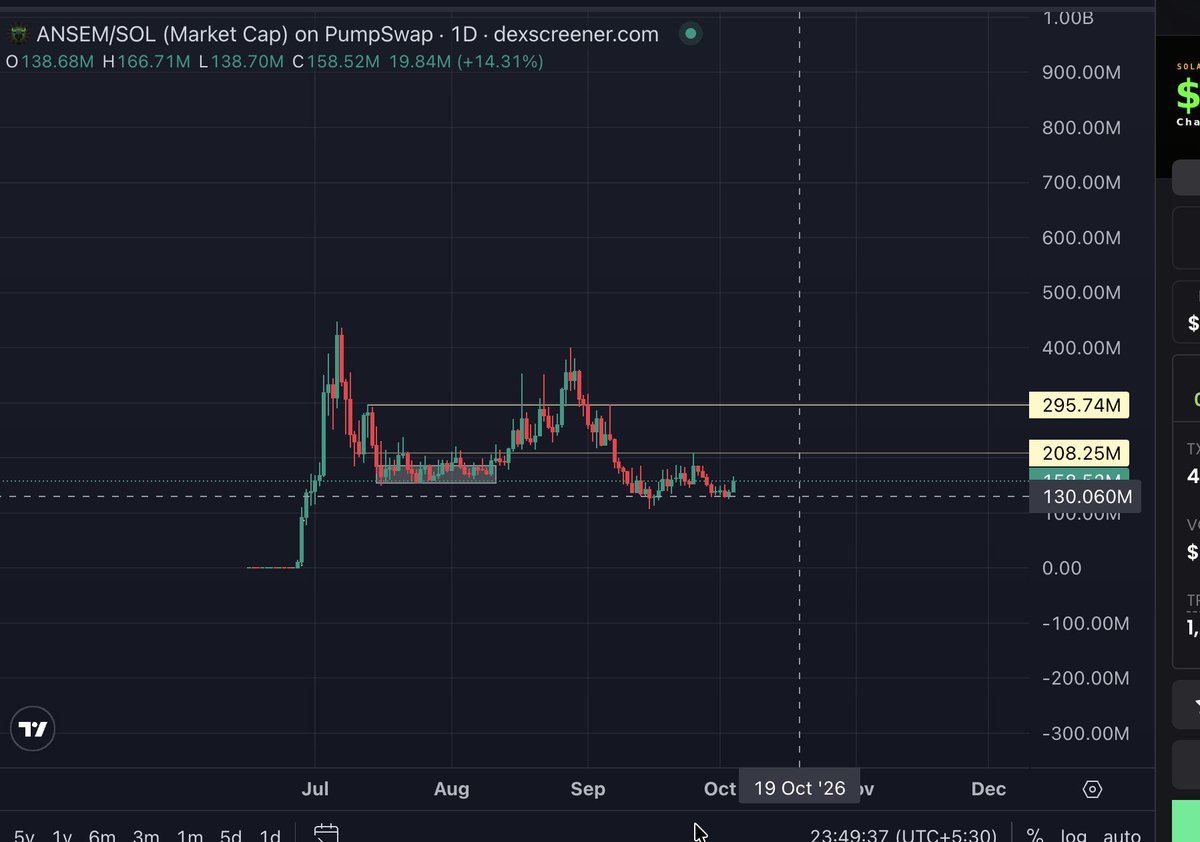
$ANSEM looks like an obvious bet here at double bottom…
- Chart looks fantastic
- $PUMP is ripping
- And other Eco coins like BATON and FONE catching a bid too
Pumpfun cabal has to step in and save this chart.. https://twitter.com/Axel_bitblaze69/status/2106815801588404321/photo/1
中文: $ANSEM 看起来明显是双底下注......
- 图表看起来很棒
- PUMP 正在撕扯
- 以及其他像BATO和FONE这样的环保币也抢购
蓬蓬的阴谋集团必须介入并保存此图表。
129950 粉丝
RT @Axel_bitblaze69: Pumpfun collected more fees in September, but kept less of them..
fees rose to $45.6m, while Pump’s share fell from $36.1m to $33m..
creator payouts explain the gap.. they jumped from $4.7m to $12.5m
so the loop i see here is pretty simple:
creators earn more → more reason to launch and promote → more traders show up → more fees → more money for creators and $Pump
中文: RT @Axel_bitblaze69:Pumpfun 在九月收取了更多费用,但保留了较少的费用。
费用上涨至4560万美元,而Pump的股价则从3610万美元下降至3300万美元。
创作者的薪酬说明了这一差距......他们从470万美元跃升至1250万美元
所以我在这里看到的循环非常简单:
创作者收入更多 → 更多推出和推广的理由 → 更多交易者会出现 → 增加费用 → 为创作者和 $Pump 支付更多费用

129950 粉丝
$LINK hasn’t given holders much to celebrate price wise so far.. but Chainlink kept building and shipping through the bear market regardless
and a lot of that progress still looks unpriced to me.. imo this coin goes soon from boring to ‘wish i bought more’
obvious bet
中文: 到目前为止,LINK并未给予持有者太多值得庆祝的价格......但无论是否在熊市中,Chainlink 仍不断在熊市中不断建设和发货
而且很多进展在我看来仍然无价之分......这枚硬币很快就从无聊变为“希望我买得更多”
明显的赌注
129950 粉丝
I find it harder to recommend crypto to my IRL friends now.. even though the apps have become much easier to use
earlier I could give them a few airdrop tasks, help them learn and potentially make something along the way..
now Pump and FOMO make getting started easy, but im still sending someone with zero experience into memes where even I struggle to find consistent winners
I don’t want introducing a friend to crypto to become introducing them to a gambling habit..
and I think this is where @Pumpfun has a much bigger opportunity
put more resources into deep liquidity, tighter spreads and better fills for majors and established midcaps, then make buying those as simple as buying a meme ( please @a1lon9 )
a new user shouldn’t need to understand bridges, gas and which DEX has liquidity just to buy the coin they came for
CEX signup and KYC already put some people off.. while the onchain alternative still asks too much of a beginner
I’d love to see Pumpfun app close that gap, maybe through liquidity partners or even a @binance collaboration if feasible ( @cz_binance )
and that would be the real W for pumpfun app.. keeping users when their interests move beyond memes, instead of losing them to another app
that’s something i’d feel much more comfortable recommending to a friend or ppl around me
129950 粉丝
Pumpfun collected more fees in September, but kept less of them..
fees rose to $45.6m, while Pump’s share fell from $36.1m to $33m..
creator payouts explain the gap.. they jumped from $4.7m to $12.5m
so the loop i see here is pretty simple:
creators earn more → more reason to launch and promote → more traders show up → more fees → more money for creators and $Pump
129950 粉丝
You may call me crazy but I can see these coins repricing to a $5B valuation in no time
$ZRO
$PUMP
$AAVE
$ENA
$LIT
中文: 你可能会说我疯了,但我可以及时看到这些硬币的估值要重新定价到50亿美元
美元
PUMP
AAVE
$ENA
$LIT
129950 粉丝
and now $STRK is in top gainers.. do you know why ?
cuz its another one with private transfers and swaps already live..
Confidential DeFi keeps giving new gainers everyday now..
If i were to pick on of them all: $ZAMA
中文: 现在,STRK 涨幅居前。你知道为什么吗?
毕竟,另一个私人转账和互换服务已经存在了。
保密的DeFi现在每天都在不断为新增益者提供。
如果我要把它们全部取好:$ZAMA
129950 粉丝
Ask me for 5 high cap coins below $5B FDV that could reprice hard:
and these would be my picks with reasoning:
- $ENA: USDe growth has a clearer path to benefiting the token now. The approved fee-switch framework starts at $7.5B USDe supply. Getting there would turn the buyback story into something real, although that threshold still needs to be reached.
- $ZRO: ATLAS could give brokers a reason to actually hold ZRO: staking improves their fee rebates. Add its planned buyback and burn mechanism, and there’s a case beyond the bridge token comparison. Zero and ATLAS still have to launch and win users.
- $PUMP i don’t need to pick the meme that survives. I need people to keep launching and trading, with 50% of defined platform revenue going into buybacks and burns under the current one-year programme. More trading products give that business more ways to earn
- $AAVE putting stocks onchain also creates demand to borrow against them. Seven tokenized equities already work as collateral on Aave. It’s early, but that’s an existing lending business getting a new category of assets to lend against.
- $LIT : partner frontends charging integrator fees now require paid trading accounts. That’s interesting because distribution can start bringing in paying activity, with protocol trading fees funding LIT buybacks.
i can see a clear case for each above $5B.. i hold them all comfy on spot..
中文: 向我索要5枚低于500美元FDV的高帽硬币,这些硬币可能会重新定价:
这些将是我用推理的选择:
- $ENA:美元增长现在有了更有利于代币的更清晰路径。批准的费用转换框架起价为75亿美元。到达那里会将回购故事变成真实的,尽管这个门槛仍需达到。
- $ZRO:ATLAS 可以为经纪商提供实际持有 ZRO 的理由:股权交易可提高手续费。加上其计划中的回购和燃烧机制,除了桥牌代币对比之外,还有一个案例。Zero 和 ATLASS 仍需推出并赢得用户。
- $PUMP 无需选择存活的表情包。我需要人们继续推出和交易,根据目前为期一年的计划,50%的固定平台收入将投入回购和消耗。更多的交易产品为该业务提供了更多盈利方式
- 将股票投入链上也会产生借贷需求。七只代币化股票已在Aave上作为抵押品。现在还为时过早,但这已是一家现有的贷款企业,正在获得一类新的资产来提供贷款。
- $LIT:合作伙伴前端收取集成商费用,现需支付交易账户。这很有趣,因为分销可以开始引入支付活动,协议交易费用将用于支付LIT回购。
我可以为每位超过50亿美元的人看到一个清晰的案例......我让他们都保持清醒。
129950 粉丝
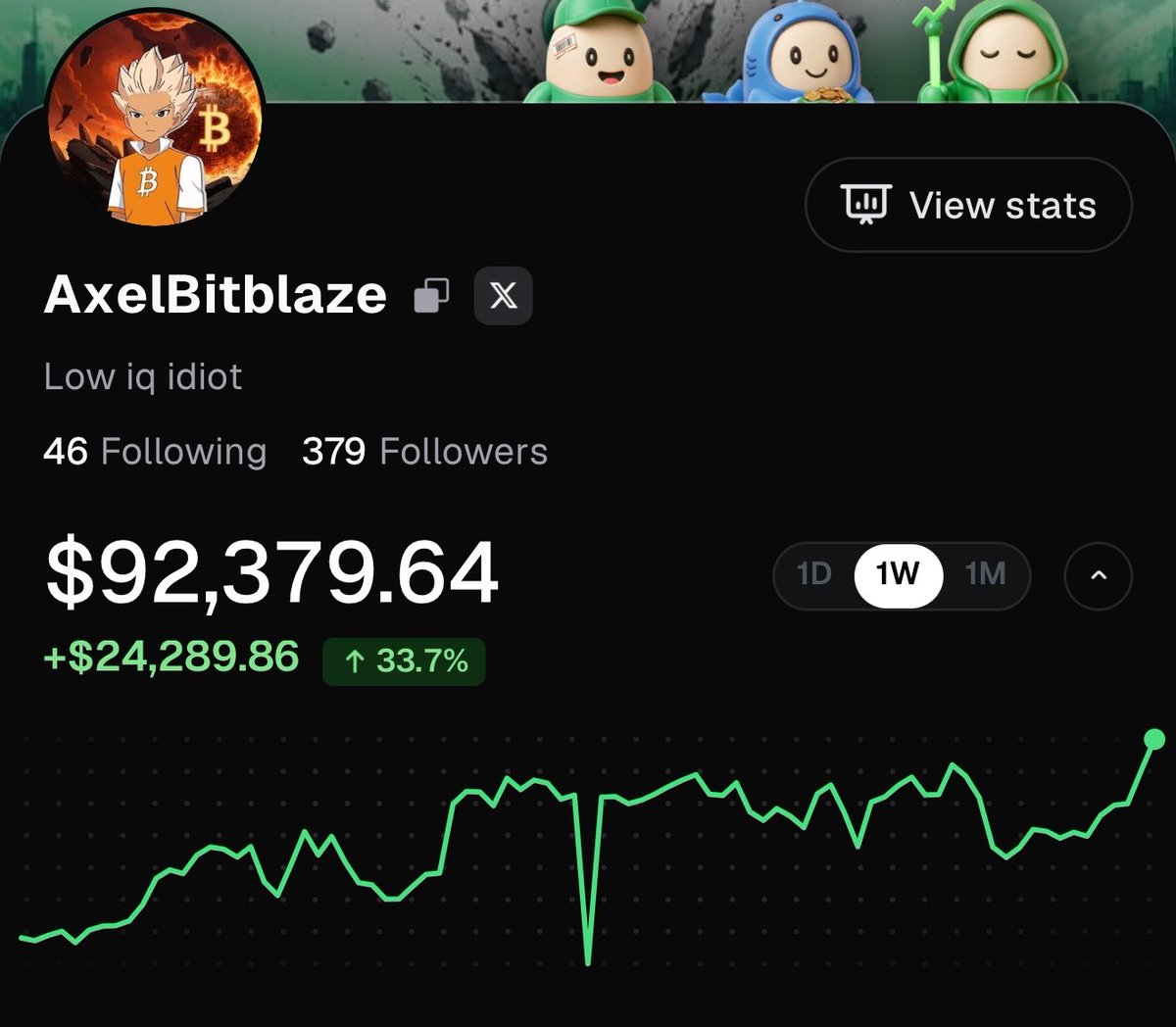
Pumpfun account lately going brrrr.. https://twitter.com/Axel_bitblaze69/status/2106465925960769912/photo/1
中文: 最近账号 brrrr。
129950 粉丝
so you’re telling me $ZRO did 91.6% of the volume across these 6 protocols in 30 days..
while Chainlink, Wormhole, Hyperlane, Socket and Axelar shared the remaining 8.4%?
and $ZRO is still roughly 75% below its all-time high?
damn. https://twitter.com/Axel_bitblaze69/status/2106463832252301418/photo/1
中文: 所以你告诉我,在30天内,6个协议中,$ZRO的体积达到了91.6%。
而 Chainlink、Wormhole、Hyperlane、Socket 和 Axelar 的涨幅则为剩余的 8.4%?
美元管理(ZRO)仍比历史高点低了约75%?
该死。

129950 粉丝
Market has been giving so many second chances.. i honestly haven’t seen beta plays work like this since 2021 bull market
missed $ZEC ?
there was $NEAR, then $NIGHT now i’m watching $ZAMA
missed $PUMP? there was $STONK on solana and $PONS on Robinhood
missed $HYPE ? there was $LIT
i mean, missing the first move hasn’t meant missing the whole trade.. there’s been time to look around, work out what else fits the narrative and find another setup.
中文: 市场已经给了太多第二次机会......老实说,自2021年牛市以来,我从未见过这样的测试版
漏掉了 $ZEC?
有 $NEAR,然后晚上,我正在看 $ZAMA
漏掉了 PUMP?有关于 sOLANA 的 $STONK 和 Robinhood 的 $PONS
漏掉了 $HYPE?有 $LIT
我的意思是,错过第一把戏并不意味着错过了整个交易......有时间四处看看,弄清楚还有什么适合叙述的,并找到另一种设置。
129950 粉丝
I think $ZAMA has a shot to pull a $ZEC type rally..
lemme share why:
look with Zcash, you’re shielding ZEC itself. fully shielded transfers can hide the sender, receiver and amount.
with Zama, you can wrap something like USDT into cUSDT 1:1, use it in supported confidential apps and DeFi, then unshield back into regular USDT
means people can actually put those confidential balances to work.
so the part that interests me is taking money people already use and giving them more ways to use it confidentially..
payments, swaps, earning through Morpho.. there’s already something to do with it.
中文: 我认为 ZAMA 有机会实现 $ZEC 类型的涨势。
莱姆分享原因:
使用Zcash,您可以自行屏蔽ZEC。完全屏蔽的传输可以隐藏发送方、接收方和金额。
使用Zama,您可以将类似 USDT 的内容打包至 cUSDT 1:1,将其用于受支持的保密应用和 DeFi 中,然后解脱为常规 USDT
这意味着人们实际上可以将这些保密余额付诸努力。
因此,我感兴趣的部分是,要拿已经用到的钱,并给他们更多的保密使用方式。
通过Morpho进行支付、互换,已经有了一些关系。
129950 粉丝
RT @Axel_bitblaze69: - $ZEC had its massive run
- $NEAR followed
- $NIGHT is now on the run
so yeah, privacy so far is clearly winning in this cycle and i'm paying attention to. just different versions of it:
- ZEC: shielded payments
- NEAR: confidential swaps and transfers + private AI
- NIGHT: privacy-focused smart contracts and apps
now i'm looking at what else could catch a bid if this keeps spreading ?
$ZAMA is the main one for me.. confidential payments, swaps and Morpho vaults are already live on Ethereum.
i hold it, and it fits pretty naturally into what people are getting interested in.
also keeping an eye on:
$RAIL: RAILGUN’s token, with shielded transfers and private DeFi on EVM chains
$ROSE: confidential apps and compute through Oasis
i mean, once a few names send, CT usually starts digging through everything attached to the narrative… some more to keep a watch on:
中文: RT @Axel_bitblaze69:- $ZEC 经历了大规模运行
- 近
- 今晚的费用正在运行
没错,到目前为止,隐私显然在这个周期中正在获胜,我正在关注其中。
- ZEC:屏蔽支付- 近:保密交换与转账 + 私人人工智能- 夜晚:以隐私为中心的智能合约和应用程序
现在我在考虑,如果这种情况持续蔓延,还有什么能吸引到报价呢?
对我来说,ZAMA 是主要的问题之一。保密的支付、互换和 Morpho 的保险库已经在以太坊上实现了。
我拿着它,它自然地契合着人们对什么感兴趣。
还关注:
$RAIL:RAILGUN 的代币,在 EVM 链上提供屏蔽转账和私有 DeFi
ROSE:通过Oasis进行保密的应用程序和计算
意思是,一旦发送了几个名字,CT通常会开始深入挖掘与叙述相关的所有内容......还有一些更多内容,以密切关注:
129950 粉丝
- $ZEC had its massive run
- $NEAR followed
- $NIGHT is now on the run
so yeah, privacy so far is clearly winning in this cycle and i'm paying attention to. just different versions of it:
- ZEC: shielded payments
- NEAR: confidential swaps and transfers + private AI
- NIGHT: privacy-focused smart contracts and apps
now i'm looking at what else could catch a bid if this keeps spreading ?
$ZAMA is the main one for me.. confidential payments, swaps and Morpho vaults are already live on Ethereum.
i hold it, and it fits pretty naturally into what people are getting interested in.
also keeping an eye on:
$RAIL: RAILGUN’s token, with shielded transfers and private DeFi on EVM chains
$ROSE: confidential apps and compute through Oasis
i mean, once a few names send, CT usually starts digging through everything attached to the narrative… some more to keep a watch on:
中文: - $ZEC 经历了巨大的运行
- 近
- 今晚的费用正在运行
没错,到目前为止,隐私显然在这个周期中正在获胜,我正在关注其中。
- ZEC:屏蔽支付- 近:保密交换与转账 + 私人人工智能- 夜晚:以隐私为中心的智能合约和应用程序
现在我在考虑,如果这种情况持续蔓延,还有什么能吸引到报价呢?
对我来说,ZAMA 是主要的问题之一。保密的支付、互换和 Morpho 的保险库已经在以太坊上实现了。
我拿着它,它自然地契合着人们对什么感兴趣。
还关注:
$RAIL:RAILGUN 的代币,在 EVM 链上提供屏蔽转账和私有 DeFi
ROSE:通过Oasis进行保密的应用程序和计算
意思是,一旦发送了几个名字,CT通常会开始深入挖掘与叙述相关的所有内容......还有一些更多内容,以密切关注:
129950 粉丝
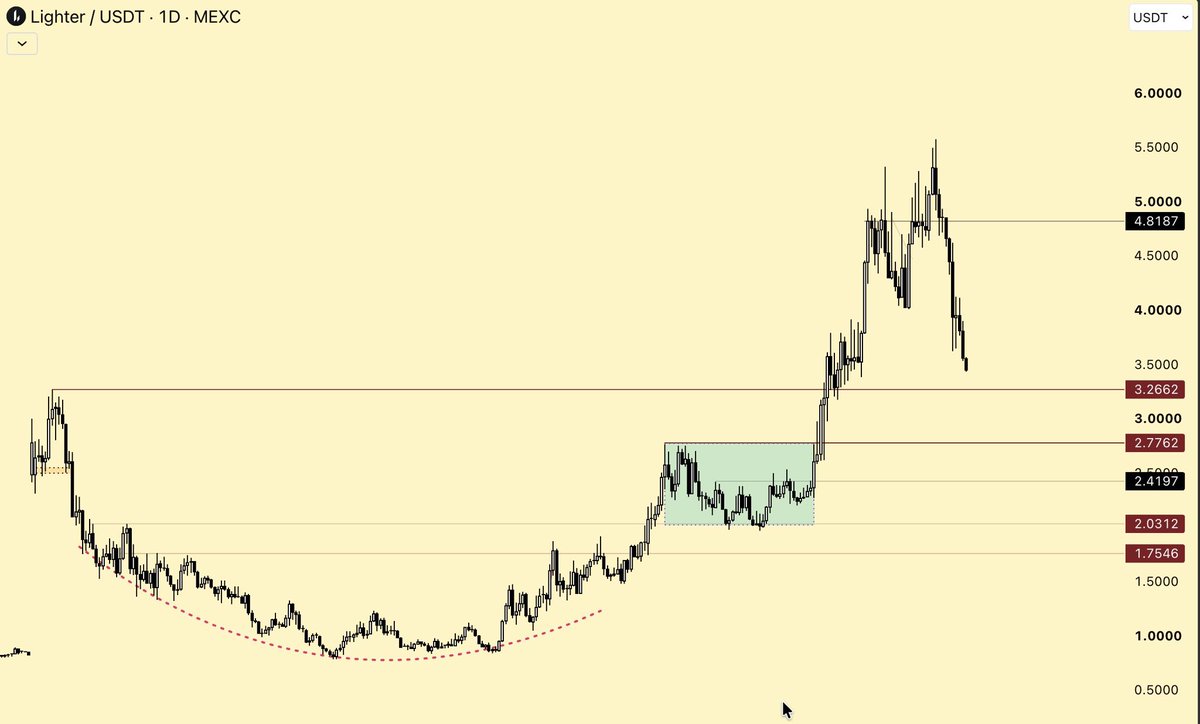
$LIT is coming to levels where i would like to add more to my portfolio..
Robinhood choosing Bitstamp for U.S. perps was a setback for the narrative, but its Wallet still uses Lighter.
so im not writing off that relationship.
From here, I want to see at least one thing happening from these 3 things that could change the picture and bring LIT as a favourite again..
- progress on the CFTC side
- @vladtenev turning his support into a bigger role for Lighter
- or insider unlocks getting pushed back.
but anyway for now, $3.26 is the first area i would like to add first bid and then at $2.78
中文: $LIT 即将进入我希望为我的投资组合增加更多的水平。
罗宾汉选择Bitstamp作为美国标的人选是这一说法的挫折,但其钱包仍使用Lighter。
所以,我不会断掉这段关系。
从这里,我希望看到这三件事至少发生一件事,这些事情可能会改变局面,让LIT再次成为热门人选。
- 商品期货交易委员会方面的进展
- @vladtenev 将他的支持转化为对 Lighter 的更大角色
或内幕解锁被推迟。
但目前,3.26美元是我想先加价的第一个区域,然后是2.78美元
129950 粉丝
Some of my best connections in crypto started by simply showing up..
TOKEN2049 is my favourite, been twice and met people I probably would’ve stayed mutuals with forever on here
and that’s where the edge builds, having people to swap trade ideas with, challenge your conviction and put things on your radar before CT starts talking about them
Looking forward to doing it again..
If you’re in Singapore or Hosting an event then DM..
129950 粉丝
$NIGHT is up roughly 80% since my last post..
probably because market is now seeing it as a ZEC beta with a catalyst of its own
look Zcash focuses on private payments, while Midnight lets devs build privacy into applications,
so things like lending and identity checks can work without exposing sensitive user data
That broader use case is behind @IOHK_Charles claim that Midnight could become bigger than Zcash, and developers can now deploy contracts freely on Midnight mainnet
my thinking is pretty simple, if $ZEC keeps bringing attention to privacy, NIGHT could catch the rotation from people looking for the next play in that category
Private apps give it a reason to stay relevant beyond that rotation, provided people actually use them
中文: 今晚的价格自我上一篇帖子以来,上涨了约80%。
可能是因为市场现在将其视为具有自身催化剂的ZEC测试版
Zcash 专注于私人支付,而 Midnight 让开发者能够将隐私构建到应用程序中。
因此,像借贷和身份核查这样的功能可以有效,而不会暴露敏感的用户数据
这一更广泛的应用案例背后是@IOHK_Charles声称Midnight可能比Zcash更大的问题,开发者现在可以在Midnight mainnet上自由部署合同
我的想法很简单,如果 $ZEC 继续引起人们对隐私的关注,那么在该类别中寻找下一场比赛的人,今晚的轮换阵容便会大放
私人应用程序为其在轮换后保持相关性提供了理由,前提是人们实际使用它们
129950 粉丝
$AAVE holding this well while many alts get hit is the kind of strength I pay attention to
and there’s a decent case building behind it
- V4 crossed $1B in deposits with $310M in active loans reported for September
- You can now borrow USDC against Coinbase tokenized stocks on Base, giving Aave another source of borrowing demand
- Foundation proposal starts the process of bringing the brand and IP into a community protected entity, although the actual transfers still need further votes
- What interests me is Aave expanding what people can borrow against while pushing to bring the brand and IP closer to tokenholder oversight
Once the market settles i think AAVE will lead DeFi sector..
中文: 保持这种良好势头,而许多优势被击中,是我关注的那种力量
背后有一栋像样的案件
- V4 的存款额超过 10 亿美元,9月份发放的活跃贷款为 3.1 亿美元
- 现在您可以基于基础地借入 USDC 股票与 Coinbase 代币化股票,为 Aave 提供了另一个借贷需求来源
- 基金会提案启动将品牌和知识产权引入受社区保护实体的流程,但实际转移仍需进一步投票
- 我感兴趣的是,Aave 在推动品牌和知识产权更贴近代币持有者监管的同时,扩大人们可以借入的资金
一旦市场稳定下来,我认为AAVE将引领DeFi行业。

129950 粉丝
October dates to watch if you’re a leverage trader, could cause volatility:
- Oct 4: OPEC+ meeting, oil supply decisions that could shift inflation expectations
- Oct 5: US ISM Services, a check on growth, employment and price pressures
- Oct 7: Fed minutes, more detail on how policymakers see the next rate move
- Oct 14: US CPI, the main consumer inflation release ahead of the Fed meeting
- Oct 15: US PPI + retail sales, producer inflation and whether consumer spending is holding up
- Oct 28: Fed decision + press conference, watching both the rate call and guidance on what comes next
- Oct 29: US GDP + PCE inflation, growth and the Fed’s preferred inflation gauge landing together the day after FOMC
- Oct 30: Bank of Japan decision, yen volatility could spill into carry trades, US stocks and crypto
- Oct 30: US Employment Cost Index, wage pressure that could shift expectations for the Fed’s next move
中文: 10月的日期值得关注,如果你是杠杆交易者,可能会引发波动:
- 10月4日:欧佩克+会议,可能改变通胀预期的石油供应决策
- 10月5日:美国ISM服务业,对经济增长、就业和价格压力的检查
- 10月7日:美联储会议纪要,更详细地介绍政策制定者如何看待下一次利率走势
- 10月14日:美国消费者物价指数(CPI),在美联储会议前发布主要消费者通胀
- 10月15日:美国PPI+零售额、生产者通胀以及消费者支出是否有所增长
- 10月28日:美联储决定+新闻发布会,关注利率调大及下一步指引
- 10月29日:美国GDP+PCE通胀、增长以及美联储偏好的通胀指标在FOMC的第二天实现
- 10月30日:日本央行决定,日元波动可能波及到股东交易、美国股票和加密货币
- 10月30日:美国就业成本指数,薪资压力可能改变美联储下一步行动的预期
129950 粉丝
Probably a good time to drop my October watchlist. so here it is:
I’m watching both the catalysts coming up and how these names handle fresh supply
- $AERO: Aero’s merger and expansion across seven chains is scheduled for Oct 21, one of the clearer DeFi catalysts this month
- $SUI: Basecamp on Oct 7–8, with product reveals around AI agents and payments, which can make SUI more than just a L1
- $MON: Privacy infrastructure reveal on Oct 6, keeping this on the list to see what they actually unveil
- $ZEC: NU7 testnet on Oct 6 and the mainnet activation decision on Oct 20, giving the privacy trade more dates to work with
- $HYPE: Contributor unlock scheduled for Oct 6
- $ENA: Final investor unlock scheduled for Oct 5, interesting to see how price handles that overhang clearing, although team vesting continues
- $ZRO: Oct 20 unlock, with ATLAS still targeted for later this year, so there’s both supply and launch expectations to watch
- $UNI and $BCH: CME futures planned for Oct 19 pending regulatory review, a date worth tracking for positioning into the launch
- $ETH: Glamsterdam’s Sepolia test targeted for Oct 6, keeping the L1 scaling roadmap in play ahead of the planned Q4 mainnet upgrade
- $CC: DTCC’s tokenization rollout targets October with Canton among the networks, watching how much institutional activity follows
- $FIL: Protocol Labs and Foundation vesting ends Oct 15, cutting new supply entering circulation by roughly 75%, enough to keep it on my radar
- $ARB: Monthly unlock scheduled for Oct 16, interested in whether buyers absorb the supply and price holds up afterwards
Also carrying these into October, with ongoing developments rather than a fixed launch date this month
- $NEAR: First full month of Bitwise ETF flows after the September launch, alongside Intents adoption, watching whether demand keeps following through
- $AAVE: V4 passed $1B in deposits and expanded to Base and Arc, so it stays on my list for a DeFi rotation
- $INJ: CypherOS is targeting Q4, another privacy development to watch, with an exact launch date still pending
- $PENDLE: Teasing PT/YT markets for assets without yield, curious about the mechanics and which assets it could open up next
129950 粉丝
RT @hrithikk: another one bites the dust
I still remember the crazy fomo when everyone defi and degen group was filled with blast bridge referrals
my g @Axel_bitblaze69 made 6 gig on this one alone, bro was literally fire, miss those crazy days
also did @blast front run abstract shut down announcement 😭🥲
中文: RT @hrithikk:另一个咬人
我仍然记得当所有defi和degen群组都充斥着爆炸桥转介时的疯狂表情
我的 @Axel_bitblaze69 独自在这一场演出中取得了6场,兄弟简直火热,怀念那些疯狂的日子
@blast 前排 抽象版 已关闭公告 😭🥲

129950 粉丝
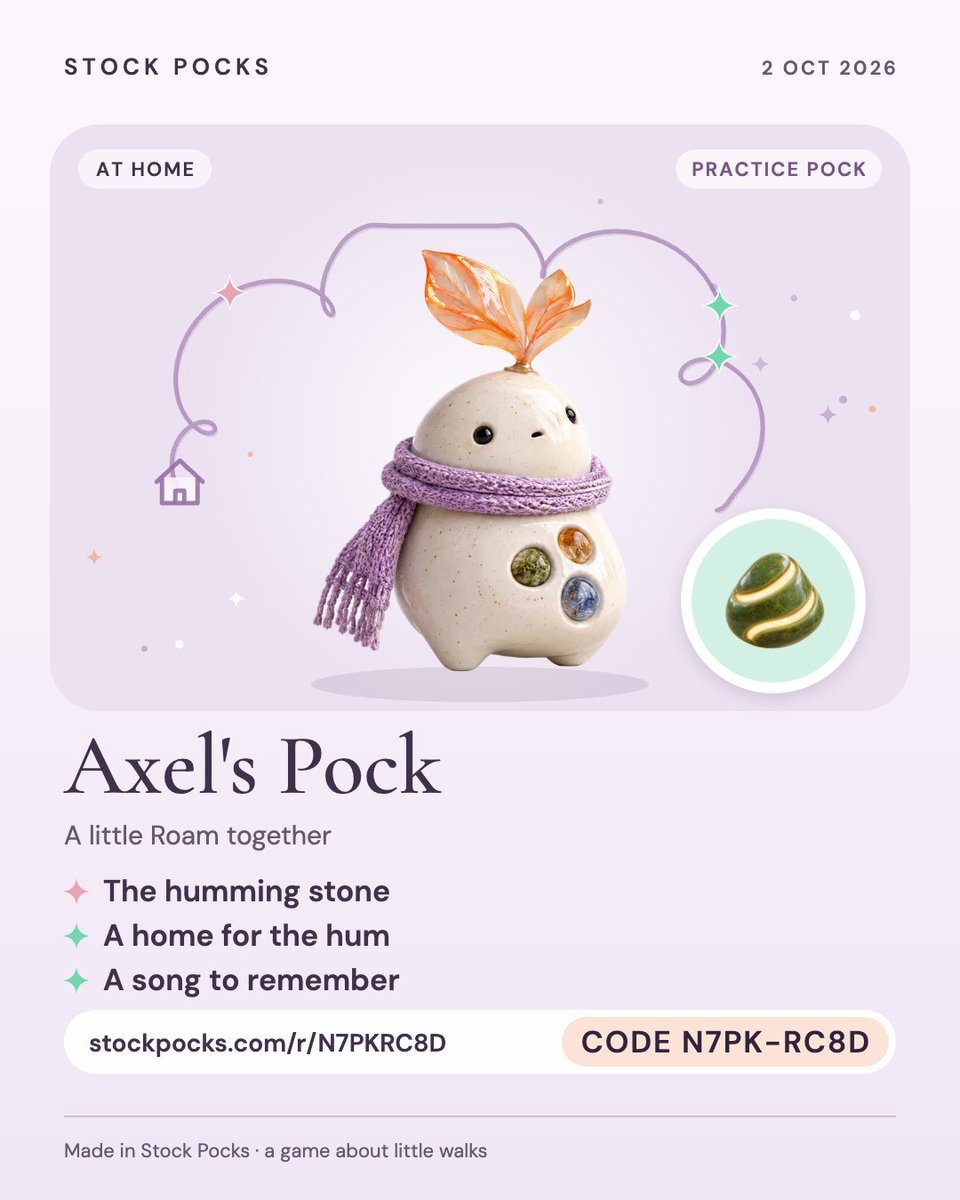
. @stockpocks is free to play right now.. sharing it while you can try the game before access changes..
It’s a virtual pet game in your browser. You get a little Pock to name, feed and take on adventures called Roams.
Each Roam is a short story with choices, ending with keepsakes and memories for your Pock’s shelf.
So you’re building a little collection as you play.
Walk outside or play from the couch, share your Roam card and hang out in the Plaza.
You can even place your Pock in your room through AR.
I like that missing a day doesn’t punish you. Something you can enjoy without another streak to babysit.
No download or wallet needed.
Play free: https://stockpocks.com/r/N7PKRC8D
18+
129950 粉丝
RT @SpamFriedRice01: Disappear from Lazarus. Enter the Alcove. https://twitter.com/SpamFriedRice01/status/2106035979211383004/video/1
中文: RT @SpamFriedRice01:从拉撒路消失。进入阿尔科夫。
🎬
视频
129950 粉丝
RT @Axel_bitblaze69: I think we could see more rotations here, because $ETH going up usually means risk on mode for Alts
and people who missed the recent runs will be looking for the next trade / beta plays
so i think we could see $HYPE, $NEAR and $LIT chilling for a bit, so I’m watching coins with fresh catalysts that fit the narratives already catching a bid like
- $AAVE for a DeFi rotation, with V4 crossing $1B in deposits and $310M in active loans, so there’s actual borrowing behind the story
- $ZRO with Zero and ATLAS coming, bringing planned staking incentives and trading-fee buybacks beyond the bridge-token label
- $INJ if the privacy and confidential DEFI bid broadens, with its upcoming CypherOS platform adding confidential transactions to the thesis
- $ZAMA for the same narrative, but with encrypted balances and transfers already available to apps on Ethereum
- And $CRV if stablecoins and DeFi catch more attention, since swaps and crvUSD borrowing already generate protocol fees
More coins to keep watch on $KITE $CHIP for Ai agents and computing
中文: RT @Axel_bitblaze69:我认为这里可以看到更多的旋转,因为价格上升通常意味着阿尔茨模式存在风险
错过近期比赛的人将寻找下一届的测试/测试版
所以我觉得我们能看到一些价格较好、NEAR和$LIT令人不寒而栗,所以我正在观察那些带有新催化剂的硬币,这些催化剂已经像在获取报价一样
- 用于DeFi轮换的AAVE,V4的存款额超过10亿美元,且有3.1亿美元的贷款,因此故事背后确实存在借款
- 推出零型和ATLAS,推出计划中的股权激励和交易手续费回购
- 如果隐私和保密的DEFI竞标范围扩大,将扩大其即将推出的CypherOS平台,为该论文增加保密交易
- 用于相同叙述的 $ZAMA,但已通过加密余额和转账提供给以太坊上的应用程序
- 如果稳定币和DeFi受到更多关注,则将产生$CRV,因为互换和crvUSD借贷已经产生协议费用
更多用于Ai代理和计算的$KITE $CHIP代币
129950 粉丝
I think we could see more rotations here, because $ETH going up usually means risk on mode for Alts
and people who missed the recent runs will be looking for the next trade / beta plays
so i think we could see $HYPE, $NEAR and $LIT chilling for a bit, so I’m watching coins with fresh catalysts that fit the narratives already catching a bid like
- $AAVE for a DeFi rotation, with V4 crossing $1B in deposits and $310M in active loans, so there’s actual borrowing behind the story
- $ZRO with Zero and ATLAS coming, bringing planned staking incentives and trading-fee buybacks beyond the bridge-token label
- $INJ if the privacy and confidential DEFI bid broadens, with its upcoming CypherOS platform adding confidential transactions to the thesis
- $ZAMA for the same narrative, but with encrypted balances and transfers already available to apps on Ethereum
- And $CRV if stablecoins and DeFi catch more attention, since swaps and crvUSD borrowing already generate protocol fees
More coins to keep watch on $KITE $CHIP for Ai agents and computing
129950 粉丝
few reasons why I think the next rotation from $NEAR could be into $ZRO
Intents gave NEAR a reason to be seen as more than another L1,
and I think ATLAS could do something similar for ZRO beyond the bridge token
- With ATLAS, other teams can run their trading apps on Zero, so LayerZero doesn’t have to convince everyone to use one exchange
- ZRO would power gas and staking, while venues could stake it for better fee rebates, giving them a reason to hold it
- And 75% of Open ATLAS fees left after venue rebates would buy and burn ZRO, so there’s a direct link between trading activity and the token
- @PrimordialAA says 20+ frontends are already testing it, which is what I’ll be watching as launch gets closer
they still need to turn that testing into real volume, but yeah, this is why I’m interested before that becomes obvious
129950 粉丝
Intents got people interested in $NEAR again and we saw the price action that followed.. now $NIGHT is catching a privacy bid too
so clearly there is interest for Conidential transfer and transactions..
And so $INJ has my attention here
As with Injective now previewing confidential transfers, trading and tokenization through CypherOS, I can see it getting pulled into that privacy narrative next
And at around $730M cap with its vesting unlocks behind it, I think it’s worth keeping on the list here..
中文: 意向再次引起了人们对$NEAR的兴趣,我们看到了随后的价格走势......现在,今晚也开始竞购隐私
显然,对Conidential的转账和交易有兴趣。
因此 $INJ 让我在这里关注
与Injevive现在通过CypherOS预览机密转账、交易和代币化一样,接下来我就能将其融入到这种隐私叙事中
以约7.3亿美元的上限,其背后的留号解锁,我认为值得继续留在这里。
129950 粉丝
Added more $ZRO to my portfolio.. think this is seriously mispriced..
and please without even looking into what Layerzero is becoming.. don’t make the mistake of thinking ZRO is just another bridge token.
A lot of you haven’t caught up with what they’re building and I don’t think the price has either
中文: 在我的投资组合中增加了更多ZRO......认为这被严重低估了。
请在不考虑Layerzero正在变成什么的情况下......不要误以为ZRO只是另一种桥牌代币。
你们中的许多人还没有真正追上他们正在建设的东西,而且我认为价格也没有
129950 粉丝
RT @Axel_bitblaze69: This is how i’m playing this crypto bull market using Ai:
- research
- wallet tracking
- trade setups
- and figuring out where i’m fumbling.
here’s how i’m putting it together:
1) Grok: find what actually happened before CT invents five reasons for the pump.
2) Perplexity Computer: dig into projects, compare competitors and check what’s actually live.
3) ChatGPT / Claude: challenge my thesis and point out where i’m just coping with my bags.
4) DefiLlama + AI: check whether growing activity translates into revenue for the token.
5) Nansen: check who’s buying, whether they’ve made money consistently and if they’re already selling.
6) CoinGlass + AI: compare funding, open interest and spot buying before joining a crowded trade.
7) TradingView: turn my setups into clear rules, test them with costs and set alerts.
8) CoinGecko + Claude Code: build comparisons to see which beta plays actually outperform the leader.
9) Dune + AI: token flows, active and new wallets, transactions, liquidity, DEX volume, and buy/sell ratios to identify emerging activity early.
10) Grok Bot / ChatGPT dots: run scheduled watchlist checks and flag anything that changes my thesis.
11) ChatGPT + my trade history: check whether the problem is my picks, my entries or selling the winners too early.
中文: RT @Axel_bitblaze69:我使用Ai来玩这个加密货币牛市的方式:
- 研究
- 钱包追踪
- 交易设置
弄清楚我在哪里摸索。
我把它放在一起的方式是:
1) 格罗克:在CT发明泵的五个原因之前,就发现实际发生了什么。
2) 复杂性计算机:深入探讨项目,比较竞争对手,并检查实际生活内容。
3) ChatGPT / 克劳德:挑战我的论点,指出我在如何处理我的包。
4) Defillama + 人工智能:检查不断增长的活动是否转化为代币的收入。
5)南森:检查谁在购买,是否一直赚钱,以及是否已经在销售。
6) CoinGlass + 人工智能:在加入激烈交易前,比较资金、开放意向和现货购买。
7) 交易视图:将我的设置转化为明确的规则,通过成本进行测试并设置警报。
8) CoinGecko + Claude 代码:建立对比,以查看哪些测试版的测试版表现实际上优于领先者。
9) 沙丘+人工智能:代币流动、主动和新钱包、交易、流动性、DEX交易量以及买入/卖出比率,以及早识别新兴活动。
10) Grok Bot / ChatGPT 点:运行预定的监视列表检查,并标记任何改变我论点的内容。
11) ChatGPT + 我的交易记录:检查问题是否由我挑选、我的参赛作品或过早出售获奖者。
129950 粉丝
This is how i’m playing this crypto bull market using Ai:
- research
- wallet tracking
- trade setups
- and figuring out where i’m fumbling.
here’s how i’m putting it together:
1) Grok: find what actually happened before CT invents five reasons for the pump.
2) Perplexity Computer: dig into projects, compare competitors and check what’s actually live.
3) ChatGPT / Claude: challenge my thesis and point out where i’m just coping with my bags.
4) DefiLlama + AI: check whether growing activity translates into revenue for the token.
5) Nansen: check who’s buying, whether they’ve made money consistently and if they’re already selling.
6) CoinGlass + AI: compare funding, open interest and spot buying before joining a crowded trade.
7) TradingView: turn my setups into clear rules, test them with costs and set alerts.
8) CoinGecko + Claude Code: build comparisons to see which beta plays actually outperform the leader.
9) Dune + AI: token flows, active and new wallets, transactions, liquidity, DEX volume, and buy/sell ratios to identify emerging activity early.
10) Grok Bot / ChatGPT dots: run scheduled watchlist checks and flag anything that changes my thesis.
11) ChatGPT + my trade history: check whether the problem is my picks, my entries or selling the winners too early.
中文: 这就是我使用Ai来玩这个加密货币牛市的方式:
- 研究
- 钱包追踪
- 交易设置
弄清楚我在哪里摸索。
我把它放在一起的方式是:
1) 格罗克:在CT发明泵的五个原因之前,就发现实际发生了什么。
2) 复杂性计算机:深入探讨项目,比较竞争对手,并检查实际生活内容。
3) ChatGPT / 克劳德:挑战我的论点,指出我在如何处理我的包。
4) Defillama + 人工智能:检查不断增长的活动是否转化为代币的收入。
5)南森:检查谁在购买,是否一直赚钱,以及是否已经在销售。
6) CoinGlass + 人工智能:在加入激烈交易前,比较资金、开放意向和现货购买。
7) 交易视图:将我的设置转化为明确的规则,通过成本进行测试并设置警报。
8) CoinGecko + Claude 代码:建立对比,以查看哪些测试版的测试版表现实际上优于领先者。
9) 沙丘+人工智能:代币流动、主动和新钱包、交易、流动性、DEX交易量以及买入/卖出比率,以及早识别新兴活动。
10) Grok Bot / ChatGPT 点:运行预定的监视列表检查,并标记任何改变我论点的内容。
11) ChatGPT + 我的交易记录:检查问题是否由我挑选、我的参赛作品或过早出售获奖者。
129950 粉丝
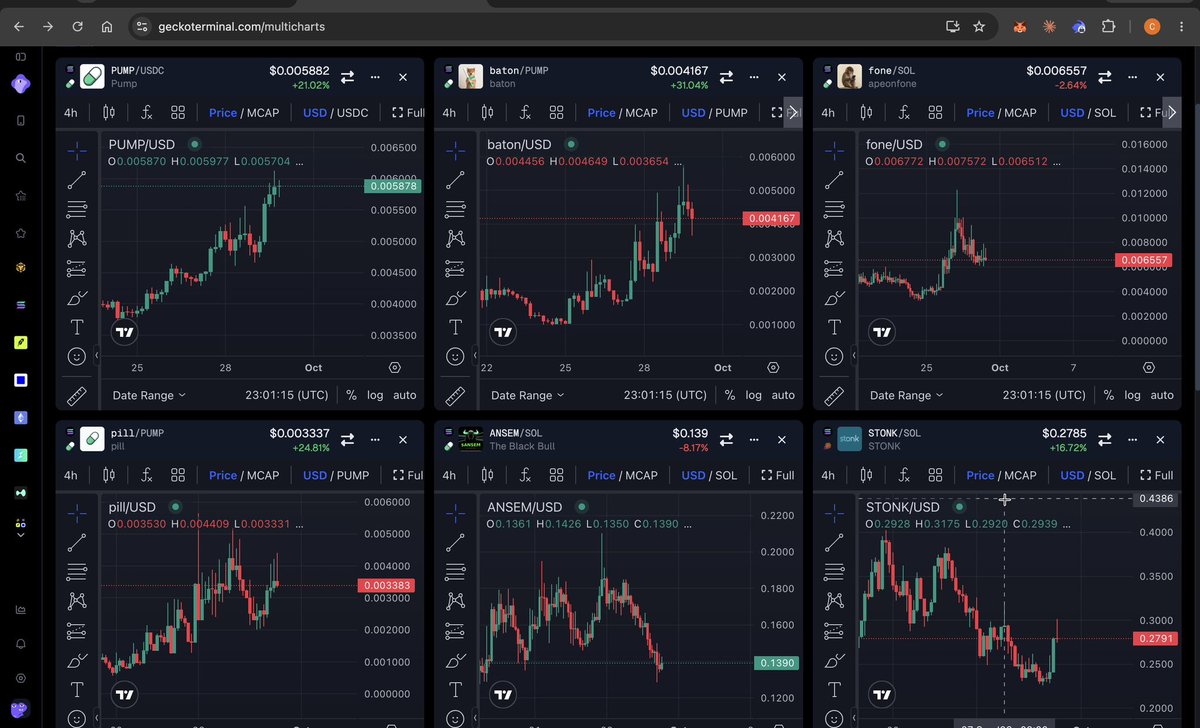
One way to spot memes worth buying during a pullback is to compare how coins from the same narrative handle the selloff..
i usually start with what's already moving, then look for possible beta plays around it.
so with $PUMP moving, names on my watchlist include $BATON, $PILL, $FONE and $ANSEM.
i'm checking whether that attention is spreading to them too.
i'd put 3–4 side by side on GT multicharts, same timeframe, and check:
- which holds its low while the others lose theirs.
- which gets back above its pre-dump level first.
- whether that recovery has volume behind it.
that helps me narrow down which one i'd actually trade… then i'd look for an entry where losing a nearby level would invalidate the idea.
don't make the mistake of thinking the coin that dumped the most has the most upside.. being down badly isn't enough. i want to see buyers showing up..
https://geckoterminal.com/multicharts
中文: 发现在回调期间值得购买的表情包的一种方法是比较同一叙事中的硬币如何处理抛售方式。
我通常从已经开始的事情开始,然后寻找可能的测试版。
因此,在 PUMP 的移动中,我的监视列表中的名称包括 $BATONS、$PILL、$FONE 和 $ANSEM。
我正在检查这种关注是否也在向他们传播。
将 3–4 并排置于 GT 多图表上,时间相同,然后检查:
保持低谷,而其他人则失去他们。
先恢复到跳前水平以上。
- 这种复苏是否具有体积。
这有助于我缩小实际交易的范围......然后我会寻找一个在附近水平下降会使这个想法无效的条目。
不要误以为投出最多的硬币最具优势......糟糕的表现还不够。我希望看到买家出现。
129950 粉丝
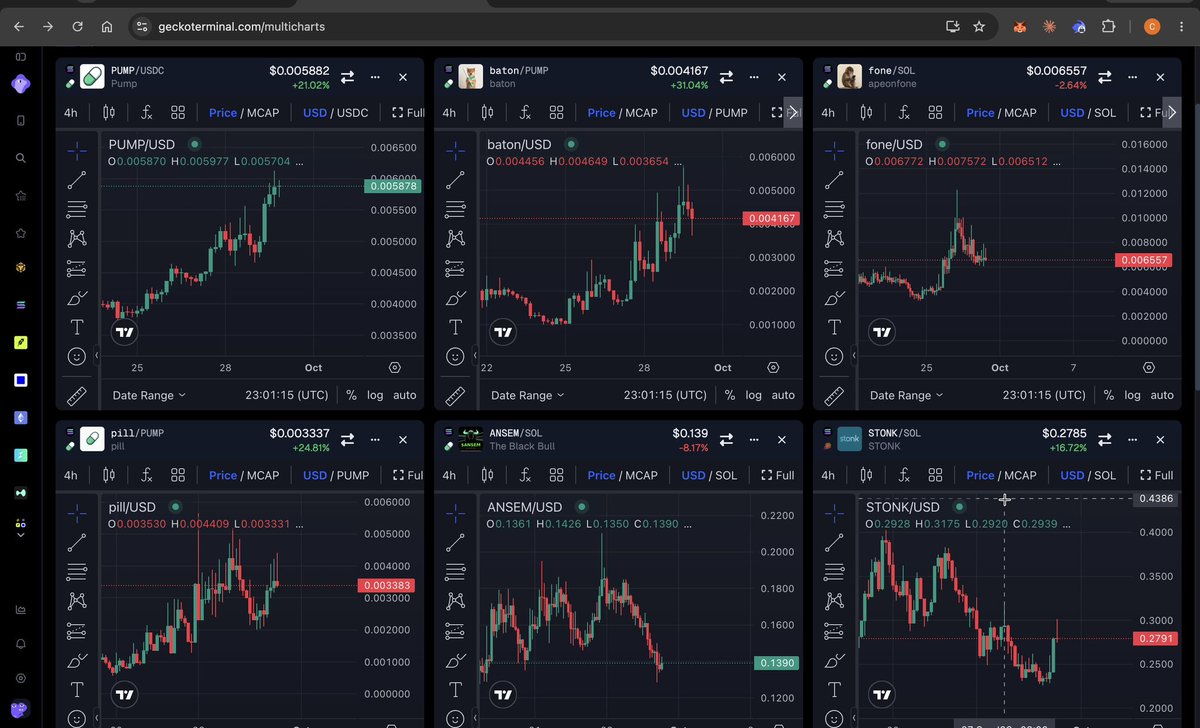
one way to spot memes worth buying during a pullback is to compare how coins from the same narrative handle the selloff..
i usually start with what's already moving, then look for possible beta plays around it.
so with $PUMP moving, names on my watchlist include $BATON, $PILL, $FONE and $ANSEM. i'm checking whether that attention is spreading to them too.
i'd put 3–4 side by side on Gecko terminal multicharts, same timeframe, and check:
- which holds its low while the others lose theirs.
- which gets back above its pre-dump level first.
- whether that recovery has volume behind it.
that helps me narrow down which one i'd actually trade. then i'd look for an entry where losing a nearby level would invalidate the idea.
don't make the mistake of thinking the coin that dumped the most has the most upside.. being down badly isn't enough. i want to see buyers showing up..
link to multiple charts: https://geckoterminal.com/multicharts
129950 粉丝
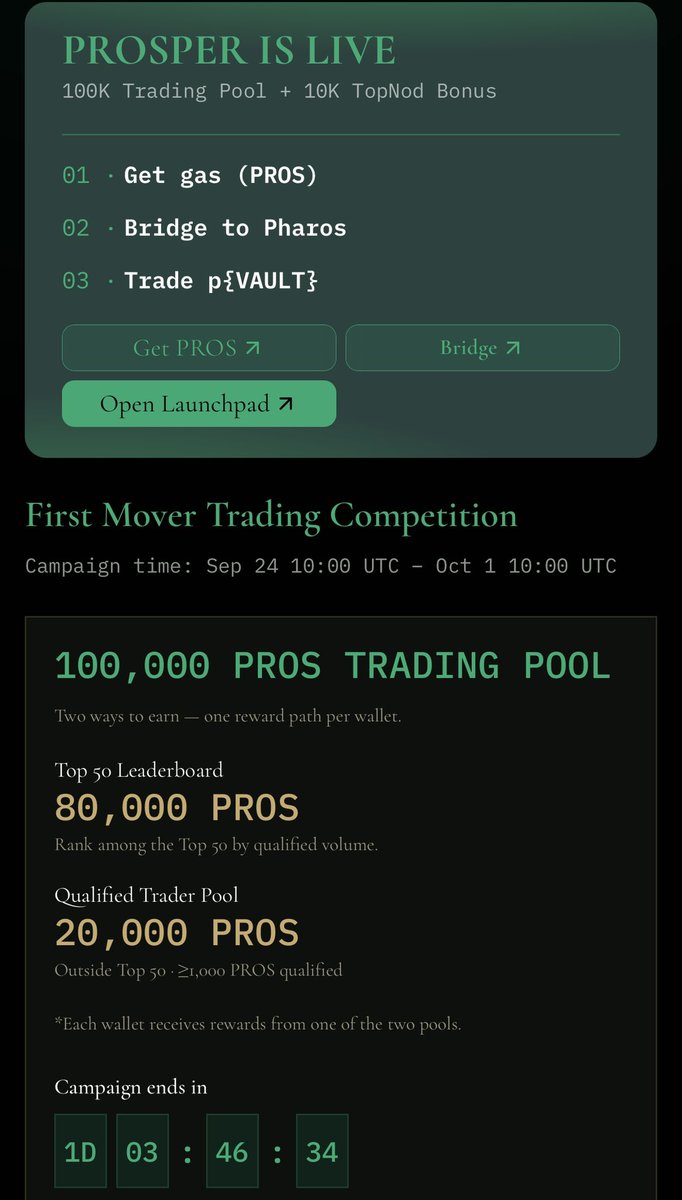
I might give Prosper’s trading competition a go.. there’s a reward pool for smaller traders too, so you don’t have to fight whales for a Top 50 spot.
TACO caught my attention with $607K in daily volume versus $64K for pAIL.
i’d compare their strategies and liquidity before deciding what to trade.
@ProsperTicker has 100K PROS in rewards until Oct 1. Top 50 share 80K;
eligible wallets outside the Top 50 with 1,000+ PROS in qualified volume share 20K proportionally.
worth checking the rules before buying.
eligible bonding-curve net buys count 5×, approved external trades count 1×. rewards depend on final eligibility and ranking.
https://app.pros-per.xyz/campaign
129950 粉丝
RT @Axel_bitblaze69: My watchlist of coins that would benefit the most if tokenized stocks really bring next rotation into DeFi:
- $AAVE: already lets eligible non-US users borrow against Coinbase tokenized stocks. a new set of assets to build its lending business around.
- $MORPHO: tokenized S&P 500 and Nasdaq ETFs already work as collateral. people can borrow USDC while keeping their stock exposure.
- $PENDLE: already has NVIDIA and Pfizer dividend markets. 80% of its V2 protocol yield and swap fees goes toward PENDLE buybacks.
- $AERO: Coinbase’s tokenized stocks already trade in its pools. trading fees go to people who lock AERO and vote for those pools.
- $UNI: tokenized securities are available through its apps, and protocol fees from enabled pools burn UNI. more trading has a route back to the token.
- $ETHFI: puts tokenized stocks, borrowing and card spending in one app. probably one of the easier ways for this stuff to reach normal users.
- $BIFI: the less obvious one. Beefy already manages liquidity for Coinbase stock pools, and BIFI stakers share in protocol revenue.
- $LINK: provides the pricing data that makes Coinbase stock tokens usable as collateral. service revenue also feeds LINK purchases for its Reserve.
- $ENA: adding hedged stock positions as another USDe yield source. i'd watch whether that helps USDe reach the $7.5B supply threshold for buybacks.
and if that brings more stablecoin activity with it:
- $CRV: stablecoin swaps and crvUSD lending. more usage could grow the fees distributed to veCRV lockers.
- $SKY: USDS is its dollar business, with protocol revenue already funding SKY buybacks. i'd watch supply growth alongside profitability.
- $SPK: routes stablecoin liquidity into lending markets. Spark has already reported spending over $3M in USDS on SPK buybacks.
Any other alts i missed ?
中文: RT @Axel_bitblaze69:我的代币清单,如果代币化股票真正为DeFi带来下一次轮换,将受益最大:
- $AAVE:已允许符合条件的非美国用户向Coinbase代币化股票借款。这是一套新的资产,用于围绕其贷款业务发展。
- 美元:标普500指数和纳斯达克ETF已作为抵押品。人们可以在保持股票风险敞口的同时借入美元。
- PENDLE:已拥有英伟达和辉瑞的股息市场。其80%的V2协议收益率和互换费用将用于PENDLE回购。
- $AERO:Coinbase的代币化股票已在其池中交易。交易费用将流向锁定AERO并投票支持这些池的人。
- $UI:代币化证券可通过其应用程序获取,且已启用的池中的协议费用将消耗在UI上。更多交易则具有返回令牌的途径。
- $ETHFI:将代币化股票、借贷和卡支出放在一个应用程序中。这可能是让这些产品更容易触达普通用户的方法之一。
- $BIFI:不太明显。Beefy 已经为 Coinbase 股票池管理流动性,而 BIFI 的 stiters 将分享协议收入。
- $LINK:提供使Coinbase股票代币用作抵押品的定价数据。服务收入还为其储备提供链接购买服务。
- $ENA:将对冲股票仓位作为另一个美元收益率来源。我想知道这是否有助于美元达到75亿美元的买入价供应门槛。
如果这带来了更多的稳定币活动:
- $CRV:稳定币互换和 crvUSD 贷款。更多使用成本可能会增加分配给 veCRV 储物柜的费用。
- 美元:美元是其美元业务,其协议收入已为SKY回购提供资金。我关注供应量增长以及盈利能力。
- $SPK:将稳定币流动性输送至借贷市场。Spark 已报告在 SPK 回购上投入了超过 300 万美元。
还有其他我错过的呢?
129950 粉丝
This $LIT dump is clearly an overreaction to the Robinhood news..
- Robinhood is bringing perps to eligible US users in its main app, reportedly through Bitstamp.
- but Bitstamp already handles its EU perps. that’s been running alongside Lighter’s separate Wallet integration in supported non-US markets, so the two already coexist.
- and Robinhood’s current Wallet docs still name Lighter as the exchange handling those trades. we don’t have confirmation that this deal is being removed.
- as for US access, @vnovakovski has discussed pursuing CFTC approval. if it gets DCM approval, that’s a step forward.
then let’s see whether Robinhood expands the deal.
so yeah, if you bought expecting immediate US expansion, i get the disappointment.
but that alone doesn’t mean Lighter’s existing Wallet business is gone.
or Am i missing something here ?
中文: 这个$LIT转储显然是对罗宾汉新闻的过度反应。
- 据报道,Robinhood 正在通过其主应用程序(Bitstamp)为符合条件的美国用户带来优惠。
但Bitstamp已经处理其欧盟的运营。这已与莱特在支持的非美国市场中独立整合的钱包并驾齐驱,因此两者已经共存。
- Robinhood 目前的钱包文档仍然将 Lighter 命名为处理这些交易的交易所。我们尚未确认此交易正在被移除。
- 关于美国的准入,@vnovakovski 曾讨论过申请美国商品期货交易委员会(CFTC)的批准。如果获得DCM批准,这将是向前迈出的一步。
那么让我们看看罗宾汉是否扩大了这笔交易。
没错,如果你买的,期待美国立即扩张,我就会感到失望。
但仅此而已,并不意味着莱特现有的钱包业务就消失了。
还是我在这里漏了点什么?
129950 粉丝
@WatcherGuru market is just overreacting to this.. good dip on LIT
中文: @WatcherGuru 市场对此反应过度......对 LIT 的下滑表现良好
129950 粉丝
My watchlist of coins that would benefit the most if tokenized stocks really bring next rotation into DeFi:
- $AAVE: already lets eligible non-US users borrow against Coinbase tokenized stocks. a new set of assets to build its lending business around.
- $MORPHO: tokenized S&P 500 and Nasdaq ETFs already work as collateral. people can borrow USDC while keeping their stock exposure.
- $PENDLE: already has NVIDIA and Pfizer dividend markets. 80% of its V2 protocol yield and swap fees goes toward PENDLE buybacks.
- $AERO: Coinbase’s tokenized stocks already trade in its pools. trading fees go to people who lock AERO and vote for those pools.
- $UNI: tokenized securities are available through its apps, and protocol fees from enabled pools burn UNI. more trading has a route back to the token.
- $ETHFI: puts tokenized stocks, borrowing and card spending in one app. probably one of the easier ways for this stuff to reach normal users.
- $BIFI: the less obvious one. Beefy already manages liquidity for Coinbase stock pools, and BIFI stakers share in protocol revenue.
- $LINK: provides the pricing data that makes Coinbase stock tokens usable as collateral. service revenue also feeds LINK purchases for its Reserve.
- $ENA: adding hedged stock positions as another USDe yield source. i'd watch whether that helps USDe reach the $7.5B supply threshold for buybacks.
and if that brings more stablecoin activity with it:
- $CRV: stablecoin swaps and crvUSD lending. more usage could grow the fees distributed to veCRV lockers.
- $SKY: USDS is its dollar business, with protocol revenue already funding SKY buybacks. i'd watch supply growth alongside profitability.
- $SPK: routes stablecoin liquidity into lending markets. Spark has already reported spending over $3M in USDS on SPK buybacks.
Any other alts i missed ?
129950 粉丝
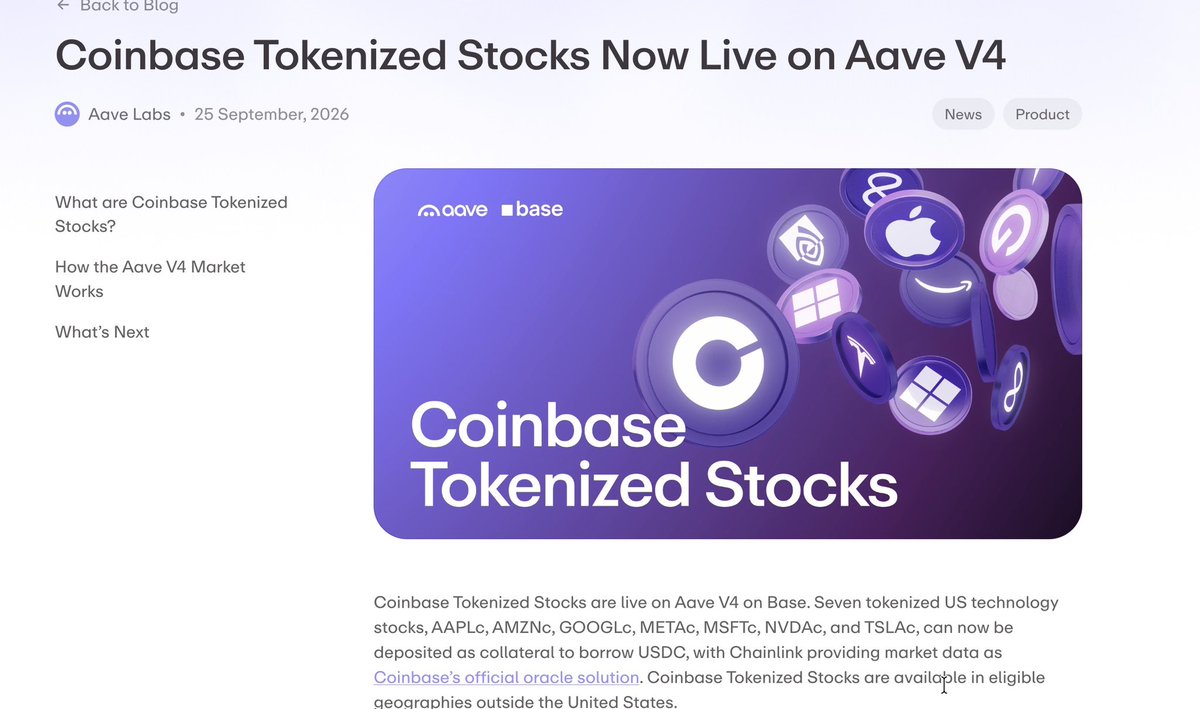
Tokenised stocks could be the catalyst that wakes DeFi the fuck up again..
one of the most interesting setups i've seen for DEFI since 2021.
$AAVE already lets eligible non-US users borrow USDC against Coinbase tokenized stocks on Base chain..
means hold your stocks, get liquidity without selling them.. normies would love this
- no paperwork, no middleman
- can be done at anytime 24x7
that's something people outside crypto can actually use… and with AAVE and $CRV already pumping today i think Defi revival has already started
中文: 代币化股票可能成为让DeFi再次觉醒的催化剂。
自2021年以来,我为DEFI见过的最有趣的设置之一。
AAVE 已允许符合条件的非美国用户在 Base 链上借入 USDC 股票,以对抗 Coinbase 的代币化股票。
意味着持有你的股票,在不卖出的情况下获得流动性......普通人会喜欢这个
- 无需文书工作,无中间人
- 可以随时24x7完成
这是加密货币以外的人实际上可以使用的......而且随着AAVE和$CRV的推出,我认为Defi的复兴已经开始了
129950 粉丝
RT @Axel_bitblaze69: $ENA has a pretty interesting test coming over the next few weeks.
ENA rewards used to attract USDe users end on Sept 30. now we get to see how much demand sticks around without the extra tokens.
> Binance deal gives Ethena another way to earn yield through hedged stock-perp trades, provided funding stays positive.
> if USDe holds its supply or keeps growing after rewards end, that's stronger sign people want the product itself.
> growth would also bring it closer to the buyback framework's $7.5B supply target, from roughly $4.9B at the last check.
that's the test for me.. can the yield and usefulness keep users around once the airdrop incentive is gone?
中文: RT @Axel_bitblaze69:$ENA 在接下来的几周内将推出一项非常有趣的测试。
用于吸引USDE用户的ENA奖励将于9月30日结束。现在,我们可以看到,如果没有额外的代币,需求会持续多少。
币安交易为伊特娜提供了另一种通过对冲股票收益交易获得收益的方式,前提是资金保持积极。
如果美元在奖励结束后保持供应或持续增长,这更表明人们希望产品本身。
增长还将使其更接近回购框架75亿美元的供应目标,从上次检查时的约49亿美元起。
对我来说就是考验......一旦空投激励消失,这种收益和实用性能否让用户继续存在?
129950 粉丝
This is exactly what ETH needs.. more new ideas and projects like this:
imagine trading memes on $ETH and getting some of your fees back?
so, @motoswap makes this possible.. it is live on Ethereum with cash rakeback on every swap, paid from the trading fee itself.
and they’re launching @motodotfun in PvE mode, with $LMEOW first up.
we’ve been saying $LMEOW on CT for years anyway lol
what makes it interesting for $MOTO is that every launchpad coin pairs with both ETH and MOTO, so every buy of those coins buys MOTO too.
keep a close watch on ETH eco and new ideas like this
中文: 这正是ETH所需要的......更多新的想法和项目:
想象一下在 $ETH 上交易表情包并拿回一些费用?
因此,@motoswap 让这种情况成为可能......它在以太坊上实时使用,每笔交易都通过交易费用支付现金回扣。
他们正在推出 @motodotfun 的 PvE 模式,首先推出 $LMEOW。
我们多年来一直在说《在CT上的LMEOW》
对MOTO来说,有趣的是每一枚发射台硬币都搭配ETH和MOTO,因此每购买一枚MOTO也会购买MOTO。
密切关注ETH eco以及类似的新想法
🎬
视频
129950 粉丝
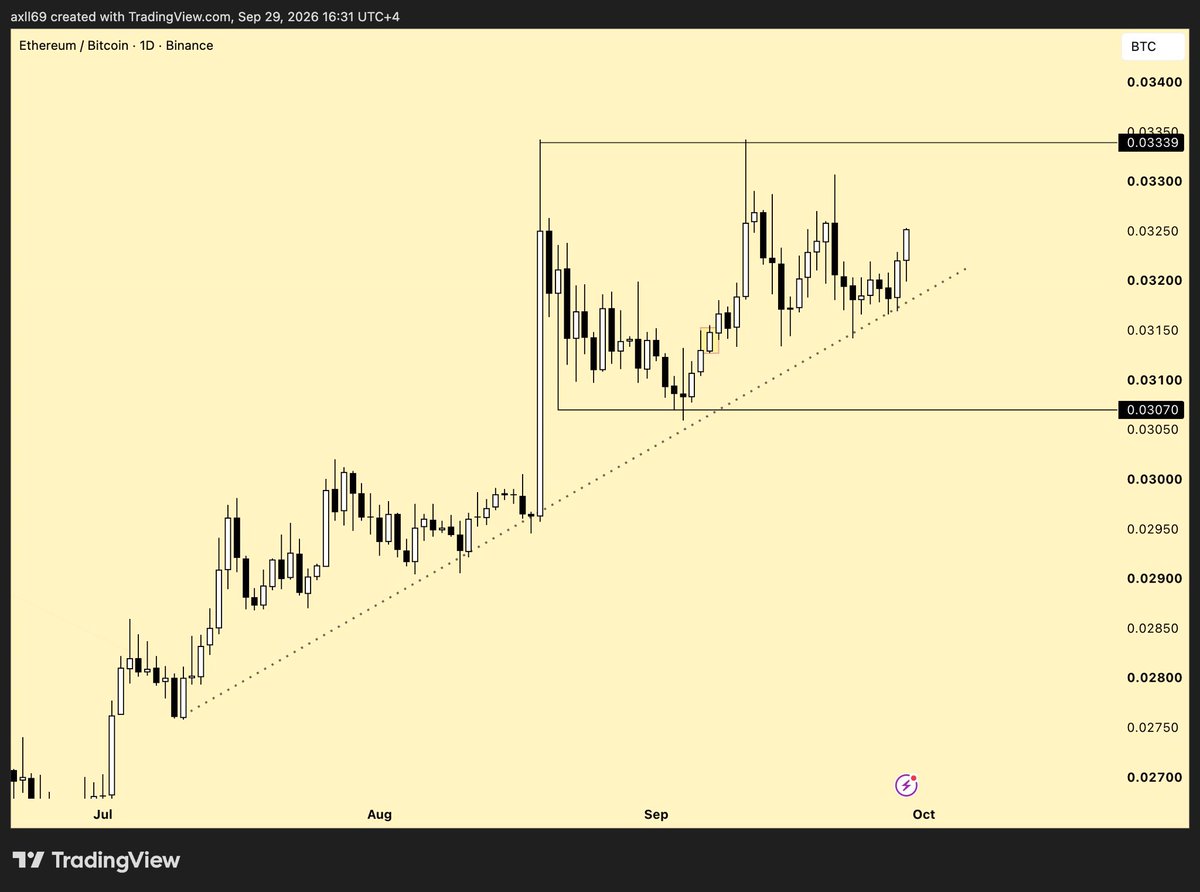
As someone deep in alts, ETH gaining against BTC is exactly what i wanna see..
if BTC stays firm then that could finally get more traders looking further out into alts.
we just need ETH/BTC to hold the uptrend https://twitter.com/Axel_bitblaze69/status/2104947102061387891/photo/1
中文: 作为一个深陷深渊的人,ETH 对比特币的上涨正是我所想看到的。
如果比特币保持稳固,最终可能会让更多交易者进一步关注市场。
我们只需要ETH/BTC来保持上升趋势
129950 粉丝
$ENA has a pretty interesting test coming over the next few weeks.
ENA rewards used to attract USDe users end on Sept 30. now we get to see how much demand sticks around without the extra tokens.
> Binance deal gives Ethena another way to earn yield through hedged stock-perp trades, provided funding stays positive.
> if USDe holds its supply or keeps growing after rewards end, that's stronger sign people want the product itself.
> growth would also bring it closer to the buyback framework's $7.5B supply target, from roughly $4.9B at the last check.
that's the test for me.. can the yield and usefulness keep users around once the airdrop incentive is gone?
中文: 在接下来的几周内,$ENA 将进行一项相当有趣的测试。
用于吸引USDE用户的ENA奖励将于9月30日结束。现在,我们可以看到,如果没有额外的代币,需求会持续多少。
币安交易为伊特娜提供了另一种通过对冲股票收益交易获得收益的方式,前提是资金保持积极。
如果美元在奖励结束后保持供应或持续增长,这更表明人们希望产品本身。
增长还将使其更接近回购框架75亿美元的供应目标,从上次检查时的约49亿美元起。
对我来说就是考验......一旦空投激励消失,这种收益和实用性能否让用户继续存在?
129950 粉丝
RT @Axel_bitblaze69: so you're telling me $LINK launched CCIP 2.0 and banks can move assets across chains without giving up control over the transfers?
they can add their own sign-off alongside Chainlink's checks, with identity checks and transfer limits following the asset across networks.
sounds boring until you realise these are exactly the controls institutions need before moving serious money in multi hundred billions
Infosys and Nethermind are building additional verification services around it too.
and there's already a connection to the token: Chainlink converts service revenue into $LINK, including purchases for its Reserve.
that's the bet here. make it easier for institutions to use the network, bring in more paid activity, and grow the revenue available to buy LINK.
中文: RT @Axel_bitblaze69:所以你告诉我,$LINK 推出了 CCIP 2.0,银行可以跨链条移动资产,而无需放弃对转账的控制权?
他们可以在Chainlink的支票上添加自己的签名,并通过跨网络进行身份检查和转移限制。
听起来很无聊,直到你意识到这些正是机构在将大量资金投入数千亿美元之前所需要的控制措施
印孚瑟斯和荷兰也正在围绕它构建额外的验证服务。
并且已与该代币建立连接:Chainlink 将服务收入转换为 $LINK,包括为其储备购买。
这就是赌注。让机构更容易使用网络,增加付费活动,并增加可用于购买LINK的收入。
129950 粉丝
RT @Axel_bitblaze69: $ZAMA is one of my biggest privacy bets and i have a big bag, so there’s my bias..
I don’t hold $NIGHT much and recently rotated alot of money from $NEAR to $ZAMA
cuz what i like is that @zama adds privacy to chains people already use… its tech lets apps work with encrypted data without exposing it.
think sending stablecoins without making the amount public, or earning yield without everyone checking your position size..
and there’s already something to use:
Zama launched confidential access to 16 Morpho vaults and confidential swaps on Ethereum this month.
ZAMA pays protocol fees, which get burned. new tokens are also minted for operator rewards, so usage needs to earn its keep.
that’s my angle.. people wanting to keep using DeFi without broadcasting how much money they have.
129950 粉丝
RT @Axel_bitblaze69: if your privacy coins watchlist stops at $ZEC and $NEAR, i’d give $NIGHT a look too..
it’s the token behind @MidnightNtwrk a blockchain for building apps that keep sensitive information private.
like imagine proving you’re over 18 without giving an app your full birth date or address. app gets proof you qualify, while the unrelated details stay private.
devs could use that for identity checks, payments or lending, choosing what needs to be public and what stays hidden.
and $NIGHT has a role in all this:
registered holdings generate DUST, which pays transaction fees… Apps can hold NIGHT to cover those fees for their users.
that’s the play here.. growing usage could give apps a reason to buy and hold NIGHT, even if users never touch the token.
中文: RT @Axel_bitblaze69:如果您的隐私币监视列表止于 $ZEC 和 $NEAR,我也会关注 $Night。
这是@MidnightNtwrk 一个用于构建隐私敏感信息应用程序的区块链背后的代币。
想象一下,在不给应用程序完整出生日期或地址的情况下证明你年满18岁。应用能证明你符合条件,而无关的细节则保持私密。
开发者可以用它来进行身份核查、还款或放贷,选择哪些内容需要公开,哪些内容会隐藏。
而 $Night 在以下所有方面都有作用:
注册资产生成DUST,用于支付交易费用......应用程序可通过NIGHT为用户支付这些费用。
这就是游戏的发展。即使用户从未接触过该代币,应用程序的使用量也可能让应用程序有买入和保持“夜晚”的理由。
129950 粉丝
$ZAMA is one of my biggest privacy bets and i have a big bag, so there’s my bias..
I don’t hold $NIGHT much and recently rotated alot of money from $NEAR to $ZAMA
cuz what i like is that @zama adds privacy to chains people already use… its tech lets apps work with encrypted data without exposing it.
think sending stablecoins without making the amount public, or earning yield without everyone checking your position size..
and there’s already something to use:
Zama launched confidential access to 16 Morpho vaults and confidential swaps on Ethereum this month.
ZAMA pays protocol fees, which get burned. new tokens are also minted for operator rewards, so usage needs to earn its keep.
that’s my angle.. people wanting to keep using DeFi without broadcasting how much money they have.
中文: ZAMA 是我最大的隐私赌注之一,而且我有个大包蟬,所以存在我的偏见。
我不太需要晚上的钱,最近还从近价转到了ZAMA
因为我喜欢的是,@zama 为已经使用的连锁用户添加了隐私保护......其技术允许应用程序在不暴露数据的情况下使用加密数据。
认为在不公开金额的情况下发送稳定币,或在不检查你职位规模的人的情况下获得收益。
而且已经有一些东西可以使用了:
Zama 本月在以太坊上推出了对 16 个 Morpho 保险库的保密访问和保密交易。
ZAMA 支付协议费用,这些费用会被烧毁。新代币也被刻为运营商奖励,因此需要使用才能获得其保留。
这就是我的观点......人们希望继续使用DeFi,而不会广播他们拥有多少钱。
129950 粉丝
if your privacy coins watchlist stops at $ZEC and $NEAR, i’d give $NIGHT a look too..
it’s the token behind @MidnightNtwrk a blockchain for building apps that keep sensitive information private.
like imagine proving you’re over 18 without giving an app your full birth date or address. app gets proof you qualify, while the unrelated details stay private.
devs could use that for identity checks, payments or lending, choosing what needs to be public and what stays hidden.
and $NIGHT has a role in all this:
registered holdings generate DUST, which pays transaction fees… Apps can hold NIGHT to cover those fees for their users.
that’s the play here.. growing usage could give apps a reason to buy and hold NIGHT, even if users never touch the token.
129950 粉丝
so you're telling me $LINK launched CCIP 2.0 and banks can move assets across chains without giving up control over the transfers?
they can add their own sign-off alongside Chainlink's checks, with identity checks and transfer limits following the asset across networks.
sounds boring until you realise these are exactly the controls institutions need before moving serious money in multi hundred billions
Infosys and Nethermind are building additional verification services around it too.
and there's already a connection to the token: Chainlink converts service revenue into $LINK, including purchases for its Reserve.
that's the bet here. make it easier for institutions to use the network, bring in more paid activity, and grow the revenue available to buy LINK.
129950 粉丝
wait, the operator behind $2 trillion in daily payments picked $QNT ??
The Clearing House runs RTP and CHIPS, and it selected Quant to help power its tokenized bank deposit network.
basically, Quant will help banks move deposits onchain and connect them to the payment systems they already use.
expected in H1 2027. for $QNT no wonder why it did 6x in 6 days https://x.com/quantnetwork/status/2103118263227912693/video/1
中文: 等待一下,这家运营着2万亿美元日用电的运营商选择 $QNT ??
清算所运营RTP和芯片,并选择Quant为其代币化银行存款网络提供动力。
基本上,Quant 将帮助银行将银行的存款转移到已使用的支付系统中。
预计在2027年的H1中。对于$QNT来说,难怪它为何在6天内达到6倍
🎬
视频
129950 粉丝
$NEAR is now everywhere on CT.. many are looking for its eco plays now..
So if you haven’t used the chain before, here’s the quick setup:
- Start with @Nightly_app for your wallet.
- Then use its cross-chain swap to get NEAR, or use https://near.com/ and withdraw to that wallet.
- Once funded, you can trade through @NearFiTrade Swap.
- And for new launches, there’s Nearly launchpad..
As for names to research:
$NEARFI is the trading platform token.
$NEARLY is the launchpad token.
$NINU is a NEAR memecoin.
That should get you started. Keep some NEAR for fees and check the contract and liquidity before buying anything.. good luck
129950 粉丝
One of the better ways to trade this market is to look for the beta plays before the rotation reaches them..
like I had my eyes on $W after $ZRO started pumping. It took a few days, but $W eventually caught a bid too.
Then we saw $ZEC run, followed by $NEAR and later $ZAMA as the privacy narrative spread..
moves aren’t happening all at once, which gives you time to look around.
If you missed the leader, check which related coins haven’t moved and whether they actually fit the same thesis.
you just need a good reason for the next coin to catch a bid, and the patience to wait..
中文: 交易这个市场的更好方法之一,就是在轮盘交易到他们之前寻找测试版。
就像在 $ZRO 开始抽水后,我的目光一直盯着 $W 。花了几天时间,但 $W 最终也获得了报价。
然后我们看到了$ZEC的运行,随后是$NEAR,后来随着隐私叙事的传播,又出现了ZAMA。
移动不会同时发生,这让你有时间环顾四周。
如果你错过了领导者,请检查一下哪些相关硬币没有移动,以及它们是否真正符合相同的理论。
你只需要一个充分的理由来获取下一个报价,以及等待的耐心。
129950 粉丝
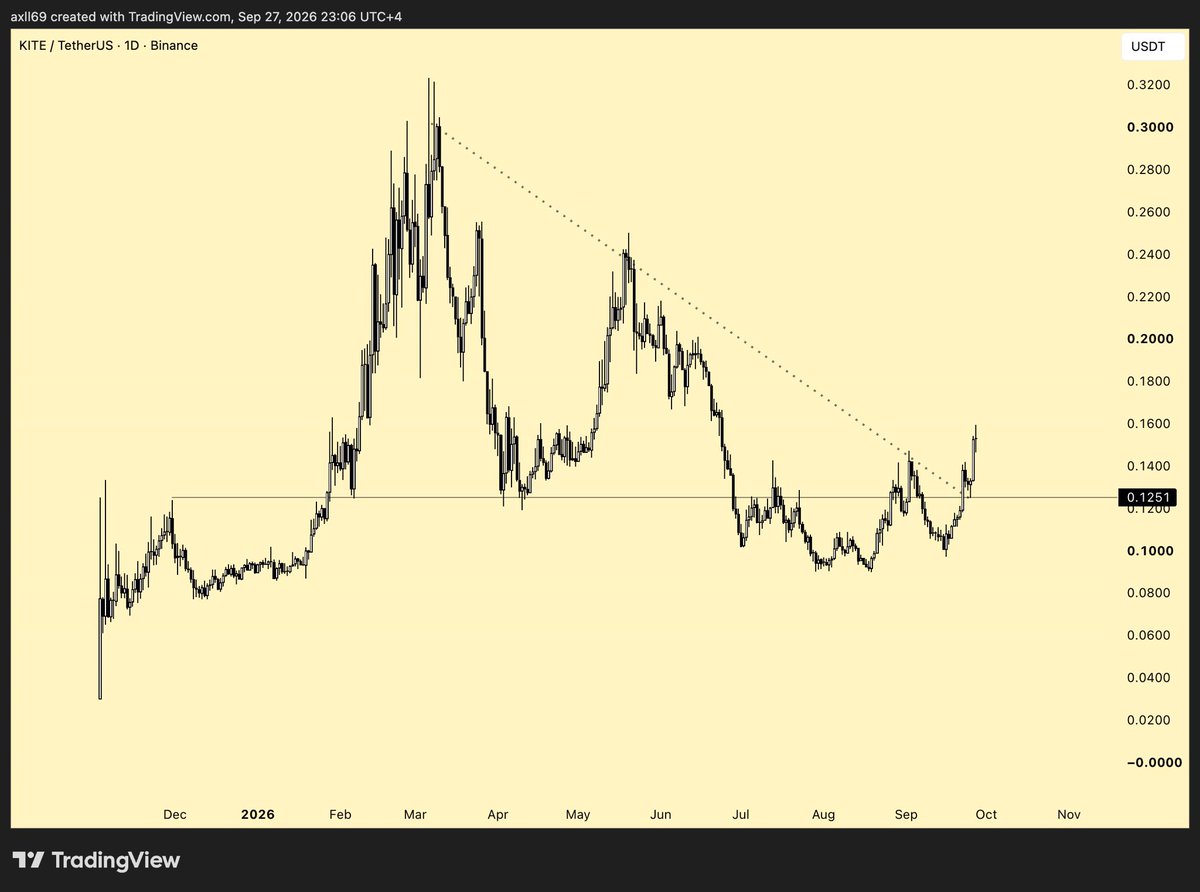
$KITE looking good here for Ai trade..
price is breaking out from the downtrend from March.. 👀
> building payments for AI agents, with wallets, spending limits and stablecoin settlement so they can pay for services without needing approval for every txn
good narrative to have exposure to..
中文: 基特在这里对艾克特市的好看。
价格正从3月份的下跌趋势中暴涨。👀
为人工智能代理建立支付,提供钱包、支出限额和稳定币结算服务,以便他们无需为每台资金支付一次服务费用
良好的叙述,能够接触......
129950 粉丝
Rotated some money from $NEAR to $ZAMA
Only cuz i think with $NEAR getting attention for confidential transfers, and for their intent tech.. $ZAMA could too get attention for their tech..
On @zama you can already wrap USDC into cUSDC, and then transfer it with encrypted amounts and balances, then put it into supported Morpho vaults.
So the money can stay confidential while you actually use it.
Zama uses FHE, which lets contracts calculate with encrypted data without exposing the numbers.
Different approach from NEAR’s Confidential Intents. And this month, Zama expanded confidential access to 16 Morpho vaults..
129950 粉丝
RT @Axel_bitblaze69: Soon CT will look back at $PUMP and kick themselves for seeing pumpfun just as a shitcoin launchpad..
Look at how the pieces connect:
- Pump Fund backs builders who launch on Pump.
- The app, livestreams and Kolscan help people discover coins and follow traders.
- PumpSwap earns from trading after graduation, while Terminal adds trading across chains.
Now Alon is encouraging more launchpads, agents and DeFi to build here.
UsePaid $PAID is already an example of another team building on Pump and bringing its own users.
And 50% of eligible launchpad, PumpSwap and Terminal revenue currently buys and burns $PUMP
pay attention to its eco coins..
中文: RT @Axel_bitblaze69:很快,CT将回顾 $PUMP 并自欺欺欺,将 sumpfun 视为一个 shitcoin 的启动平台。
观察这些碎片是如何连接的:
- 泵基金支持在泵上启动的建设者。
- 该应用程序、直播和Kolscan帮助人们发现硬币并关注交易者。
- PumpSwap 毕业后通过交易获得收益,而 Terminal 则增加了跨链式交易。
现在,Alon 正鼓励更多的启动板、代理和 DeFi 来在此地进行构建。
UsePaid $PAID 已经是另一个团队在 Pump 上构建并自带用户的实例。
目前,50%符合条件的发射台、PumpSwap和终端收入用于购买和消耗PUMP
关注它的生态币。
129950 粉丝
Soon CT will look back at $PUMP and kick themselves for seeing pumpfun just as a shitcoin launchpad..
Look at how the pieces connect:
- Pump Fund backs builders who launch on Pump.
- The app, livestreams and Kolscan help people discover coins and follow traders.
- PumpSwap earns from trading after graduation, while Terminal adds trading across chains.
Now Alon is encouraging more launchpads, agents and DeFi to build here.
UsePaid $PAID is already an example of another team building on Pump and bringing its own users.
And 50% of eligible launchpad, PumpSwap and Terminal revenue currently buys and burns $PUMP
pay attention to its eco coins..
中文: 很快,CT将回顾一下PUMP,并因将 pumpfun 视为一个 shitcoin 发布平台而自欺欺。
观察这些碎片是如何连接的:
- 泵基金支持在泵上启动的建设者。
- 该应用程序、直播和Kolscan帮助人们发现硬币并关注交易者。
- PumpSwap 毕业后通过交易获得收益,而 Terminal 则增加了跨链式交易。
现在,Alon 正鼓励更多的启动板、代理和 DeFi 来在此地进行构建。
UsePaid $PAID 已经是另一个团队在 Pump 上构建并自带用户的实例。
目前,50%符合条件的发射台、PumpSwap和终端收入用于购买和消耗PUMP
关注它的生态币。
129950 粉丝
$BNB is built different..
it works differently from other buyback and burn coins..
You’ve seen projects use revenue or fees to buy back their tokens.. BNB’s quarterly burn doesn’t depend on either.
as @binance committed its original 80M BNB team allocation to burns.
It isn’t a fixed amount each quarter. amount depends on BNB’s price and blocks produced, regardless of revenue earned.
July’s burn removed 1.62M BNB, roughly 1.2% of the pre-burn supply.l
Quarterly burns aim for 100M remaining, and yes part of the chain’s gas fees gets burned separately too. 🔥
129950 粉丝
$NEAR is getting attention for Confidential Intents.but it’s not the only project working on private payments, transfers and apps..
Here are a few more alts with similar tech:
- $RAIL lets you transfer existing ERC-20 tokens privately.
- $ZAMA hides balances and payment amounts, but addresses stay public.
- $ALEO supports private stablecoin payments and payroll.
- $NAM shields supported assets from other chains.
- $NIGHT powers Midnight’s privacy-focused apps.
- $COTI supports confidential token transfers.
- $ROSE supports confidential apps, although ordinary ROSE transfers stay public.
- $XMR makes payments private by default.
- $ZEC offers privacy through shielded transactions.
Any other coins you would like to suggest ?
中文: $NEAR 正因“保密意图”而受到关注。但它并非唯一致力于私人支付、转账和应用程序的项目。
以下是一些具有类似技术的另类:
- $RAIL 可让您私下转账现有的 ERC-20 代币。
- $ZAMA 会隐藏余额和付款金额,但地址会保持公开。
- $ALEO 支持私人稳定币支付和工资单。
- 受其他链条支持的 $NAM 屏蔽资产。
- $Night 为 Midnight 的隐私保护应用程序提供支持。
- $COTI 支持保密代币转让。
- $ROSE 支持保密应用程序,但普通的 ROSE 转账服务仍然公开。
- $XMR 默认将付款保密。
- $ZEC 通过屏蔽交易提供隐私保护。
还有其他你想推荐的硬币吗?
129950 粉丝
I don’t own $DRV, but it’s an interesting one for the buyback meta.. so sharing:
@DeriveXYZ earns fees from options and perps trading onchain.. It generated ~$500K after rebates over the last 30 days, with 35% of revenue allocated to buybacks.
and now there’s a proposal to raise the allocation to 50%.. nice!
What I like is that options maker rebates have been falling, that means less of the collected fees went back to market makers, leaving more revenue with Derive before
will look to buy some if we get a dip on this..
129950 粉丝
Added $CHIP to my portfolio..
not seeing anyone on CT talk about how quickly its lending business is growing..
but i think that changes once these numbers start making the rounds on the timeline
quick explanation:
@USDai_Official lends to AI companies using their GPUs as collateral, and since its June report:
- money deployed has more than doubled, from $202m to $420m
- TVL has grown from $398m to roughly $615m
what i like is that lending is growing faster than deposits.. more of the money is actually being put to work
so my conviction is that this growth brings more attention to $CHIP as the AI trade picks up..
129950 粉丝
Altoins with rising activity are what you should look for.. and by activity i mean:
> Fresh deposits and growing TVL
> more users and trading volume
> higher fees and revenue
> bigger revenue-funded buybacks or holder rewards
as growing numbers can get attention pretty quickly in a market like this..
find one where the price hasn’t caught up, do the homework and give it time.. no need to jump into a different coin every day here and there
中文: 活动量上升的空间是你应该注意的......而活动是指:
新鲜存款和种植TVL
增加用户数量和交易量
更高的费用和收入
> 增加收入支持的回购或持有人奖励
随着不断增长的数量在这样的市场中迅速受到关注。
找一个价格没有追上来的地方,做作业并给时间......不必每天在这里和那里跳进不同的硬币
129950 粉丝
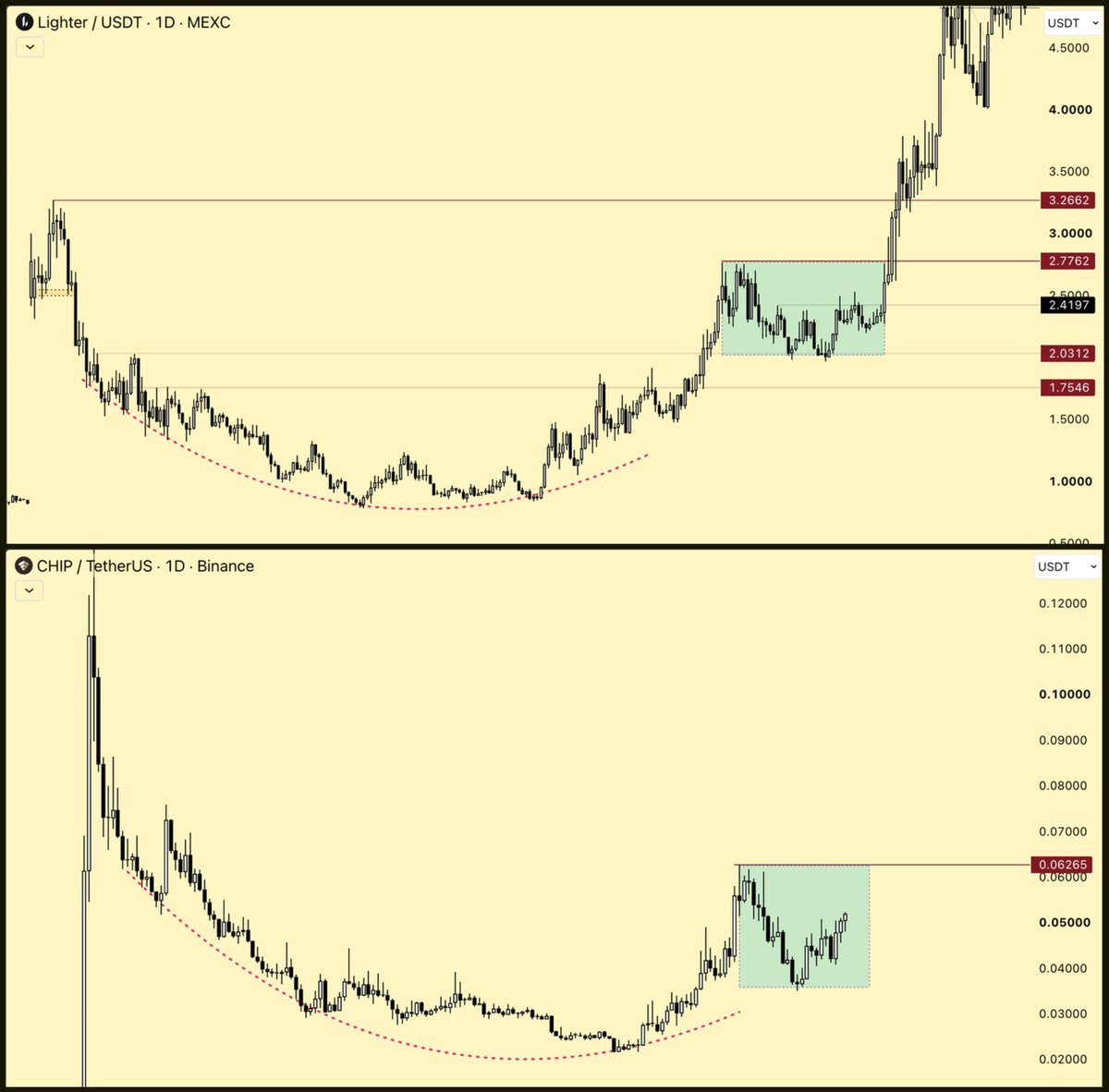
I can see similarities in PA of $CHIP with $LIT and narrative aligns too with current meta.. if you wanna play safe wait for break out of 0.062 https://twitter.com/Axel_bitblaze69/status/2103885614429122697/photo/1
中文: 我能从 $CHIP 与 $LIT 的 PA 中看到相似之处,而叙事也与当前的元数据一致......如果你想在 0.062 的分手时安全等待,请
129950 粉丝
I added $KITE to my portfolio.. as i think there’s money to be made helping AI agents spend money..
Agents doing real work need to pay for data, tools and computing power… and Kite lets them spend stables within a budget you set, without asking you to approve every payment
what interests me is:
- mainnet is live, with tools for Claude Code and Cursor
- payments work across chains
- its token model is designed to use service fees to buy KITE
so there’s a potential buyback angle here too.. more agents paying for services could mean more money buying $KITE
Bought a small bag.. nothing fancy just chasing Ai narrative trade..
129950 粉丝
My buyback meta coins watchlist.. and where the buying comes from:
- $HYPE: trading fees fund HYPE purchases through Hyperliquid’s Assistance Fund
- $LIT: Lighter uses trading fees to buy LIT from the market
- $PUMP: revenue across Pump’s products funds PUMP buybacks and burns
- $RAY: 12% of swap fees funds RAY buybacks, with additional buybacks from LaunchLab
- $JUP: 50% of revenue from several Jupiter products goes into JUP buybacks
- $CAKE: a share of trading fees and other product revenue buys and burns CAKE
- $ASTER: platform fees buy ASTER, which is distributed to eligible stakers
- $NEAR: revenue captured from Intents swaps buys NEAR on the open market
- $PENDLE: 80% of V2 yield and swap fees buys PENDLE for eligible sPENDLE holders
- $SYRUP: a share of Maple’s lending revenue funds SYRUP buybacks
- $DBR: deBridge uses protocol revenue to buy back DBR
- $SKY: surplus protocol income helps fund SKY buybacks
two related names worth separating:
$UNI: fees from enabled pools fund UNI burns through its fee-collection mechanism
$LDO: the DAO buys LDO through its accumulation programme, rather than an automatic share of daily fees
also i usually check is how much they’re buying relative to market cap and new supply.. cuz having buybacks is one thing, making them meaningful is another
129950 粉丝
official FAQ by SEC on Crypto
https://www.sec.gov/about/divisions-offices/division-corporation-finance/faqs-crypto-assets
中文: 美国证券交易委员会关于加密货币的官方常见问题
129950 粉丝
buyback meta coins got another reason to catch a bid.. thanks to the SEC
yes, SEC staff clarified that buybacks alone don’t make an otherwise non-security token a security once its protocol is up and running
that gives more backing to a trade i already like.. projects making money and using some of it to buy their own coin
will share a watchlist of coins shortly..
as a holder, the connection is simple.. more people using the product can mean more fees going into buybacks.
that’s the kind of growth i want my bag tied to..
中文: 回购元币又得到了另一个买入的理由......这要归功于美国证券交易委员会
是的,美国证券交易委员会工作人员澄清,一旦协议启动并运行,仅回购就不会使其他非安全代币成为安全
这为我已做到的一笔交易提供了更多支持......项目是赚钱,并用其中一些资金购买自己的硬币
不久将分享一份硬币观察名单。
作为持有者,连接非常简单......使用该产品的人越多,购买回购时可能收取更多费用。
那种希望我的包被捆绑的成长。
129950 粉丝
Tools worth bookmarking before buying your next alt..
- CoinMarketCal: upcoming launches, upgrades and events
- RootData: project research, funding and investors
- Tokenomist: token unlocks and who gets the supply
- CryptoRank: fundraising rounds and vesting schedules
- DeFiLlama: TVL, volume, fees and revenue
- Token Terminal: compare the numbers behind different projects
- Dune: dashboards for users and actual product activity
- CoinGlass: funding, open interest and liquidations
- Arkham: team, whale and exchange wallet movements
- TradingView: charts and strength against BTC
- Snapshot: votes on buybacks, staking and other proposed changes
so yeah, before buying any alts, see if there is any upcoming catalyst, check the unlocks, then see how much the coin has already moved.. and always check the original announcement for dates
中文: 购买下一套产品前值得添加书签的工具。
- CoinMarketCal:即将推出的发布、升级和活动
- 根数据:项目研究、资助和投资者
- 代币主义:代币解锁,谁获得供货
- CryptoRank:募捐轮次和归属时间表
- 德菲拉马:电视、音量、费用和收入
- 代币终端:比较不同项目背后的数据
- 沙丘:用户仪表板及实际产品活动
- CoinGlass:资金、开放利息和清算
- 阿卡姆:团队、鲸鱼和交换钱包动作
- 交易视图:图表与比特币的优势
- 快照:关于回购、押注及其他拟议变更的投票
是的,在购买任何alts之前,请先查看是否有即将推出的催化剂,查看解锁时间,然后查看硬币已经移动了多少......并始终查看原始公告的日期
129950 粉丝
RT @Axel_bitblaze69: I have been buying $ENA for last few weeks..
thesis is simple, as markets get more heated.. ppl will get more aggressive with leverage and that will help Ethena earn more..
when traders pay funding to stay long, Ethena can collect those payments. it holds the coin and shorts the matching perp, so the price moves largely offset each other
now its Binance partnership brings that same trade to stocks. that gives it another market to earn from beyond crypto.
the way i see it, people want two things in a bull market.. leverage to trade with, and somewhere to earn on the stables they’re holding
Ethena connects the two.
income from those trades helps fund rewards for staking USDe, its dollar token. attractive rewards could bring more money into USDe
and as an ENA holder, that growth is what i care about. its buyback framework starts directing a share of revenue toward ENA purchases at the $7.5b USDe supply milestone.
that’s my bet.. demand for leverage helping grow USDe, with a path for that income to eventually buy back ENA.
中文: RT @Axel_bitblaze69:我过去几周一直在购买$ENA。
论点很简单,因为市场变得更加激烈......PPL 将变得更加激进,并有助于埃斯纳获得更多收益。
当交易者支付资金以维持长期时,Ethena 可以收取这些款项。它持有硬币并提供相配的报价,因此价格变动在很大程度上相互抵消
现在,其币安合伙企业将同样的交易带入股票领域,使其在加密货币之外获得另一个市场收益。
人们在牛市中想要两样东西,即与它们进行交易,以及在他们持有的马厩上赚取收益
埃雅典将两者连接起来。
这些交易所得有助于为美元代币(USDe)的赌注提供奖励。有吸引力的奖励可能为美元带来更多收益
作为ENA持有者,这种增长是我所关心的。其回购框架开始将收入份额定向至75亿美元的供应量里程碑。
这是我的赌注......对杠杆的需求有助于美元增长,为这些收入提供最终回购收益的途径。
129950 粉丝
What if all these alts that already did 2–3x from the bottom without a proper dip have another 30–40% left just to make everyone who missed them finally cave..
people get tired of waiting, start coping about missing the entire cycle and rage ape right into resistance
then comes the dip they spent weeks waiting for, except now they’re fully deployed lol
Good night anyway..
中文: 如果这些已经从底部直接浸出2到3倍的藻叶,只剩下30%到40%,只为让所有错过它们的人最终陷入谷地。
人们厌倦了等待,开始应对错过整个周期,并立即陷入反抗
然后他们等待了数周的下滑,只是现在他们已经完全部署了
晚上好。
129950 粉丝
I have been buying $ENA for last few weeks..
thesis is simple, as markets get more heated.. ppl will get more aggressive with leverage and that will help Ethena earn more..
when traders pay funding to stay long, Ethena can collect those payments. it holds the coin and shorts the matching perp, so the price moves largely offset each other
now its Binance partnership brings that same trade to stocks. that gives it another market to earn from beyond crypto.
the way i see it, people want two things in a bull market.. leverage to trade with, and somewhere to earn on the stables they’re holding
Ethena connects the two.
income from those trades helps fund rewards for staking USDe, its dollar token. attractive rewards could bring more money into USDe
and as an ENA holder, that growth is what i care about. its buyback framework starts directing a share of revenue toward ENA purchases at the $7.5b USDe supply milestone.
that’s my bet.. demand for leverage helping grow USDe, with a path for that income to eventually buy back ENA.
129950 粉丝
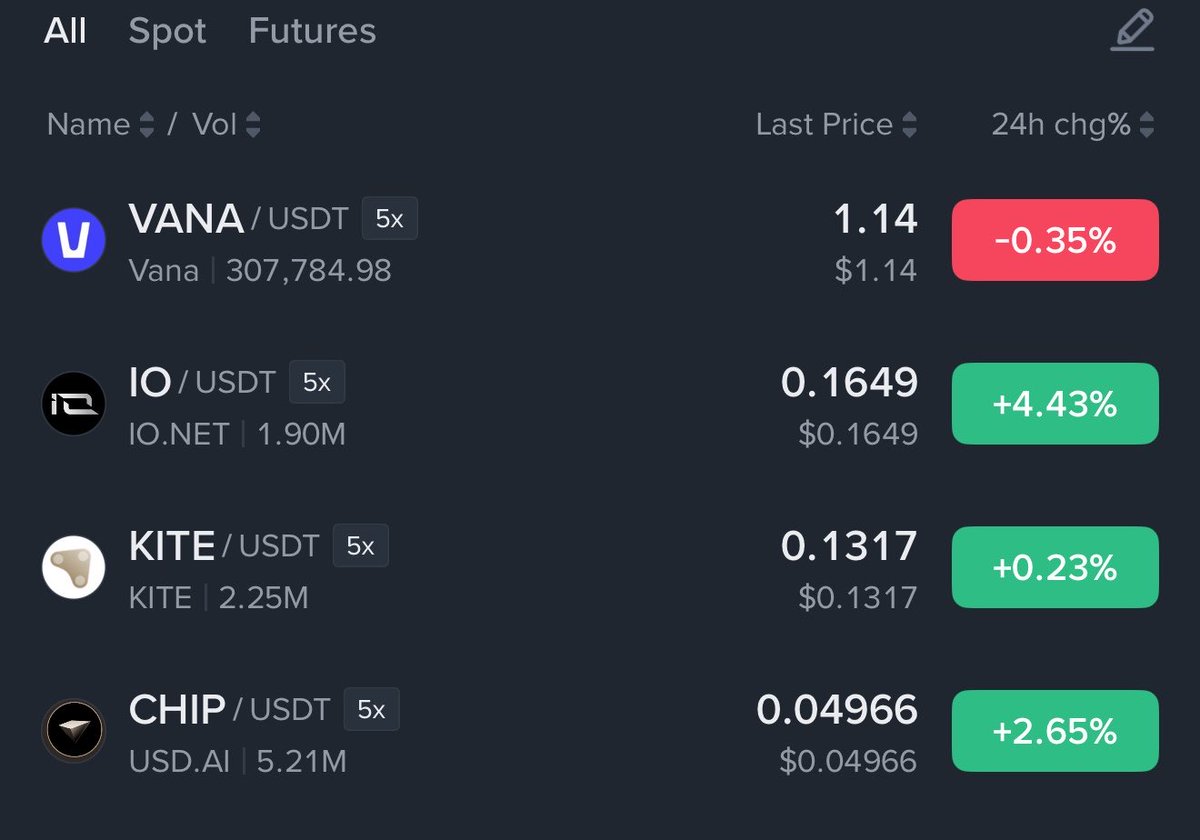
Portfolio update:
Took some profits from $NEAR and added these 4 new coins in last 4 days.. https://twitter.com/Axel_bitblaze69/status/2103609650273042851/photo/1
中文: 投资组合更新:
从 $NEAR 获得了一些利润,并在过去 4 天内新增了这 4 枚金币。
129950 粉丝
How i’m hunting alts rn..
starting with what’s already pumping, then looking at what hasn’t moved around it..
- check which narratives keep showing up in the top gainers
- find other coins that actually fit those narratives
- look for charts still going sideways while the leaders rip
- check for upcoming launches, upgrades or other confirmed catalysts
i want something people have a reason to notice next, before my timeline discovers it and starts doing bagwork
so basically “hasn’t pumped yet” gets my attention.. and something coming up gives me some sort of confidence
中文: 我怎么在打猎
从已经泵送的东西开始,再看看周围没有移动的东西。
- 检查哪些叙述不断出现在最强增者中
- 找到其他真正符合这些叙述的硬币
- 寻找在领导人们被撕扯时仍会走来走去的图表
- 检查即将发布的发布、升级或其他已确认的催化剂
我想要一些别人有理由在我的时间线发现并开始做包装之前想注意到的
所以基本上“还没抽到”引起我的注意......而出现的事情给了我一些信心
129950 粉丝
We are in a market where a coin can look completely dead for months, then suddenly rip 2x or more..
like $NIL is roughly 3x over the past week. i think the privacy rotation is part of that move..
the way i see it rn is:
- the leaders pump and people feel late buying them
- they still want in on the trade
- so they look for similar coins that haven’t moved yet
they’re uncomfortable chasing the pump, but the fomo doesn’t disappear.. it sends them looking for the next one
that’s why i’d look at flat charts with a real connection to whatever narrative is running
中文: 我们所处的市场,一枚硬币可能在数月内完全消亡,然后突然撕裂超过2倍。
像过去一周的$NIL大约是3倍。我认为隐私轮换是这一举措的一部分。
我看到它的方式是:
- 领导者们投入了价格,人们觉得购买它们很晚
他们仍然希望从事贸易
- 因此他们寻找尚未移动的类似硬币
他们在追赶水泵时感到不舒服,但表情不在灰水中消失......它让他们寻找下一个
这就是为什么我会查看平面图表,与任何叙事中的真实关联
129950 粉丝
RT @Axel_bitblaze69: Stocks onchain is a meta i can see getting much bigger.. and $ONDO is one of the coin i’d watch for that trade
it lets eligible users buy tokens backed by stocks, ETFs and yield-paying investments.
already $1.19b in its stock products and $2.28b in USDY, its dollar token that earns yield..
what i like is how they’re creating more demand for products they already have:
- the new BlackRock-designed portfolios hold Ondo’s stock and ETF tokens
- someone buys a portfolio, and their money goes into those existing products
- institutions can supply the tokens using shares they already own through Alpaca, potentially making liquidity cheaper to provide..
so someone just wanting a stock portfolio can end up using Ondo without caring about the crypto narrative at all
that’s where i see the loop.. more buyers attract liquidity, better liquidity makes trading cheaper, and that helps bring in the next buyer.
for $ONDO, i’m betting that adoption brings more demand for the coin as people trade this meta.
中文: RT @Axel_bitblaze69:股票链是一块可以看到的元价值,会越来越大。
它允许符合条件的用户购买由股票、ETF和收益型投资支持的代币。
其股票产品已达到119亿美元,美元代币USDY为22.8亿美元,从而获得收益。
我喜欢的是,它们对已有的产品产生了更多需求:
- 由贝莱德设计的新投资组合持有Ondo的股票和ETF代币
- 有人购买投资组合,而他们的资金也流入了现有产品
- 机构可以通过其通过Alpaca持有的股票来提供代币,这可能使流动性更便宜。
因此,一个只想投资股票的人最终可能会使用Ondo,而完全无需在意加密货币的叙述
这就是我所看到的循环......更多买家会吸引流动性,而更好的流动性使得交易成本更低,这有助于吸引下一个买家。
对于 $ONDO,我敢打赌,随着人们用这种元货币进行交易,采用这种货币会带来更多需求。
129950 粉丝
Stocks onchain is a meta i can see getting much bigger.. and $ONDO is one of the coin i’d watch for that trade
it lets eligible users buy tokens backed by stocks, ETFs and yield-paying investments.
already $1.19b in its stock products and $2.28b in USDY, its dollar token that earns yield..
what i like is how they’re creating more demand for products they already have:
- the new BlackRock-designed portfolios hold Ondo’s stock and ETF tokens
- someone buys a portfolio, and their money goes into those existing products
- institutions can supply the tokens using shares they already own through Alpaca, potentially making liquidity cheaper to provide..
so someone just wanting a stock portfolio can end up using Ondo without caring about the crypto narrative at all
that’s where i see the loop.. more buyers attract liquidity, better liquidity makes trading cheaper, and that helps bring in the next buyer.
for $ONDO, i’m betting that adoption brings more demand for the coin as people trade this meta.
中文: 股票链是一种我能看到的元规模,规模会越来越大......而 $ONDO 是我为该交易所关注的加密货币之一
它允许符合条件的用户购买由股票、ETF和收益型投资支持的代币。
其股票产品已达到119亿美元,美元代币USDY为22.8亿美元,从而获得收益。
我喜欢的是,它们对已有的产品产生了更多需求:
- 由贝莱德设计的新投资组合持有Ondo的股票和ETF代币
- 有人购买投资组合,而他们的资金也流入了现有产品
- 机构可以通过其通过Alpaca持有的股票来提供代币,这可能使流动性更便宜。
因此,一个只想投资股票的人最终可能会使用Ondo,而完全无需在意加密货币的叙述
这就是我所看到的循环......更多买家会吸引流动性,而更好的流动性使得交易成本更低,这有助于吸引下一个买家。
对于 $ONDO,我敢打赌,随着人们用这种元货币进行交易,采用这种货币会带来更多需求。
129950 粉丝
Vibe coding an app is getting easier.. but getting it live onchain is still a pain in the ass
@CNPYNetwork handles the chain setup, wallets and shared security, so builders can work with Claude or Cursor and launch the app and its token through Terminal.
Mainnet is already live
and $CNPY gets used along the way:
- app token launches use CNPY
- network fees are paid in CNPY
- staking helps secure the chains, with extra app-token rewards where offered
that’s the bet i like.. more people building gives Canopy more chances to land apps that people actually keep using, bringing fee activity after the launch hype dies down
they also want to train better coding agents on the public app code.. more working examples could help the next builder ship faster..
still something they need to deliver on, but i can see how the two could feed each other
129950 粉丝
$ONDO got BlackRock to design 3 portfolio strategies for it.. yeah, that’s a W
you hold one token tracking a mix of tokenized stocks and ETFs, and Ondo handles the rebalancing. available to eligible users outside the US..
what i like is how the products feed into each other:
- Ondo’s stock and ETF tokens become the holdings inside these portfolios
- the portfolio tokens can then be used across DeFi where supported.
so you could keep your stock exposure and borrow against the portfolio wherever it’s accepted as collateral..
i can see the appeal for people who already keep their money onchain https://x.com/Ondo/status/2103106602593087575/video/1
中文: 美元让贝莱德为其设计了3个投资组合策略......没错,这是一个W
持有一个代币,用于跟踪代币化股票和ETF的组合,而Ondo则负责向美国以外符合条件的用户提供的再平衡功能。
我喜欢的是产品相互相互反馈的方式:
- 翁多的股票和ETF代币成为这些投资组合中的持股
- 投资组合代币可以在支持的 DeFi 上使用。
因此,你可以保留股票敞口,并在投资组合中以其抵押品的地点进行借贷。
我可以看到那些已经把钱留在链上的人的吸引力
🎬
视频
129950 粉丝
All of a sudden macro looking good and it’s reflecting back into the markets..
- Bessent says the US - China trade truce got another two months
- reports of US and Iran talks about reopening Hormuz have sent oil and the dollar lower too
- then you’ve got nearly $2.1b flowing into US spot BTC ETFs across Monday and Wednesday..
means institutions are still heavily bidding
and yeah, October hike odds were around 78% today, so rates are still a headache. i just think a lot of that fear is already in the price..
all this only makes me believe that waiting for one more massive flush here could turn into buying your bags back higher..
中文: 宏观市场突然看起来不错,而且它重新回向市场。
- 贝森特表示美国——中国贸易休战又达成了两个月
有关美国和伊朗谈论重新开放霍尔木兹的报道也导致石油价格下跌
- 那么,周一和周三,美国现货比特币ETF的流入也接近21亿美元。
意味着各机构仍在大力招标
是的,如今10月份的加息概率约为78%,因此利率仍然令人头疼。我认为,这种担忧早已在价格上。
这一切让我相信,在这里再等待一次大规模冲水,就可能变成把行李买回来。
129950 粉丝
. @BTCdrivechains eCash beta is live.. and it's the most credible attempt yet at making Bitcoin programmable without touching Bitcoin.
they’re building a separate network where devs can try private payments, swaps and other apps without changing Bitcoin itself
you keep your $BTC, and eligible coins held in your own wallet at the full fork on October 31 get a matching ECX balance.. 1 ECX per BTC
beta also gives early users an extra allocation:
- practice coins are called pECX
- eligible burns of 1,000 pECX earn 20 ECX at mainnet
- that’s double the alpha reward, on top of the BTC allocation
full launch is planned around October 31
the coins will get people’s attention.. i want to see which apps they’re still using once the reward farming cools off
one thing i wouldn’t wing: coin splitting. moving BTC can also move unsplit ECX, so read the official guide first. exchange holders need to check whether their exchange will credit it
https://ecash.com/join
129950 粉丝
There’s a coin i like as a $NIL beta.. its chart reminds me of NIL before it started running
- only at $34m mcap
- @cz_binance is an advisor
- backed by YZi Labs, Paradigm and Coinbase Ventures.
- building around private, user-owned data for AI
- mainnet upgrade just shipped, staking updates expected over the next few weeks.
中文: 有一枚硬币,就像一枚$NIL的测试版一样......它的图表让我想起了NIL,之后它才开始运行
- 仅以3400万美元的价格购买
- @cz_binance 是一位顾问
由YZi Labs、Paradigm和Coinbase Ventures支持。
- 围绕私有的、用户拥有的人工智能数据进行构建
- 主网升级刚刚发货,预计未来几周将发布最新动态。
129950 粉丝
$ETH is looking pretty similar to 2025 here.. breaks out, and then on the pullback everyone starts thinking if it was a fakeout
but as long as we hold the $2540 area and don’t slip back into the old range, i’m still bullish.. https://twitter.com/Axel_bitblaze69/status/2103070389253665110/photo/1
中文: 费思的情况与2025年非常相似......随后,在回调时,每个人都会开始思考这是否是虚假的
但只要我们持有2540美元的区域,却不再回落到旧区间,我依然保持乐观。

129950 粉丝
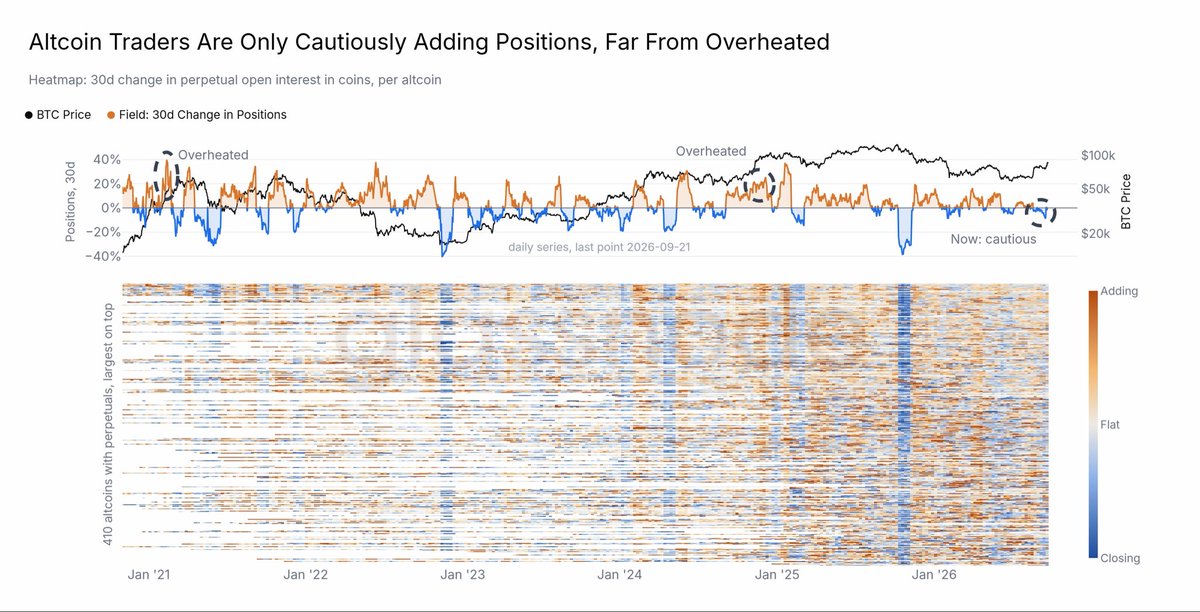
RT @Axel_bitblaze69: Alts are getting a bid without everyone piling into perps yet.. i really like it..
- 72.5% of the altcoins outperformed BTC over the past week.. august’s squeeze only reached 39%
- Alt perp positions, measured in coins, barely grew over the last 30 days
dollar OI can go up just because coins pump.. measuring in coins helps show whether traders are actually adding positions.
so the rally is spreading without a big rush into perps across the board which makes me think this rotation has more room.
so i’m watching the alts already beating BTC.. those are the ones i’d expect the perp crowd to chase if this keeps going
中文: RT @Axel_bitblaze69:Alts 正在获得报价,但尚未让所有人都陷入实际。
- 过去一周,72.5%的山寨币表现优于比特币......8月的挤压率仅达到39%
- 以硬币衡量的Alt perp位置在过去30天内几乎没有增长
美元OI之所以能上涨,只是因为硬币在上涨。用硬币衡量有助于衡量交易者是否真的在增加仓位。
因此,这场反弹正在蔓延,而没有大力冲锋,这让我觉得这次轮换阵容更加有空间。
所以我正在观察那些已经战胜比特币的另类群体......如果这种情况继续下去,我预计会吸引到这些人群
129950 粉丝
$LIT has a few things cooking beyond this breakout..
- Bitwise launched a LIT-backed product in Europe. people can buy exposure through their broker now, with staking planned for later
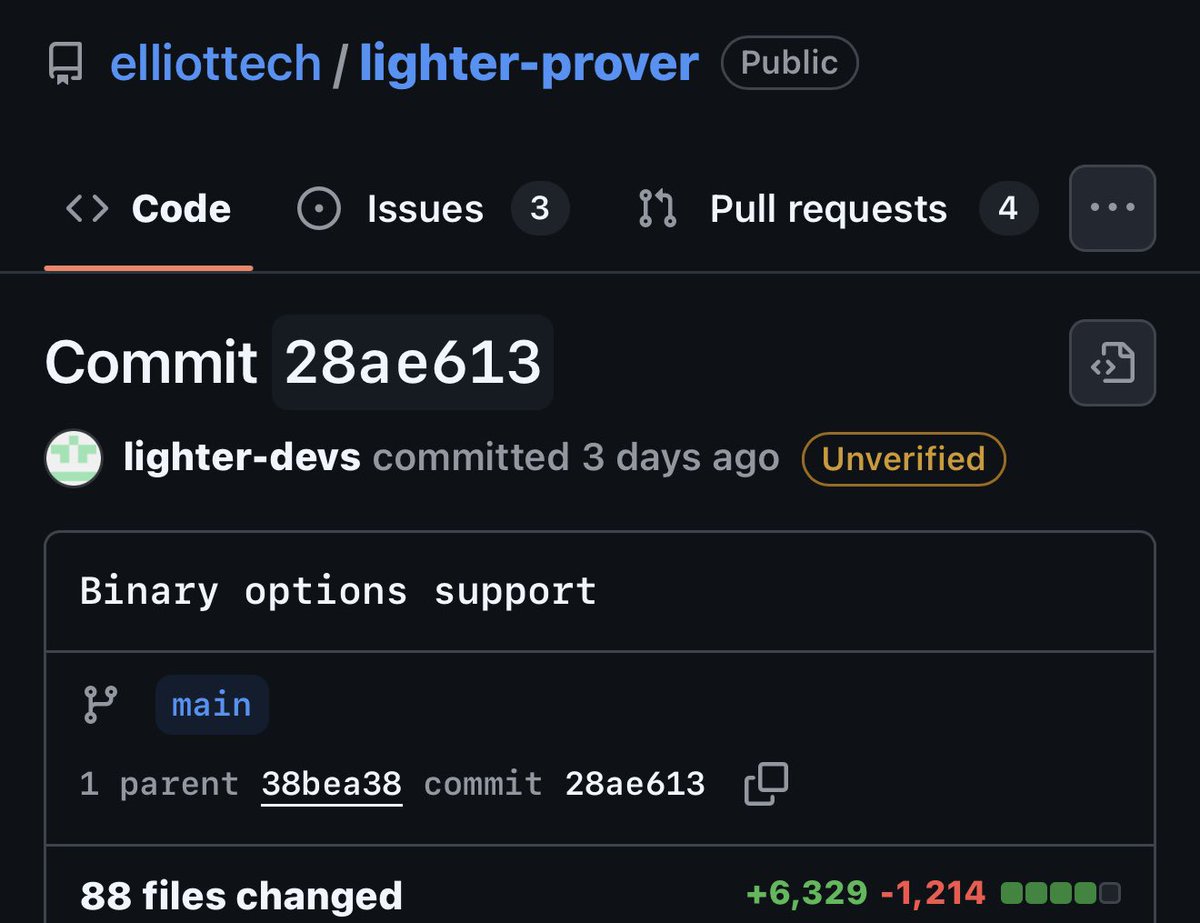
- prediction markets could be next. the GitHub code includes binary options support
prediction market on lighter is huge.. i mean give the traders already on Lighter more things to bet on, and there’s a shot at bringing in more fees to buy back $LIT
No wonder why LIT is now in everyone’s watchlist
中文: 除了这次突破之外,一些烹饪点子是 $LIT 的。
- Bitwise 在欧洲推出了一款由 LIT 支持的产品。现在人们可以通过自己的经纪人购买敞口,并计划稍后进行收购
- 预测市场可能是下一个。GitHub 代码包含二元期权支持
价格较轻的预测市场巨大......这意味着交易者可以再下注更多,并且有机会增加费用以回购LIT
难怪为什么LIT现在会进入所有人的观察名单

129950 粉丝
$ZRO is holding so strong.. i think the market is starting to price in what’s coming
LayerZero is building Zero, a new chain, and ATLAS, which lets teams run exchanges for perps, stocks and more.
ATLAS is planned for later this year
and ZRO has a role in all of it:
- gas and staking on Zero
- exchanges can stake ZRO to get better fee rebates
- 75% of trading fees left after those rebates goes toward buying and burning ZRO
yeah, i get why it’s catching a bid.
中文: ZRO 的股价非常强劲......我认为市场正开始对即将到来的市场定价
LayerZero 正在构建新链“Zero”和“ATLAS”,它允许团队运营交易所,用于购买各种股票等商品。
ATLAS计划于今年晚些时候举行
ZRO 在所有内容中都发挥着作用:
- 零度燃气和油打压
- 交易所可以对ZRO进行股权交易以获得更高的手续费回扣
- 扣除这些返利后剩余的交易费用,其中75%用于购买和焚烧ZRO
是的,我明白为什么它会收到报价。
129950 粉丝
Alts are getting a bid without everyone piling into perps yet.. i really like it..
- 72.5% of the altcoins outperformed BTC over the past week.. august’s squeeze only reached 39%
- Alt perp positions, measured in coins, barely grew over the last 30 days
dollar OI can go up just because coins pump.. measuring in coins helps show whether traders are actually adding positions.
so the rally is spreading without a big rush into perps across the board which makes me think this rotation has more room.
so i’m watching the alts already beating BTC.. those are the ones i’d expect the perp crowd to chase if this keeps going
129950 粉丝
I’m still bullish.. but just not interested in getting liquidated over a dip lol
OI had pushed back to around $80B on this chart, near October 2025 levels.. now price is pulling back and i want to see how much of that positioning actually unwinds
yes, high OI doesn’t automatically mean crowded longs.. but anyone who chased with too much leverage can get forced out, and that selling can make the dip uglier
i’d be more comfortable seeing OI come down and buyers absorb the selling before getting aggressive again
today’s pullback hasn’t changed my broader view.. i’m just leaving room for it to go further..
中文: 我仍然持乐观态度......但只是对因下跌而无法被清算不感兴趣
OI在这张图表上已回落至约800亿美元,接近2025年10月的水平......现在价格正在回落,我想看看这一定位实际上有多少会放松
是的,高OI并不意味着拥挤的长时间......但任何以过多杠杆追逐的人,都可能被迫退出,而这种抛售可能使这种下滑变得更加丑陋
看到OI下跌后,买家会更乐于接受销售,然后再采取积极措施
今天的回调并没有改变我更广泛的看法......我只是为它留下了进一步的余地。

129950 粉丝
USDC can now be borrowed against BTC without wrapping BTC..
i like how @ZestProtocol new mainnet demo lets you lock BTC on Bitcoin and borrow USDC on Ethereum.. nice! finally!
usually, using $BTC as collateral on Ethereum means getting a wrapped version like WBTC first.. here, the BTC itself stays on Bitcoin
it’s capped at 0.001 BTC per wallet for now, ahead of the full rollout
what i like is connecting BTC holders to Ethereum’s existing stablecoin liquidity.. people get access to stables without having to sell their BTC
the team already has some experience behind this:
- contributors to Stacks, sBTC and Nakamoto
- over two years operating a lending market
- roughly $92m TVL across their existing Stacks suite
i think there’s a market for making BTC borrowing easier.. for $ZEST, the next things i’m watching are the full launch, how much people actually borrow and how holders benefit from that growth
中文: 现在可以在不包装比特币的情况下借入美元兑换比特币。
我喜欢@ZestProtocol 新主网演示让你在比特币上锁定 BTC 并在以太坊上借入 USDC 的方式......很好!终于!
通常,使用比特币(BTC)作为抵押品,在以太坊上意味着先获得像WBTC这样的包装版本......在这里,比特币本身就停留在比特币上
目前每钱包上限为0.001 BTC,提前全面推出
我喜欢的是将比特币持有者与以太坊现有的稳定币流动性连接起来......人们无需出售自己的比特币即可获得稳定币
团队已经拥有一些经验:
- 为 Stacks、sBTC 和 Nakamoto 做出贡献
- 两年多来经营一个贷款市场
- 现有Stacks套件的售价约为9200万美元
我认为有一个市场可以让比特币借贷变得更加便捷......对于ZEST,接下来我关注的就是全面推出、人们实际借贷的金额以及持有者如何从这一增长中受益
129950 粉丝
@WatcherGuru interesting
中文: @WatcherGuru 很有趣
129950 粉丝
$PENGU looks like it’s getting ready to leave the station..
months of basing around 10/10 wick, now a higher low forming on the weekly.. i like this https://twitter.com/Axel_bitblaze69/status/2102324028346445852/photo/1
中文: 普恩古看起来正准备离开车站。
大约10/10号灯芯的月度,每周的形成率已降至较低水平。我喜欢这个

129950 粉丝
RT @elliotrades: Virtual Bacon got hacked please report the account @virtualbacon
Please RT and share so people don't get burned
Here's him explaining the situation
@Support
中文: RT @elliotrades:虚拟培根被黑客入侵,请报告账号:@virtualbacon
请分享一下RT,以免人们被烧伤
他来解释情况
@支持
129950 粉丝
RT @Axel_bitblaze69: $LINK is too an interesting play for the privacy trade imo..
everyone wants banks and funds onchain, but do we really expect them to let CT track their trades and client balances lol
chainlink has been building for this:
- private transfers between private chains through CCIP, hiding amounts and sender/receiver details from outsiders
- Confidential Compute, designed to keep sensitive data and trading logic private while apps use it
that’s why i think the privacy narrative could spill over into LINK.. the same banks we’re betting will come onchain need this stuff before they’re comfortable using it
中文: RT @Axel_bitblaze69:$LINK 对隐私贸易而言太有趣了。
每个人都希望银行和基金在链上,但我们真的希望它们能让CT追踪他们的交易和客户余额吗
链链一直为此而建:
- 通过CCIP在私人链之间进行私人转账,从外部人员那里隐藏金额以及发送/接收者的详细信息
- 机密计算,旨在保持敏感数据和交易逻辑的私密性,同时应用使用
这就是为什么我认为隐私问题可能会泄露到链接中......我们押注的银行在使用之前,就需要使用这些东西
129950 粉丝
Just bull market things..
$BTC dipped below $76k, then quickly ripped through $82.8k.. probably rinsing overleveraged longs first and late shorts on the way back up
now too many people are waiting to short $84K.. i think that could be another expensive lesson lol
imo it runs straight through $88k and annihilates the next round of shorts
中文: 只是牛市的东西......
BTC价格下跌至7.6万美元以下,随后迅速突破了8.28万美元......在返回途中,可能会冲洗掉超杠杆的长短裤
现在有太多人正等待空头8.4万美元......我认为这可能又是一堂昂贵的课
它直接跑过88万美元,并使下一轮短裤湮灭

129950 粉丝
$LINK is too an interesting play for the privacy trade imo..
everyone wants banks and funds onchain, but do we really expect them to let CT track their trades and client balances lol
chainlink has been building for this:
- private transfers between private chains through CCIP, hiding amounts and sender/receiver details from outsiders
- Confidential Compute, designed to keep sensitive data and trading logic private while apps use it
that’s why i think the privacy narrative could spill over into LINK.. the same banks we’re betting will come onchain need this stuff before they’re comfortable using it
129950 粉丝
RT @Axel_bitblaze69: just when $ETH was about make its move to $3000 these are the today’s headlines:
- Poland warns russia could target NATO countries with drones and missiles
- macron warns russian threats against europe are intensifying
- houthis claim missile and drone attacks on saudi arabia’s capital
- trump says he’s considering renewed large-scale strikes on iran
- israel launches fresh airstrikes in southern lebanon (The Guardian)
- trump signs new russia sanctions allowing up to 100% tariffs on major buyers of russian oil
ahhhhhh back to watching geopolitics alongside the charts..
中文: RT @Axel_bitblaze69:就在 $ETH 即将转至 3000 美元之际,这些就是今日头条新闻:
波兰警告俄罗斯可能使用无人机和导弹打击北约国家
- 马克龙警告称,针对欧洲的俄罗斯威胁正在加剧
- 声称对沙特阿拉伯首都发动导弹和无人机袭击
- 特朗普表示正在考虑对伊兰进行新一轮大规模打击
- 伊斯兰国在黎巴嫩南部发动新的空袭(《卫报》)
- 王牌签署新的俄罗斯制裁,允许对俄罗斯石油主要买家征收高达100%的关税
回到与图表一起观看地缘政治。
129950 粉丝
just when $ETH was about make its move to $3000 these are the today’s headlines:
- Poland warns russia could target NATO countries with drones and missiles
- macron warns russian threats against europe are intensifying
- houthis claim missile and drone attacks on saudi arabia’s capital
- trump says he’s considering renewed large-scale strikes on iran
- israel launches fresh airstrikes in southern lebanon (The Guardian)
- trump signs new russia sanctions allowing up to 100% tariffs on major buyers of russian oil
ahhhhhh back to watching geopolitics alongside the charts..
中文: 就在 $ETH 即将转至3000美元时,这些就是今日的头条新闻:
波兰警告俄罗斯可能使用无人机和导弹打击北约国家
- 马克龙警告称,针对欧洲的俄罗斯威胁正在加剧
- 声称对沙特阿拉伯首都发动导弹和无人机袭击
- 特朗普表示正在考虑对伊兰进行新一轮大规模打击
- 伊斯兰国在黎巴嫩南部发动新的空袭(《卫报》)
- 王牌签署新的俄罗斯制裁,允许对俄罗斯石油主要买家征收高达100%的关税
回到与图表一起观看地缘政治。
129950 粉丝
RT @Axel_bitblaze69: this is pretty much how i’m filtering alts to add to my portfolio rn..
> teams that kept building through the bear
> products people actually use
> steadily growing activity and fees
> fees that benefit holders through buybacks, burns or revenue sharing
> and price that hasn’t caught up with that progress
> no huge upcoming unlocks being overlooked
basically, i’m looking for altcoins that have kept getting better while the market hasn’t priced in its full value yet..
中文: RT @Axel_bitblaze69:这几乎就是我过滤alts以添加到我的作品集的方式。
不断通过熊来建造的队伍
人们实际使用的产品
活动和费用的稳步增长
通过回购、烧钱或收入分成使持有者受益的费用
以及尚未跟上这一进展的价格
没有大范围即将推出的解锁功能被忽视
基本上,我正在寻找一些在市场尚未完全定价的情况下不断进步的山寨币。
129950 粉丝
this is pretty much how i’m filtering alts to add to my portfolio rn..
> teams that kept building through the bear
> products people actually use
> steadily growing activity and fees
> fees that benefit holders through buybacks, burns or revenue sharing
> and price that hasn’t caught up with that progress
> no huge upcoming unlocks being overlooked
basically, i’m looking for altcoins that have kept getting better while the market hasn’t priced in its full value yet..
中文: 这几乎就是我过滤alts以添加到我的作品集的方式。
不断通过熊来建造的队伍
人们实际使用的产品
活动和费用的稳步增长
通过回购、烧钱或收入分成使持有者受益的费用
以及尚未跟上这一进展的价格
没有大的即将推出的解锁功能被忽视
基本上,我正在寻找一些在市场尚未完全定价的情况下不断进步的山寨币。
129950 粉丝
Altcoins that are behind the products people use more as this market heats up are the obvious bets right now to me..
as people start swapping more, moving between chains, borrowing against their bags and finding somewhere to put their profits like..
- $UNI for swaps as people rotate between coins
- $NEAR Intents for swapping across chains
- $ZAMA for keeping balances and transfer amounts private
- $HYPE and $LIT for spot and perps
- $AAVE for borrowing against coins and earning on stables
Keep an eye on such coins..
tbh AAVE is one i’d watch closely here.
someone’s ETH goes up, they can borrow more without selling,
while someone taking profits can supply stables and earn interest
so yeah, i think a busier market could bring these products more business, and these coins are worth having in your watchlist
also yeah, see whether that extra usage reaches the token through fees, burns or buybacks..
129950 粉丝
RT @Axel_bitblaze69: $ETH is only 13% away from reaching $3000 btw and we did a move that size in the last 2 days
funny how my timeline thinks its gonna be tough and far from here.. https://twitter.com/Axel_bitblaze69/status/2101297987049980356/photo/1
中文: RT @Axel_bitblaze69:距离每盎司3000美元仅上涨了13%,而我们在过去两天内就实现了如此规模的转会
有趣的是,我的时间线认为会很艰难,而且远非如此。

129950 粉丝
$ETH is only 13% away from reaching $3000 btw and we did a move that size in the last 2 days
funny how my timeline thinks its gonna be tough and far from here.. https://twitter.com/Axel_bitblaze69/status/2101297987049980356/photo/1
中文: 距离3000美元到达仅13%,而我们在过去两天里就实现了这一规模
有趣的是,我的时间线认为会很艰难,而且远非如此。
129950 粉丝
RT @Axel_bitblaze69: I like $UNI because i think people will keep trading more as this market heats up..
Uniswap generated $15.6M in protocol revenue over the last 30 days, with $8.9M coming from Robinhood Chain alone..
so the loop is pretty simple.
when trading makes providing liquidity worthwhile, more liquidity can come in, giving traders better prices and attracting more trades
and where protocol fees are enabled, those fees feed UNI burns..
so yeah, people can keep chasing their favourite coins without caring about UNI at all.
and my bet is Uniswap keeps winning those trades, and more of that activity turns into burns
中文: RT @Axel_bitblaze69:我喜欢 $UI,因为随着市场升温,人们会继续继续交易。
Uniswap在过去30天内创造了1560万美元的协议收入,仅Robinhood Chain就获得了890万美元。
所以循环相当简单。
当交易使提供流动性变得有价值时,可以有更多流动性,从而让交易者获得更好的价格,并吸引更多交易
并且在协议费用启用时,这些费用会导致UI的消耗。
是的,人们可以继续追逐自己喜爱的硬币,而根本不在乎UI。
我的赌注是,尤因斯瓦普不断赢得这些交易,而更多的交易活动也变成了火
129950 粉丝
I like $UNI because i think people will keep trading more as this market heats up..
Uniswap generated $15.6M in protocol revenue over the last 30 days, with $8.9M coming from Robinhood Chain alone..
so the loop is pretty simple.
when trading makes providing liquidity worthwhile, more liquidity can come in, giving traders better prices and attracting more trades
and where protocol fees are enabled, those fees feed UNI burns..
so yeah, people can keep chasing their favourite coins without caring about UNI at all.
and my bet is Uniswap keeps winning those trades, and more of that activity turns into burns
129950 粉丝
Memes paired with coins, tokenized stocks, commodities and even leveraged tokens..
this meta keeps expanding and i really like where it’s going..
holder rewards gives another reason to hold and farm yield
innovation that made memes great again.. something NFTs are missing
中文: 与硬币、代币化股票、商品甚至杠杆代币配对的表情包。
这个元不断扩展,我非常喜欢它的发展。
持牌人奖励给出了另一个持有和实现收益的理由
创新让表情包再次变得伟大......一些NFT缺少的东西
129950 粉丝
Could this be a generational dip on $NUB or its all over ? whats going on here lol https://twitter.com/Axel_bitblaze69/status/2100988710548619392/photo/1
中文: 这会是对 $NUB 或其全部内容的代际下滑吗?这里发生的事情,请访问
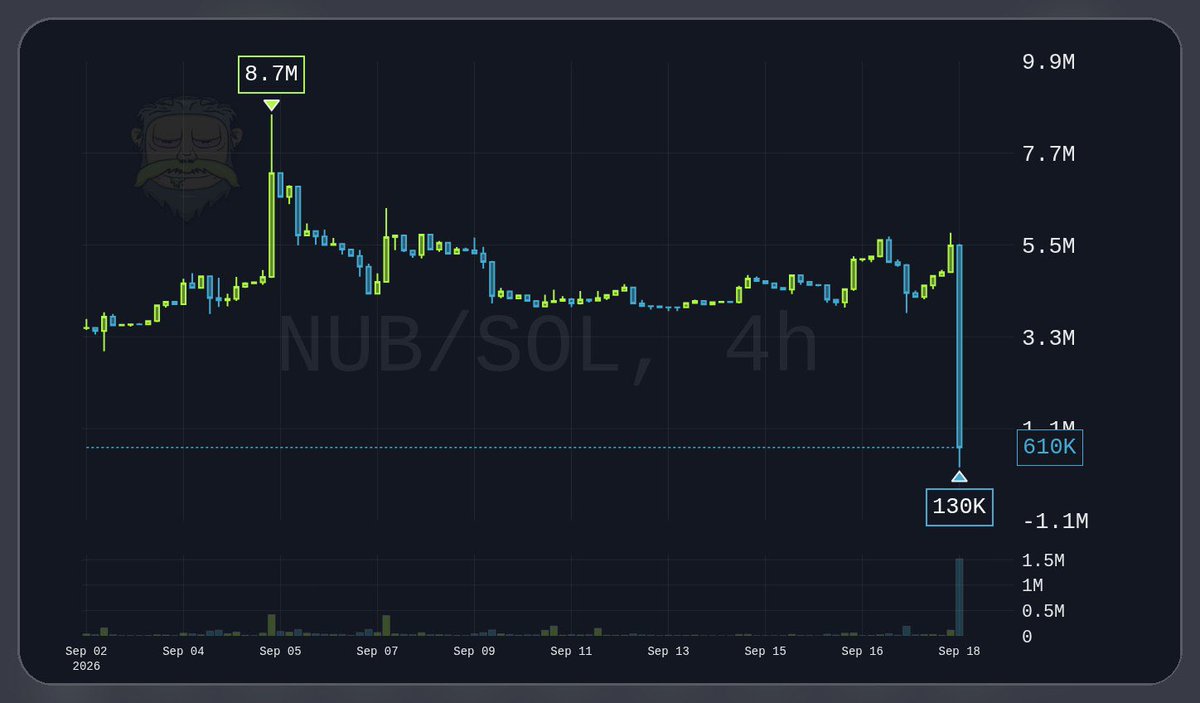
129950 粉丝
You can now borrow stables against your $HYPE without selling it.. another reason to keep money on Hyperliquid
manual borrows are live:
- supply HYPE or BTC as collateral, borrow USDC or USDT
- $10k of HYPE gives up to $6.5k borrowing capacity, subject to caps and available liquidity
- supply USDC or USDT instead and earn interest from borrowers
say you want cash but still want to hold your $HYPE .. now you have that option directly on HyperCore
what interests me is how this could keep more money on the platform.. traders can hold coins, borrow against them and put idle stables to work in the same place
i’m bullish on giving people more reasons to stay, even when they’re not trading perps..
Hyperliquid
129950 粉丝
$NEAR is finally sending.. price is catching up with everything they’ve been building.
i think $LINK could be next to pull that kind of move.. look at where Chainlink is already being used:
- Lighter and BitMEX adopted its price feeds for stock trading
- Polymarket uses its data for short-term crypto markets
- Ondo adopted it for tokenized stock and ETF pricing
and the part that keeps me bullish on the coin.. enterprise and onchain revenue gets converted into $LINK for the reserve.
customers can pay to use Chainlink without ever deciding to buy LINK themselves.
so when i’m bullish on more stocks coming onchain, more perps trading and more prediction markets, $LINK is one of the coins that will benefit the most
i don’t think the market fully appreciates that yet.. growing usage turning into meaningful LINK buying.. wait until they realise
中文: $NEAR 终于在发送了......价格正在追上他们一直构建的一切。
我认为 $LINK 可能就是采取这种举措的下一步。看看 Chainlink 已经在使用的地方:
- 莱特和比特MEX采用其价格源进行股票交易
- Polymarket 将其数据用于短期加密货币市场
- Ondo 采用它作为代币化股票和 ETF 定价
而让我对硬币保持乐观的部分......企业收入和链收入都被转化为储备金的美元链接。
客户无需自行决定购买LINK,即可使用Chainlink。
因此,当我看好更多股票进入链上、更多股票交易以及更多预测市场时,美元链接是最有利于你的货币之一
我认为市场尚未完全意识到这一点......不断增长的使用量会转化为有意义的链接购买......等到他们意识到
129950 粉丝
Since, I already hold a fat bag of $NEAR, $LINK, $LIT and $PUMP
so i’m looking for paired coins that pay me more of those coins.. like:
- $CANDLE earns me $LIT
- $NEARKAT earns me $NEAR
$ZCAT is leading this meta atm with over 100M mcap rn.. paying $ZEC
that’s what interests me about this meta.. collecting coins i already wanted through a meme i’m willing to hold..
for $LINK there is $Linkkat ( which i have created )
129950 粉丝
$CANDLE below $200K mcap with $227.6k in rewards paid in $LIT is funny.
- 1300% annualized APR based on the last 3 days
- means roughly $3.54 a day per $100 held at that rate
those numbers are insane lol.. buyers here could eat good in $LIT .. looking like an obvious bet to me https://twitter.com/Axel_bitblaze69/status/2100856608880529826/photo/1

129950 粉丝
If alts keep moving like this, i wouldn’t be surprised to see money rotate out of the trenches..
fewer meme winners to chase, while alts are starting to put together steadier moves
at some point people will ask why they’re chasing hundreds of launches a day when the alts they ignored keep grinding higher
if $BTC and $ETH hold steady while that continues, i think it gives the rotation room to build..
some memes will continue to do well.. but they have to compete for that money again
中文: 如果阿尔茨继续这样行动,看到资金从战壕中转出,我也不会感到意外。
追逐的meme赢家较少,而另类则开始将更稳定的动作组合起来
在某个时刻,人们会问为什么每天要追逐数百次发射,而他们忽视的那些大白却不断升高
如果在继续的情况下,$BTC和$ETH保持稳定,我认为它为构建提供了旋转空间。
一些表情包将继续表现良好......但他们必须再次争夺那份钱
129950 粉丝
Why is $CANDLE this cheap when the lore is literally right there
we were QTing lighter posts with candles all through points farming szn lol
i bought some for culture.. to farm free $LIT
🕯️
中文: 当传说真的就在那里时,为什么把 $CANDLE 这么便宜
我们通过农业 szn lol 的点点都在用蜡烛调亮的贴文
我买了一些用于文化的农用,免费购买。
🕯️
129950 粉丝
RT @Axel_bitblaze69: If privacy is really getting a bigger bid this cycle then $NEAR belongs at top in that conversation..
I say this with 100% conviction because how many normal crypto activities it’s bringing privacy to:
- payments, so sending someone money doesn’t reveals about what else you hold and do onchain
- swaps, so your buys and sells are not exposed
- now perps powered by Hyperliquid, with positions harder to link to your main account
i think the demand is pretty obvious.. people want to trade without their wallet becoming a public diary
NEAR doesn’t have to turn all those people into holders to get them using its tech
but if the experience is good enough, i can see privacy becoming a reason traders choose it and stay..


129950 粉丝
If privacy is really getting a bigger bid this cycle then $NEAR belongs at top in that conversation..
I say this with 100% conviction because how many normal crypto activities it’s bringing privacy to:
- payments, so sending someone money doesn’t reveals about what else you hold and do onchain
- swaps, so your buys and sells are not exposed
- now perps powered by Hyperliquid, with positions harder to link to your main account
i think the demand is pretty obvious.. people want to trade without their wallet becoming a public diary
NEAR doesn’t have to turn all those people into holders to get them using its tech
but if the experience is good enough, i can see privacy becoming a reason traders choose it and stay..
129950 粉丝
A trader can look brilliant when the market trends.. i want to see what happens when it starts chopping
that’s what i’d watch with Edge Metrics’ Hennessy Trend Vault on @ProsperTicker
it’s a systematic strategy that can go long or short Bitcoin and large-cap US equities, trying to follow sustained moves in either direction
so it doesn’t need every market to go up, but getting repeatedly caught on the wrong side of reversals is what i’d be watching for
my checks would be pretty simple:
- is the value per vault share recovering after losses, or making lower lows?
- how much does it lose during sideways markets?
- does it handle a reversal without giving back the previous move?
the live chart only has a few days of history, so there’s no basis to call it a proven strategy yet
then there’s pTACO, the separate token market around this strategy
i’d compare the attention and trading around pTACO with what the vault actually delivers.. is confidence building alongside results, or is the token running ahead of the evidence?
and don’t mix the two up: vault shares give you strategy exposure, while pTACO gives you no claim on the vault’s assets or profits and doesn’t track its NAV
that’s the setup i’d keep on a watchlist for now
https://app.pros-per.xyz/?view=detail&vault=emht-f43219
129950 粉丝
This is huge.. could bring attention back to stock paired coins again..
SEC just issued a five-year conditional exemption allowing eligible venues to trade tokenized US stocks through onchain liquidity pools
Robinhood is backing it, highlighting instant settlement, 24/7 trading and fractional ownership
that’s a meaningful development for the stocks-onchain narrative.. and i think the next trade to watch is where that attention goes
my rotation thesis would be:
- renewed interest in tokenized stocks
- traders revisit the apps and ecosystems built around them
- some speculative money rotates into stock paired memes and launchpad tokens
中文: 这非常巨大......可能会再次引起人们对股票配对硬币的关注。
美国证券交易委员会刚刚发布了一项为期五年的有条件豁免,允许符合条件的场所通过链式流动性池交易美国股票
罗宾汉支持它,强调即时结算、全天候交易和分量持股
这对股票与连锁交易的叙述而言是一个有意义的发展......我认为接下来需要关注的交易将走向何方
我的轮换论文是:
- 重新关注代币化股票
- 交易者重新审视围绕它们构建的应用程序和生态系统
- 一些投机性资金可旋转成股票配对的表情包和启动板代币
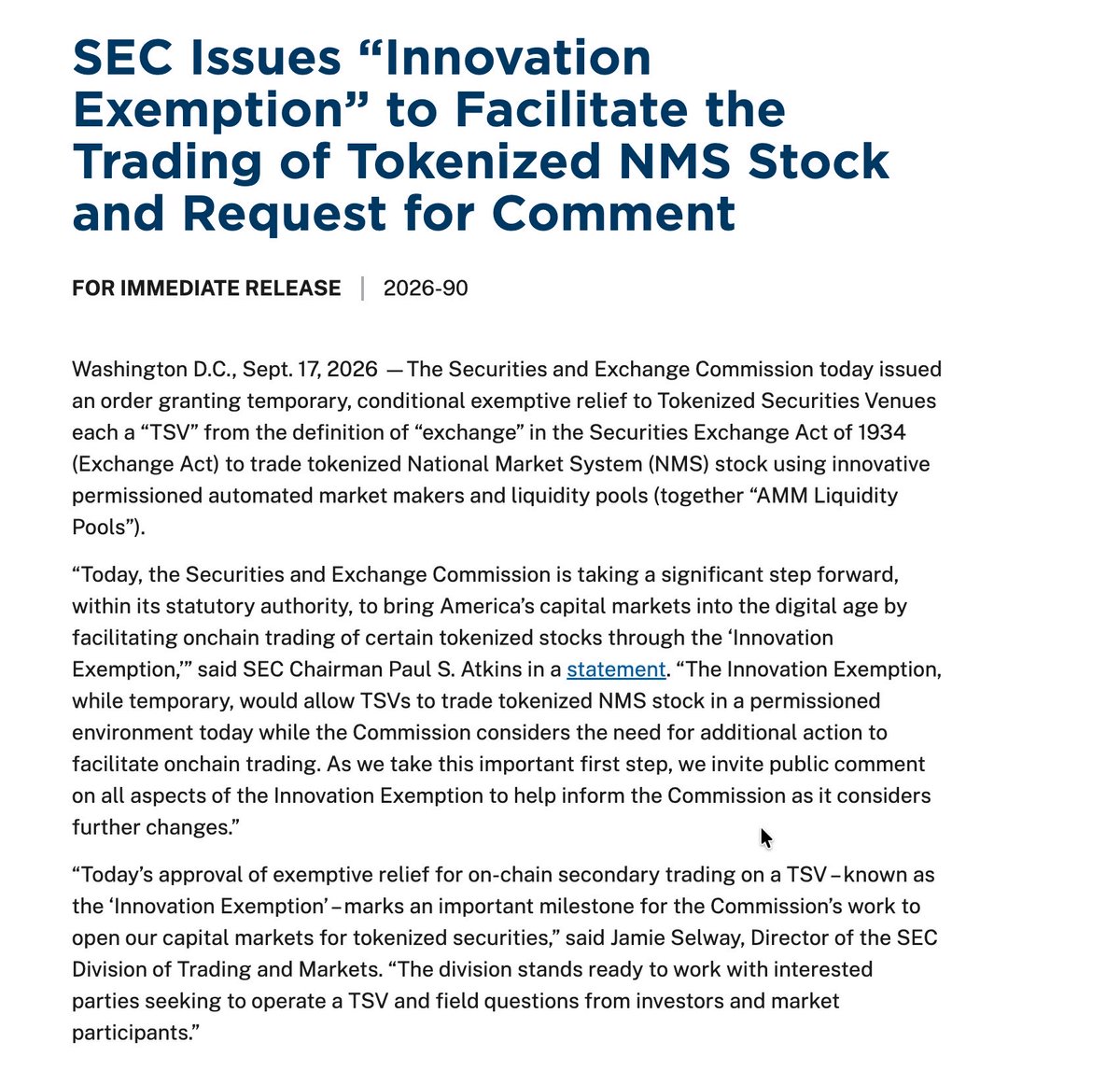
129950 粉丝
$NEAR is one of those coins you don’t have to be bullish on to help fund its buybacks..
you could just be swapping through Ledger or Brave Wallet,
or using Zodl to move into shielded $ZEC all three integrate NEAR Intents
and the usage is already there
- $30.35B in total Intents volume
- $4.17B over the last 30 days
- $847M of that through confidential swaps
that’s roughly 54% of all confidential volume happening in one month
when trades route through Intents, NEAR captures a share of the fees, with captured revenue funding $NEAR buybacks
so yeah, you can prefer another chain and still use NEAR’s tech without thinking about it..
that’s my bet on.. more apps routing through Intents, more usage feeding revenue back into the token
129950 粉丝
Im heavy on $ETH and so excited for a pumpfun style launchpad with its own DEX on Ethereum.. finalllyyy..
that’s what @Motoswap and @motodotfun are building, and i see a good opportunity here to farm some $MOTO
why cuz my thesis is pretty simple:
- launches bring coins and traders into the DEX
- those coins keep generating fees as people trade them
- the planned 1% swap fee gets split across LPs, trader rakeback, MOTO stakers, treasury and buyback-and-burn
say the DEX does $1M in volume. that’s $10k in total fees to distribute…
for LPs, the interesting part is how much volume their pool handles relative to the liquidity sharing its fees.
opening farms are
USDC/MOTO
USDT/MOTO
WETH/MOTO
and single-sided MOTO.
and the team has several million dollars in rewards planned over two weeks, initial APYs are expected to be high, but variable.
so gonna farm the early incentives and watch whether trading and creator-fee revenue gives me a reason to stay as emissions slow down..
pools and rates: https://motoswap.org/
🎬
视频
129950 粉丝
$PAID is doing something i can see non-crypto people caring about..
letting them receive a share of memecoin trading fees as dollars through X Money, without setting up a crypto wallet.
CAN SEE THIS GOING VIRAL PRODUCT ON X
say someone launches a meme around a creator.
they name that creator’s X handle and permanently direct the token’s creator fees to @UsePaid. and collected fees are split:
80% goes to the recipient through X Money
20% goes toward buying and burning $PAID
so $1,000 in creator fees means $800 allocated to the person and $200 to buybacks.
the recipient still needs an eligible X Money account that accepts payments. but no wallet connection, no buying $PAID, no figuring out how to sell tokens for dollars.
that’s the bit i like.
it works with existing launchpads and makes the receiving side easier for someone who doesn’t care about crypto.

129950 粉丝
I really don’t think we’ll see another launchpad coin run like $PONS or $STONK unless it offers something beyond custom pairs and holder rewards.
doesn’t matter which chain it’s on.. the same features with a new token aren’t enough for me anymore.
129950 粉丝
RT @Axel_bitblaze69: Its clear that the confidence is there in the market.. people still want to take risk.
but the meme experience is getting exhausting.
- KOL bundles and insiders selling into every push
- another chain launching, another set of launchpads competing for the same money
- endless copied new coins splitting attention and liquidity
- barely getting time to build conviction before everyone moves on
people want something they can hold for more than a few hours without having to watch every wallet.
that’s why i think even a small move in alts could get chased hard this time.
especially if the first few pumps actually hold and give people a reason to stay.
give the crowd somewhere else to make money other than memes and i think that rotation could turn into a much bigger and healthy rally than people expect…
anyway until then back to trading memes. c’ya
129950 粉丝
Its clear that the confidence is there in the market.. people still want to take risk.
but the meme experience is getting exhausting.
- KOL bundles and insiders selling into every push
- another chain launching, another set of launchpads competing for the same money
- endless copied new coins splitting attention and liquidity
- barely getting time to build conviction before everyone moves on
people want something they can hold for more than a few hours without having to watch every wallet.
that’s why i think even a small move in alts could get chased hard this time.
especially if the first few pumps actually hold and give people a reason to stay.
give the crowd somewhere else to make money other than memes and i think that rotation could turn into a much bigger and healthy rally than people expect…
anyway until then back to trading memes. c’ya
129950 粉丝
I use the price range setting on Jupiter DCA for my entries.. pretty underrated feature imo on @JupiterExchange
sometimes i like a coin, know where i want to buy, but don’t want to sit there placing every order..
so i just set the amount, split the buys and give it a range. something like:
- $500 total, split into 10 buys
- $50 every 30 minutes
- only buy between $0.008 and $0.01
you can set this under “Add price range” on Jupiter DCA.
if it pumps to $0.015, the next buy waits. same if it drops below $0.008. it checks again at the next interval.
that’s what i like about it.
i can step away without my DCA buying at prices i never wanted just because another 30 minutes passed..
129950 粉丝
Give me a one good reason not to fade ARC ?
I don’t see a catalyst that brings fresh money into its memes once the launch hype fades..
- Robinhood has Vlad openly supporting the ecosystem and listing coins doing good on chain giving traders something to look forward to.
- Base chain has Coinbase distribution and now Cobie at the frontend
- Solana already has the meme traders, liquidity and communities. i can see why money would go there..
- And ARC atm feels like launchpad wars.
- i’m struggling to find a meme building a cult beyond people waiting for the next launch. the whole thing feels forced.
- My test is whether one of these launchpad coins reaches $100m mcap in the coming days. if none can, that strengthens my view that demand isn’t there. a brief wick wouldn’t convince me either..
so i think the next rotation could go back to solana memes or robinhood DeFi.
that’s where i’d rather look until ARC gives me a reason to change my mind.
中文: 给我一个不褪色的合理理由?
我看不到一旦发布炒作消退,会为其表情包注入新资金的催化剂。
- 罗宾汉公司已公开支持Vlad生态系统,并将擅长的加密货币列入链式交易,为交易者提供值得期待的服务。
- 基础连锁店已拥有 Coinbase 分销,而如今 Cobi 处于前端
- 索拉纳已经拥有了这些商品的交易员、流动性和社区。我明白为什么资金会流向那里。
- 而ARC atm 感觉像是发射台战争。
- 我正努力寻找一个在人们等待下一次发布后建立邪教之外的主题。整个事情感觉是被迫的。
- 我的测试是,这些发射台硬币在未来几天内是否达到1亿万卡。如果无法用,这强化了我的观点,即需求不存在。一个简短的娞娨一也无法说服我。
所以我认为下一次轮换可能会回到 salana 表情包或 robinhood DeFi。
我宁愿看,直到ARC给了我改变主意的理由。
129950 粉丝
Am i the only one fading ARC completely?
中文: 唯一完全褪色的ARC吗?
129950 粉丝
$ETH continues to impress me..
BTC is losing its range while ETH is still holding up… this is exactly the kind of strength i want to see.
makes me more confident in my thesis on in looking for opportunities in Altcoins instead of fading them altogether. https://twitter.com/Axel_bitblaze69/status/2100244708366926276/photo/1

129950 粉丝
RT @Axel_bitblaze69: My screening setup to find launches to ape on ARC chain:
there are already more coins than i can follow, so i want to narrow things down before spending time on individual charts.
i keep the Arc page open on GeckoTerminal with:
- 30K+ liquidity, to cut out the thinnest pools
- 50K+ daily volume, so there’s some trading activity
- 100+ holders, to exclude coins with barely any wallets
- top 10 holders at 40% max combined, to limit obvious concentration
the idea here is simple.. i’m willing to miss some first-minute entries if it means having more information before buying.
then i compare the 1h and 6h moves with the 24h. a coin being up 500% today doesn’t tell me whether it’s still moving or has been dumping for the last three hours.
if i like the chart, i open Transactions and Holders to check the trade sizes and who controls the supply.
the filters give me candidates, and these checks help me decide which ones deserve more time..
also, i check “Other Pools.” the same token can have several pools with different liquidity and fees, so i compare them before checking the actual quote in my trading app.
that’s how this helps me.. fewer random charts, the same checks for every coin, and less rushing into something just because it landed on my timeline.
中文: RT @Axel_bitblaze69:我在ARC链上寻找登陆的放映设置:
已经有比我能遵循的更多的硬币了,所以我想先缩小范围,然后再花时间在单个图表上。
在 GeckoTerminal 上保持 Arc 页面的打开:
- 30K+ 流动性,以切断最薄的池
- 每日交易量超过5万,因此有一些交易活动
- 100多只持有者,将钱币排除在几乎没有任何钱包的情况下
- 最高10个最大浓度为40%,以限制明显浓度
这里的想法很简单......如果意味着购买前需要更多信息,我愿意错过一些第一分钟的参赛作品。
然后,我将1小时和6小时的走势与24小时进行比较。如今,一枚硬币上涨了500%,并不能告诉我它是否仍在移动,或在过去三个小时内一直在倾销。
如果我喜欢图表,请打开交易和持有者,以查看交易规模以及谁控制了供应量。
筛选器会为我提供应聘者,而这些检查帮助我决定哪些人值得拥有更多时间。
同时,我会勾选“其他池”。同一个代币可以拥有多个具有不同流动性和费用的池,因此在查看我的交易应用中的实际报价之前,我会先进行比较。
这就是对我有帮助的方式......更少的随机图表,每枚硬币的支票都一样,而仅仅因为它落在我的时间线上,就更少地匆忙投入。
🎬
视频
129950 粉丝
@cz_binance $BNB at 713 is a steal
中文: @cz_binance 713 的 $BNB 是一茪
129950 粉丝
129950 粉丝
My screening setup to find launches to ape on ARC chain:
there are already more coins than i can follow, so i want to narrow things down before spending time on individual charts.
i keep the Arc page open on GeckoTerminal with:
- 30K+ liquidity, to cut out the thinnest pools
- 50K+ daily volume, so there’s some trading activity
- 100+ holders, to exclude coins with barely any wallets
- top 10 holders at 40% max combined, to limit obvious concentration
the idea here is simple.. i’m willing to miss some first-minute entries if it means having more information before buying.
then i compare the 1h and 6h moves with the 24h. a coin being up 500% today doesn’t tell me whether it’s still moving or has been dumping for the last three hours.
if i like the chart, i open Transactions and Holders to check the trade sizes and who controls the supply.
the filters give me candidates, and these checks help me decide which ones deserve more time..
also, i check “Other Pools.” the same token can have several pools with different liquidity and fees, so i compare them before checking the actual quote in my trading app.
that’s how this helps me.. fewer random charts, the same checks for every coin, and less rushing into something just because it landed on my timeline.
中文: 我为在ARC链上寻找发布到猿的筛选设置:
已经有比我能遵循的更多的硬币了,所以我想先缩小范围,然后再花时间在单个图表上。
在 GeckoTerminal 上保持 Arc 页面的打开:
- 30K+ 流动性,以切断最薄的池
- 每日交易量超过5万,因此有一些交易活动
- 100多只持有者,将钱币排除在几乎没有任何钱包的情况下
- 最高10个最大浓度为40%,以限制明显浓度
这里的想法很简单......如果意味着购买前需要更多信息,我愿意错过一些第一分钟的参赛作品。
然后,我将1小时和6小时的走势与24小时进行比较。如今,一枚硬币上涨了500%,并不能告诉我它是否仍在移动,或在过去三个小时内一直在倾销。
如果我喜欢图表,请打开交易和持有者,以查看交易规模以及谁控制了供应量。
筛选器会为我提供应聘者,而这些检查帮助我决定哪些人值得拥有更多时间。
同时,我会勾选“其他池”。同一个代币可以拥有多个具有不同流动性和费用的池,因此在查看我的交易应用中的实际报价之前,我会先进行比较。
这就是对我有帮助的方式......更少的随机图表,每枚硬币的支票都一样,而仅仅因为它落在我的时间线上,就更少地匆忙投入。
🎬
视频
129950 粉丝
Im so ready to lose some money on ARC chain today..
sharing my watchlist so far.. coins, NFTs and where i’ll be looking for new launches.
keeping the list small enough that i can actually follow what happens after buying.
1) coins / launchpads
- $TOLLY / @TollyLabs: direct launches into USDC pools, no bonding curve. watching whether activity spreads beyond $TOLLY into the coins launching there.
- $WARP / @circlewarp: bonding-curve launchpad. the cross-chain buying feature is what interests me, although its site still says source-chain deployment is pending.
- @TradePools: watching new launches here too. already has a product on Robinhood Chain, so i want to see which builders and traders follow it onto Arc.
for the pad tokens, i’m checking how trading fees benefit holders. a busy launchpad and a good token investment aren’t automatically the same thing.
2) NFTs / mint watchlist
@akadotfun: NFT/token hybrid. interested in how the two sides work together.
@ArclingsNFT: fully onchain collection. watching the mint and whether there’s demand afterwards.
@Orixaxyz: NFT marketplace and launchpad angle, so worth following beyond an individual mint.
OpenSea announced day-one Arc support, which gives these collections somewhere familiar to trade.
i’ll check official mint details before committing. and once trading starts, i care about actual sales and bids more than whatever floor someone lists at.
3) the tools alongside the watchlist
fomo: discovery
Banana Gun: execution
Tower: comparing swap routes
Pumpfun app for trading
fomo, pumpfun and Banana Gun announced day-one support.
if you’re still getting set up, Circle’s bridge lists Arc. gas is USDC, mainnet chain ID is 5042, and the official network details are:
chain ID: 5042
RPC: https://rpc.mainnet.arc.io/
currency: USDC
explorer: https://explorer.arc.io/
129950 粉丝
FOMC today.. 25bps hike odds went from 33% to 92.5% in a month
so yeah, a hike is pretty much expected here.. i wouldn’t assume we dump just because they deliver it
if we get the expected 25bps without that extra hawkishness, i think we pump.. https://twitter.com/Axel_bitblaze69/status/2100115962574082071/photo/1

129950 粉丝
how are you guys casually aping thousands into memes with CLARITY failing to advance and FOMC today..
like do you genuinely not give a fuck or am i overthinking all of this 😭
129950 粉丝
RT @Axel_bitblaze69: I’ve been farming stock meme pairs lately.. and this is pretty much how i’ve been choosing where to put liquidity..
the whole idea is to earn a share of the fees when people trade through the pool
so, first i start on GeckoTerminal’s Stock Pairs APR Tracker to compare daily fees, volume, liquidity and estimated APR.
then i narrow them down:
- both tokens.. liking NVDA isn’t enough if i wouldn’t want to hold the meme paired with it. i’m exposed to both.
- fees against liquidity.. say two pools each generate $1k in daily fees. one has $100k deposited, the other $1M … that’s 1% versus 0.1% in daily fees relative to liquidity. same fees, but very different amounts of capital sharing them.
- volume over several days.. if trading drops from $1m to $100k a day, fees would drop roughly 90% at the same fee rate. yesterday’s big APR won’t tell me that activity is about to disappear.
after i find the ones that look interesting, i open on Uniswap through the tracker and check the fee structure and my LP range, meaning the price range where my liquidity earns fees.
outside that range, i stop earning swap fees. so i check the pair’s chart before choosing it, and keep monitoring after entering.
the displayed APR projects the last 24 hours over a year. my actual return depends on my position, and earning $20 in fees doesn’t help much if its value drops $200.
that’s what i’m checking.. whether the trading activity lasts, whether the fees justify the exposure, and whether i’m comfortable holding the pair.
check the tracker here: https://geckoterminal.com/apr
中文: RT @Axel_bitblaze69:我最近一直在养殖股票表情包......这几乎就是我选择在哪里放置流动性的。
整个想法是,当人们通过泳池进行交易时,就可以分得一杯费
首先,我先在GeckoTerminal的股票对盘价APR跟踪平台上,比较日费、成交量、流动性以及预估的年价。
然后我把它们缩小了:
- 两种代币......如果不想同时使用 NVDA,就不够了。我同时接触到这两种。
- 对流动性收取费用。假设两个池每池产生1k万美元的每日手续费。一个池子存入10万美元,另一个存入100万美元......与流动性相比,每日费用为1%,而为0.1%。相同费用,但与资本共享金额大相反。
- 几天内成交量......如果交易价格从每天100万美元降至10万美元,费用将按相同费率下降约90%。昨日的大额APR不会告诉我,活动即将消失。
找到那些看起来有趣的产品后,我通过追踪器在Uniswap上打开,查看费用结构和我的LP范围,即我的流动性收入范围。
在该范围之外,我停止收取互换费用。因此,在选择之前请先查看该货币的表格,并在输入后继续监控。
显示的APR项目将全年持续24小时。我的实际回报取决于我的职位,如果其价值下降200美元,获得20美元的费用将无济于事。
这正是我正在检查的......交易活动是否持续,费用是否证明了曝光的合理性,以及我是否愿意持有这双。
请在此处查看追踪器:
🎬
视频
129950 粉丝
RT @Axel_bitblaze69: I’ve been farming stock meme pairs lately.. and this is pretty much how i’ve been choosing where to put liquidity..
the whole idea is to earn a share of the fees when people trade through the pool
so, first i start on GeckoTerminal’s Stock Pairs APR Tracker to compare daily fees, volume, liquidity and estimated APR.
then i narrow them down:
- both tokens.. liking NVDA isn’t enough if i wouldn’t want to hold the meme paired with it. i’m exposed to both.
- fees against liquidity.. say two pools each generate $1k in daily fees. one has $100k deposited, the other $1M … that’s 1% versus 0.1% in daily fees relative to liquidity. same fees, but very different amounts of capital sharing them.
- volume over several days.. if trading drops from $1m to $100k a day, fees would drop roughly 90% at the same fee rate. yesterday’s big APR won’t tell me that activity is about to disappear.
after i find the ones that look interesting, i open on Uniswap through the tracker and check the fee structure and my LP range, meaning the price range where my liquidity earns fees.
outside that range, i stop earning swap fees. so i check the pair’s chart before choosing it, and keep monitoring after entering.
the displayed APR projects the last 24 hours over a year. my actual return depends on my position, and earning $20 in fees doesn’t help much if its value drops $200.
that’s what i’m checking.. whether the trading activity lasts, whether the fees justify the exposure, and whether i’m comfortable holding the pair.
check the tracker here: https://geckoterminal.com/apr
🎬
视频
129950 粉丝
CLARITY failed to advance and now we’ve got the FED rate hike tomorrow..
yeah, i get why people expect more downside… but how much of that fear have we already sold off on?
if the FED delivers what the market expects and doesn’t signal anything worse ahead, people who sold before these events could start buying back.
that’s why i’m leaning towards a relief pump once we’re through this.
bad news doesn’t always mean another leg down when people have already traded it.
understood?
129950 粉丝
@WatcherGuru take a note of em crypto fellas
中文: @WatcherGuru 关注一下 em 加密货币的倒戈
129950 粉丝
Clarity act didn't pass, pretty sure this is the final nail in the coffin for crypto unfortunately. was fun while it lasted though, can't really see how bitcoin survives without a bill literally called clarity. might be time to rotate back into something with actual fundamentals like copper futures and wheat. sad day for the industry, congress has officially rugged us. should've called the bill the "maybe we'll figure it out eventually act". i just deleted metamask. uninstalled twitter. threw my ledger into the fucking ocean. currently at walmart trying to figure out how the fuck the rewards points work.
中文: 明晰的行为未能通过,但可以肯定的是,这不幸成为加密货币的最终决定. 虽然一直很有趣,但无法真正看到比特币能否在没有真正被称为“清晰”的法案的情况下生存下去. 可能是时候重新回归铜期货和小麦等基本面因素了. 对行业来说,这是令人难过的一天,国会已经正式让我们感到艰难. 应该把账单称为“也许我们最终会采取行动”. 我刚刚删除了 metamask. 已卸载的推特. 把我的账本扔进了该死的大海. 目前在沃尔玛,试图弄清楚奖励积分是如何起作用的。
129950 粉丝
this shit did 4x in 10 mins from the moment i bought..
and you know why?
because i randomly aped just $50, literally 1/10th of my usual $500 size..
why is it always like this.. whenever i actually ape with size, i lose money ? 🥹 https://twitter.com/Axel_bitblaze69/status/2099943108704350704/photo/1
中文: 从我购买的那一刻起,这烂事在10分钟内就做了4次。
你知道为什么吗?
因为我随机只用了50美元,简直就是我平时500美元尺寸的十分之一。
为什么总是这样......每当我真正体型大小时,我都会亏钱?🥹

129950 粉丝
One good conversation in crypto can put you onto something you would’ve missed entirely..
a project, a different way to trade, or someone you end up building with.
that’s why i think it’s worth showing up at events where you can actually meet the people you usually only see on your timeline.
and that’s a big part of why i’m heading to @token2049 Singapore on October 7–8
looking forward to meeting some of you and hearing what you’re working on.
if you’re coming too, let’s connect..
and if you’re still sorting tickets, AXELB10 gets you 10% off General Access:
https://checkout.token2049.com/events/asia?promo=AXELB10
中文: 一次加密货币的好对话就能让你完全错过。
一个项目,另一种交易方式,或者你最终建立的人。
这就是为什么我认为值得参加那些你通常只在时间线上看到的人参加的活动。
这也是我前往新加坡的10月7日至8日 @token2049 的重要原因
期待与你们中的一些人见面,并听到你们正在做的事情。
如果你也来了,那就连线吧。
如果您仍在整理票务,AXELB10 可享受 10% 的普通优惠优惠:
129950 粉丝
With the CLARITY vote tonight and the FED tomorrow.. i’m watching how $ETH trades through both while its still inside the range
last i checked, Polymarket had CLARITY getting signed this year at ~14% and a 25bps hike tomorrow at ~87%.
so there’s already plenty of pessimism going into this..
i’m keeping my spot bags and looking to add on a sweep and reclaim of the range lows.
if we get disappointing news and ETH still refuses to break down, i’d take that as strength..
but if we lose the range and can’t get back inside, i’ll hold off on the adds.. until then, still leaning toward buying the dip.
中文: 今晚的CLARITY投票以及明天的联邦选举(FED),我正在观察 $ETH 在其仍在区间内交易的同时
上次检查时,Polymarket今年以约14%的涨幅签下了CLARITY,明天以约87%的涨幅上调了25个基点。
因此,对此已经存在很多悲观情绪。
我留着我的现货包,想在扫地时再加一,并重新找回低谷。
如果我们得到令人失望的消息,而ETH仍然拒绝崩溃,我就会认为这是有实力的。
但如果我们失去区间且无法重新进入内部,我会推迟加注......在此之前,仍然倾向于买入跌幅。
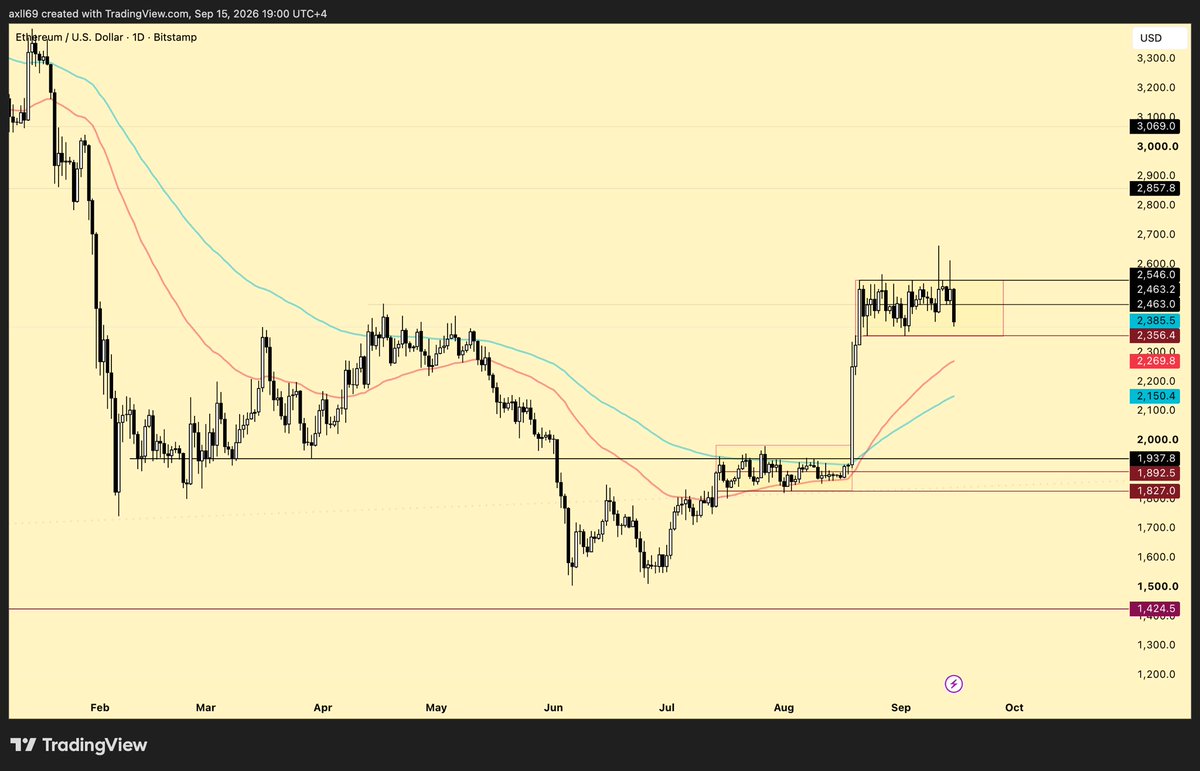
129950 粉丝
$40m in seven weeks from one confidential USDC vault.. that gives me a reason to pay attention to what @zama is building.
that’s the figure the team shared for their first vault with Morpho and Steakhouse, launched in june.
now they’re expanding to 16 vaults, five curators and five assets.
what can you actually do?
deposit confidential tokens into existing Morpho vaults and earn yield while keeping your identity and position private.
there are also confidential-only vaults, including a WBTC yield option, plus swaps between supported confidential assets. i like that people can access existing strategies through this.
Zama adds confidentiality on top of public chains, so it doesn’t require everyone to move to a new blockchain.
https://app.zama.org/
中文: 七周内,从一家机密的USDC保险库中获得了4000万美元......这让我有理由关注@zama正在建设什么。
这是团队在6月推出的Morpho和Steakhouse首个金库时分享的数字。
现在他们将扩展至16个金库、5个策展人和5个资产。
你到底能做些什么?
将保密代币存入现有的Morpho保险库,并在保持身份和位置隐私的同时获得收益。
还有仅保密的保险金,包括WBTC收益率选项,以及支持的保密资产之间的互换。希望人们可以通过此方式获取现有策略。
Zama 在公共链上增加了保密性,因此并不要求所有人都转向新的区块链。
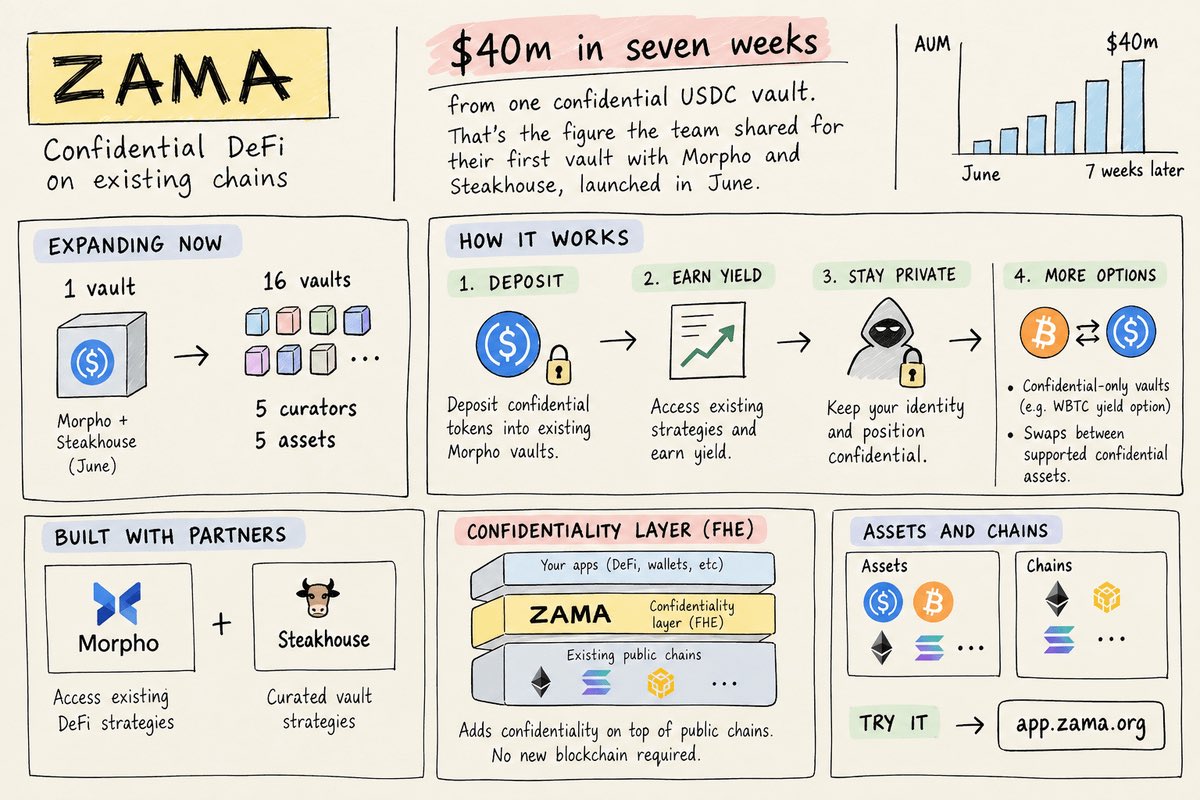
129950 粉丝
I’ve been farming stock meme pairs lately.. and this is pretty much how i’ve been choosing where to put liquidity..
the whole idea is to earn a share of the fees when people trade through the pool
so, first i start on GeckoTerminal’s Stock Pairs APR Tracker to compare daily fees, volume, liquidity and estimated APR.
then i narrow them down:
- both tokens.. liking NVDA isn’t enough if i wouldn’t want to hold the meme paired with it. i’m exposed to both.
- fees against liquidity.. say two pools each generate $1k in daily fees. one has $100k deposited, the other $1M … that’s 1% versus 0.1% in daily fees relative to liquidity. same fees, but very different amounts of capital sharing them.
- volume over several days.. if trading drops from $1m to $100k a day, fees would drop roughly 90% at the same fee rate. yesterday’s big APR won’t tell me that activity is about to disappear.
after i find the ones that look interesting, i open on Uniswap through the tracker and check the fee structure and my LP range, meaning the price range where my liquidity earns fees.
outside that range, i stop earning swap fees. so i check the pair’s chart before choosing it, and keep monitoring after entering.
the displayed APR projects the last 24 hours over a year. my actual return depends on my position, and earning $20 in fees doesn’t help much if its value drops $200.
that’s what i’m checking.. whether the trading activity lasts, whether the fees justify the exposure, and whether i’m comfortable holding the pair.
check the tracker here: https://geckoterminal.com/apr
🎬
视频
129950 粉丝
I’m more interested in what CLARITY could do for Altcoins than what it does on chart tonight
if you’re running a crypto business, you want to know whether the product you’re building will still be allowed a few years from now.. same if you’re putting serious money into a project as an investor
that’s why i think getting a workable law through would be a massive W. businesses could then actually plan around it.
personal, i still lean toward that happening eventually. a setback tonight could only mean more waiting and an ugly chart, but it wouldn’t automatically change that view.
and for my spot bags, i’m watching which projects could actually benefit from clearer rules..
if this CLARITY gets approved, i’d rather have that homework done than start chasing green candles after they’ve pumped.
129950 粉丝
$ETH is looking a lot like 2025 here..
similar chop around the 50W & 100W EMAs, then big wicks on both sides… like we saw in last few days..
last time it took one strong weekly candle above the range to get going…
watching for something similar breakout again.. https://twitter.com/Axel_bitblaze69/status/2099805402561171515/photo/1
中文: ETH 看起来非常像 2025 年。
类似的切口位于50W和A/amps上;100W EMA,两侧则有大灯芯......就像我们过去几天看到的那样。
上一次,每周花一根强劲的蜡烛才能开始......
再次关注类似的突破。
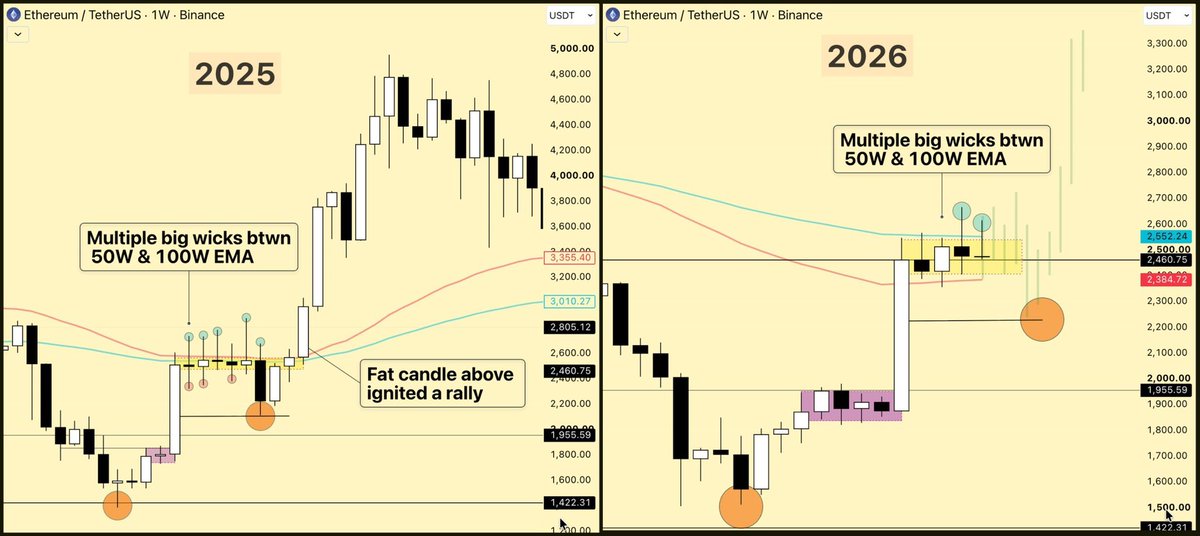
129950 粉丝
with pump’s revenue picking up.. I think the next big runners could come from its own eco..
my watchlist:
$BATON paired with $PUMP
$NOIZ paired with $ANSEM
$BABYALON paired with $ALON
$BTC paired with $WBTC
$ONCHAIN / $LINK
you can track more here: https://pumpstock500.fun/ https://twitter.com/Axel_bitblaze69/status/2099788832338317694/photo/1
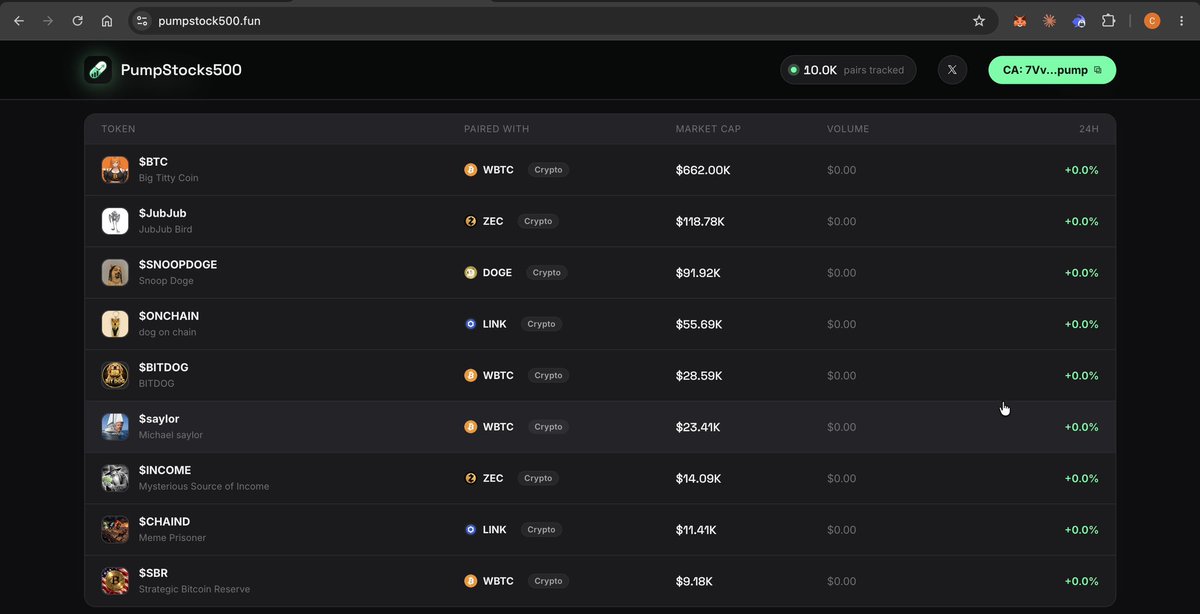
129950 粉丝
Since Pumpfun announced holder rewards, i checked DefiLlama to see how its revenue compares with STONK and PONS..
over september 13–14, the first 2 full days after the announcement:
- pump: $2.7M ( revenue UP)
- PONS: $2.12m ( steady )
- STONK: $1.25m (down)
Keep a watch on $PUMP .. revenue going up and technically at support.. no reason to fall for the fud
中文: 自从Pumpfun宣布获得奖励后,我查看了DefiLlama,了解其收入与STONK和PONS的对比。
9月13日至14日,即公告发布后的前2个完整日:
- 泵:270万美元(收入增加)
- 奖金:212万美元(稳定)
- STONK:125万美元(下跌)
关注 $PUMP......营收持续上升,从技术上讲得到支撑......没有理由放弃
129950 粉丝
RT @Axel_bitblaze69: Just in case this ends up mattering as eligibility criteria:
> Download the Pumpfun app
> Make a few trades (stick to higher mcap coins to avoid getting killed on slippage)
> Create a coin
> Make a few posts on the App
> Follow some accounts… you can follow me AxelBitblaze too
中文: RT @Axel_bitblaze69:以防以此作为资格标准而变得重要:
下载 Pumpfun 应用程序
做几笔交易(坚持使用更高的mcap币,以免在滑倒时被杀死)
创造一枚硬币
在应用程序上发布几篇文章
关注一些账号......你也可以关注我
129950 粉丝
Shill me a 5x coin
I wanna fund my KBW and Token2049 trip..
中文: 给我一个五枚硬币
我想资助我的KBW和Token2049旅行。
129950 粉丝
Just in case this ends up mattering as eligibility criteria:
> Download the Pumpfun app
> Make a few trades (stick to higher mcap coins to avoid getting killed on slippage)
> Create a coin
> Make a few posts on the App
> Follow some accounts… you can follow me AxelBitblaze too
中文: 以防以此作为资格标准而重要:
下载 Pumpfun 应用程序
做几笔交易(坚持使用更高的mcap币,以免在滑倒时被杀死)
创造一枚硬币
在应用程序上发布几篇文章
关注一些账号......你也可以关注我
129950 粉丝
i’m so ready.. this is how i’m playing this marke lately:
my spot bags are packed in the coins i’ve already been sharing here.
now i’m just watching markets and adding on dips where the setup still looks good.
- and been trading memes with small funds day to day
- scalping with leverage when i see an opportunity
- farming stock meme pairs alongside that.. will share the guide on it soon
so even while i’m busy in the trenches, i’m already positioned if the majors start moving.

129950 粉丝
sure, memes might be doing well, but don’t get so deep in the trenches that you miss the majors starting to move..
cuz what i think is clearer US crypto rules through CLARITY could be a meaningful catalyst for alts and the businesses around them. that’s a thesis worth preparing for, even if the timing is uncertain..
know which coins you want, where you’d enter and what would make you reconsider.
good luck..
129950 粉丝
RT @Axel_bitblaze69: I remember waiting for $BTC ETF approval..
delay after delay, but anticipation alone gave people a reason to keep buying . there were pullbacks, of course, but the rally started well before approval..
i can see a similar trade with CLARITY.. especially for alts.
clearer rules around tokens and how crypto businesses can operate in the US could give investors more confidence to back them.
that’s why i think this could matter more for alts than BTC..
so yeah, imo a delay could hurt short term. but if passage still looks likely, i don’t think the anticipation trade just disappears.
personally, i’m betting on eventual approval.. and the alts that stand to benefit could keep outperforming while we wait. find them
129950 粉丝
I remember waiting for $BTC ETF approval..
delay after delay, but anticipation alone gave people a reason to keep buying . there were pullbacks, of course, but the rally started well before approval..
i can see a similar trade with CLARITY.. especially for alts.
clearer rules around tokens and how crypto businesses can operate in the US could give investors more confidence to back them.
that’s why i think this could matter more for alts than BTC..
so yeah, imo a delay could hurt short term. but if passage still looks likely, i don’t think the anticipation trade just disappears.
personally, i’m betting on eventual approval.. and the alts that stand to benefit could keep outperforming while we wait. find them
129950 粉丝
Strength in $LIT and ETH/BTC is pretty interesting ahead of the CLARITY Act vote
looks like traders are betting on good news
especially in coins that could benefit from clearer rules.. charts are looking optimistic. https://twitter.com/Axel_bitblaze69/status/2099406397893190073/photo/1
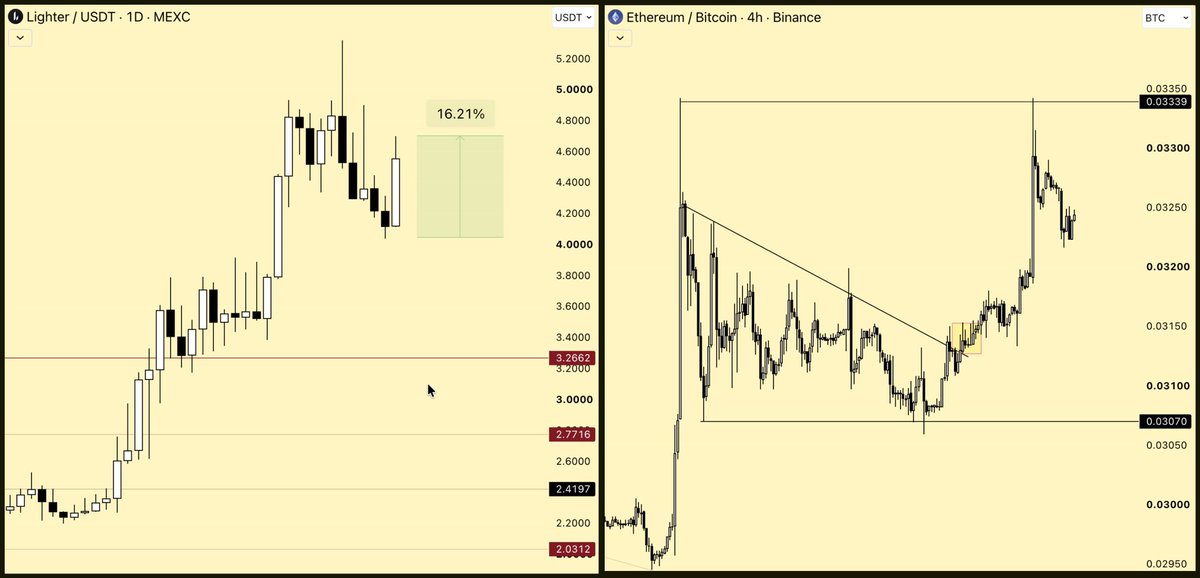
129950 粉丝
woke up to $NOIZ doing a clean 10x from my entry.. finally lmao
made back everything i lost over the last few days.. was much needed that one for my confidence too
now holding a moon bag and farmed $ANSEM along the way. hopefully that finds a bottom and sends too
journey to 500K continues

129950 粉丝
RT @Axel_bitblaze69: I like buying the meme coins where the same buyers keep coming back to DCA..
that shows the conviction of holders.. such a green flag.
here’s a setup and prompt to find those coins: https://twitter.com/Axel_bitblaze69/status/2099124476978041332/photo/1

129950 粉丝
I don’t understand how people hold size in memes below $200–300k mcap..
i can like the lore, see the potential, get a good entry.. and still get shaken out by a small pullback when i have serious money in it.
many of these coins i exited in loss went on to do 10–20x, but only after ugly pullbacks that i couldn’t sit through.
looking back, holding seems obvious.. while it’s happening, you don’t know whether its a shakeout or the beginning of a move to 0.
that’s what i struggle with.
with a tiny position, i can give it time. once i add size, every sell makes me question what i missed.. and after getting rugged twice in the last few days, that fear doesn’t come from nowhere.
so for those who hold size through this.. what gives you the conviction to stay, and what makes you decide you’re wrong ?
genuinely curious what you look for beyond good lore and a promising chart..
129950 粉丝
RT @Axel_bitblaze69: Unpopular opinion:
All these other launchpads are a copy pasta of Pumpfun and not the other way around..
Pumpfun is the first launchpad with:
- Simple bonding curve launches without needing to seed your own liquidity
- Their own dex, PumpSwap, for graduated coins
- Mobile trading app with social features
- Livestreams alongside coin trading
- Creator fees and rewards for callouts
- Revenue funded $PUMP buybacks and burns
- And now holder rewards too
and custom pairs existed long before pump or $STONK. pairing a coin with another asset isn’t something either platform invented
being frustrated about the airdrop is fair even im too.. but making things up to fud $pump because of it isn’t ffs..
中文: RT @Axel_bitblaze69:不受欢迎的观点:
所有其他发射台都是Pumpfun的复制版面,而不是另一种方式。
Pumpfun 是首个带有以下平台的发射台:
- 简单的绑定曲线启动,无需自行播种流动性
- 他们自己的德克斯,PumpSwap,用于分级硬币
- 具有社交功能的移动交易应用
- 与硬币交易一起的直播
- 奖励奖励的创作者费用
- 资金支持的PUMP回购和烧销
- 现在也奖励持有者
定制对在泵或$STONK之前已经存在。将硬币与另一种资产配对,并不是纲领中发明的
对空投感到沮丧,即使如此也是公平的......但因为空投而将东西制作起来并不是。
129950 粉丝
I just wanna ape a coin with $5000 at $100K mcap and cash out $50M when it hits $10M mcap..
129950 粉丝
I like buying the meme coins where the same buyers keep coming back to DCA..
that shows the conviction of holders.. such a green flag.
here’s a setup and prompt to find those coins: https://twitter.com/Axel_bitblaze69/status/2099124476978041332/photo/1
129950 粉丝
Farming sweet passive Airdrop in:
$NEAR
$LIT
$ANSEM
$ETH
$BTC
$PUMP
$ZEC
中文: 种植甜美的被动式空投:
近
$LIT
ANSEM
$ETH
BTC
PUMP
$ZEC
129950 粉丝
$1M already.. and seeing $ANSEM whales apeing with size on chain..
1/10th of $ANSEM put us at $15M.. definitely achievable.
$NOIZ https://twitter.com/Axel_bitblaze69/status/2099029065860825517/photo/1
中文: 已有100万美元......并看到 $ANSEM 鲸鱼在链上大小。
1/10 的 $ANSEM 使我们的目标目标达到 1500 万美元,绝对可以实现。
$NOIZ

129950 粉丝
Unpopular opinion:
All these other launchpads are a copy pasta of Pumpfun and not the other way around..
Pumpfun is the first launchpad with:
- Simple bonding curve launches without needing to seed your own liquidity
- Their own dex, PumpSwap, for graduated coins
- Mobile trading app with social features
- Livestreams alongside coin trading
- Creator fees and rewards for callouts
- Revenue funded $PUMP buybacks and burns
- And now holder rewards too
and custom pairs existed long before pump or $STONK. pairing a coin with another asset isn’t something either platform invented
being frustrated about the airdrop is fair even im too.. but making things up to fud $pump because of it isn’t ffs..
129950 粉丝
RT @Axel_bitblaze69: Pumpfun has a clear route to fund a meaningful $PUMP airdrop..
Alon just needs to say AIRDROP APPROVED
24% of the original 1 trillion supply was allocated to community & ecosystem initiatives… that’s 240 billion $PUMP https://twitter.com/Axel_bitblaze69/status/2098890040793555388/photo/1
中文: RT @Axel_bitblaze69:Pumpfun 有明确的路线来资助一个有意义的 $PUMP 空投。
阿隆只需说一下,机场已批准
最初1万亿供应量中有24%被分配给社区和生态系统项目,即2400亿美元的PUMP项目
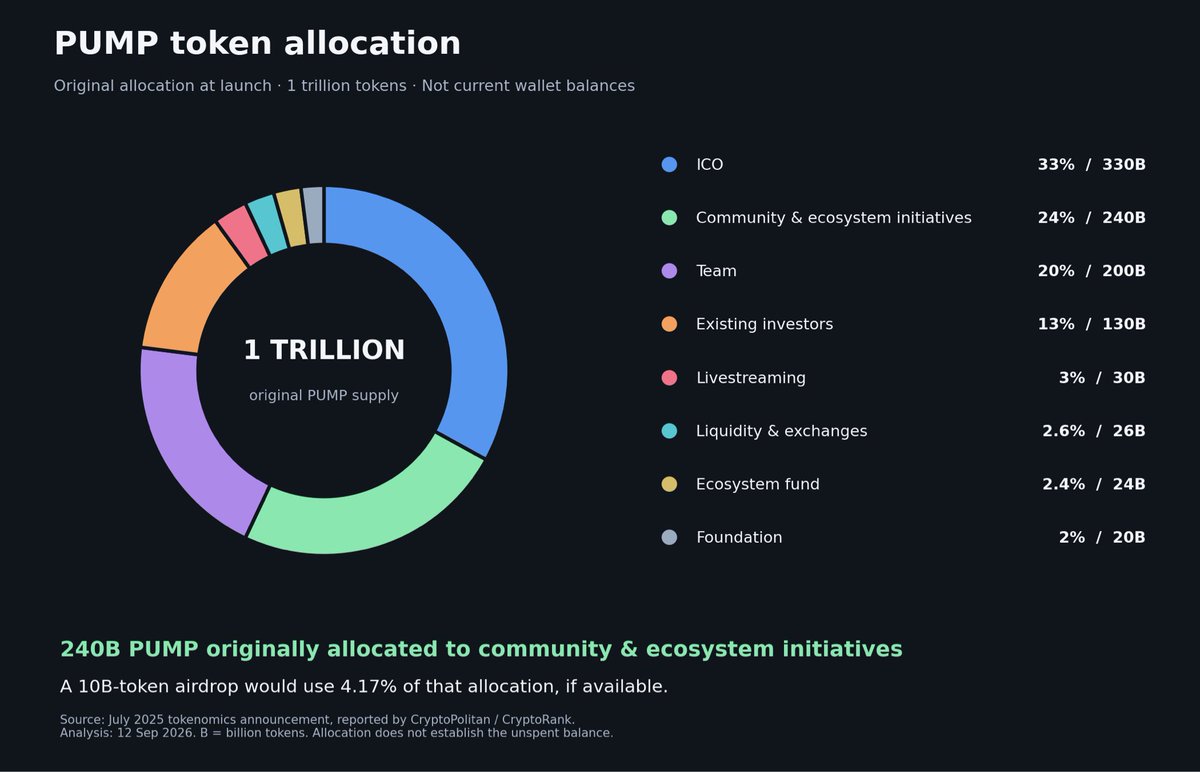

129950 粉丝
. @blknoiz06 is now top holder of $NOIZ
yeah, moon that shi.. https://twitter.com/Axel_bitblaze69/status/2098929482635825203/photo/1
中文: @blknoiz06 现已获得 $NOIZ 的最高持有者
是的,月亮。

129950 粉丝
4x and counting on $NOIZ this one should be a clear winner of $ANSEM meta..
and dev is based.. already sent 4% of supply to @blknoiz06 https://twitter.com/Axel_bitblaze69/status/2098920481734946844/photo/1
中文: 4倍且指望$NOIZ,这一应该明显成为$ANSEM元的赢家。
且开发已基于以下内容:已向@blknoiz06 发送了4%的供应量:

129950 粉丝
Rotation on pumpfun is here believe it or not.. and $ANSEM is the first coin they will crime back up..
And $NOIZ first coin paired with $ANSEM likely to benefit the most.
中文: 对 zumpfun 进行旋转是信不信由你......而 $ANSEM 是他们将重新犯罪的第一枚硬币。
与$ANSEM配对的首枚硬币可能受益最大。
129950 粉丝
getting a 10x vibes from this one.. what do i do ?
中文: 从这个中获得10倍的氛围......我该怎么办?
129950 粉丝
yo @blknoiz06 @ansem check this out lads
中文: @blknoiz06 @ansem 来看看这个
129950 粉丝
It’s $NOIZ ..First token paired with $ANSEM https://twitter.com/Axel_bitblaze69/status/2098900070456566025/photo/1
中文: 是 $NOIZ ..首个与$ANSEM配对的代币

129950 粉丝
Pumpfun has a clear route to fund a meaningful $PUMP airdrop..
Alon just needs to say AIRDROP APPROVED
24% of the original 1 trillion supply was allocated to community & ecosystem initiatives… that’s 240 billion $PUMP https://twitter.com/Axel_bitblaze69/status/2098890040793555388/photo/1
中文: Pumpfun 有明确的路线来资助一个有意义的 PUMP 空投。
阿隆只需说一下,机场已批准
最初1万亿供应量中有24%被分配给社区和生态系统项目,即2400亿美元的PUMP项目
129950 粉丝
Getting Airdropped approx $50 worth $ANSEM every hour
just by holding $800 worth this shitter thats below $300K mcap lmao.. good tek https://twitter.com/Axel_bitblaze69/status/2098882705501159916/photo/1
中文: 每小时获得约50美元的Airdrapped
只需持有价值800美元,这个烂物就低于3亿马克·拉宝......好客
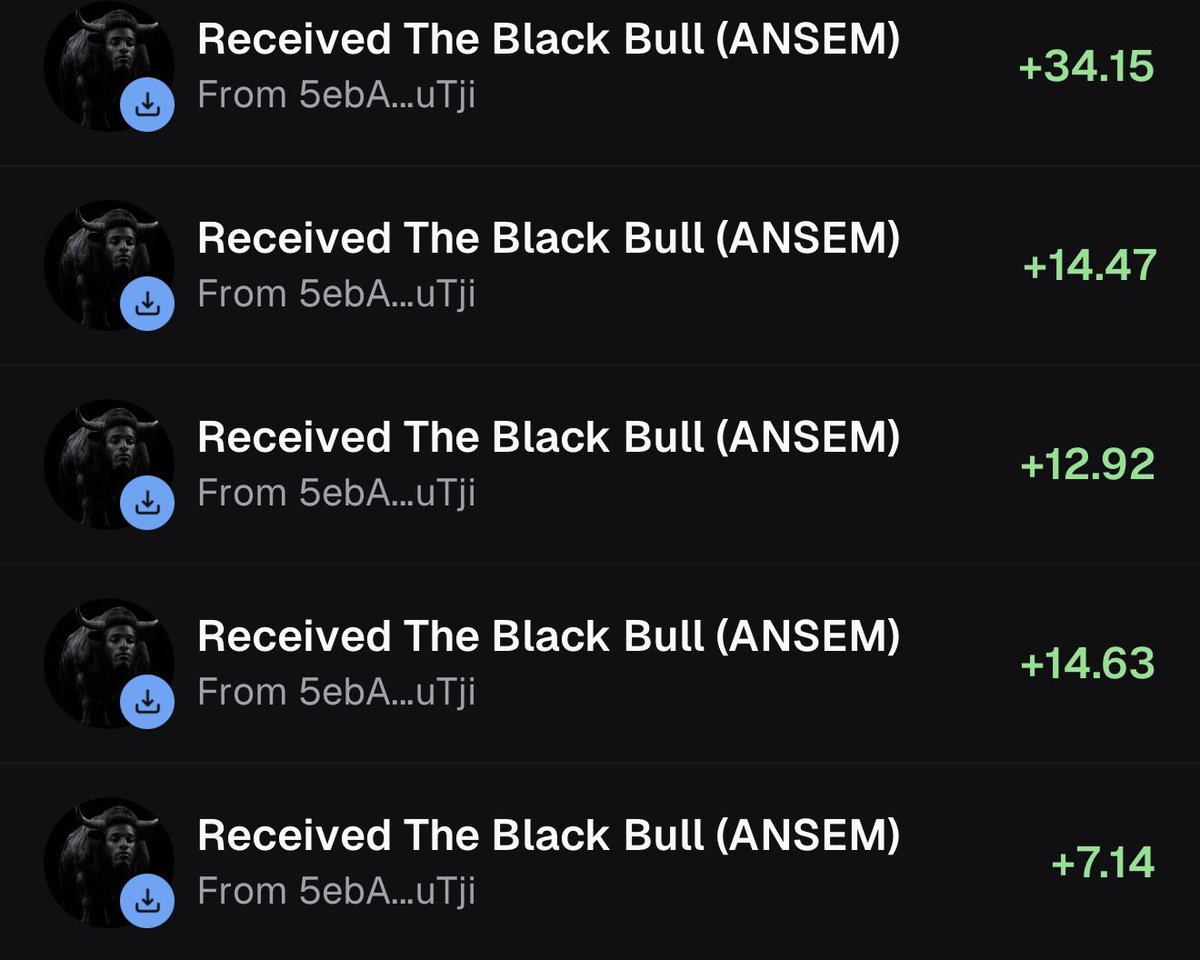
129950 粉丝
Ok @a1lon9 thanks for finally listening to our feedback.. good step with holder rewards
4 more things i’d like to see as a $PUMP holder:
> Commit 100% of protocol revenue to buybacks
> Address the airdrop plan… tell community where it stands and what to expect
> Make pumpfun multichain
> Build an ecosystem support program with visibility and support for organic communities
中文: 好的 @a1lon9 感谢您终于听取了我们的反馈......带有持卡奖励的良好步骤
作为 $PUMP 持有者,我希望看到的4件事:
将协议收入的100%用于回购
解决空投计划......告诉社区它的立场以及预期
制作 pumpfun 多链
构建一个具有可视性并支持有机社区的生态系统支持计划
129950 粉丝
So, like STONK.. holder rewards are live on Pumpfun too..
i like this meta.. gives holder a reason to hold.. like I just deployed $PUMPFLY and Paired with $PUMP on Pumpfun app..
You get $PUMP airdropped for holding $PUMPFLY
中文: 因此,像STONK一样,持有者的奖励也通过Pumpfun进行直播。
我喜欢这个元......让持有者有理由持有......就像我刚刚在Pumpfun应用程序上部署了$PUMPLY和Paired $PUMP一样。
持有 $PUMPFLY 时,您将获得 PUMP 空投
129950 粉丝
The amount of money i’m losing on Pumpfun app.. just getting rugged back to back
what the fuck did i do to deserve this ?
中文: 我在Pumpfun应用程序上损失的金额......只是背对着坚固
我该做什么才配得上这个?
129950 粉丝
Before taking a leveraged position on BTC or any altcoin, i use this one prompt to assess my setup with @coinglass_com x AI..
I want to check:
- Who’s paying funding, and is it unusual for that coin?
- Are positions building or getting closed as price moves?
- Is spot buying or selling supporting the move?
- Where are the estimated liquidation clusters on both sides?
then i ask it to explain the long case, the short case and what price needs to do to confirm either..
basically, i want to know whether there’s a setup worth taking or whether i’m forcing a trade.
paste the prompt below into an MCP-compatible AI agent. it helps set up the connection, then checks your coin…
中文: 在对比特币或任何山寨币采取杠杆立场之前,我使用此提示来评估我的设置:@coinglass_com x AI。
我想检查一下:
- 谁在支付资金,这枚硬币是否不寻常?
- 位置是随着价格变动在建位还是被关闭?
- 现货买卖是否支持这一举措?
- 双方估计的清算集群在哪里?
然后我要求它解释一下长案、简短案例以及需要付出什么代价来确认。
基本上,我想了解是否有一个值得接受的设置,或者我是否在强迫进行交易。
将下面的提示粘贴到兼容MCP的AI代理中。它有助于设置连接,然后检查您的硬币......
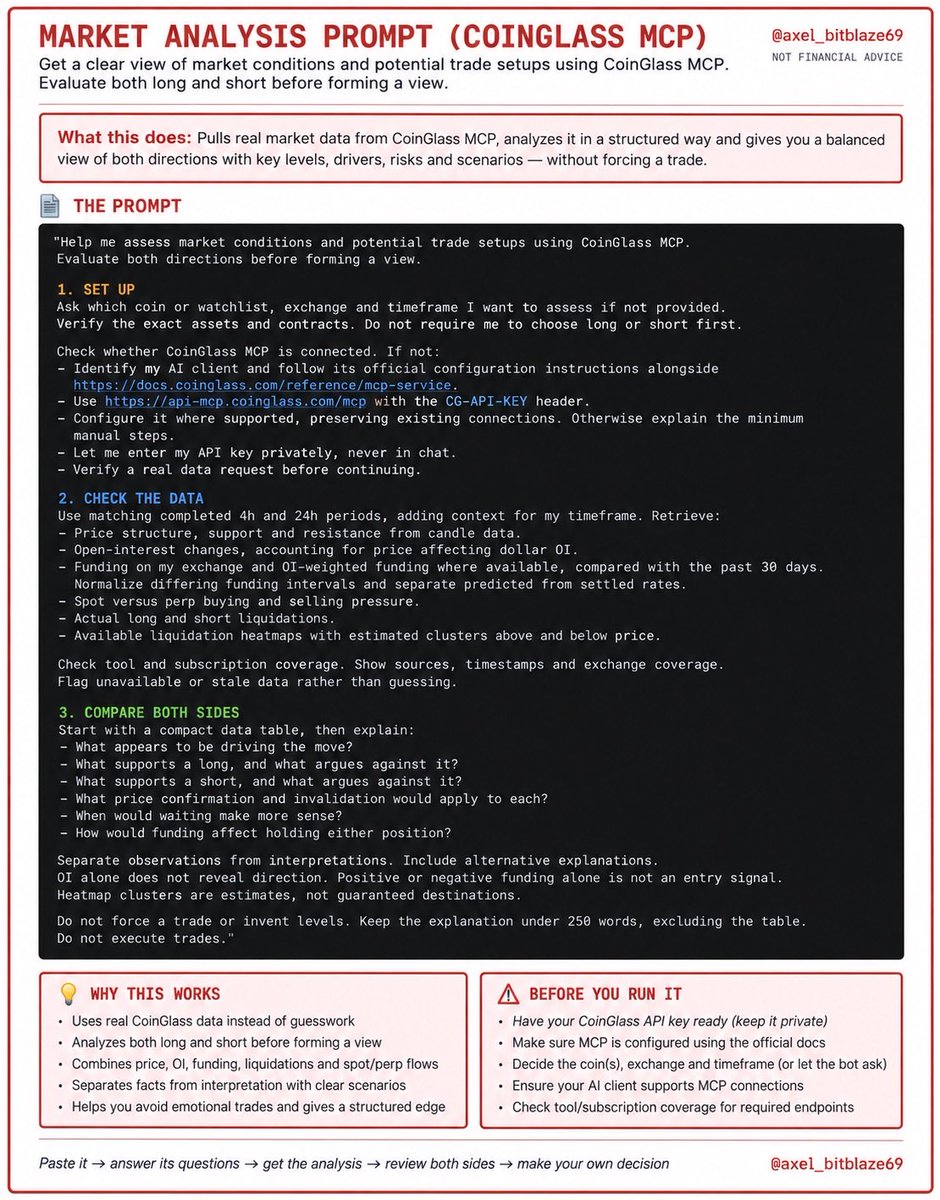
129950 粉丝
RT @Axel_bitblaze69: Stonk ecosystem watchlist.. starting with what each coin actually pays holders..
- $ZCAT pays $ZEC
- $NEARKAT pays $NEAR
- $CANDLE pays $LIT
- $PURR pays $HYPE
- $BTC pays ethereum:0x2260fac5e5542a773aa44fbcfedf7c193bc2c599
- $RAYCAT pays $RAY
- $JUPCAT pays $JUP
- $PUMPCAT pays $PUMP
- $METCAT pays $MET
- $BUTT buttensor, pays $TAO
- $SOLCAT pays $SOL
- $MUCHWOW pays $DOGE
- $UBI pays $USDC
- $KNOTS and $STONKCAT pay $STONK
getting paid in a coin i like is interesting..
129950 粉丝
RT @Axel_bitblaze69: This is how i’d narrow down what memecoins to watch:
- group coins by meta and check whether several are gaining volume, rather than one carrying the whole group.
- and compare them over the same timeframe. which ones recover after a dip, and which keep making new lows?
- check the trades and wallets behind the volume. repeated activity from the same wallets deserves a closer look.
- watch whether the original callers are holding or selling while still posting bullish.
- mark the previous bounce low. on the next dip, watch whether buyers step in before price breaks it.
- check liquidity and holder concentration before sizing, then decide where the trade is wrong.
中文: RT @Axel_bitblaze69:我是如何缩小观看的memecoins的范围:
- 通过元积组合硬币,并检查是否多个币数在增加体积,而不是一个带有整个组合的币。
- 并在同一时间段进行比较。哪些在下跌后恢复,哪些会不断降低新低?
- 检查交易量背后的交易和钱包。来自同一钱包的重复活动值得仔细观察。
- 观察原始来电者是否持有或卖出,同时仍保持乐观。
- 标出之前的反弹低点。下次下跌时,观察买家是否在价格下跌前先介入。
- 在调整规模之前先检查流动性和持有者的集中度,然后判断交易的错点。
129950 粉丝
This is how i’d narrow down what memecoins to watch:
- group coins by meta and check whether several are gaining volume, rather than one carrying the whole group.
- and compare them over the same timeframe. which ones recover after a dip, and which keep making new lows?
- check the trades and wallets behind the volume. repeated activity from the same wallets deserves a closer look.
- watch whether the original callers are holding or selling while still posting bullish.
- mark the previous bounce low. on the next dip, watch whether buyers step in before price breaks it.
- check liquidity and holder concentration before sizing, then decide where the trade is wrong.
中文: 我是如何缩小观看的memecoins的范围:
- 通过元积组合硬币,并检查是否多个币数在增加体积,而不是一个带有整个组合的币。
- 并在同一时间段进行比较。哪些在下跌后恢复,哪些会不断降低新低?
- 检查交易量背后的交易和钱包。来自同一钱包的重复活动值得仔细观察。
- 观察原始来电者是否持有或卖出,同时仍保持乐观。
- 标出之前的反弹低点。下次下跌时,观察买家是否在价格下跌前先介入。
- 在调整规模之前先检查流动性和持有者的集中度,然后判断交易的错点。
129950 粉丝
all my activity is public on pumpfun app.. entries and exits included.
you can check it yourself: https://pump.fun/join/AxelBitblaze
中文: 我的所有活动都在 spumpfun 应用程序上公开......包括条目和退出。
你可以自己查看:
129950 粉丝
Caught so many of these gems early, watched them do crazy multiples.. and still ended up losing money.
i’ll be honest, bear market PTSD got me selling winners too early and holding losers way too long. https://twitter.com/Axel_bitblaze69/status/2098510692118892565/video/1
中文: 早早地抓住了这些宝石,看着它们疯狂地多数,最终还是亏了钱。
说实话,熊市创伤后应激障碍让我卖赢家太早,把输人卖得太久。
🎬
视频
129950 粉丝
What makes me bullish on $STONK is how the same trading activity can benefit everyone involved
holders / community, the team and Solana
Bullish on this loop:
> Eco coins airdrop holders in majors like NEAR, ZEC, HYPE, LIT, PUMP from trading fees.
> Earning coins you already want to stack gives you another reason to hold through the chop.
> Consistent payouts can build conviction and keep communities doing bag work.
> Holders sharing their rewards can bring fresh attention and more traders.
> Activity sticks, means higher volume generates more fees to support further payouts.
> Some holders reinvest their rewards, bringing buying back into the same coin or other eco plays.
> Stonk earns revenue too, supporting more $STONK buybacks and burns.
> Successful communities can attract more launches, bringing more trading activity to Solana.
that’s the loop i’m bullish on.. rewards give people a reason to stay, communities bring traders, and trading funds the rewards.
so basically, upside goes well beyond one coin having a good run.
中文: 让我对$STONK持乐观态度的是,同样的交易活动如何使所有相关人员受益
持有者/社区、团队和索拉纳
对此循环看点:
在NEAR、ZEC、HYPE、LIT、PUMP等主要领域,从交易费用中获得代币空投。
赚取你已经想要堆叠的硬币,又为你提供了另一个坚持这个切碎的理由。
持续的赔付可以建立信念,并让社区继续从事包工。
持有奖励的持有者可以带来新的关注,并吸引更多交易者。
活动棒,意味着更高的音量会产生更高的费用,从而支持进一步的赔付。
部分持有者将奖励重新投资于同一枚硬币或其他生态游戏。
斯托克也获得收入,支持更多的STONK回购和烧钱。
成功的社区可以吸引更多的上市活动,为索拉纳带来更多的交易活动。
这就是我看好的循环......奖励给了人们留下的理由,社区带来交易,并用资金换取回报。
所以基本上,上涨远远超出了一枚拥有良好运行的硬币。
129950 粉丝
i’ve never done a giveaway before, but if i manage to turn this into $100K,
i’ll take $5,000 and send it equally among everyone who comments on the post below before i hit $100K
please God, let me come back to this post.
中文: 我以前从未做过赠品,但如果我设法将这个结果变成10万美元,
我将获得5000美元,并在我达到10万美元之前,向所有在下方帖子上发表评论的人同样发送
请上帝啊,让我回到这篇文章。
129950 粉丝
Stonk ecosystem watchlist.. starting with what each coin actually pays holders..
- $ZCAT pays $ZEC
- $NEARKAT pays $NEAR
- $CANDLE pays $LIT
- $PURR pays $HYPE
- $BTC pays ethereum:0x2260fac5e5542a773aa44fbcfedf7c193bc2c599
- $RAYCAT pays $RAY
- $JUPCAT pays $JUP
- $PUMPCAT pays $PUMP
- $METCAT pays $MET
- $BUTT buttensor, pays $TAO
- $SOLCAT pays $SOL
- $MUCHWOW pays $DOGE
- $UBI pays $USDC
- $KNOTS and $STONKCAT pay $STONK
getting paid in a coin i like is interesting..
中文: 停止使用生态系统观察列表......从每枚硬币实际支付的持有者价格开始。
- $ZCAT 支付 $ZEC
- $NEARKAT 支付 $NEAR
- CANDLE 支付 $LIT
- PURR 支付 $HYPE
- $BTC 支付 etherome:0x2260fac5e5542a773aa44fbcfedff7c193bc2c599
- $RAYCAT 支付 $RAY
- JUPCAT 支付 $JUP
- PUMPCAT 支付 $PUMP
- $METCAT 支付 $MET
- $BUTT 制表器,支付 $TAO
- SOLCAT 支付 $SOL
- MUCHWOW 支付 $DOGE
- UBI 支付 USDC
- $KNOTS 和 $STONKCAT 支付 $STONK
用一枚类似的硬币来支付是有趣的。
129950 粉丝
Down $12000 in last 2 days..
lets see if this goes to 0 or i can run it to $500K
wish me luck pleaseee ♥️ https://twitter.com/Axel_bitblaze69/status/2098474467362316585/photo/1
中文: 过去两天下跌了12000美元。
让我们看看这是不是0,还是可以运行到50万美元
祝我好运♥️

129950 粉丝
Actual thesis behind $WLFI is more than what you think it is..
the main thing here is USD1..
it has grown from roughly $3.3B supply in January to around $4B now, making it one of the largest stablecoins in the market.. and World Liberty recently received conditional OCC approval for a national trust bank.
once finalized, they can bring USD1 issuance, redemption, custody and reserve management under their own regulated entity instead of depending on outside providers.
and around USD1 they're now building:
> WLFI Markets for lending and borrowing
> cross-chain rails across ETH, BNB and SOL
> AgentPay for AI agent payments
> a consumer app connecting crypto with bank accounts
> sovereign payment rails, with Pakistan already exploring USD1 for cross-border settlements
so the flywheel is pretty simple..
more USD1 distribution brings more reserves and liquidity.. that makes integrations easier, integrations create more lending, trading and payment use, and all of that gives World Liberty more reasons to keep USD1 inside its own products.
so yeah, i'd track USD1 supply, where that supply is being used, product activity, and the mechanism that connects ecosystem revenue back to the token.
those pieces are lining up.. $WLFI is becoming a liquid bet on a stablecoin, payments and onchain banking ecosystem..
中文: FLFI背后的实际论点比你想象的要多。
这里最主要的是1美元。
其供应量已从1月份的约33亿美元增长至目前约40亿美元,成为市场上最大的稳定币之一......而世界自由银行最近已获得国家信托银行的有条件OCC批准。
最终确定后,他们可以根据自身受监管的实体提供1美元的发行、赎回、托管和储备管理,而不依赖外部供应商。
大约1美元,他们现在正在建设:
用于借贷的WLFI市场
跨 ETH、BNB 和 SOL 的跨链轨道
代理支付用于人工智能代理支付
一款将加密货币与银行账户连接起来的消费类应用
主权支付轨道,巴基斯坦已寻求1美元用于跨境结算
所以飞轮相当简单。
更多的1美元分配带来更多的储备和流动性......这使得整合变得更加容易,整合创造了更多的借贷、交易和支付使用方式,而这一切都为世界自由银行提供了更多将1美元保留在自身产品中的理由。
是的,我会追踪1美元的供应量,即使用该供应量、产品活动以及将生态系统收入与代币连接起来的机制。
那些碎片正在排起来。美元价值(WLFI)正成为对稳定币、支付和链上银行生态系统的流动赌注。

129950 粉丝
Love to finally see some strength from $NEAR
i think the tech has deserved more attention for a while, but the price hasn’t given people much reason to look
if this strength continues, people start digging into Intents, private AI and the apps already using them..
wouldn’t surprise me if entire timeline starts talking about it soon..
中文: 非常期待在 $NEAR 上看到一些优势
我认为这项技术在一段时间内值得关注,但价格并没有给人们太多值得关注的理由
如果这种优势持续下去,人们就会开始深入研究Intents、私有人工智能以及已使用它们的应用程序。
如果整个时间线很快开始讨论,我也不会感到意外。
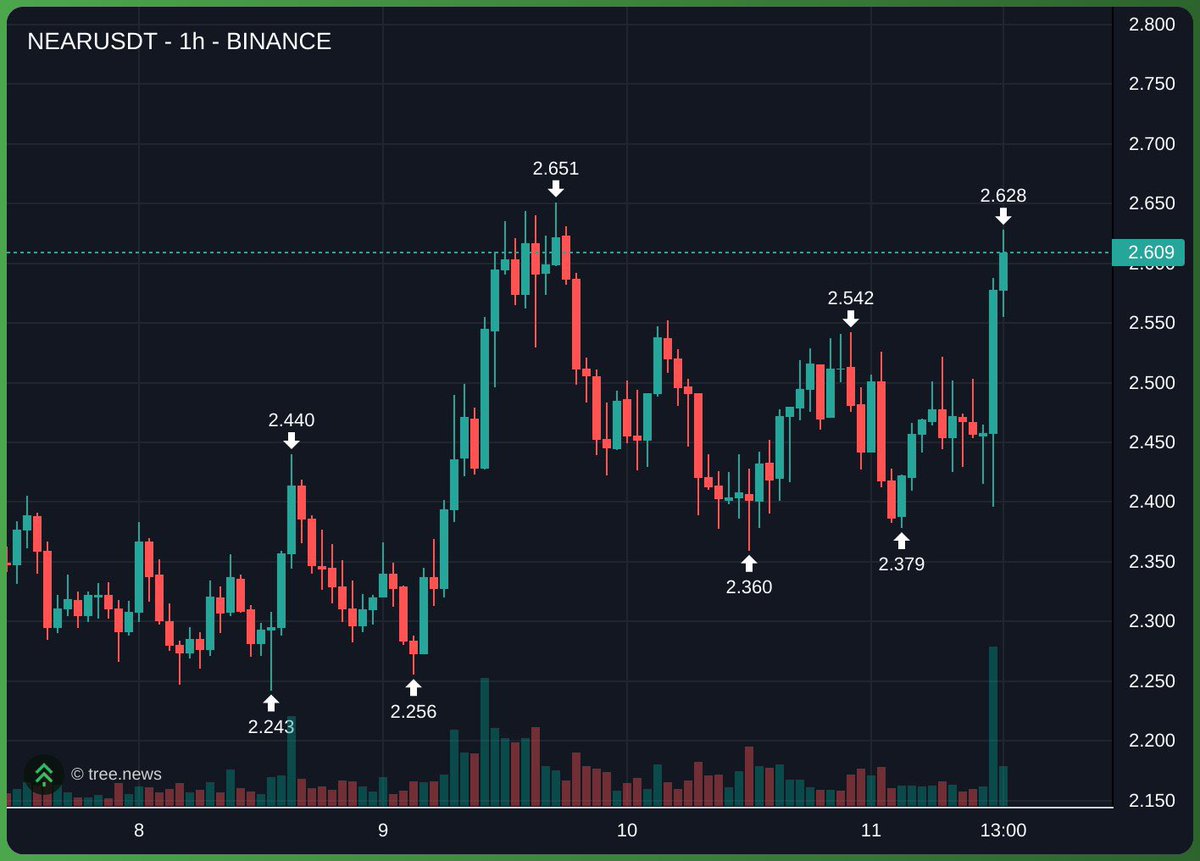

129950 粉丝
RT @Axel_bitblaze69: STONK ecosystem has been getting my attention.. especially the coins linked to Coins that are already showing strength.
the angle i’m watching is pretty simple:
- $LIT looking strong? check $CANDLE, which pays holders in LIT
- $NEAR holding up well? check $NEARKAT
- then there’s the $BTC (Buy the Cat ) paying $BTC
- then $ROCK paying $ETH
- and $ZCAT for $ZEC
- $POLLY paying $PENGU
if interest in the paired asset keeps growing, i think these names are worth watching.. but just remember the payouts won’t make up for a bad entry..
中文: RT @Axel_bitblaze69:STONK 生态系统一直引起我的注意......尤其是那些与已显示出实力的 Coins 关联的加密货币。
我正在看的角度相当简单:
- 看起来很强?勾选在LIT中支付持有人费用的 $CANDLE
- 附近握得好?勾选 $NEARKAT
然后是支付BTC的$BTC(购买猫)
- 然后$ROCK支付 $ETH
- 和 $ZCAT 用于 $ZEC
- 支付 $PENGU
如果对配对资产的兴趣持续增长,我认为这些名字值得关注......但请记住,这些支出无法弥补糟糕的回报。
129950 粉丝
STONK ecosystem has been getting my attention.. especially the coins linked to Coins that are already showing strength.
the angle i’m watching is pretty simple:
- $LIT looking strong? check $CANDLE, which pays holders in LIT
- $NEAR holding up well? check $NEARKAT
- then there’s the $BTC (Buy the Cat ) paying $BTC
- then $ROCK paying $ETH
- and $ZCAT for $ZEC
- $POLLY paying $PENGU
if interest in the paired asset keeps growing, i think these names are worth watching.. but just remember the payouts won’t make up for a bad entry..
129950 粉丝
what i like about $ETH here is how little of that breakout it’s given back..
sure this chop looks ugly up close, but zoom out and price is still holding well above the old range.
that keeps me leaning bullish.. https://twitter.com/Axel_bitblaze69/status/2098334266870645217/photo/1
中文: 我喜欢 $ETH 的一点,就是它所给予的这种突破是多么少。
这款切口看起来非常难看,但放大后价格仍远高于旧价位。
这让我保持了乐观的倾向。

129950 粉丝
i’ve never made money buying immediately after a callout i see on FOMO or Pumpfun app.. no matter who’s calling it
what has always worked for me is:
- if i like a coin, i add it to my watchlist first
- i wait for the initial dump and check whether the callers are holding or selling
- i watch who’s still doing the bag work once the excitement wears off
- i let it go through a couple of ugly corrections, sometimes 50–60% or even 70 - 80%, and see whether buyers keep coming back
- if it keeps recovering and people are still showing up, i look for an entry on the next dip
中文: 在FOMO或Pumpfun应用程序上看到的呼喊后,我从未立即赚钱过......无论谁在打电话
对我来说一直有效的是:
- 如果我喜欢硬币,我会先把它加入我的监视列表
- 我等待初始转储,并检查来电者是否持有或出售
- 观看兴奋感逐渐消失后,谁还在做包装
- 我让它经历几次难看的修正,有时是50%到60%,甚至70%到80%,看看买家是否还会继续回来
- 如果它持续恢复,人们仍在出现,我会在下次下垂时寻找入场
129950 粉丝
Gut says $ETH will close the month above $3000
中文: 古特表示,每月将超过3000美元的ETH
129950 粉丝
I like $NEAR for the same reason I like $HYPE and $LIT
I mean i like owning coins that other projects end up using as rails, and NEAR is already doing that across crypto and AI.
Zashi uses NEAR Intents to move BTC, SOL and USDC into shielded $ZEC
while Venice, the product behind $VVV, uses NEAR AI for private and verifiable inference
and btw yeah.. NEAR Intents has already processed over $19B across 35+ chains
so my bet on $NEAR is pretty simple, more apps will keep using its tech underneath, even if their users never realize they’re using NEAR
that’s the kind of adoption I want exposure to..
中文: 我喜欢 $NEAR 的原因和我喜欢 $HYPE 和 $LIT 的原因相同
我的意思是,我就像拥有那些其他项目最终用作导线的硬币,而NEAR已经在加密货币和人工智能领域做到这一点。
扎希利用近近意图将比特币、SOL和USDC迁入受屏蔽的ZEC
而 Venice(支持 $VVV 的产品)则使用 NEAR AI 进行私密且可验证的推理
嗯,是的。近心企业已在35多家连锁企业中处理了超过190亿美元
因此,我对$NEAR的赌注相当简单,更多应用程序将继续使用其技术,即使用户从未意识到自己正在使用NEAR
这就是我想要接触的领养类型。
129950 粉丝
Getting airdropped $TAO for holding $SN6900
bought $SN6900 yesterday.
> backed by General TAO Ventures
> @markjeffrey mentioned it on a podcast and has been interacting with it on X
> 1% of trading fees goes to holders in $TAO
lore is simple.. Subnet 6900 is the Iron Bank of the chain.
it catches funds being used for gooning and stakes them until the sender proves they can behave. most never do.. so the subnet earns either way.
one law: NEVER GOON.
129950 粉丝
looking at how well $ETH is holding up, this feels like a normal and healthy reset to me..
i think the dips get bought up soon.
added more $LINK and $NEAR here
中文: 看着 $ETH 保持得当,这对我来说就像一次正常而健康的重置。
我认为这些蘸料很快就会被买起来。
此处添加更多 $LINK 和 $NEAR
129950 粉丝
RT @Axel_bitblaze69: ETH / BTC keeps pushing higher
my round 2.0 thesis is only getting stronger day by day.. https://twitter.com/Axel_bitblaze69/status/2098125770308899154/photo/1
中文: RT @Axel_bitblaze69:以太坊/比特币持续上涨
我的第二轮2.0论文每天才变得越来越强。

129950 粉丝
ETH / BTC keeps pushing higher
my round 2.0 thesis is only getting stronger day by day.. https://twitter.com/Axel_bitblaze69/status/2098125770308899154/photo/1
中文: ETH / BTC 持续走高
我的第二轮2.0论文每天才变得越来越强。
129950 粉丝
$NEAR looks incredibly good..
中文: 近地看起来非常好。
129950 粉丝
RT @Axel_bitblaze69: Fastest way to become exit liquidity of KOLs is buying the first candle after a callout on the app..
> squad is already positioned
> callout brings instant buyers
> candle goes vertical
> early wallets start taking profits
> so you get trapped on the first dump
so use callouts to find attention, not entries. let the first candle die, wait for the 50-60% correction, then check who is still holding and doing bagwork. buy if you find enough conviction
中文: RT @Axel_bitblaze69:KOLs 摆脱流动性最快的方式,就是在应用程序发出号召后购买第一支蜡烛。
队好已经部署了
呼叫带来即时买家
蜡烛呈垂直
早期钱包开始获利
所以你被困在第一个垃圾场
请使用呼救声来寻找注意力,而不是吸引人。让第一支蜡烛熄灭,等待50%到60%的矫正,然后检查谁还在拿行李。如果找到足够的判定,请购买
129950 粉丝
This is why i always i keep watchlist of coins before a dip comes..
where i understand the product, catalyst and why the trade should work.
for each coin, i already have my buy zone, max size and the level that proves me wrong..
then when the market gives us one of those ugly shakeouts, i’m checking my list for coins that:
- dropped less than their sector
- held or quickly reclaimed support
- still have proper volume and bids
中文: 这就是为什么我总是在下跌之前保留硬币的监视列表。
我了解产品、催化剂以及贸易应发挥作用的原因。
每枚硬币上,我的购买区、最大尺寸以及证明我错误的水平。
那么当市场给我们一个丑陋的颠覆时,我正在查看我的硬币清单:
- 跌幅小于其行业
获得或迅速获得支持
- 仍然有适当的音量和报价
129950 粉丝
RT @Axel_bitblaze69: We have seen this before on $ETH
last time price got sandwiched between the 50W and 100W EMAs, it spent weeks printing crazy volatility and wicks on both sides before finally breaking higher
same structure is now forming again.. some pain and chop here before a violent move https://twitter.com/Axel_bitblaze69/status/2097962012479467583/photo/1
中文: RT @Axel_bitblaze69:我们之前在 $ETH 上见过这种情况
上一次价格介于50W和100W EMA之间时,它花了数周时间在两侧都印上疯狂的波动性和电芯,最终最终突破了
同样的结构现在再次形成......在发生剧烈动作之前,这里会有些疼痛和疼痛。

129950 粉丝
Pumpfun has somehow been the easiest thing for CT to hate.. since the day 1
- No airdrop? fair reason to be annoyed, but that has nothing to do with how good the product is.
- Selling SOL? it was revenue earned from providing a service.
- Copied FOMO? Pumpfun was working on social trading before Fomo existed.
- Copied STONK? nobody owns the idea of stock pairs.
- Causes rugs? devs can’t pull liquidity from Pump funded pools.
and i still don’t understand why $STONK holders need $PUMP to die.. both can survive and grow the category.
clearly the hate is louder than the facts rn
中文: 从第一天起,Pumpfun就一直是CT最容易讨厌的事情
- 没有空投?有理由感到烦躁,但这与产品的良好程度无关。
- 销售 SOL?是提供服务所获得的收入。
- 复制FOMO?在Fomo存在之前,Pumpfun 就从事社交交易工作。
- �供了,STOK?没有人拥有股票对的想法。
- 导致地毯?开发人员无法从Pump资金池中提取流动性。
我仍然不明白为什么持有$STONK的人需要$PUMP才能死亡......两者都能生存并发展这一类别。
显然,仇恨比事实更响亮
129950 粉丝
RT @Axel_bitblaze69: Pattern that always works well for me trading memes..
> Find a few big squads on the Pumpfun app
> track what each squad is buying
> check if they’re actually doing proper bagwork
> wait for the coin to correct 50-60%
> check if the squad is still holding and still bag working
> if yes, buy that shit
Don’t FOMO in their first candle… see their conviction level after the chart gets ugly.
patience!
129950 粉丝
We have seen this before on $ETH
last time price got sandwiched between the 50W and 100W EMAs, it spent weeks printing crazy volatility and wicks on both sides before finally breaking higher
same structure is now forming again.. some pain and chop here before a violent move https://twitter.com/Axel_bitblaze69/status/2097962012479467583/photo/1
中文: 我们以前在 $ETH 上见过这种情况
上一次价格介于50W和100W EMA之间时,它花了数周时间在两侧都印上疯狂的波动性和电芯,最终最终突破了
同样的结构现在再次形成......在发生剧烈动作之前,这里会有些疼痛和疼痛。
129950 粉丝
$PUMP had already priced in the stock pairs announcement 2 days before it went live..
that feature appeared on testnet, price ran before the news, then dumped once it became official..
typical sell the news.. now i’m watching the actual numbers.
now let’s see if Custom Pairs brings repeat volume.. if revenue and burns start rising with it, $PUMP should follow imo
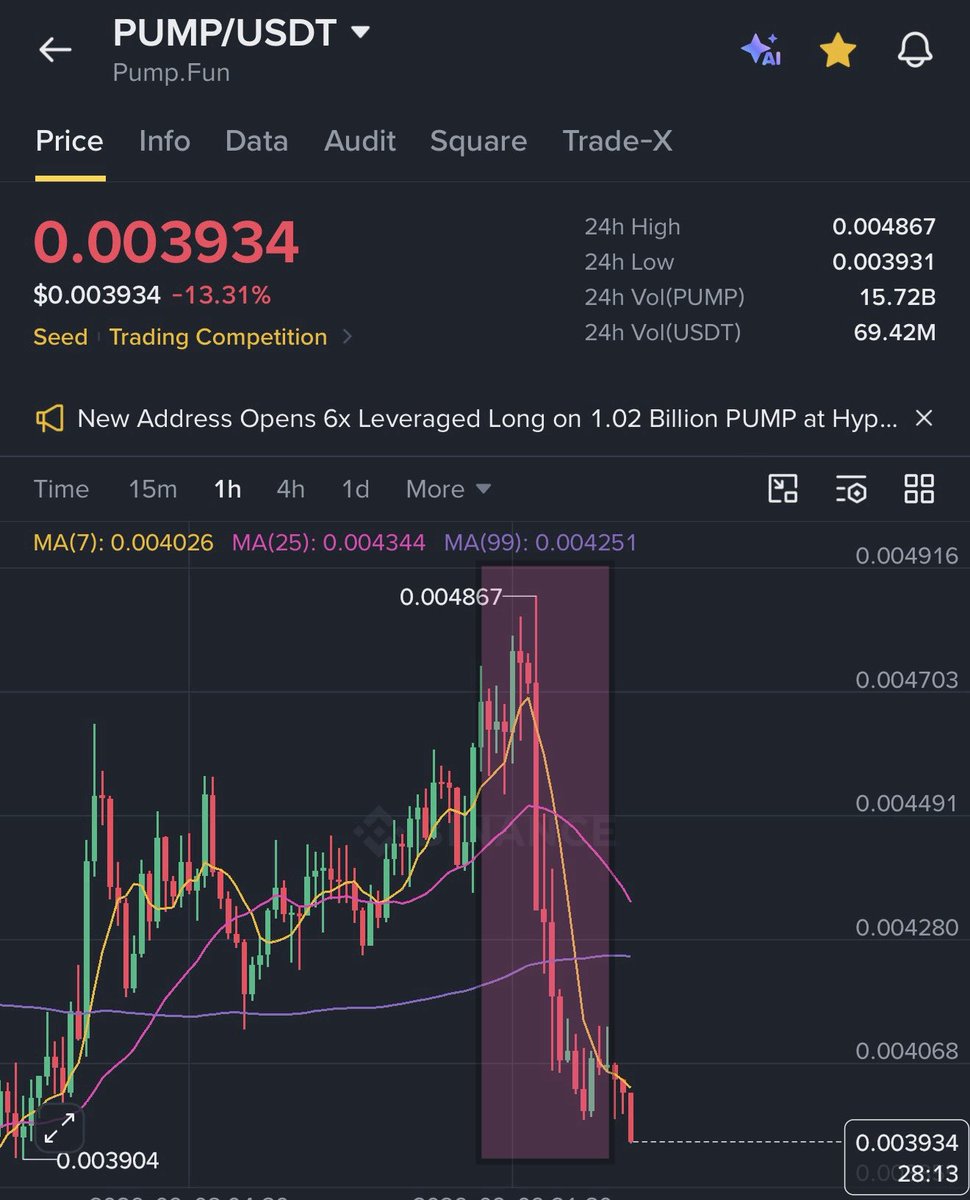
129950 粉丝
Fastest way to become exit liquidity of KOLs is buying the first candle after a callout on the app..
> squad is already positioned
> callout brings instant buyers
> candle goes vertical
> early wallets start taking profits
> so you get trapped on the first dump
so use callouts to find attention, not entries. let the first candle die, wait for the 50-60% correction, then check who is still holding and doing bagwork. buy if you find enough conviction
中文: 获得KOLs退出流动性最快的方法就是在应用程序上发出号召后购买第一支蜡烛。
队好已经部署了
呼叫带来即时买家
蜡烛呈垂直
早期钱包开始获利
所以你被困在第一个垃圾场
请使用呼救点来寻找注意力,而不是吸引人。让第一根蜡烛熄灭,等待50-60%的矫正,然后检查谁还在拿行李。如果找到足够的判定,请购买
129950 粉丝
Pattern that always works well for me trading memes..
> Find a few big squads on the Pumpfun app
> track what each squad is buying
> check if they’re actually doing proper bagwork
> wait for the coin to correct 50-60%
> check if the squad is still holding and still bag working
> if yes, buy that shit
Don’t FOMO in their first candle… see their conviction level after the chart gets ugly.
patience!
中文: 对我来说,这种模式总是很适合我交易的。
在 Pumpfun 应用程序上找到几个大团队
跟踪每个小队的购买内容
检查他们是否真的在做正确的包包
等待硬币校正到50%
检查小队是否仍在握着,并且仍在工作
如果是,就买那件废话
不要在第一根蜡烛中看到他们的定罪程度,因为图表会变得难看。
耐心!
129950 粉丝
Meme coins i’ve made the most money on were usually the ones that had already survived 50-60% corrections.. atleast 2-3 times..
one recovery can be a random bounce.
but when a coin keeps getting smashed, finds buyers again and reclaims the same levels, it tells me there are still real bids behind it.
this dip should expose them clearly.
i’m watching which coins recover faster than the market, hold above their previous lows and keep doing volume.
those are usually the first ones i want when the market turns..
129950 粉丝
I’d pay attention to the Pumpfun eco here..
stock pairs launch just gave people a completely new reason to launch and trade coins on Pump.
now it only needs 3-4 of these coins to cross $50M -$100M + to compete with $STONK
those runners bring more eyes, more launches and more volume.
more volume means more fees, and 50% of the revenue from stock pairs goes towards buying and burning $PUMP
that’s the flywheel i’m betting on to work.
a few big runners could make the whole eco go stupid again while $PUMP benefits from everything happening inside it
129950 粉丝
$PUMP is the next $LIT
buying PUMP here is like buying LIT at $2.3 https://twitter.com/Axel_bitblaze69/status/2097674168062165469/photo/1
中文: PUMP 是下一个 $LIT
在这里购买PUMP,就像以2.3美元的价格购买LIT一样
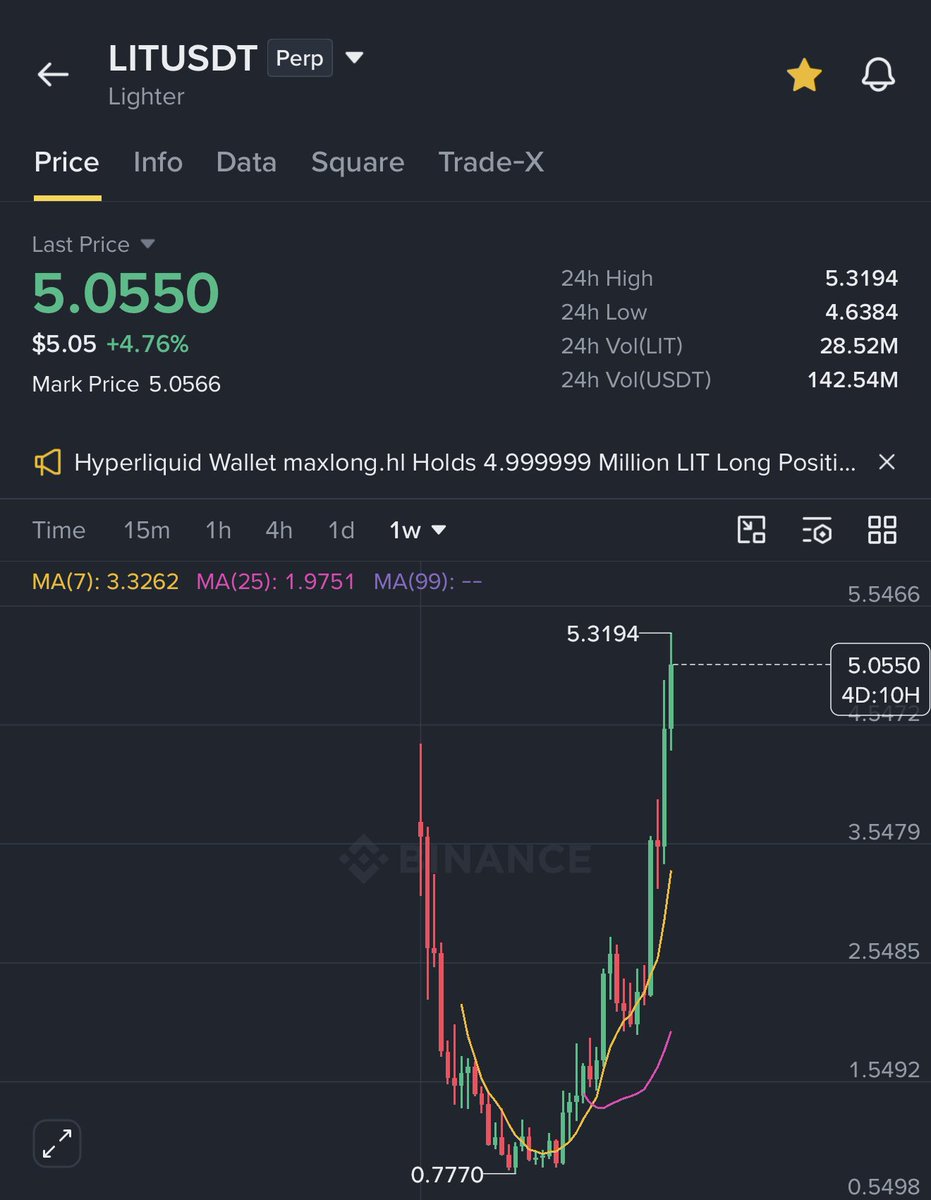

129950 粉丝
Note to self after this week in the trenches..
Not to treat 5 same chain memes like 5 separate trades.. they aren’t tbh
same chain is same liquidity and mostly the same crowd. when one got hit, all 5 started bleeding together.
i always short the native token of the chain before trading on its chain.. like i short $SOL to trade on solana.
shorting SOL can reduce the damage from SOL falling, but it can’t hedge a dev dump, bad distribution or the timeline moving on.
so the portfolio itself has to be the hedge.
from here i’ll:
- meme account stays capped at 20% of my portfolio
- starter position stays at 0.5%
- 1% is the maximum in any one coin
- coins from the same chain and narrative count as one risk bucket
- 5 losses in a row means i’m done for the day
- no adding money from my core portfolio during a drawdown
if something reaches 3x, selling one-third returns my original stake before costs.
some of every realized win leaves the meme account too.. otherwise i’m just recycling profits until one bad day takes them back.
129950 粉丝
AI agent that reads the order book before a major move shows up on the chart..
exchanges already stream live orders and trades through public feeds. no “backend access” needed.
the agent would track:
- where large orders appear
- whether they get filled or cancelled
- whether liquidity keeps refilling at the same price
- whether the same move is happening across exchanges
say a $5M sell wall appears, then disappears every time price gets close.
that isn’t real resistance it could be spoofed liquidity.
but if sellers keep hitting one bid and price still refuses to fall, someone may be absorbing everything.
the code measures the fills, cancellations and order book imbalance.
AI then explains what is happening and ranks the setup.
basically an alert for when the liquidity you see and the trading actually happening are telling two different stories..
WANT ACCESS ?
129950 粉丝
one winner should fund my next few bets.
a bag that only moves because everything is pumping is still dead weight.
that’s how i want to grow my portfolio without adding fresh money in this bull market
中文: 一位获奖者应为我接下来的几笔投注提供资金。
一个因所有东西都在抽水而移动的袋子,仍然是死重的。
这就是我希望在牛市中不增加新资金的情况下扩大投资组合的方式
129950 粉丝
In a bull market, your bags pumping isn’t enough.. they need to outperform the market.
like if $BTC goes up 20% and my alt does 8%, i’m green, but it was still a bad trade. i accepted more risk just to make less.
real W is when the market does 10% and one of my bags does 40%
means now i can take some profit, keep the rest running and use that extra capital to bid the next setup.
that’s how i want my portfolio working this cycle.. winners creating more bids. means a more chances to multiply the portfolio..
129950 粉丝
RT @CryptoMichNL: This is true.
The combination of $VVV and $ZEC outperforming the markets will drag $NEAR even further upwards.
I wouldn't be surprised to see $NEAR catching up and make new yearly highs.
中文: RT @CryptoMichNL:这是真的。
美元VVV和美元ZEC的结合将进一步拖累美元近地市场。
看到 $NEAR 迎头赶上并取得新的年度新高,我也不会感到意外。
129950 粉丝
My high conviction bets for this cycle.. $LIT and $PUMP have worked out well so far.. https://twitter.com/Axel_bitblaze69/status/2097613852724854909/photo/1
中文: 我坚信要为这个周期做赌注。到目前为止,$LIT 和 $PUMP 效果都很好。

129950 粉丝
if you’re bullish on $VVV, it’s hard not to get bullish on $NEAR too..
Venice uses NEAR AI Cloud as one of the providers for its private inference. that’s what helps process user prompts without Venice or the machine operator reading them..
you can also lock $NEAR and receive credits for private AI models and agent hosting without selling your tokens.
VVV needs Venice to keep growing.
NEAR can benefit from Venice and every other app that uses its private AI infrastructure.
reason why the NEAR side looks super mispriced to me.
129950 粉丝
main bags outperforming the market.. feeling rich..
iPhone 18 launches today, right? might just buy every colour unit. https://twitter.com/Axel_bitblaze69/status/2097580725793173628/photo/1
中文: 主包性能优于市场......感觉富有。
iPhone 18 今天发布,对吧?可能直接购买每台颜色单元。

129950 粉丝
$PUMP starting to look ready for another leg..
$0.00446 is the level
daily close above that and i think the previous highs around $0.0052 get tested again.. https://twitter.com/Axel_bitblaze69/status/2097567844196323501/photo/1

129950 粉丝
having your main bag outperform everything this early in the bull market is a different kind of fun..
gives you a nice head start before the bigger rotation even begins.
$LIT was a great hold.. https://twitter.com/Axel_bitblaze69/status/2097557709394760162/photo/1

129950 粉丝
DeFi farming is here with a twist..
its now merged with memecoins this time and is more fun and rewarding then ever
you basically hold the meme, people trade it, and part of that activity comes back to holders in the token it’s paired with..
in my case, this $500K mcap coin $CANDLE ( can be bought on either Pumpfun app or FOMO ) sends me $LIT every hour..
- meme gets a reason to be held instead of instantly flipped
- while LIT gets another pair, more liquidity and new holders accumulating it.
way more interesting than locking stables to farm some random token nobody wants.
129950 粉丝
Earning free $LIT in 2 ways rn..
- getting 6% APR from staking my LIT holdings.
- and this $500K mcap coin i bought on pumpfun app is literally airdropping me more LIT every hour lmao..
中文: 通过两个方式免费赚取 $LIT。
- 持有LIT股份可获得6%的APR。
- 这款我在 sumpfun 应用程序上购买的 50 万美元 mcap 硬币,每小时 lmao 都会向我多滴 LIT 。
129950 粉丝
making $50 a day on average for sharing memes on pumpfun app..
not much but dishonest work.. https://twitter.com/Axel_bitblaze69/status/2097410007533023651/photo/1
中文: 每天平均赚50美元,用于在 sumpfun 应用程序上分享表情包。
工作不多,但工作不诚实。

129950 粉丝
I had a pretty rough day in the trenches while trading on Pumpfun app..
played it pretty dumb tbh… kept moving from one coin into the next callout, paying fees, resetting my entry and giving none of them enough time.
some recovered right after i sold.. the next punts dumped after i entered.
basically traded myself into a worse position. gonna do fewer punts now.
rather wait for 2–3 coins i actually want to hold than touch 20 because the feed keeps moving.
中文: 我在Pumpfun应用程序上交易时,在战壕里度过了相当艰难的一天。
玩得相当笨拙......不断从一枚硬币进入下一个套音,支付费用,重置我的参赛作品,却没有给他们足够的时间。
我卖了之后,一些球就恢复了......我进去后,下一个平底锅被丢弃了。
基本上把自己交易成更糟糕的境地。现在要少做点球。
更确切地说,等待我真正想要持有的2到3枚硬币,而不是触摸20,因为进给源会不断移动。
129950 粉丝
@elonmusk X’s automated systems seem to suspend genuine accounts pretty often.. a friend of mine has been suspended 3 times despite not violating any rules.
are you aware of issues like this?
中文: @elonmusk X 的自动化系统似乎经常暂停真实账户。尽管我的一位朋友未违反任何规定,但仍被停职了三次。
你了解这样的问题吗?
129950 粉丝
What’s the point of private money if every dApp you use after that exposes your balance, trades and positions again ?
that’s why i think $ZEC and $ZAMA fit the same thesis.. and added $ZAMA in my portfolio today..
ZEC gives you private money.
ZAMA lets onchain apps process encrypted data without revealing it.
so stablecoin transfers, payroll and OTC trades can still work without putting every detail in public..
and fees for using Zama are paid in ZAMA and burned.
$ZEC basically protects the money. and $ZAMA brings privacy to what you do with it.. good beta play
中文: 如果在之后使用的每款dApp再次暴露你的余额、交易和头寸,私人资金有什么意义?
这就是为什么我认为 $ZEC 和 $ZAMA 符合相同的观点......今天在我的投资组合中新增了 $ZAMA。
ZEC 会为你提供私人资金。
ZAMA 允许 inchaine 应用程序在不泄露数据的情况下处理加密数据。
因此,稳定币转账、工资单和场外交易仍可在不公开透露所有细节的情况下发挥作用。
使用Zama的费用在ZAMA支付并烧毁。
$ZEC 基本上保护了资金。而 ZAMA 为你所做的事带来隐私保护......良好的测试版
129950 粉丝
Stock paired coins are now spreading from Robinhood to Solana, Base and BNB..
imo what this could mean for $LINK is still not priced in.. lemme explain:
tokenized stocks need reliable prices wherever they trade.
- Coinbase already chose Chainlink to power its tokenized stocks.
and Chainlink just added price streams for AAPL, NVDA, GOOGL, AMZN, META, MSFT and more across its supported networks. updates
the launchpads and chains can keep changing.. but each new stock market brought onchain creates more demand for the data underneath it
LINK still gets valued like an old DeFi oracle.
not like infrastructure for a 24/7 onchain stock market.
imo that gap is yet to be priced in.
中文: 股票搭配的硬币如今正从罗宾汉蔓延至索拉纳、基地和BNB。
对于 $LINK 来说,这可能意味着什么,仍然不定价...... leme 解释道:
代币化股票在交易中需要可靠的价格。
- Coinbase 已经选择 Chainlink 来为其代币化股票供电。
Chainlink 刚刚在其支持的网络上为AAPL、NVDA、GOOGL、AMZN、META、MSFT等公司增加了价格流。
发射台和连锁关系可以不断变化......但每一个新股市场带来,都会对其背后的数据产生更多需求
链接仍然像旧的DeFi神�变一样受到重视。
不像是24小时在线股票市场的基础设施。
这一差距尚未被计入。
129950 粉丝
$BNB is looking like a good bet here..
as BNB Chain finally has a fresh trade again, not just the same old memes getting recycled..
FOUR is bringing tokenized stocks onchain and letting people launch memes against them..
$4STOCK touching nearly $50M within hours showed how quickly traders picked up the narrative.
then there’s $BNC, a Nasdaq-listed company holding 515K+ BNB and now its stock has been brought onchain as BNC4. filing
so you now have public market money, tokenized stocks and meme traders all meeting inside the BNB ecosystem.
if these stock memes keep printing runners, more creators will launch there, more traders will move there and more liquidity will stay there.
BNB as the broader bet on all of it is imo better than gambling on tickers to tickers in the ecosystem..
129950 粉丝
If you put $50 into 40 coins and one hits 2000x thats $4M
that’s the game im after bro..
129950 粉丝
i think $FORM is a good bet if this stock meme thing keeps growing on BNB chain..
4Stock lets creators launch memes paired with tokens backed by real stocks..
so each new stock added could bring another round of launches and traders to FOURMEME
and Fourmeme has said 100% of its BNB launchpad trading fees will be used to buy back $FORM.
so my thinking is.. more activity on the launchpad could fund more FORM buybacks, without me having to guess which meme wins..
i like that bet.
中文: 我认为如果这种股票在BNB连锁店继续增长,那么$FORM就是个不错的选择。
4Stock 允许创作者推出与真实股票支持的代币配对的表情包。
因此,每增加一只新股票,就可能为FOUMEME带来新一轮的上市和交易
Fourmeme 表示,其 BNB 发布平台交易费用的 100% 将用于回购 FORM。
所以我的想法是:启动时的更多活动可以资助更多的Form回购,而我无需猜测哪款表情包会赢。
我喜欢那个赌注。
129950 粉丝
BNB Chain got a new way to bring stocks onchain and launch memes around them..
and that’s why $4Stock went nuts, touching nearly $50M within hours.
FOURMEME calls the new product 4Stock.
easiest way to understand it is through BNC4, the first stock token launched through the product..
FOUR uses USDC to buy real BNC shares through a managed account, then mints the same amount as BNC4 on BNB Chain.
so BNC4 is backed 1:1 by the shares Four purchased. once BNC4 is live, creators can use it to launch new memes.
normally, a meme trades against BNB or USDT. now someone could launch MEME/BNC4, meaning you would buy and sell that meme using BNC4
the meme itself is not backed by BNC shares.. only BNC4 is.
and bringing a completely new stock into 4Stock requires $500k:
- $250k buys the real shares
- $250k creates liquidity for the stock token
why would someone put up that money?
because they receive 50% of the internal trading fees from memes launched against that stock, plus 50% of the yield from its initial liquidity pool. docs
so if memes paired with BNC4 start doing serious volume, the person who brought BNC4 onchain keeps earning from that activity.
that could make someone else bring another stock over.
then more stocks bring more meme pairs, more meme pairs bring more traders, and more trading produces more fees.
that’s the possible flywheel..
but yeah mind you, the $4Stock coin everyone is buying is a meme named after the product.
it is not BNC4.. it isn’t backed by shares, and i couldn’t find anything showing that product fees go to $4Stock holders.
so my thesis on the coin is attention.
if Four’s 4Stock product becomes big on BNB Chain, this meme could become the main ticker people use to bet on that growth.
but i’d also watch whether the actual stock paired memes start doing volume.
if only $4Stock pumps while nothing built with the product gets traded, then the flywheel isn’t working yet..
you are just buying the name.
129950 粉丝
RT @Axel_bitblaze69: I’m hearing Pumpfun might announce stock paired feature on their Launchpad ..
if true, then does the current valuation of $PONS still makes sense ?
i mean, if i can launch the same idea on Pumpfun and reach its massive community , what makes me choose PONS?
token launches on Pons and its revenue might take a hit.. leading to less buybacks and eventually break their flywheel..
good short setup on $PONS here imo..
中文: RT @Axel_bitblaze69:我听说Pumpfun可能会在他们的 Launchpad 上发布组合功能。
如果属实,那么目前美元代币的估值是否仍然有意义?
我的意思是,如果我能在Pumpfun上推出同样的想法并触达其庞大的社区,那么我选择PONS的原因是什么?
代币在Pons上推出,其收入可能受到打击......导致回购减少,最终导致其飞轮断裂。
在 $PONS 上设置不错。
129950 粉丝
I’m hearing Pumpfun might announce stock paired feature on their Launchpad ..
if true, then does the current valuation of $PONS still makes sense ?
i mean, if i can launch the same idea on Pumpfun and reach its massive community , what makes me choose PONS?
token launches on Pons and its revenue might take a hit.. leading to less buybacks and eventually break their flywheel..
good short setup on $PONS here imo..
中文: 我听说Pumpfun可能会在他们的Launchpad上发布搭配功能。
如果属实,那么目前美元代币的估值是否仍然有意义?
我的意思是,如果我能在Pumpfun上推出同样的想法并触达其庞大的社区,那么我选择PONS的原因是什么?
代币在Pons上推出,其收入可能受到打击......导致回购减少,最终导致其飞轮断裂。
在 $PONS 上设置不错。
129950 粉丝
ETH / BTC
Are you ready for round 2.0 ? 👀 https://twitter.com/Axel_bitblaze69/status/2096897457129214272/photo/1
中文: 以太坊/比特币
你准备好迎接第二轮比赛了吗?👀

129950 粉丝
$LINK right at that $13.50 flip now..
now it just needs to get a weekly close above $13.50 and hold it… $22 will be quick after that imo.. https://twitter.com/Axel_bitblaze69/status/2096863627764781088/photo/1
中文: 立即在那13.50美元处直接链接翻转。
现在只需将周线收盘价控制在13.50美元以上,之后就会很快达到22美元。
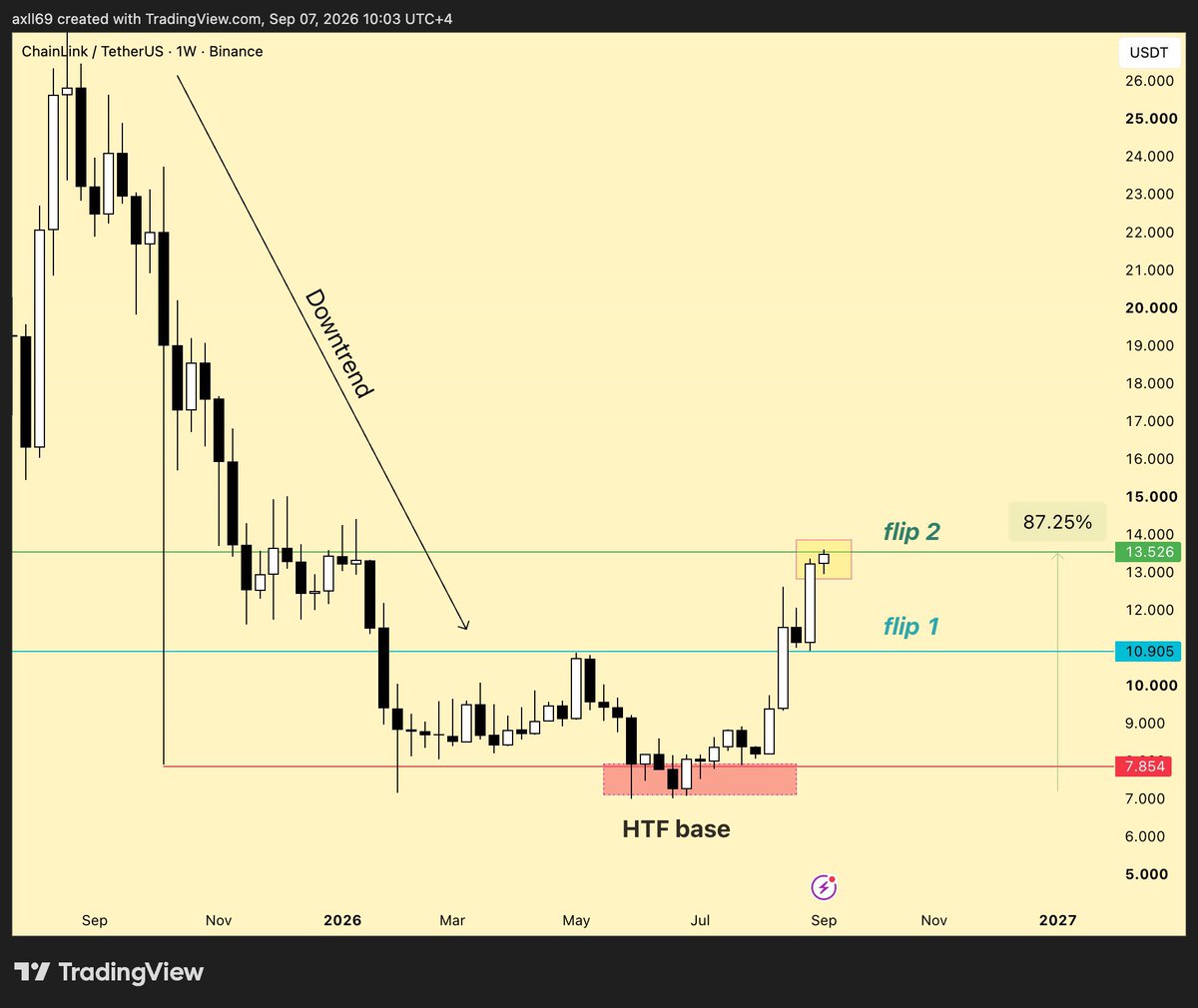
129950 粉丝
for me, the appeal is having several small attempts while keeping cash for the next setup.. i’d rather spend my time finding better entries and exits than increasing leverage.
中文: 对我来说,吸引力在于在为下一个设置保留资金的同时进行几次小尝试......我宁愿花时间寻找更好的出局,而不是增加杠杆。
129950 粉丝
With $5k to trade, i’d rather trade memes than leverage trading..
cuz i want enough money left to take the next opportunity without one bad trade putting me under pressure.
say i put $250 into 10 coins and keep the other $2,500 in cash.
7 go to zero
2 get sold at 3x
1 gets sold at 8x
i finish with $6,000 before costs… that’s 20% up on the account despite 7 losers.
obviously i still have to find those winners and actually sell them. if the 8x only reaches 4x, i’m breakeven before costs.
what i like about spot is the room to hold. a $250 position can survive a nasty wick without me needing to add money.
on a 5x isolated long, a roughly 20% move against me would wipe out the starting margin, with liquidation usually happening earlier.
and with limited funds, i don’t want to feel pressured to keep feeding a losing position.
small positions are what give me more attempts. spot lets me take those attempts without a liquidation price.
sure, the meme can still go to zero. that’s why i keep the buy small..
129950 粉丝
RT @Axel_bitblaze69: $LINK above $13.. i like it for the tokenized stock trade…
Coinbase already uses Chainlink to price its tokenized stocks.
DTCC’s collateral platform is targeting Q4 with Chainlink integrated.
Schwab plans to add LINK trading in the coming months.
my thinking is pretty simple.. if more stocks move onchain and people actually trade, borrow and lend against them, Chainlink has more potential customers.
and its service revenue gets converted into LINK. that gives the activity a way to benefit the token.
that’s what i think could still be underestimated.. how much LINK buying comes from these integrations as usage grows.
higher
中文: RT @Axel_bitblaze69:$LINK 高于每盎司13美元。我喜欢用于代币化的股票交易......
Coinbase 已使用 Chainlink 为其代币化股票定价。
DTCC的抵押平台正以整合Chainlink为目标,瞄准第四季度。
施瓦布计划在未来几个月内增加LINK交易。
我的想法很简单......如果更多股票在线移动,人们实际上进行交易、借贷和借贷,Chainlink 的潜在客户就越多。
其服务收入被转化为链接,使该活动能够使代币受益。
我认为这仍可能被低估......随着使用量的增长,这些整合方式带来了多少链接购买。
更高
129950 粉丝
$LINK above $13.. i like it for the tokenized stock trade…
Coinbase already uses Chainlink to price its tokenized stocks.
DTCC’s collateral platform is targeting Q4 with Chainlink integrated.
Schwab plans to add LINK trading in the coming months.
my thinking is pretty simple.. if more stocks move onchain and people actually trade, borrow and lend against them, Chainlink has more potential customers.
and its service revenue gets converted into LINK. that gives the activity a way to benefit the token.
that’s what i think could still be underestimated.. how much LINK buying comes from these integrations as usage grows.
higher
129950 粉丝
My top callouts on Pumpfun so far.. getting closer everyday to make a Million.. https://twitter.com/Axel_bitblaze69/status/2096737068215153142/photo/1
中文: 到目前为止,我对Pumpfun的最高级呼吁......每天靠得更近,赚一百万。

129950 粉丝
Im literally getting airdropped
$HYPE
$LIT
$TAO
$BTC
And some tokenised stocks too.. $TSLA $NVDA and what not lmao
中文: 简直就是被空了
$HYPE
$LIT
TAO
BTC
还有一些代币化的股票。$TSLA 与 什么不是 lmao
129950 粉丝
$BEN got fully shilled by Flap, THE hottest launchpad on BNB right now.
and you think it dies below $10M ?
higher.
中文: 目前,Flap 是 BNB 上最火热的发射台,BEN 完全一腱。
你以为它会低于1000万美元?
更高。
129950 粉丝
The sexual tension it creates between us..
when i shill this girl $sendnudes is crazy…
love it. Send Nudes https://twitter.com/Axel_bitblaze69/status/2096702356234903794/photo/1
中文: 它在我们之间造成了性紧张。
当你先让这个女孩疯狂时......
喜欢它。发送裸体

129950 粉丝
Some of you keep quoting revenue like i said $PONS had no volume..
My point is $PONS still looks like the shiny new pumpfun killer trade.
i’m less convinced by what’s happening underneath it. outside PONS itself, the biggest coin currently is around $16M
Meanwhile StonkFun’s $ZCAT has crossed $100M
put yourself in a deployer’s shoes.
you want buyers who stick around and a community your coin can actually grow in.
if other launchpads keep producing stronger runners, why stay loyal to PONS?
devs can launch on pumpfun, StonkFun or
wherever traders are going next.
that’s my bear case.. attention moves, launches follow, fees shrink, buybacks shrink.
PONS pumping doesn’t settle whether its ecosystem can keep people around..
中文: 有些人一直引用收入,比如我说 $PONS 没有成交量。
我的观点是,美元一美元仍然看起来像是闪亮的新式抽油药杀手交易。
我对它下面发生的事情不太相信。在PONS之外,目前最大的硬币价格约为1600万美元
与此同时,StonkFun 的 $ZCAT 已突破 1 亿美元
让自己处于部署者的自我。
你希望那些能坚持下去的买家,以及你的硬币实际上可以成长的社区。
如果其他发射台不断生产出更强的跑者,为何要对PONS保持忠诚?
开发人员可以在 sumpfun、StonkFun 或平台上发布
下一个交易者要去哪里。
这是我的情况......注意力在变动,启动会随之而来,费用会缩减,回购会减少。
PONS抽水并不能决定其生态系统是否能够让人们继续留在身边。
129950 粉丝
launchpads are going absolutely nuts rn..
$STONK earlier today on Solana..
$STONKEX on Base..
then $BREW on BNB..
if you’ve been following my calls on Pumpfun, you know.
One hell of an undervalued gem that many don’t know about is $AST on BNB
this one has a different angle… a unique launchpad of all..
ast(.)fun lets u launch memes backed by leveraged crypto or stock positions.
think a meme backed by a 3x BTC long, with the liquidation risk that comes with it.
revenue funds $AST buybacks and burns, so i’m betting on those launches getting traded next..
中文: 发射台正在彻底疯狂。
今天早些时候在索拉纳上。基础上的 $STONKEX。然后在BNB上购买。
如果你一直关注我在Pumpfun上的电话,你知道的。
一个被低估、许多人不知道的瑰宝,就是BNB上的 $AST
这个角度不同......是所有发射台中独一无二的。
Ast(.)fun 可让您推出由杠杆加密货币或股票仓位支持的表情包。
认为一个由3倍比特币长期支持的表情包,随之而来的是清算风险。
收入资金为 $AST 回购和烧钱,因此我押注于这些发行将在下一个交易中。
129950 粉丝
I think $PONS is super overvalued, and buying it as the next $PUMP could end badly..
Take a look at PONS eco for once..
PONS itself had a crazy run to almost a Billion and still its ecosystem’s… next biggest coins are just around $20M and $18M $ROBIN and $HMM
that gap says everything..
you’re betting on a launchpad. right ? so its launches need to give people a reason to keep coming back.
winners bring traders, traders attract deployers, and that activity generates fees.
while $PUMP has produced billion-dollar runners like GOAT and PNUT and Fartcoin in last cycle..
PONS pumping doesn’t give its ecosystem the same track record.
and those buybacks come from fees. if traders keep losing interest and deployers move elsewhere, volume dries up.
less revenue, less money for buybacks.
a dump still generates fees. an empty launchpad doesn’t..
i think people are getting way ahead of themselves calling this a Pumpfun killer.

129950 粉丝
I’m in $AST for this idea of pairing memes with perps..
One of the best play on BNB rn..
Astfun lets you launch a meme backed by a leveraged long or short.
think a $BTC bull meme backed by a 3x BTC long… the position keeps affecting its value even when nobody trades the meme.
revenue has already funded buybacks and burns.. i can see people having fun with this.
worth getting attention from @cz_binance and @binance
中文: 我为将表情包与竖琴配对的想法而达到最佳状态。
BNB rn. 上最棒的戏剧之一
Astfun 可让您推出由杠杆长或短支撑的表情包。
以一个由3倍比特币长支撑的BTC美元牛市币为支撑......即使无人交易该币币,该头寸也持续影响其价值。
收入已经为回购和烧钱提供了资金......我可以看到人们对此感到愉快。
值得关注 @cz_binance 和 @binance

129950 粉丝
if @Pumpfun adds stock-paired launches + perps and goes multichain across Solana, BNB and Robinhood..
i can see $PUMP becoming a $10–20B play.
@a1lon9
中文: 如果@Pumpfun 添加备货型的发布 + psup ,并在 Solana、BNB 和 Robinhood 上实现多链。
我可以看到 $PUMP 成为一部 10 美元至 20 美元的游戏。
@a1lon9
129950 粉丝
Imagine holding a meme and getting paid in coins you were planning to buy anyway..
that’s why i like this memefi meta.. keeping the meme exposure while collecting another bag on the side.
could see this getting a lot of attention if the payouts keep coming.
中文: 想象一下,拿着一个表情包,然后用你打算买的硬币来支付。
这就是为什么我喜欢这个 memefi 元——在取下另一个包时保持表情包曝光。
如果支出问题不断到来,可能会引起大量关注。
129950 粉丝
Buying a coin called Buttensor and getting paid in $TAO is pretty funny tbh..
I like this memefi meta. few coins doing it:
- $PURR pays $HYPE
- $BUTT pays $TAO
- $ZCAT pays $ZEC
- $RAYCAT pays $RAY
- $BTC / Buy The Cat pays WBTC
- $PIZZA pays BTCB on BNB
i’m looking for more like these.. ideally paying something i’d want to keep after i’m done with the meme..
中文: 买一枚名为Buttensor的硬币,并用$TAO支付,这真是太好笑了。
我喜欢这个memefi元。很少有硬币能做到这一点:
- PURR 支付 $HYPE
- $BUTT 支付 $TAO
- $ZCAT 支付 $ZEC
- $RAYCAT 支付 $RAY
- 比特币/购买猫咪支付WBTC
- 比萨币(PIZZA)在BNB上支付比特币
我正在寻找更多类似这样的产品......理想情况下,在完成这个表情包后,我会想继续支付一些费用。
129950 粉丝
RT @Axel_bitblaze69: One of the ways i’ve been hunting for the next big memecoin runner lately is:
I take a few coins that already ran, find the wallets that actually cashed out, then check what they’re buying next.
Gets interesting when several of them are buying and still holding the same coin.
For this:
- Connect Nansen MCP to your Ai agent like Codex or Claude or Cursor
- and paste the prompt in the image:
中文: RT @Axel_bitblaze69:最近寻找下一位大型memecoin跑步者的方式之一是:
我拿几枚已经用完的钱币,找到那些真正兑现的钱包,然后查看一下他们接下来要买什么。
当他们中的几人正在购买并仍持有同一枚硬币时,会很有趣。
为此:
- 将南森MCP连接到您的Ai代理,如Codex或Claude或Cursor
- 并将提示粘贴到图片中:

129950 粉丝
Im interested in memes like this that fit into memefi meta..
basically, buy a meme and collect tokenized Nvidia or any other stock on the side.
looking for more coins doing this rn.
StonkFun’s reward coins use a transfer tax to pay holders in the paired asset. with an NVDAx pair, that means tokenized Nvidia.
i’d want the rewards in something i actually want to keep.. then check how much reaches holders and whether the volume lasts.
holding a meme and slowly building a stock-token bag from it is a pretty fun idea tbh.
129950 粉丝
When a coin catches my eye on Pumpfun app, this is what i check before buying..
- About
- Holders
- Callouts
- Stats
- Chart
- Buy screen
129950 粉丝
Robinhood
Base
Solana
BNB
watch which team does the most to support its onchain projects.. that’s where i’d expect the plays to keep doing well
中文: 罗宾汉
基础
索拉纳
BNB
观察哪支球队最能支持其链上项目......我期望比赛能继续表现良好
129950 粉丝
$PONS on Robinhood
$STONK on Solana
$STONKEX on Base
All to billions..
中文: 罗宾汉的$PONS
索拉纳号上的$STONK
基础上的$STONKEX
全部到数十亿......
129950 粉丝
$STONKEX could catch some of that attention on Base too..
especially after seeing $PONS and $STONK go bonkers..
ONLY AT $10M 👀
> same idea of launching memes paired with tokenized stocks
> liquidity locked on Uni V3
> platform fees fund STONKEX buybacks and burns
if a few of these memes take off on Base, their trading could keep feeding the buybacks.
中文: $STONKEX 也可能在 Base 上引起一些关注。
尤其是看到$PONS和$STONK出现问题后。
仅1000万美元👀
推出与代币化股票搭配的表情包的相同想法
流动性锁定在Uni V3上
平台费用基金 STONKEX 回购与烧钱
如果其中一些表情包在基地上起飞,它们的交易可能会继续助长回购。
129950 粉丝
$STONK went from $35M to $100M in since my yesterday’s post..
thesis was pretty simple.. if stock paired memes found a crowd on Robinhood, why wouldn’t people try them on Solana too?
StonkFun lets people launch memes against tokenized stocks like Nvidia. and the team reported $1M in cumulative STONK buybacks on September 5..
that’s what interests me here. if more launches keep getting traded, the fees can keep funding buybacks. and in no time this can pull a $PONS like rally.. no brakes
中文: 自从我昨天发帖以来,$STONK从3500万美元涨到了1亿美元。
论文很简单......如果在《罗宾汉》上发现群交的表情包,为什么人们在索拉纳上也不会尝试呢?
StonkFun 允许人们针对英伟达等代币化股票推出表情包。该团队在9月5日累计收到100万美元的STONK回购资金。
这正是我在这里感兴趣的原因。如果更多的上市交易不断被交易,这些费用可以继续为回购提供资金。而且,这几乎可以像反弹一样拉动一美元的上涨......无需刹车
129950 粉丝
Solana getting a stock paired meme season would be pretty good for $STONK ..
StonkFun reported $79k revenue yesterday..
$46k went into buybacks and 2.14M STONK was burned..
now new launches go through Raydium LaunchLab, with cheaper deployments and liquidity that compounds after graduation.
so i’m watching what actually launches there and keeps getting traded.
few runners bringing repeat volume could add a lot to the buyback budget. that’s the bet i’d be making with STONK..
Perhaps a $PONS beta on Solana.. 👀
129950 粉丝
For finding good callers on Pumpfun, i’d start with coins that already ran and work backwards:
> check who called them before the move. look for names that show up early across several winners..
> go through their last 10–20 calls, including the dead ones.
> remove their biggest winner. is the rest of their record still worth following?
> check whether there was time to enter after the call. i mean a 10x nobody could follow means very little.
> watch their next few calls before putting money behind them. record the price when YOU see the alert.
someone calling 50 coins a day will eventually hit something.
i wanna know what following all those calls would’ve cost me..
中文: 要在 Pumpfun 上找到优秀的呼叫者,我先先使用已运行且向后运行的硬币:
> 在搬家前检查谁给他们打电话。查找一些获奖者中出现的名字。
> 完成他们最后10到20次的通话,包括那些死去的电话。
移除他们最大的赢家。他们记录的其余部分是否仍值得关注?
> 检查通话后是否有时间输入。我的意思是,无人能追上的10倍意味着很少。
> 先关注他们接下来的几次通话,然后投入资金。看到警报后,请记录价格。
每天打50枚硬币的人最终会击中某种东西。
想知道那些电话之后会让我付出什么代价。
129950 粉丝
After one month of trading full time on the Pumpfun app.. my filter would be:
- Follow a few callers who consistently find coins early. check their losing calls too.
- Use trending to spot what’s getting attention, then callouts to find coins worth watching.
- Shortlist coins that survived their first selloff and started recovering.
- Watch whether the next dip holds above the previous low.
- Check holder distribution. several small wallets could still belong to one person.
- Compare the current price with the call price. someone else’s early entry could be your late buy.
lastly, follow me on Pumpfun to get notified what im trading..
中文: 在Pumpfun应用程序上进行为期一个月的全职交易后,我的筛选器会是:
- 关注一些持续早早找到硬币的来电者。也请查看他们丢失的电话。
- 利用趋势来发现哪些内容正在引起关注,然后调用这些内容来查找值得关注的硬币。
- 短销硬币,在首次抛售后得以恢复。
- 观察下一次跌幅是否高于之前的低点。
- 支票持有人分配。多个小钱包可能仍属于一个人。
- 将当前价格与通话价格进行比较。别人的提前入场可能是您迟迟来的购买。
最后,请在 Pumpfun 上关注我,以便收到关于我交易内容的通知。
129950 粉丝
My Top Holdings for September..
$BNB: my bet on the BNB rotation continuing, with bStocks memes and Flap/Four.meme getting ecosystem support.
$ETH: still like it for a broader DeFi recovery.. Glamsterdam is now in public testing, working toward more capacity on Ethereum itself.
$PUMP: 50% of revenue goes into buybacks and burns.. already burned 16.4% of the original supply.
$LIT: Robinhood Wallet gives Lighter access to more traders, while trading fees fund daily LIT buybacks.
$LINK: the new Bottomline partnership targets payments for 600+ bank customers.. watching how much of that becomes actual usage.
$AAVE: mobile app early access opened on August 26.. interested in whether it brings a new wave of savers into Aave.
$PENGU: expanded to Robinhood Chain and crossed 35K Pengu Card users.. watching whether that reach brings more demand for the token.
$NEAR: Confidential Intents is open to developers.. i like the angle of making private cross-chain swaps easier.
$DASH: Zcash-based shielded transactions are live on Evolution.. gives me a reason to watch it alongside the privacy trade.
129950 粉丝
One of the ways i’ve been hunting for the next big memecoin runner lately is:
I take a few coins that already ran, find the wallets that actually cashed out, then check what they’re buying next.
Gets interesting when several of them are buying and still holding the same coin.
For this:
- Connect Nansen MCP to your Ai agent like Codex or Claude or Cursor
- and paste the prompt in the image:
中文: 最近我一直在寻找下一个大型 memecoin 跑步者的方式之一是:
我拿几枚已经用完的钱币,找到那些真正兑现的钱包,然后查看一下他们接下来要买什么。
当他们中的几人正在购买并仍持有同一枚硬币时,会很有趣。
为此:
- 将南森MCP连接到您的Ai代理,如Codex或Claude或Cursor
- 并将提示粘贴到图片中:
129950 粉丝
RT @Axel_bitblaze69: Pay attention on whats happening.. BNB season might actually be real this time..
$BNB weekly looks so ready.. weekly close just above here $745 will confirm the first proper higher high while reclaiming both the 50W and 100W EMAs
$933 next obvious level imo.. https://twitter.com/Axel_bitblaze69/status/2096164146257760740/photo/1
中文: RT @Axel_bitblaze69:关注正在发生的事情。这次BNB赛季可能真的很真实。
每周的$BNB看起来已准备就绪......本周收盘价略高于此处,745美元将确认首次达到正高点,同时收复50W和100W的EMA
933美元,下一个明显级别的imo。
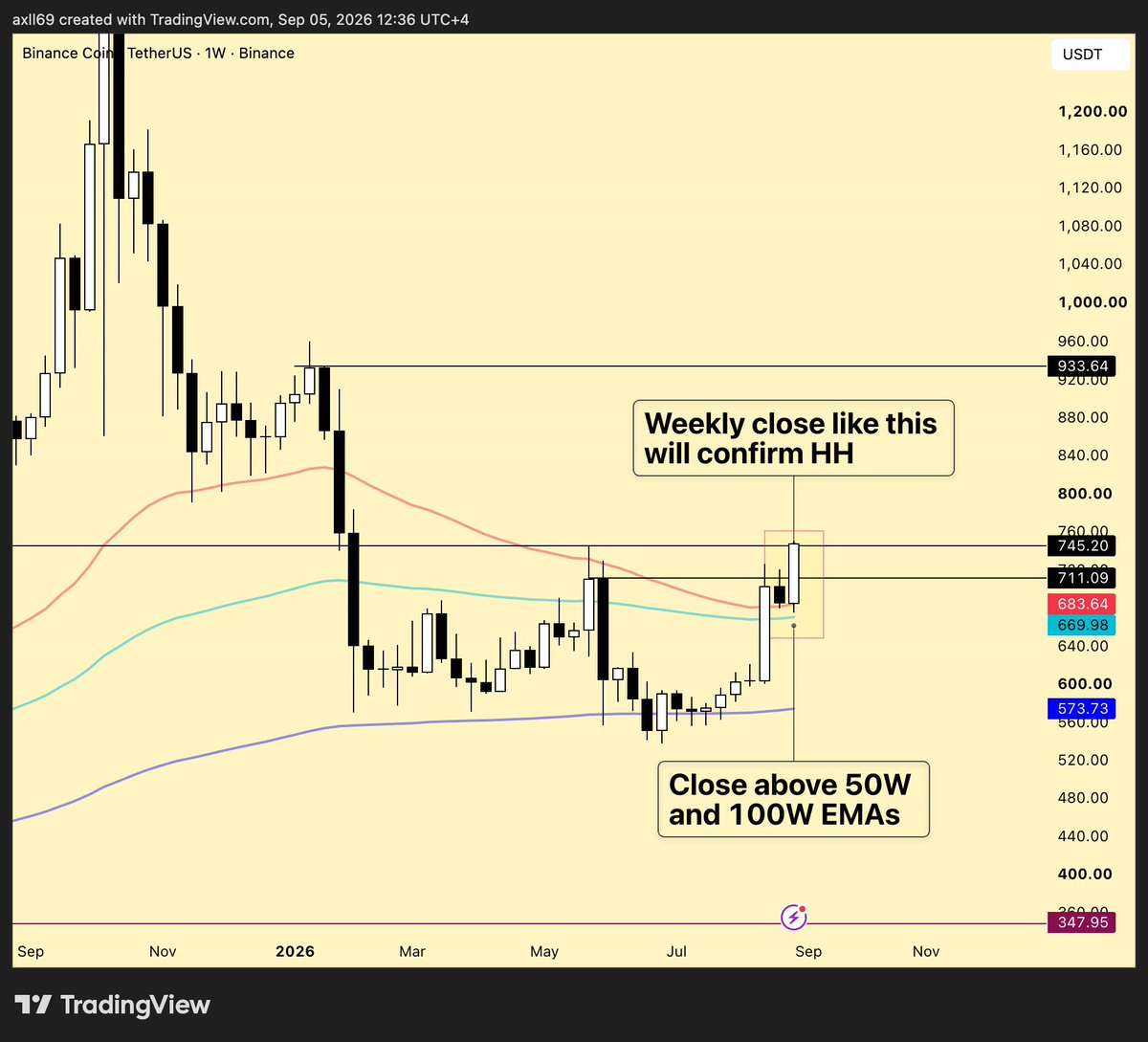
129950 粉丝
RT @Axel_bitblaze69: Robinhood is getting overcrowded now..
so i’ve bought a fat bag of $BNB and started watching coins there before the rotation becomes obvious..
My filter for $BNB coins now:
- minimum $500K market cap
- survived a proper 35-40% drawdown and reclaimed the level
- decent liquidity and clean holders
- launched on Flap or Fourmeme
- extra points if paired with a bStock..
- basically the same meme x tokenized stock setup that worked on Robinhood
- volume returning after the dip
- some Binance Wallet attention, but no spot listing yet
not looking for fresh launches here.. i want coins that already got tested, didn’t die and look ready for a second leg.
shill me what you’re holding?
中文: RT @Axel_bitblaze69:罗宾汉现在越来越拥挤了。
所以我买了一袋一袋BNBB的大包,开始在那里看硬币,然后旋转变得明显。
现在我的 $BNB 硬币筛选器:
- 最低50万美元市场上限
- 经历了35至40%的合理降幅,并重新找回了这一水平
- 流动性合理且持有清白
- 在 Flap 或 Fourmeme 上发布
- 如果与 bStock 配对,则加分。
- 与 Robinhood 上相同的 meme x 令牌化配置
- 跌落后回音
- 部分币安钱包关注点,但尚未发现
不想在这里寻找新的新品......我想要那些已经测试过、没有死亡的硬币,并且看起来已经准备好迎接第二回合了。
你拿着什么就让我先来?
129950 粉丝
Robinhood is getting overcrowded now..
so i’ve bought a fat bag of $BNB and started watching coins there before the rotation becomes obvious..
My filter for $BNB coins now:
- minimum $500K market cap
- survived a proper 35-40% drawdown and reclaimed the level
- decent liquidity and clean holders
- launched on Flap or Fourmeme
- extra points if paired with a bStock..
- basically the same meme x tokenized stock setup that worked on Robinhood
- volume returning after the dip
- some Binance Wallet attention, but no spot listing yet
not looking for fresh launches here.. i want coins that already got tested, didn’t die and look ready for a second leg.
shill me what you’re holding?
129950 粉丝
If i’m putting real size into this market for a near 2x, i’d rather buy $PUMP and $BNB than gamble on another low cap..
i’m placing heavy bets on both for an ATH run..
$PUMP
$0.0042 now
$0.0088 ATH
around 2.1x back to highs.
Pump did $47.5M in fees and $36.3M in revenue over the last 30 days. $26.8M was used for buybacks, taking total buybacks to around $351M
the unlocks are the risk, but this is still the biggest meme casino in crypto and its revenue keeps buying the token..
$BNB
$749 now
$1,370 ATH
around 83% back to highs.
if BNB season really starts, Binance distribution does the rest.. these won’t give me 20x..
but for roughly 2x with size, i don’t think it needs to be more complicated than this.
中文: 如果我将实际规模投入到这个市场,获得接近2倍的价格,我宁愿购买PUMP和$BNB,也不愿再赌一个低价。
我正在为两次ATH比赛投入大量资金。
PUMP
0.0042 美元
0.0088美元
约2.1倍回到高点。
过去30天,Pump的手续费为4750万美元,收入为3630万美元。2680万美元被用于回购,总回购总额约为3.51亿美元
解锁是风险,但这仍然是加密货币领域最大的大型赌场,其收入仍持续购买代币。
$BNB
现价749美元
每日1370美元
约83%回到高点。
如果BNB赛季真的开始,币安的发行会做剩下的事......这些不会给我20倍。
但对于大约2倍的尺寸来说,我认为它不必比这更复杂。
129950 粉丝
Pay attention on whats happening.. BNB season might actually be real this time..
$BNB weekly looks so ready.. weekly close just above here $745 will confirm the first proper higher high while reclaiming both the 50W and 100W EMAs
$933 next obvious level imo.. https://twitter.com/Axel_bitblaze69/status/2096164146257760740/photo/1
中文: 关注正在发生的事情。这次BNB赛季可能真的很真实。
每周的$BNB看起来已准备就绪......本周收盘价略高于此处,745美元将确认首次达到正高点,同时收复50W和100W的EMA
933美元,下一个明显级别的imo。
129950 粉丝
$DASH has done a 2x in last few days.. and barely anyone is talking about it.
$ZEC crossed $1,000 now and worth around $17B after getting the first US-listed Zcash ETF
so, i think people are looking for the next liquid privacy beta and DASH is still below $1B
but there is an actual update behind it too.
Dash launched shielded transactions on Evolution last month using Zcash’s Orchard tech, with settlement in around one second.
they’re also building Dash to Anything, where you send DASH and the other person receives whichever asset they want. isn’t it cool ?
on a decent pullback, this is probably the most obvious ZEC beta alongside $NEAR
中文: 过去几天,DASH 已经做了2倍的工作......几乎没人谈论这件事。
ZEC 现价超过 1000 美元,在获得首只美国上市的 Zcash ETF 后,市值约为 170 亿美元
因此,我认为人们正在寻找下一个流动性隐私测试版,而DASH仍低于10亿美元
但背后也有实际的更新。
上个月,达世银行在Evolution上使用Zcash的Orchard技术推出了屏蔽交易,约一秒后达成和解。
他们还在将Dash打造为“Anything”,你向DASH发送,而对方会收到他们想要的任何资产。这不酷吗?
在一次不错的回调中,这可能是与 $NEAR 一体最明显的 ZEC 测试版

129950 粉丝
I think the reason Robinhood season refuses to die is Robinhood itself..
Vlad keeps talking about what’s happening onchain, and when native coins win, Robinhood is actually listing them..
$CASHCAT and $PONS are both tradable there now.
that changes the ceiling imo.. an onchain meme can reach the same users buying stocks on Robinhood. is huge right?
and there’s always something new to do.
- memes trading against tokenized stocks like NVDA, SPY
- Pools launches graduating into permanently locked Uniswap liquidity.
- $PONS and $CASHCAT farms on Ripe, while supported stock tokens can be borrowed against.
- Lighter perps inside Robinhood Wallet.
- NFTs are getting alive too.. we have seen crazy raises in millions for mints
even when AMC’s CEO called out its tokenized AMC exposure, Vlad publicly stood behind Stock Tokens. good sign..
So clearly Robinhood is giving the chain assets, apps, distribution and public support..
as long as they keep doing this, i don’t see the season dying anytime soon..
129950 粉丝
What went wrong with $AVNT and $ZORA?
both were heavily pushed by the Cb Cartel, Jesse and Base
one was supposed to be Base’s Hyperliquid, the other its Pumpfun
but the attention never turned into lasting demand.. maybe this is why Base is losing its charm https://twitter.com/Axel_bitblaze69/status/2096122127497953333/photo/1
中文: $AVNT 和 $ZORA 出了什么问题?
两者都受到Cb Cartel、Jesse和Base的大力推动
一个本应是Base的超流动性,另一个是其Pumpfun
但关注从未转化为持久的需求......也许这就是为什么Base正在失去其魅力的原因

129950 粉丝
RT @Axel_bitblaze69: $NEAR is finally moving.. the only laggard in my portfolio..
now with $ZEC above $1,000, i think this is probably the cleanest beta.
NEAR Intents is already one of the main routes in and out of native ZEC..
Zashi uses it, and users can swap 100+ assets from different chains directly into ZEC.
Intents has now processed $27.4B in total volume and $2.83B in the last 30 days.
ZEC is worth around $17B now.
NEAR is still only $2.5B
while everyone chases privacy coins, NEAR is sitting there powering part of the actual ZEC flow.
I think the market eventually connects this.
中文: RT @Axel_bitblaze69:$NEAR 终于在移动了......这是我作品集中唯一落后的......
现在,ZEC 价格超过 1000 美元,我认为这可能是最干净的测试版。
近心通道已是本地ZEC的主要路线之一。
Zashi 使用它,用户可以直接将来自不同链的 100 多个资产交换到 ZEC 中。
Intents 在过去30天内已累计成交量274亿美元,累计成交额为28.3亿美元。
ZEC现在价值约170亿美元。
近至二“仅”
当每个人都在追逐隐私币时,NEAR 却坐在那里,为实际的 ZEC 流程供电。
我认为市场最终会将这一点联系起来。

129950 粉丝
$PUMP would go bonkers if @a1lon9 ships these 2 things immediately.
- bring @Pumpfun to Robinhood Chain
- add perps directly inside pumpfun
like $Pons is outperforming $PUMP rn because all the activity is on Robinhood while Solana memes are kinda dead atm..
PONS recently did $4.89M in daily fees compared to pumpfun’s $1.72M..
no wonder why pumpfun is underperforming since last couple weeks
but man if they introduce perps.. then perp activity would mean more revenue, bigger buybacks and more PUMP burned
i don’t think a $10 - 20B valuation is out of question for $PUMP if they really do build these 2 things
129950 粉丝
$NEAR is finally moving.. the only laggard in my portfolio..
now with $ZEC above $1,000, i think this is probably the cleanest beta.
NEAR Intents is already one of the main routes in and out of native ZEC..
Zashi uses it, and users can swap 100+ assets from different chains directly into ZEC.
Intents has now processed $27.4B in total volume and $2.83B in the last 30 days.
ZEC is worth around $17B now.
NEAR is still only $2.5B
while everyone chases privacy coins, NEAR is sitting there powering part of the actual ZEC flow.
I think the market eventually connects this.
中文: 近在转近,这是我投资组合中唯一落后的。
现在,ZEC 价格超过 1000 美元,我认为这可能是最干净的测试版。
近心通道已是本地ZEC的主要路线之一。
Zashi 使用它,用户可以直接将来自不同链的 100 多个资产交换到 ZEC 中。
Intents 在过去30天内已累计成交量274亿美元,累计成交额为28.3亿美元。
ZEC现在价值约170亿美元。
近至二“仅”
当每个人都在追逐隐私币时,NEAR 却坐在那里,为实际的 ZEC 流程供电。
我认为市场最终会将这一点联系起来。
129950 粉丝
Not fading @theunipcs on this one..
if BNB season actually happens, this is my watchlist of BNB basket:
$BNB for the chain
$CAKE for spot volume
$ASTER for perps
$FORM for the meme launchpad
$XVS for lending
$MARSCOIN and $MUBARAK and $TST for the main meme
Marscoin getting listed on Binance Spot today is a good sign from Binance.. so the support is definitely there for the memes.
中文: 不会在这件事上逐渐淡出@theunipcs。
如果BNB赛季真的发生,这是我的BNB篮筐观察名单:
链式 $BNB
现货量的$CAKE
用于 perps 的 $ASTER
用于表情包启动板的$FORM
贷款的 $XVS
主表情包的 $MARSCOIN 和 $MUBARAK 和 $TST
今天在币安点上市的Marscoin是币安的良好信号......因此,对这些表情包的支持确实存在。
129950 粉丝
First 10M is the hardest, next 10M takes a day
中文: 前10米最难,下一个10米需要一天
129950 粉丝
$LIT is pumping as if someone already knows the US license is coming along with $HYPE
Lighter already does around $2B in daily perp volume while US users still don’t have access
and through Robinhood, it already offers crypto, stocks, ETFs, commodities and FX perps.
a regulated US route would open both crypto and TradFi volume through the same product
more volume, more fees and more $LIT buybacks.
129950 粉丝
Any memecoin or any project with Indian community is a big red flag..
中文: 任何与印度社区合作的memecoin或项目都是一大危险信号。
129950 粉丝
Buying $LINK is basically betting on all of crypto..
Such an obvious bet..
- more DeFi means more price feeds
- more chains means more CCIP usage
- more stablecoins means more proof of reserves
- more RWAs means more onchain data and settlement
- more institutions coming onchain means more Chainlink infrastructure
every new chain, asset and market gives Chainlink another place to get paid..
129950 粉丝
$1400 to $1.3M
Goals.. what does it takes to achieve this? https://twitter.com/Axel_bitblaze69/status/2095772361358504003/photo/1
中文: 1400万至130万美元
目标......实现这一点需要什么?

129950 粉丝
$BTC sliced straight through the 50W and 100W EMAs.. 👀
if we close weekly above $81K..then there’s barely anything stopping us from running toward $94K
( imp to close above 81K first because this is exactly the same area from where we got rejected in May ) https://twitter.com/Axel_bitblaze69/status/2095764366423687299/photo/1
中文: $BTC 直接切片通过 50W 和 100W EMA。👀
如果我们每周收盘超过81万美元......那么几乎没有什么能阻挡我们走向9.4万美元
(由于这个区域与我们5月份被拒绝的区域完全相同,因此首先要关闭81K以上)

129950 粉丝
And the type of Robinhood pairs i’m interested in are the ones where the pair itself is the joke..
something that makes sense. like:
- $NUDES paired with Snapchat
- $JEET paired with the Indian stock market lmao 🤣
- $iCOIN paired with Apple
so, if i have to hold both sides of an LP, at least give me a pair people understand without needing an explanation..
中文: 我感兴趣的罗宾汉组合类型是那对玩得开个好闲的。
有道理的东西。比如:
- 与 Snapchat 配对的 $NUDES
- 与印度股市 lmao 配对的 $JEET 🤣
- 与苹果配对
所以,如果我必须同时持有一张唱片的两面,至少要让我理解,而不需要解释。
129950 粉丝
If I had to build one basket of safe bets to get full exposure of Robinhood eco:
- $HOOD: direct Robinhood exposure
- $ARB: the stack behind the chain + revenue share
- $UNI: main spot liquidity
- $MORPHO: lending and Robinhood Earn
- $LIT: perps inside Robinhood Wallet
- $PONS: chain native launchpad
- $NET: native DeFi/RWA play
- $CASHCAT: main meme beta
most of my size would stay in all these coins.. and then yeah i’d rotate small bets into day to day new coins on Fomo or pumpfun
中文: 如果我必须建立一篮子安全投注,才能充分获得罗宾汉生态的曝光:
- 价格:直接接触罗宾汉
- 美元利润:产业链背后的堆栈 + 收入份额
- UNI:主要现货流动性
- 莫佛:借贷与罗宾汉收入
- $LIT:罗宾汉钱包内的perps
- $PONS:链式原生启动板
- $NET:原生的DeFi/RWA游戏
- $CASHCAT:主 meme 测试版
我大部分的尺码都会留在所有这些硬币中......然后,我会在Fomo或sumpfun上将小额投注轮换成日常新币
129950 粉丝
$PUMP is consolidating after a nice round 1 of its rally.. round 2 will be straight to ATH
Bookmark this..
over the last 15 days, pumpfun has averaged around:
- $94M daily volume
- $1.85M daily fees
- $1.41M daily revenue
- $1.04M daily buybacks and burns
that’s $21.1M in revenue and $15.6M used to buy and burn PUMP in just 15 days. 🤯
and this thing is still below $2B mcap ? man send this to $10B and beyond..
中文: 在一轮不错的反弹后,PUMP正在整合......第二轮将直接向ATH进行
书签这个......
在过去15天里,sumpfun 的平均时间是:
- 每日成交量9400万美元
- 每日费用185万美元
- 每日收入141万美元
- 每日104万美元的回购和烧钱
即2110万美元的收入,以及1560万美元用于在短短15天内购买和燃烧PUMP。🤯
而且这个价格仍低于200亿美元?将这个金额发送至100亿美元及以上。

129950 粉丝
The filter i’m using before aping any meme on Robinhood now..
- at least $1M market cap
- $100K + real liquidity
- paired with a tokenized stock or ETF that actually fits the meme
- LP locked with no deployer control
- top holders aren’t bundled or linked
- volume coming from new buyers, not the same wallets farming themselves
- enough activity to make LPing or yield farming worth it
- survived its first big sell-off and still held a decent base
what else should i look for before buying anything?
中文: 我现在在Robinhood上使用任何表情包之前使用的滤镜。
- 至少100万美元的市值
- 10万美元+真实流动性
- 搭配一个真正符合该主题的代币化股票或ETF
- 未控制部署器的 LP 锁定
- 顶座者不会捆绑或关联
- 来自新买家的数量,而不是同一家自行养殖的钱包
- 足以使液化石油气或实现农业的活动值得
- 经历了首次重大抛售,目前仍保持良好基础
购买任何东西之前,我还应该寻找什么?
129950 粉丝
I just bought some $CHIP on Binance..
thinks it is a good bet on AI money rotating into crypto.. also Yzi labs backed.. pay attention.
basically, @USDai_Official takes stablecoin liquidity and lends it to AI infra companies against real GPUs.
recent loans carry 10-15% rates while sUSDai depositors are currently earning 7.2%.
and it’s already doing numbers:
$492M TVL
$282M lifetime capital deployed
$22.4M cumulative yield
$1.41M fees in the last 30 days
Bullish also just provided a $100M debt facility and sUSDai supply crossed $400M.
meanwhile $CHIP is still around $110M circulating market cap and $550M FDV.
CHIP governs which GPUs are accepted, LTVs, interest rates, fee splits and treasury allocation. it can also be staked as sCHIP to backstop the protocol.
so the thesis itself is pretty simple..
AI companies need GPUs, GPU operators need financing and https://usd.ai/ earns as that loan book grows.
$CHIP is the bet that eventually some of that growth reaches the token..
129950 粉丝
i’ve easily fumbled close to $3M across $FARTCOIN, $PONS and $CASHCAT alone.
bought all three early with size, took my 2-3x and watched them do another 10-15x without me..
finding coins early means nothing if you can’t hold them is what i’ve learned a very hard way
中文: 仅在 $FARTCOIN、$PONS 和 $CASHCAT 上,我轻松摸索了接近 300 万美元。
三人都提前买了尺码,拿了我的2到1个,看着他们再做10到15个没有我的。
尽早找到硬币,如果不能持有,就毫无意义,这是我非常难以学到的
129950 粉丝
How i see it from here..
> the AI trade has probably peaked for now
new model launches won’t hold the same attention
> a lot of those profits will rotate into crypto
> dips will keep getting bought
> diamond hands will finally work again
already learned my lesson the hard way with $PONS and $CASHCAT
found them early, sold them early and watched them keep going. 😭
中文: 我怎么从这里看的。
人工智能贸易目前可能已达到峰值
新机型的发布不会引起同样的关注
大量利润将转向加密货币
蘸料会不断被购买
钻石手终于能再次发挥作用
用$PONS和$CASHCAT已经从我的艰难中吸取了教训
早早找到它们,早早卖掉,然后看着它们继续往动。😭
129950 粉丝
with $BASECAT, @theunipcs kinda saved Base and Coinbase from another fumble..
That guy doing what even Coinbase listing couldn’t.. https://twitter.com/Axel_bitblaze69/status/2095616349079040504/photo/1
中文: 使用 $BASECAT,@theunipcs 将 Base 和 Coinbase 从另一次失误中拯救出来。
那个做连Coinbase上市都做不到的人。

129950 粉丝
$2M - $3M is the new early on Robinhood..
i’ve realised the first few million are basically the filter now.
most low caps get buried the moment attention rotates and never catch a bid again..
i’d rather pay $2 -3M for something that has already survived its first rotation than keep digging through coins that die below $1M
中文: 200万美元——300万美元,是罗宾汉早期的新片。
我意识到,现在前几百万基本上就是过滤器。
大多数低帽在注意力旋转且再未再获得报价时就被埋没了。
我宁愿花200万到300万美元买一些已经经历过首次轮换的东西,也不愿继续挖掘那些价值低于100万美元的硬币
129950 粉丝
$VAR TGE could cool $LIT for a while..
i’ll use that window to take some profit and keep the rest staked..
wouldn’t be surprised if LIT profits rotate to $VAR temporarily..
VAR points campaign end no later than Q3, which makes an October launch possible.
Variational already has $1.59B OI, $29.9B monthly volume and more than 500 markets.
so its possible markets could price VAR launching somewhere near $LIT ’s current $4.2B FDV
at that valuation, i’ll look for token utility and value capture.. so far, only the roughly 50% community allocation is confirmed.
supply, unlocks, staking and buybacks are still unknown… Lighter has been trading for months after its airdrop and usage is still growing..
so yeah, i definitely wont sell my full bag to chase $VAR
Also don’t forget.. Vlad Novakovski and Robinhood’s Vlad Tenev also sit on the CFTC Innovation Advisory Committee. basically the US regulators..
so along with $HYPE i think i think i think Lighter perps gets regulated for US users..
man you have no idea the Volume that could come in from the US for tradfi..
129950 粉丝
ngl $LIT is carrying my portfolio rn..
and i was just thinking how high can it actually go from here.
$ASTER is sitting close to $2B mcap while $LIT is still around $1.1B
so even if LIT only gets the same valuation, it puts the price somewhere near $8
but what interests me more is the Robinhood side.
they are already using a separate Lighter instance for perps and that alone has done over $5B volume in the last 30 days.
maybe Robinhood is only the first one.. if more apps start using Lighter as their backend, then you are not betting on just one exchange anymore.
plus holding LIT itself is not boring. i keep saying this since last month..
i’m earning 6% from staking, it gives access to LLP, lowers trading fees and the protocol keeps buying back LIT daily.
I will look to trim some profits around $8.. cuz that is where the $ASTER comparison will get heated up..
中文: ngl $LIT 承载着我的投资组合。
我刚才在想,它究竟能从这儿走得有多高。
美元ASTER的售价接近20亿美元,而$LIT仍在11亿美元左右
因此,即使LIT的估值也相同,其价格也接近8美元
但更让我感兴趣的是罗宾汉方面。
他们已经使用一个独立的“打火机”实例作为使用,仅此一项就在过去30天内完成了超过50亿美元的成交量。
也许Robinhood只是第一个......如果更多应用程序开始使用Lighter作为后端,那么你不再只赌一个交易所了。
而且,持有LIT本身并不乏味。从上个月起,我一直这么说。
我从中获利6%,能够获得LLP的访问权限,降低交易费用,且该协议每天都在持续回购LIT。
我会考虑削减一些约8美元的利润......因为在那里,ASTER的对比将会升温。
129950 粉丝
ROUND 2.0 OF THIS BULL MARKET
i think we are back in that part of the market where diamond hands will be rewarded..
don’t keep chasing whatever is pumping here and there.
just hold tight to whatever you actually have conviction in https://twitter.com/Axel_bitblaze69/status/2095572801101135966/photo/1
中文: 此牛市第二轮 2.0
我认为我们又回到了钻石之手将获得回报的市场中。
不要一直追逐着这里和那里正在跳动的东西。
只需在 中严格掌握你实际拥有的任何信念
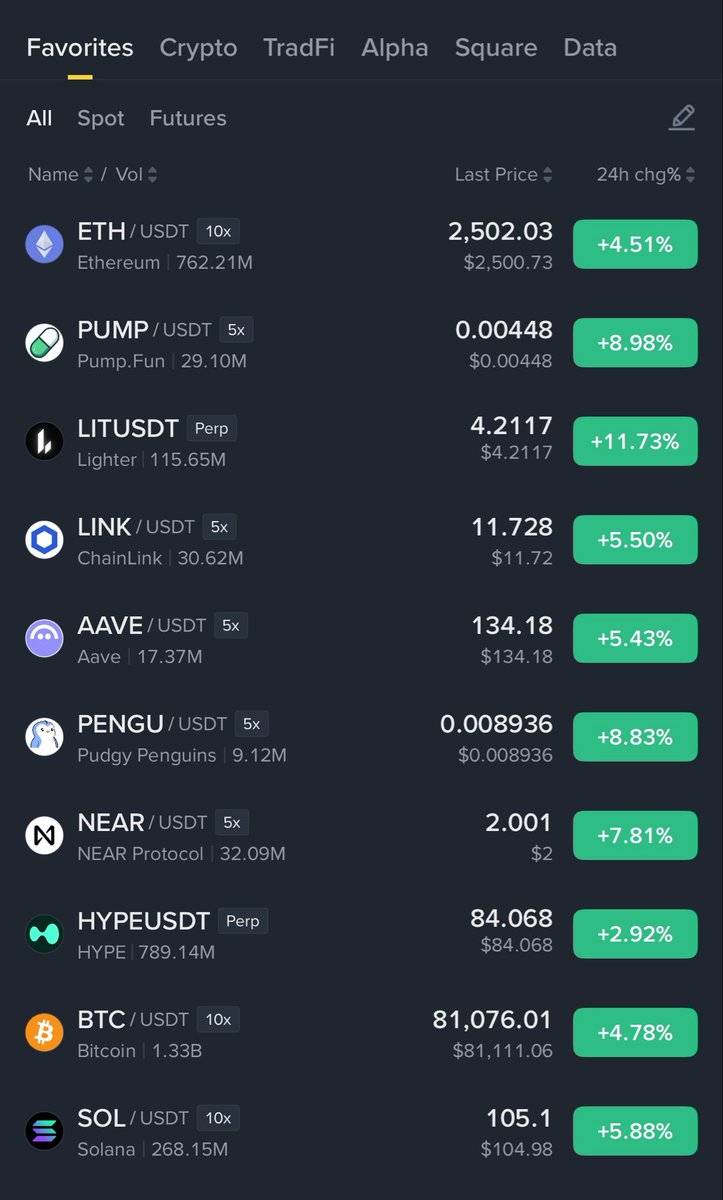
129950 粉丝
Holding $LIT has been super fun tbh.. making money while i sleep
i’ve had mine staked since day one after the airdrop..
it now earns 6% APR, and every 1 LIT staked lets me deposit up to 10 USDC into LLP,
which is currently earning around 14.17% APR.
so while i enjoy the upside on LIT, the token itself earns yield and also unlocks another yield position for my USDC.
and more activity on Lighter means more exchange revenue for buybacks, with repurchased LIT now being burned.
15.6M LIT has already been removed from supply.
price upside, staking rewards, LLP yield and continuous buybacks..
Love it
中文: 持有$LIT非常有趣......睡觉时赚钱
我从空投一日起就一直井井有落。
现在每存入1个LIT,即可将最高10美元存入LLP,
目前年收入约为14.17%。
因此,虽然我在LIT上享受优势,但代币本身也获得了收益,同时也为我的USDC锁定了另一个收益率位。
在莱特上开展更多活动意味着回购时获得更多的换货收入,回购的LIT现已被烧毁。
已有1560万LIT从供应中移除。
价格上行、赌注奖励、LLC 收益和持续回购。
喜欢它
129950 粉丝
Pay attention to coins like this..
A lot of these newer alts are starting to look similar to the new coins from previous cycles right before they went on crazy runs..
they dumped 70-80% after TGE, spent months slowly grinding back to their launch price and are now breaking above it with strength.
$NEAR followed this exact structure last cycle
$LIT seems to be at the same stage now.
中文: 注意这样的硬币。
许多较新的金银币在开始疯狂运行之前,开始与以往的新硬币相似。
他们在TGE之后以70%至80%的价格下跌,数月来逐渐回转,如今正以强势优势突破这一优势。
上个周期,$NEAR 遵循了这一确切结构
目前,$LIT 似乎正处于同一阶段。

129950 粉丝
Memefi narrative on Robinhood will continue to do well because,
holding memes paired with tokenised stocks is fun..
$PONS is currently earning 66% APY on Ripe
$CASHCAT 33%
$STONKBROKER 64%
$AI 83%
$INDEX 66%
and $sNET 44%
all single-sided too… so you keep full exposure to the coin while earning $RIPE without selling half for an LP.
and if you want exposure to both sides, you can LP a coin against ETH or a tokenized stock on Uniswap and earn trading fees.
or LP through UP33 and stake it into a gauge for extra UP emissions.
so now you can hold a meme, farm it, pair it with a stock and earn from the volume around both..
129950 粉丝
I actually like the idea of memecoins paired with tokenized stocks on robinhood..
take $NUDES / SNAP for example.
buying NUDES only gives me exposure to the meme.
but if i LP the NUDE/SNAP pair, i hold exposure to both while also earning fees whenever people trade between them.
so i’m thinking of choosing memes paired with stocks i wouldn’t mind holding anyway, then putting a small amount into the LP
still risky though.. if the meme dies, the pool can keep selling my SNAP for more NUDES
but this is probably the first time LPing memecoins has felt interesting to me.
中文: 我其实喜欢在 robinhood 上将 memecoins 与代币化股票配对的想法。
以 $NUDES/SNAP 为例。
购买 NUDES 只会让我接触到表情包。
但如果与NUDE/SNAP对进行对交易,我同时会同时收取费用,只要人们之间进行交易。
所以我考虑选择搭配我并不介意持有的股票的表情包,然后向LP投入少量
不过仍然有风险......如果这个表情包死了,这个泳池可以继续把我的SNAP卖给更多的NODES
但这可能是LPI Memecoins第一次让我觉得有趣。
129950 粉丝
RT @Axel_bitblaze69: With the kind of stuff i’m seeing, i think coins on Robinhood will continue to do well for longer than we think..
This season is not going anywhere for a while..
> Memes brought the attention first.
> then NFTs like Spritehood started building an actual collector base.
> Uniswap brought native launches and permanently locked liquidity through Pools.
> Ripe is turning memes and tokenized stocks into productive assets by letting people farm them or borrow against them.
> Lighter brings perps.
and Robinhood already has tokenized stocks, ETFs and private companies moving onchain.
memes, NFTs, RWAs, lending, farming and perps are all starting to connect.
129950 粉丝
and the good thing is that attention on Robinhood isn’t staying limited to memecoins..
pretty much everything is getting attention NFTs, farms, tokenized stocks, lending and perps on the same chain. nice!
中文: 好处是,对Robinhood的关注并不仅限于memecoins。
几乎所有东西都在引起人们对NFT、农场、代币化股票、借贷以及同一家连锁店的关注。很好!
129950 粉丝
With the kind of stuff i’m seeing, i think coins on Robinhood will continue to do well for longer than we think..
This season is not going anywhere for a while..
> Memes brought the attention first.
> then NFTs like Spritehood started building an actual collector base.
> Uniswap brought native launches and permanently locked liquidity through Pools.
> Ripe is turning memes and tokenized stocks into productive assets by letting people farm them or borrow against them.
> Lighter brings perps.
and Robinhood already has tokenized stocks, ETFs and private companies moving onchain.
memes, NFTs, RWAs, lending, farming and perps are all starting to connect.
中文: 看到我所看到的那种东西,我认为罗宾汉币的表现将比我们想象的要长。
这个赛季暂时无处可去......
表情包首先引起了关注。
然后像Spritehood这样的NFT开始构建一个真正的收藏库。
Uniswap 通过 Pools 带来原生发布和永久锁定流动性。
里普正通过允许人们进行农业或借贷来将表情包和代币化股票转化为生产性资产。
更轻便的带底。
Robinhood 已经将股票、ETF 和私营公司的代币化化在线。
表情包、NFT、RWA、借贷、农业和大众都开始建立联系。
129950 粉丝
$ETH is the most obvious bet rn imo..
if we somehow get $2200 - $2250 again, that might be the last clean chance to buy it
check this chart i shared a few days ago.. 2025 vs 2026 ETH move
last time ETH moved like this from $1600 to $2200, it retraced around half the candle near $2100-$2200 and then ran straight towards $4000
something similar imo..
中文: $ETH 是最明显的 nr imo。
如果我们再次获得2200至2250美元,那可能是最后一次购买的机会
请查看几天前分享的这张图表。2025 与 2026 年 ETH 走势
上一次ETH从1600美元转到2200美元时,它几乎将蜡烛的一半重新调整至2100至2200美元,然后直接回转至4000美元
类似的东西。
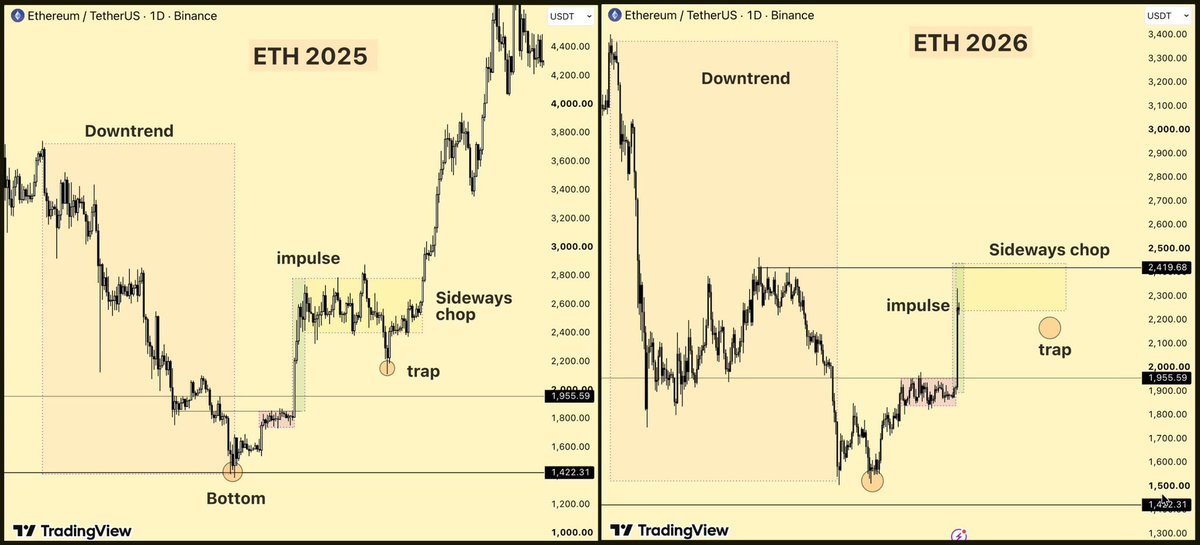
129950 粉丝
It’s now been a month of trading memecoins full time.. and tbh it’s mostly been regrets lol..
i caught $PONS around $8- 10M and sold at $25- 30M and it went above $400M
same with $CASHCAT .. bought around $15M, sold around $40M and it later went to $300M
then there were few more i could have made easy 10x on..
and i keep having the same problem every cycle..
i can find them early but i never have enough conviction to sit through the whole move.
if something gives me 2-3x, i sell because it already feels like good money and if it drops 50-60% after i buy, i lose confidence and sell.
中文: 现在已经是一个全职交易memecoins的月份了......而且这主要是遗憾。
我在800万至1000万美元左右获得了1美元,以2500万至3000万美元的价格成交,价格超过4亿美元
与$CASHCAT相同,购买金额约为1500万美元,售出约4000万美元,之后又售罄至3亿美元
然后,我再简单10倍的再简单就简单了。
而且我每个周期都一直都有同样的问题。
我能早点找到他们,但我永远没有足够的信念来整整地行动。
如果某件事让我有2到3倍的价格,我会因为感觉像是好钱一样卖到,如果买房后价格下跌了50%到60%,我就会失去信心并卖出。
129950 粉丝
We need @cobie to write the memecoin version of his low float/high FDV article now..
i remember his article on VC coins farming retail.. and after that memecoins kinda became the answer.
but now memes have basically created their own version of low float through bundling.
maybe another Cobie article gets us onto the next phase lol
中文: 我们现在需要@cobie来撰写他低浮点/高FDV文章的memecoin版本。
我记得他关于风险投资硬币农业零售的文章......之后,这种表情币变成了答案。
但现在,memes 基本上已经通过捆绑创建了它们自己版本的低浮点数。
也许又一篇科比的文章让我们进入下一阶段的LOL
129950 粉丝
> Ethereum has institutional liquidity
> Hyperliquid has perps
> Robinhood has tokenized stocks and memes
> What does Solana has ……. ?
中文: 以太坊具有机构流动性
超强液体具有可充
罗宾汉公司已对股票和表情包代币化
索拉纳有什么......?
129950 粉丝
Study what happens when a multi year range finally breaks
price gets rejected from previous ATH again and again
then one fat candle takes it out, and the move that follows is usually so violent you have to keep zooming out just to find the chart again
$ETH is at that point rn https://twitter.com/Axel_bitblaze69/status/2095091594781483439/video/1
中文: 研究当一个多年范围最终破裂时会发生什么
价格一次又一次地被从以往的ATH中拒绝
然后一根肥蜡烛会把它拿出来,接下来的动作通常非常剧烈,你必须不断放大才能再次找到图表
$ETH 已在 上
🎬
视频
129950 粉丝
$SOL fully retraced its recent pump.. and the reasons are pretty obvious.
2 things that carried Solana this cycle were speed and retail mindshare.. neither is a moat anymore.
memecoin attention is moving across Robinhood, BNB and Base, while newer chains can offer the same cheap and fast experience.
Robinhood is also coming directly for tokenized stocks.
and perps mindshare is already owned by Hyperliquid.
Solana has $15.5B in stablecoins, yet its entire perp ecosystem did $8.9B last week.. Hyperliquid often does that in a day.
stablecoin activity is good for the chain, but as more volume settles in dollars, SOL becomes less important beyond paying gas.
even Pumpfun has sold around 4.8M SOL worth more than $800M and expanded its terminal beyond Solana..
so basically, every narrative sol was supposed to own now has a stronger competitor.
129950 粉丝
$AAVE is the only green coin in my portfolio today..
First CRV and now $AAVE is moving while most of the market is red
Ethereum DeFi is looking good.. and I have a decent bag of AAVE.. probably the cleanest bet if Ethereum DeFi is really coming back..
around 85% of its $17.8B TVL sits on Ethereum, and Aave already has $12.7B in active loans..
that activity generates around $105M in annualized revenue, while Aave has a $50M yearly buyback budget.
so as Ethereum DeFi grows:
more deposits → more borrowing → more revenue → more AAVE bought back.
中文: 今天,我投资组合中唯一的绿色硬币是AAVE。
首次CRV和现在的AAVE正在移动,而大部分市场则处于红色
以太坊DeFi看起来不错......而且我拥有相当不错的AAVE......如果以太坊DeFi真的回归,可能是最干净的一回落。
其价值178亿美元的TVL中约有85%位于以太坊上,而Aave已拥有127亿美元的活跃贷款。
该活动每年产生约1.05亿美元的收入,而Aave则拥有5000万美元的年度回购预算。
因此,随着以太坊DeFi的发展:
更多存款 → 更多借款 → 收入增加 → 更多AAVE回购。

129950 粉丝
RT @Axel_bitblaze69: $ETH plan for coming few days.. https://twitter.com/Axel_bitblaze69/status/2094887083294986452/photo/1
中文: RT @Axel_bitblaze69:未来几天的 $ETH 计划。

129950 粉丝
$CRV is worth keeping an eye on as this bull market gets heated..
as it’s obvious that the stablecoin market will keep getting more crowded, and every new stablecoin needs deep liquidity before people can actually use it..
so on Curve, projects compete for gauge votes to direct CRV incentives toward their pools.
so more stablecoins should mean more competition for votes and more CRV being locked.
then there is crvUSD and Llamalend capturing the borrowing side too.
with 851M CRV already locked and emissions falling every year, the setup starts making more sense if stablecoin activity continues growing.
中文: 在牛市市场升温时,值得密切关注。
很明显,稳定币市场将变得越来越拥挤,而每一种新的稳定币在人们真正使用它之前,都需要深厚的流动性。
因此,在曲线上,项目争相争取衡量选票,以引导CRV激励资金池。
因此,更多的稳定币意味着更多的选票竞争,而更多的CRV被锁定。
然后是 crvUSD 和 Llamalend 也占据了借贷方。
随着851万CRV已锁定,且排放量每年都在下降,如果稳定币的活跃活动持续增长,这一配置开始变得更加有意义。
129950 粉丝
$ETH plan for coming few days.. https://twitter.com/Axel_bitblaze69/status/2094887083294986452/photo/1
中文: 未来几天的 $ETH 计划。
129950 粉丝
Pay attention to the coins holding up the strongest during turbulence like this:
$LINK
$LIT
$NEAR
$AAVE
中文: 注意在这种动荡中举起最强的硬币:
$链接
$LIT
近
AAVE
129950 粉丝
Lighter’s LLP currently pays around 15.2% APR on USDC
Access requires 1 staked $LIT for every 10 USDC deposited..
so a $10K position needs:
1000 LIT at $3.70 = $3,700
10,000 USDC = $10,000
Total capital exposed = $13,700
expected yearly return at current rates:
LLP: $1,521
LIT staking at 6%: $222
Total: $1,743
that works out to 12.7% on the full position if LIT stays flat.
LIT drops 30% = $1,110 loss
net return falls to $633, or 4.6%.
LIT drops 50% = $1,850 loss
the entire year of yield is gone
the actual trade here is earning yield on USDC while staying long LIT. makes sense only if you already wanted to hold LIT anyway.
中文: 莱特律师事务所目前在USDC上支付约15.2%的年增长率
每存入10美元,访问权限需要1个投注点。
因此,需要1万美元的职位:
1000 LIT,售价3.70美元,=3700美元
10000美元 = 10000美元
总资本敞多数=13700美元
按当前费率计算的预期年回报率:
LLC:1,521美元利特押注6%:222美元总计:1743美元
如果LIT保持平稳,则在完全位置上达到12.7%。
LIT 下降 30% = 1,110 美元
净回报率降至633美元,跌幅为4.6%。
LIT 下降50% = 1,850美元
全年的收益率都消失了
实际交易是在保持长期LIT的同时获得USDC的收益率。只有在您已经想持有LIT的情况下,才有意义。

129950 粉丝
Is $PONS the $PUMP killer ?
because it crossed $4B in volume and burned 29% of its supply.
and i like PONS, but that comparison right now is too early.
Pump did $22.6B in volume and around $57M in revenue over the last 30 days alone.
it has also spent over $445M buying and burning $PUMP and more importantly, Pump owns the full loop:
> launches bring creators
> creator fees keep them promoting
> promotion brings traders
> trading moves to PumpSwap
> fees buy and burn $PUMP
then the liquidity and audience bring more creators back.. it also has the mobile app, terminal, livestreams and years of memecoin culture behind it.
PONS has a strong loop too. 80% of protocol revenue accumulates PONS, while Robinhood Chain gives it the tokenized stock and RWA angle Pump doesn’t have.
so imo $PONS can be a good high beta Robinhood Chain bet without being a Pumpfun killer.
中文: $PONS 是 $PUMP 杀手吗?
因为它的供应量超过了40亿美元,并消耗了29%的供应量。
我喜欢PONS,但现在这种比较还为时过早。
仅在过去30天里,Pump的销售额就达到226亿美元,收入约为5700万美元。
它还花费了超过4.45亿美元购买和烧焦了PUMP,更重要的是,Pump拥有完整的循环:
推出 T LT TL 创作者
创作者费用不断促进
促销带来交易
交易转向 PumpSwap
购买和烧掉 PUMP 的费用
然后,流动性和受众将更多创作者带回......它背后还拥有移动应用、终端、直播以及多年的memecoin文化。
PONS 也具有强大的循环。80% 的协议收入会累积 PONS,而 Robinhood Chain 则提供代币化的股票,而 RWA 角度泵则没有。
因此,imo $PONS 可以成为高 beta 罗宾汉链式赌注,而不会成为 Pumpfun 杀手。
129950 粉丝
Robinhood chain is a blessing for $ARB
I mean robinhood built its own chain using Arbitrum’s stack..
under the Arbitrum Expansion Program, 10% of its net revenue flows back to the Arbitrum ecosystem.
8% goes to the DAO treasury and 2% goes toward developers working on the stack.
so as activity on Robinhood grows through stock tokens, trading, lending and other apps, Arbitrum earns from it.
the bigger thesis is that Robinhood probably won’t be the last company to do this.
Arbitrum provides the tech, companies launch their own chains, and every successful chain can add another source of revenue for the DAO.
more chains bring more revenue and more revenue funds better infrastructure.
better infrastructure attracts more companies.
that’s the loop here for ARB.. the only missing part for $ARB is direct value capture.
ARB holders govern the treasury, but the revenue isn’t currently used to buy back the token or pay holders.
if that changes, $ARB goes from being a governance token to an actual bet on the growth of every chain built using Arbitrum.
129950 粉丝
A lot of these coins on Robinhood pulling 100M mcap are cabal bundled.. means they are basically low float, high FDV coins in a different form..
before, most of the supply was actually locked and released through scheduled unlocks..
now cabals bundle 50-60% of the supply at launch across different wallets.
technically it’s circulating.. but until they decide to sell, that supply might as well be locked.
only a small amount is actually trading, so it takes less money to push the price and create a huge market cap
same setup, different packaging.
the only difference is there’s no unlock date anymore.. the unlock happens whenever the cabal decides to dump.
中文: 罗宾汉拉着100米的硬币中,很多都是卷心菜的。这意味着它们基本上是低浮点数,高FDV硬币,形式不同。
之前,大部分供应实际上是通过预定的解锁解锁而解锁的。
现在,各包在不同钱包的发布时,将50%至60%的供应量捆绑在一起。
从技术上讲,它正在流通......但在他们决定出售之前,这种供应可能会被锁定。
实际上只有少量交易,因此压高价格并形成巨大的市值需要更少的资金
相同的设置,不同的包装。
唯一的区别是,现在已不再有解锁日期了。每当阴谋集团决定放弃时,解锁就会发生。
129950 粉丝
What you can do on Robinhood Chain is actually pretty cool..
hold $QUANT for an hourly chance to receive an NFT floor price $9500, while trading fees build a SPY reserve backing every NFT
hold $INDEX and fees are used to buy tokenized stocks which get distributed to holders.
$NET gives you exposure to an onchain treasury holding USDG and tokenized stocks.
burn a QUOTRON to activate a terminal that earns stock rewards from trading fees.
use LONG to trade tokens paired directly against stocks like NVDA or TSLA instead of ETH.
use WIRE to buy, send or airdrop tokenized stocks through commands on X.
and Arrow is building a way to borrow stables against your stocks without selling them.
so basically stocks aren’t just sitting in your wallet waiting to go up anymore.. people are using them as backing, collateral, rewards and liquidity to build completely new loops around them.
中文: 在Robinhood Chain上你能做的事情其实相当酷。
按小时购买QUANT,可获得9500美元的NFT价格,而交易费用则为每一家NFT提供SPY储备
持有 $INDEX 和费用用于购买代币化股票,这些股票将分配给持有者。
$NET 让你接触到持有美元及代币化股票的链上国库。
烧掉一个QUOTRON以激活一个通过交易费用获得股票奖励的终端。
使用Long直接与NVDA或TSLA等股票交易代币,而非ETH。
使用 WIRE 通过 X 上的命令购买、发送或空投代币化股票。
Arrow 正在建立一种无需出售商品即可借入马厩的方法。
因此,股票基本上不再只是坐在钱包里等待上涨......人们正用它们作为后盾、抵押品、奖励和流动性,来围绕它们建立全新的循环。
129950 粉丝
I was talking to a CT friend today who turned $20K into $350K trading memes on robinhood..
i asked him the obvious question:
how do you actually get the conviction to hold something for 10x+?
because that’s always been my problem. i can find decent coins, but i usually ape small and start selling around 2-3x because i don’t have enough conviction to sit through the volatility.
his answer was almost stupidly simple.
“my friend sends me the trade and gives me the target. i don’t even check the name or what it does. i just buy size and hold until the target.”
that conversation made me realise that in this market, finding the coin is only half the game..
you can have every scanner, dashboard and research tool in the world, but if you don’t have conviction, you either size too small or sell too early.
and that conviction comes from having the right people around you.. kinda crazy how much of crypto is a connections game.
129950 粉丝
No wonder why $LIT is pumping
compare it with $HYPE you will see:
24h volume:
Lighter: $1.87B
Hyperliquid: $5.97B
Open interest:
Lighter: $786M
Hyperliquid: $6.05B
so Hyperliquid is still clearly much bigger..
around 3.2x the volume and 7.7x the OI.
but the buybacks are interesting.
YTD Hyperliquid bought back $366M of HYPE while Lighter bought back $26.5M
in dollars, it’s not even close. sure..
but that equals 4.87% of LIT’s circulating supply compared to 2.71% for HYPE.
so relative to the current float, Lighter’s buybacks are almost twice as large, and the bought LIT is eventually burned.
中文: 难怪为什么$LIT正在抽搐
与你将看到的 $HYPE 进行比较:
24小时成交量:
更轻:18.7亿美元高流动性:5.97亿美元
开放兴趣:
轻量:7.86亿美元高流动性:6.05亿美元
因此,超液体显然仍然要大得多。
体积约为3.2倍,OI约为7.7倍。
但回购是有趣的。
YTD Hyperliquid 回购了 3.66 亿美元的 HYPE,而 Lighter 回购了 26.5 亿美元
以美元计算,它甚至不近。
但这相当于LIT流通供应量的4.87%,而HYPE为2.71%。
因此,相对于当前的浮点数而言,莱特的回购量几乎是其两倍,而购买的LIT最终被烧毁了。
129950 粉丝
RT @Axel_bitblaze69: Good to see both $BTC and $ETH close above the 50W EMA..
but the price is now sandwiched between the 50W and 100W EMAs, and the 100W has acted as resistance before
so the structure looks better, but i still want to see both close above the 100W EMA https://twitter.com/Axel_bitblaze69/status/2094315200497525228/video/1
中文: RT @Axel_bitblaze69:看到 $BTC 和 $ETH 均在 50W EMA 上方收盘。
但现在价格介于50W和100W EMA之间,而100W此前已起到了阻力作用
因此结构看起来更好,但我仍然希望两者都位于100W EMA上方
🎬
视频
129950 粉丝
Good to see both $BTC and $ETH close above the 50W EMA..
but the price is now sandwiched between the 50W and 100W EMAs, and the 100W has acted as resistance before
so the structure looks better, but i still want to see both close above the 100W EMA https://twitter.com/Axel_bitblaze69/status/2094315200497525228/video/1
🎬
视频
129950 粉丝
NFTs on Robinhood are cooking lately..
Came across Quantums.. might be the most interesting NFT experiment i’ve seen on RH so far..
mainly because there is no mint.. you just hold $QUANT
every hour the protocol freezes everyone’s balance, picks one holder based on how much QUANT they own and sends them a random NFT from a collection of 4,000.
hold 1% of the eligible supply and you roughly have a 1% chance that hour.
no staking, no claim button and buying after the snapshot doesn’t count for that round..
all 4,000 artworks already exist on IPFS and the rarity is fixed:
1,600 Gray
1,200 Blue
800 Violet
320 Gold
80 Green
but nobody knows which unissued piece comes next because the randomness comes from a future Ethereum block.
the other interesting part is the backing..
$QUANT trades against Robinhood’s tokenized S&P 500 ETF, SPY, on Uniswap.
every buy and sell pays a 2% fee in SPY, which goes directly into a reserve.
if you win a Quantum, you can keep it, sell it or burn it for your share of that SPY reserve.
10% of every redemption stays behind, so when someone cashes out, the backing per remaining NFT goes up.
rarity doesn’t change the payout either. a rare Green and a common Gray have the same claim on the reserve. rarity only matters if collectors are willing to pay more for it.
so the whole thing is pretty simple:
- people trade $QUANT
- the SPY reserve grows
- holders compete for an NFT every hour
- NFT owners can burn for SPY
- and every burn leaves more backing for whoever stays
once all 4,000 are distributed, 1% keeps feeding the SPY reserve and the other 1% starts buying and burning $QUANT
the team can’t change the fee, pause trading, choose winners, mint extra pieces or withdraw the reserve.
i like the idea because the collection isn’t promising some random utility later.. the backing is visible onchain from day one.
but the risk is also obvious: if nobody trades $QUANT, the reserve doesn’t grow much.
still very early, but definitely one i’m watching.

129950 粉丝
Quantums might be the most interesting NFT experiment i’ve seen on Robinhood so far..
mainly because there is no mint.. you just hold $QUANT
every hour the protocol freezes everyone’s balance, picks one holder based on how much QUANT they own and sends them a random NFT from a collection of 4,000.
hold 1% of the eligible supply and you roughly have a 1% chance that hour.
no staking, no claim button and buying after the snapshot doesn’t count for that round..
all 4,000 artworks already exist on IPFS and the rarity is fixed:
1,600 Gray
1,200 Blue
800 Violet
320 Gold
80 Green
but nobody knows which unissued piece comes next because the randomness comes from a future Ethereum block.
the other interesting part is the backing..
$QUANT trades against Robinhood’s tokenized S&P 500 ETF, SPY, on Uniswap.
every buy and sell pays a 2% fee in SPY, which goes directly into a reserve.
if you win a Quantum, you can keep it, sell it or burn it for your share of that SPY reserve.
10% of every redemption stays behind, so when someone cashes out, the backing per remaining NFT goes up.
rarity doesn’t change the payout either. a rare Green and a common Gray have the same claim on the reserve. rarity only matters if collectors are willing to pay more for it.
so the whole thing is pretty simple:
- people trade $QUANT
- the SPY reserve grows
- holders compete for an NFT every hour
- NFT owners can burn for SPY
- and every burn leaves more backing for whoever stays
once all 4,000 are distributed, 1% keeps feeding the SPY reserve and the other 1% starts buying and burning $QUANT
the team can’t change the fee, pause trading, choose winners, mint extra pieces or withdraw the reserve.
i like the idea because the collection isn’t promising some random utility later.. the backing is visible onchain from day one.
but the risk is also obvious: if nobody trades $QUANT, the reserve doesn’t grow much.
still very early, but definitely one i’m watching.
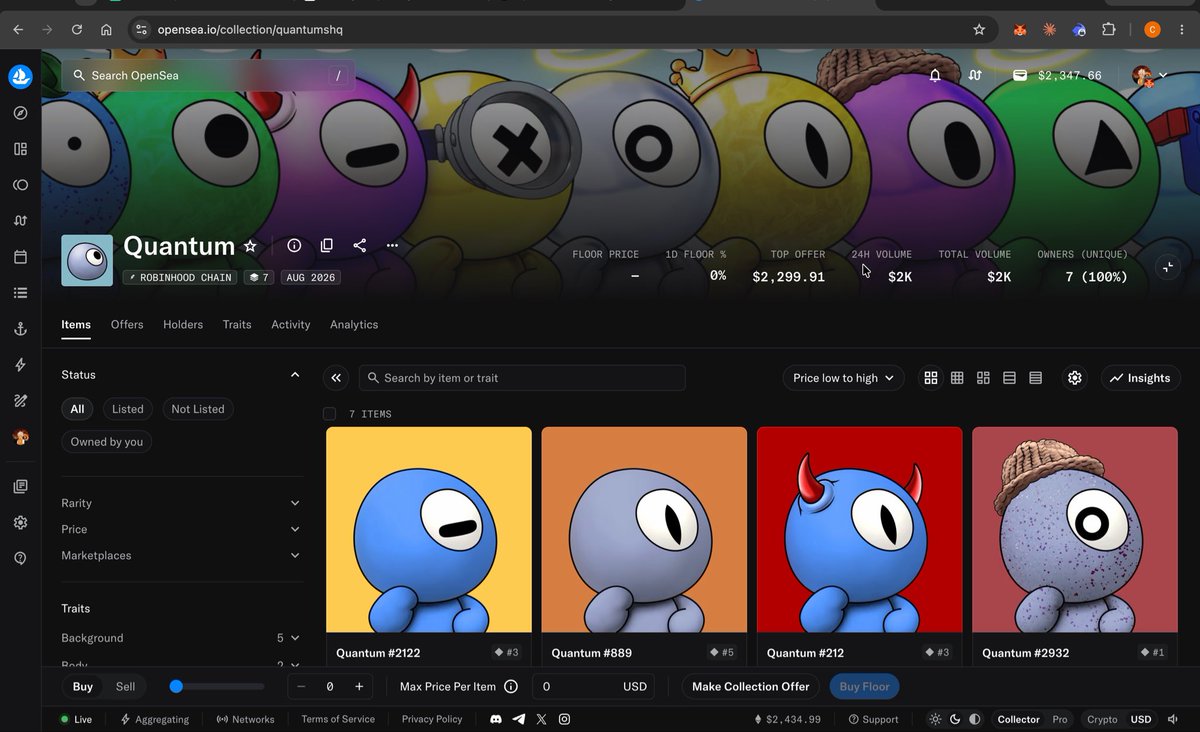
129950 粉丝
NFTs on Robinhood in my watchlist
- StonkBrokers: basically a wallet disguised as an NFT. it can hold Stock Tokens and earn more from protocol fees once activated.
- QUOTRONS: hardwire the terminal permanently and it earns Stock Tokens from trading across ten stock-paired pools.
- RH Machines: burn $PRINTER to wake the machine, then it gets paid weekly in Stock Tokens. over $208K has already been distributed.
- Coattail Brokers: follows disclosed US Congress trades and automatically buys the same stocks for activated brokers.
- Firm Brokers: burn 25K $9TO5 to hire one, then choose which Stock Tokens or USDG it receives as hourly pay.
- Stock Miners: bind a machine to a ticker, buy the shifts it works and get paid in that stock’s token.
- The Insiders: every NFT is supposed to hold a basket of stocks and compete against other baskets. not live yet, so this one is only on watch for now.
any other collections worth watching ?
中文: 罗宾汉的NFT在我的观察名单上
- StonkBrookers:基本上是一个伪装成NFT的钱包。一旦激活,它就可以持有Stock Tokens,并从协议费用中赚取更多收益。
- QUOTRONS:将终端永久连接,通过在十个股票配对池中交易赚取股票代币。
- RH 机器:将 $PRINTER 烧掉以唤醒机器,然后以股票代币支付每周费用。已分发超过 208 亿美元。
- Coattail Brokers:关注已披露的美国国会交易,并自动为激活的经纪商购买相同的股票。
- 公司经纪人:烧掉2.5万美元5托,然后租用一只,然后选择其按时薪领取的股票代币或美元。
- 股票清点:将机器与股票代码绑定,购买其运行的换挡,并以该股票的代币获得报酬。
- 内部人士:每只NFT都应该持有一篮子股票,并与其他篮子竞争。目前尚未上线,因此目前仅限关注。
还有其他值得关注的收藏吗?
129950 粉丝
Started the day buying some dip..
bought some $PUMP and $ETH and did most of the buying on Robinhood Chain:
$NET
$PONS
and aped small in couple of memes thats im not so confident to share about.
129950 粉丝
Robinhood was born to take memecoin activity away from Solana and bring it back to Ethereum..
Solana won that market because Ethereum was too expensive and annoying for small traders.
Robinhood removes that problem.
cheap trades, easy launches, ETH for gas and everything settles back to Ethereum.
and unlike most new chains, it already has another reason for people to stay: Tokensied stocks.
you can launch memes against stocks, earn stock rewards from fees and move between both markets on the same chain.
the direct fees are small for now, obviously.. but retail activity and liquidity moving back onto Ethereum rails is bullish for $ETH and pretty bad for $SOL
中文: Robinhood 天生就是为了将 memecoin 活动从 Sorana 中恢复而诞生。
索拉纳赢得了这个市场,因为以太坊过于昂贵,而且对小商户来说也过于烦人。
罗宾汉消除了这个问题。
廉价交易,简易上市,ETH换天然气,所有东西都重新回到以太坊。
与大多数新连锁店不同,它已经有了人们留下来的另一个原因:代币股票。
你可以针对股票推出表情包,通过费用赚取股票奖励,并在同一链条上的两个市场之间移动。
目前直接费用较小,显然......但零售活动和流动性重新回到以太坊轨道上,对以太坊持乐观态度,而对SOL来说相当不利
129950 粉丝
Most interesting projects on Robinhood are the ones giving you exposure to tokenized stocks..
and i think these will continue to do well..
$INDEX uses trading fees to buy stocks and sends them directly to holders.
$NET holds tokenized equities inside the treasury backing it.
QUOTRONS pays holders in tokenized-stock rewards.
you hold a crypto asset and its activity slowly builds stock exposure for you.. that’s something genuinely new and probably the most interesting part of Robinhood rn.
中文: 罗宾汉最有趣的项目是让你接触代币化股票的项目。
我认为这些将会继续好起来。
$INDEX 使用交易费用购买股票,并将其直接发送给持有者。
$NET 持有国库内部的代币化股票,支持它。
QUOTRONS 向持牌人支付代币化股票奖励。
持有一种加密资产,其活跃度会逐渐为你建立股票敞口......这确实是个新事物,也可能是罗宾汉公司最有意思的部分。
129950 粉丝
Some of the most interesting plays i’ve come across on Robinhood:
$PONS: basically its Pumpfun.. generated $21.7M in fees over the last 30 days, with most protocol revenue used to buy back and burn PONS..
https://t.co/UuS5OhPah0: Uniswap’s launchpad with crowd launches and permanently locked liquidity
$UP: the chain’s ve(3,3) DEX. lock UP, vote where incentives go and earn fees from those pools.
$LONG: lets projects launch tokens paired directly against stocks like NVDA or TSLA instead of only ETH or stables.
$INDEX: trading fees buy tokenized stocks and distribute them to holders. around $1.43M distributed so far.
$HOOD10: does something similar with the top 10 Robinhood Chain tokens instead of stocks. its launchpad also supports stock pairs like HOOD, NVDA and TSLA.
Longbow: lets you borrow USDG against tokenized stocks without selling them. NFLX and RBLX collateral markets are already live.
$NET: an onchain fund with a USDG treasury, staking, bonds and its own tokenized-stock portfolio.
$PRINTER: 10,000 NFT machines with their own wallets. token fees buy stocks selected by holders and deposit them inside the NFTs.
$STONKBROKER: broker NFTs that receive holder-selected stock tokens and can also be used as collateral.
QUOTRONS: burn a QUOTRON to activate a terminal that earns stock-token rewards from trading fees.
$ARROW: wants to let people borrow aUSD against tokenized stocks and ETFs. not fully live yet though.
$GWOOD: trying to build a self-custody neobank where users can save, borrow, spend and earn stocks as cashback.
$WIRE: lets you buy, sell, send and airdrop tokenized stocks through commands on X.
TickerYard: working on moving Robinhood stock tokens across different chains. still very early.
some of these will probably go nowhere..
but using stocks as collateral, rewards, trading pairs or even assets held inside NFTs is where Robinhood Chain starts getting interesting beyond memes imo..
129950 粉丝
Solana is starting to lose its meme market to Robinhood Chain..
Robinhood Chain launched barely 2 months ago but $PONS already generated around $22M in fees over the past 30 days and is now above $200M mcap.
Pumpfun generated around $46M during the same period.
so Pons is already doing almost half of Pumpfun’s fees.
even Pumpfun now lets people trade Robinhood, Ethereum, Base, BNB and HyperEVM tokens through the same app.
the launches are still on Solana, but the attention no longer stays there.
Robinhood Chain is an Ethereum L2.
And Solana’s biggest advantage just isn’t exclusive to Solana anymore.
another reason i think $ETH outperforms $SOL this cycle
中文: 索拉纳开始失去其表情包市场,输给了罗宾汉连锁。
Robinhood Chain 推出时间不到两个月,但过去30天内已产生约2200万美元的手续费,目前已超过2亿美元。
同期,Pumpfun 产生了约 4600 万美元。
因此,Pons 已经支付了 Pumpfun 近一半的费用。
即使是Pumpfun,现在也允许人们通过同一应用交易Robinhood、以太坊、Base、BNB和HyperEVM代币。
发射仍在索拉纳,但关注点已不再存在。
Robinhood Chain 是以太坊 L2。
而索拉纳最大的优势已不再局限于索拉纳。
另一个原因:我认为 $ETH 表现优于 $SOL 这个周期
129950 粉丝
$NET is probably the most interesting thing i found on Robinhood Chain so far..
it’s basically a reserve-backed token inspired by old OlympusDAO.
the treasury holds USDG, protocol-owned liquidity and a separate portfolio of tokenized stocks.
it has already grown to more than $3.5M in total assets..
every $NET buy and sell pays a 5% fee. after the initial 30 day split ends, the entire fee goes into the treasury.
so more trading grows the reserves, higher reserves increase the backing per NET, and staking distributes more NET while the token trades above its NAV.
there are also bonds that let the protocol sell NET above its backing and use the money to buy more assets.
so the loop:
more activity → more fees and bond demand → larger treasury → higher backing per NET.
the obvious risk is that NET trades at a large premium to what currently backs it.
so this isn’t the same as buying $1 of assets for $1. you’re paying for the treasury to keep compounding and for Robinhood Chain activity to grow.
interesting setup, but definitely not something i would blindly invest the money i cannot afford to loss..
129950 粉丝
This $ENA update actually gives the token a proper reason to exist..
the foundation bought out locked tokens from seed investors who were selling, so that monthly VC sell pressure should now disappear.
then there’s the fee switch.
once USDe supply reaches $7.5B, part of Ethena’s revenue starts buying ENA from the market.
that share increases as USDe grows, reaching 20% at $20B supply.
more USDe means more revenue and more ENA buybacks.
pretty straightforward.
rn USDe sits around $4.1B today, so none of this is active yet..
still, ENA now has less unlock pressure and a direct way to benefit if Ethena starts growing again.
that’s the bet here.
not buybacks today, but buying the token before USDe reaches the level that turns them on.
中文: 这次$ENA更新实际上为该代币提供了存在的合理理由。
该基金会从出售种子基金的投资者手中收购了上锁的代币,因此如今应该将失去每月的风险投资销售压力。
然后是费用转换。
一旦美元供应量达到75亿美元,埃塞纳的部分收入就会开始从市场上购买ENA。
随着美元增长,这一份额增长,达到20%,达到200亿美元。
美元增加意味着收入增加,再增加ENA回购。
相当简单。
目前美元约为41亿美元,因此目前尚未有任何活跃状态。
现在,如果伊塞纳再次开始成长,ENA 的解锁压力就会减轻,并有直接的优势。
这就是赌注。
今天不是回购,而是在美元达到打开的水平之前买入该代币。
129950 粉丝
$ETH will outperform $SOL this cycle… I said this a few days ago and i’ll say it again..
SOL was already the obvious winner of the last run, while ETH spent years getting hated and underowned even as most stablecoin liquidity, DeFi collateral and institutional tokenization stayed around Ethereum.
while SOL’s strongest demand came from memes and retail trading and that demand is no longer uncontested either.
HyperEVM, Robinhood Chain and possibly Base are all trying to pull the same users and liquidity..
ETH has a different buyer now.
ETFs, treasury companies and institutions don’t need to trade memes or use the chain every day.
they just need ETH as the asset sitting underneath onchain finance.
imo from here, i think ETH has the bigger catch-up trade and the stronger marginal buyer..
so i just think ETH goes up more than Sol
129950 粉丝
Pretty good outcome for Solana holders..
around 18.9M less $SOL will be issued over the next 6 years.
staking APY comes down with it, but that yield was mostly being paid through dilution anyway.
so if i’m holding SOL for price appreciation, i’d rather earn a little less yield and have less new SOL constantly entering the market.
the burn proposal failed, so it’s not the complete tokenomics change people wanted.
but overall, SOL holders are getting less dilution than before.. hard to see that as anything other than a positive..
中文: 对索拉纳持有者来说,结果相当不错。
未来6年将减少约1890万美元的发行。
对APY进行赌注是有回报的,但这种收益主要是通过稀释来支付的。
因此,如果我在价格上持有SOL,我宁愿少赚一点收益,少一些新的SOL不断进入市场。
燃烧方案失败了,因此人们想要的并不是完全的代币组学变革。
但总体而言,SOL持有者的稀释程度比以前少了......很难将这一点视为一种积极因素。
129950 粉丝
After seeing how well @OriginalBlokyz did, i scanned X and Alphabot for upcoming NFT mints..
and these are the ones i came across:
Aug 30
@ChogNFT
Aug 31
@PoweredByVolt
@SuitsOnHood
@Billiz_nft
@WezardsRH
Sep 1
@Dummies_RH
@TheSuitedApes
Sep 2
@KenjiOrigins
Sep 4
@RobinRocksMaze
@SPJC_Society
Sep 11
@TrustUsNFT
some without dates yet:
@boldpfps
@THEBUFOS
@OranguNation
@bangerbots
@OnchainSketches
@BootyPirates1
@itsriggles
@ppuffins
@PROOF_PIXELS
Volt, Chog, Billiz, Bolds, Bufos, Orangu, Kenji and TrustUs are the ones i’ll probably watch closer.
keep your tabs on their account and DYOR before minting... im just sharing what i have found so far.. dates can move, so verify from the project before minting
129950 粉丝
My plan for $ETH over the coming few weeks.. https://twitter.com/Axel_bitblaze69/status/2093699702508368040/photo/1
中文: 我未来几周的 $ETH 计划。

129950 粉丝
NFT mints are printing free money right now.. these are the tools im using to find upcoming mints early to stay ahead:
1) Grok: scan what NFT traders are following and talking about
2)@alphabot : find new WL raffles and project collabs
3) @nftcalendar : see what’s minting over the next few days
4) OpenSea Drops: check confirmed mints and my wallet eligibility
5) Magic Eden Mint Terminal: find what’s upcoming or already minting across different chains
So yeah Grok basically finds them early for me and the rest help me track the mint..
Don’t forget to bookmark this
129950 粉丝
First pump after a real bottom is always the easiest one to fade..
everyone is still mentally bearish, so they call it a squeeze and wait for price to come back.
then it holds.. another leg starts.
that’s pretty much what happened after $4K in 2019 and $16K in 2023.
中文: 真正底部后的第一泵总是最容易褪色的。
每个人仍然精神上都处于悲观状态,因此他们称之为压力,等待价格回落。
然后它又开始了......另一条腿开始。
这几乎就是2019年4万美元、2023年16万美元之后发生的事情。
129950 粉丝
RT @Axel_bitblaze69: Altcoins that makes sense to me to buy here:
$LINK: chainlink Reserve added another 92K LINK yesterday and now holds 5.67M, funded by enterprise and onchain revenue.. usage is finally creating direct demand for LINK
$LIT: Lighter now powers perps inside Robinhood Wallet, nearly 46% of supply is staked and 15.6M LIT was burned using exchange revenue.. the US license talk is also being speculated
$AAVE: V4 deposits just hit $806M after growing 30% in a week, while Aave still has over $12B in active loans.. if leverage returns, much of it will sit here.
$ETH: spot ETFs just had their biggest inflow week of 2026 at $697M while a record 41.4M ETH is staked.. demand is returning while liquid supply keeps shrinking.
$PUMP: trailing 30 day revenue is back around $53M, nearly $1.8M a day, while renewed memecoin activity keeps funding buybacks and burns.. the house bet is working again.
$ENA: yesterday’s proposal would send 95% of Foundation net revenue into ENA buybacks once USDe reaches $7.5B, while future monthly investor unlocks are being removed.. finally addressing both token capture and overhang.
$ZRO: ATLAS lets venues build exchanges using LayerZero underneath, stake ZRO for rebates and send 75% of remaining fees into ZRO buybacks and burns.. not live yet, but easily its clearest token demand loop so far.
solana:2zMMhcVQEXDtdE6vsFS7S7D5oUodfJHE8vd1gnBouauv: now tradable on Robinhood Chain, still has the ETF filing and keeps expanding its toy business beyond crypto.. one of the few memes with both retail distribution and real consumer IP.
$NEAR: Intents is above $19B in volume, confidential TVL is up 123% in 90 days and protocol revenue now feeds NEAR buybacks.. this is no longer just another old L1 thesis.
中文: RT @Axel_bitblaze69:让我在这里购买的山寨币:
链接:链式银行储备昨日新增了92K LINK,目前持有567万,由企业和企业收入提供资金。使用量终于创造了对LINK的直接需求
LIT:如今,Lighter 为 Robinhood 钱包内的 perps 供电,近 46% 的供应被投入,1560 万 LIT 被通过交易所收入消耗殆尽。
AAVE:V4存款在一周内增长30%后,刚刚达到8.06亿美元,而Aave仍有超过120亿美元的活跃贷款......如果杠杆回报,其中大部分资金将位于此处。
ETH:现货ETF在2026年的最大流入周为6.97亿美元,而创纪录的4140万只ETH被持有......需求正在回流,而流动性持续萎缩。
PMP:连续30天收入恢复约5300万美元,每天近180万美元,而重新融资的memecoin业务则持续为回购和融资提供资金。
昨日的提案将在美元达到75亿美元后,将95%的基金会净收入用于ENA回购,同时未来的月度投资者解锁计划也将被移除......最终解决代币捕获和过剩问题。
$ZRO:ATLAS允许场馆使用LayerZero在下方建设交易所,持有ZRO的返利权,并将剩余费用的75%用于ZRO的回购和烧钱。目前尚未上线,但目前价格却轻松清澈,是迄今为止最清晰的代币需求循环。
索拉纳:2zMMhcVQEXDtdE6vsFS7S7D5oUodfJHE8vd1gnBouauv:目前可在罗宾汉链上交易,目前仍持有ETF申请,并持续将其玩具业务拓展至加密货币之外。这是少数拥有零售分销和真实消费IP的网状物之一。
近价:意向金额超过190亿美元,保密的TVL在90天内上涨123%,协议收入现在为NEAR回购提供支持。这已不再只是另一个老旧的L1理论。
129950 粉丝
Altcoins that makes sense to me to buy here:
$LINK: chainlink Reserve added another 92K LINK yesterday and now holds 5.67M, funded by enterprise and onchain revenue.. usage is finally creating direct demand for LINK
$LIT: Lighter now powers perps inside Robinhood Wallet, nearly 46% of supply is staked and 15.6M LIT was burned using exchange revenue.. the US license talk is also being speculated
$AAVE: V4 deposits just hit $806M after growing 30% in a week, while Aave still has over $12B in active loans.. if leverage returns, much of it will sit here.
$ETH: spot ETFs just had their biggest inflow week of 2026 at $697M while a record 41.4M ETH is staked.. demand is returning while liquid supply keeps shrinking.
$PUMP: trailing 30 day revenue is back around $53M, nearly $1.8M a day, while renewed memecoin activity keeps funding buybacks and burns.. the house bet is working again.
$ENA: yesterday’s proposal would send 95% of Foundation net revenue into ENA buybacks once USDe reaches $7.5B, while future monthly investor unlocks are being removed.. finally addressing both token capture and overhang.
$ZRO: ATLAS lets venues build exchanges using LayerZero underneath, stake ZRO for rebates and send 75% of remaining fees into ZRO buybacks and burns.. not live yet, but easily its clearest token demand loop so far.
solana:2zMMhcVQEXDtdE6vsFS7S7D5oUodfJHE8vd1gnBouauv: now tradable on Robinhood Chain, still has the ETF filing and keeps expanding its toy business beyond crypto.. one of the few memes with both retail distribution and real consumer IP.
$NEAR: Intents is above $19B in volume, confidential TVL is up 123% in 90 days and protocol revenue now feeds NEAR buybacks.. this is no longer just another old L1 thesis.
129950 粉丝
bitcoin:native went from $60K to $80K and still isn’t giving people the retrace they are waiting for..
this is where most people get stuck... they didn’t buy the bottom, price already moved, and now every entry feels late.
i have something similar happened when BTC moved from from bottom in 2019 in 2023.
the bear market had already ended, but most people only accepted it much later..
obviously BTC can still have a nasty correction after this move.
but if this is the beginning of another bull market, whether you bought at $70K or $80K probably won’t matter much a few years from now.
i’d rather keep buying slowly than sit in cash waiting for a bottom that already happened.
just keep the position small enough that you can actually hold through the correction when it comes.
中文: 比特币:原生币从6万美元涨至8万美元,至今仍无法给予人们等待的回溯。
大多数人都会陷入困境......他们并没有买下底,价格已经上涨,现在每一篇作品都感觉迟到了。
2023年比特币从底部移动时发生了类似的情况。
熊市已经结束了,但大多数人只是晚了才接受。
显然,比特币在此举动后仍可能出现严重的回调。
但如果这又是牛市的开始,那么无论你以7万美元还是8万美元买入,几年后可能就无关紧要了。
我宁愿继续慢慢买,也不愿坐在现金里等待已经发生的底。
保持这个位置足够小,这样你才能在调整后真正保持住。

129950 粉丝
Lighter’s biggest advantage is free retail trading,
so charging everyone would only hurt what made it grow. instead, normal trading stays free while it makes money from users who need more..
1 bp on advanced orders for Standard accounts, paid tiers for higher API limits and 0.5 bp from partner integrations.
so retail keeps trading for free while professional traders, bots and apps become the revenue source.
paid accounts are already increasing after the change. if that continues, Lighter earns more without making normal trading worse.
and more revenue means more money available for $LIT buybacks and future burns.
pretty much what i want to see as a LIT holder.
129950 粉丝
22/
Conclusion:
For now, I'm more inclined to the bullish side but I'm not a permabull yet.
There's still a risk BTC might revisit $60K if it fails to make a higher high now.
But if Bitcoin breaks above $83K, I'll assume the bottom is in and any 10%-15% correction will be for buying.
中文: 22/
结论:
目前,我更倾向于看涨一方,但目前还不是永久对手。
如果比特币现在无法达到更高的高点,它仍有可能再次出现6万美元的风险。
但如果比特币突破8.3万美元,我将假设底部已进入,任何10%至15%的回调都将用于买入。
129950 粉丝
21/
This has already happened once in August 2024, when the global markets lost $5T in a week.
I'm not saying it'll happen again but the risk remains.
And from my experience one thing I have learned is that market hates uncertainty more than it hate bad news.
中文: 21日
这种情况在2024年8月已经发生过一次,当时全球市场在一周内就下跌了5万亿美元。
我并不是说这种情况会再次发生,但风险依然存在。
根据我的经验,我了解到的一件事是,市场更讨厌不确定性,而不是讨厌坏消息。
129950 粉丝
Market structure has clearly changed
But there are still 2 things that could send us lower.
Bull vs Bear case:🧵👇
中文: 市场结构已明显改变
但仍有两件事可能让我们走低。
公牛对熊案:🧵👇
129950 粉丝
Chainlink is buying $LINK with actual revenue every week.. 👀
Chainlink Reserve now holds:
- 5.67M LINK
- worth $67.2M
- average cost of $11.14
- another 91,989 LINK added yesterday
revenue from enterprise integrations and onchain usage gets converted into LINK and stored in the Reserve.
中文: Chainlink 每周都会以实际收入购买 $LINK。👀
Chainlink Reserve 现已持有:
- 5.67M 链接
价值6720万美元
- 平均费用为11.14美元
- 昨天又新增了91989条链接
企业整合和链上使用带来的收入被转化为链接,并存储在保护区内。

129950 粉丝
Nearly half of $LIT circulating supply is staked while its protocol revenue is being used to buy and burn tokens.. 🔥
and my bag earns 6% APR while im holding and + price going up gains..
comfy hold. https://twitter.com/Axel_bitblaze69/status/2093252845323817268/photo/1

129950 粉丝
$LINK is setting up for something similar to what $PUMP did.. 👀
same HTF base and now the first weekly level is being reclaimed
$13.50 is the next flip..
above that, the chart starts looking almost as if it will run as explosive as pump did.. https://twitter.com/Axel_bitblaze69/status/2093229695747952942/photo/1

129950 粉丝
Making some free money from my $LIT bag for the last few months..
i staked the whole thing at 6% APR and basically left it there while the price kept moving up..
checked the dashboard today and 115.2M LIT is now staked.. thats around 46% of the circulating supply. didn’t realize it was that much lol
and staking also gives me:
- LLP access
- free fast withdrawals with 100+ LIT
- trading fee discounts at higher tiers
Lighter has also used exchange revenue to buy back around 15.5M LIT and says future buybacks will be burned.
the only thing to understand is that the 6% staking reward comes from the ecosystem allocation, not protocol revenue, so there are some emissions behind it.
but i was holding the bag anyway..
might as well let it slowly grow instead of sitting untouched in my wallet.
中文: 过去几个月,我的$LIT包里免费赚了钱。
将整体价格押在6%的年利率上,基本保持在价格继续上涨。
今天检查了仪表盘,现在已经投入了1.152亿升格,这大约占流通供应量的46%。
而且打桩也给了我:
- LLC 访问权限
- 免费快速提款,新增100多分
- 较高层级的交易费用折扣
莱特还利用交易所收入回购了约1550万利时贷款,并表示未来的回购将被削减。
唯一需要理解的是,6%的赌注奖励来自生态系统的分配,而不是协议收入,因此背后存在一些排放。
但我还是拿着袋子。
不妨让它慢慢生长,而不是坐在钱包里。
129950 粉丝
RT @Axel_bitblaze69: A weekly close above $2550 would make this $ETH setup very hard to ignore
it’s almost repeating the exact same weekly structure as last year
> bottom around $1500
> build a base below $2000
> then one huge weekly candle straight into the major MA cluster
> last time ETH reclaimed this area, it consolidated for a few weeks and then ran toward $4800
中文: RT @Axel_bitblaze69:每周收盘超过2550美元将使此$ETH设置极难被忽视
它几乎与去年的每周结构完全相同
底部约1500美元
建立一个低于2000美元的基地
然后,每周一根巨大的蜡烛直接进入主要的MA集群
上次ETH重新收复该区域时,它合并了几周,随后又接近4800美元

129950 粉丝
NFTs need something new and fun to make a comeback
like memecoins keep coming back because builders keep changing how people interact with them..
- Pumpfun made launching a coin easy enough for anyone.
- then apps like Fomo and Pumpfun turned discovery, callouts and trading into one social feed.
- wallet tracking, copy trading, callout rewards..
there is always something new being tried.
NFTs meanwhile still work almost exactly like they did in 2021..
- mint from a website.
- join a Discord.
- trade on OpenSea.
- watch the floor all day.
NFTs need a completely new way to discover, trade and form communities around them..
maybe that’s a Fomo-like app where collectors post what they bought and why, every entry and PnL is verified, and anyone can buy directly through the thesis.
good collectors build a following and earn from the volume they create. minting, secondary trading and holder chats all happen in the same feed.
someone needs to make them feel new again.
129950 粉丝
Next leg up straight to new ATH.. https://twitter.com/Axel_bitblaze69/status/2093062104349847699/photo/1

129950 粉丝
Tool you need to master to hunt memecoins:
X + Grok: spot new narratives and see what people are suddenly talking about
Pumpfun + Fomo: watch what the trenches are actually trading and calling
GeckoTerminal: filter thousands of new pools by age, liquidity, volume and holders, rugcheck and health score
GMGN: track smart wallets, KOL buys, insiders and wallet PnL
Bubblemaps: find linked wallets hiding behind the holder distribution
you need to get very good at using these together.
- find attention on X.
- filter the coin.
- check who owns it.
- check who is buying it.
then decide if the risk is worth taking..
129950 粉丝
I own a decent bag of $AAVE and barely own any $MORPHO
but the more i understand what Morpho is doing, the more i think i may be underexposed.
at its simplest, Morpho is a lending engine.
anyone can create a separate market where borrowers deposit collateral and pay interest to lenders.
each market has its own assets and risk settings, so one bad market doesn’t infect everything else.
curators then bundle these markets into vaults, and other apps can offer those vaults directly to their users.
Robinhood Earn is probably the best example.. users lend USDG inside the Robinhood app and earn yield from collateralized borrowers.
Robinhood provides the app.
Robinhood Chain settles it.
Morpho handles the lending underneath.
and that’s what makes Morpho interesting to me… it doesn’t need everyone to open the Morpho app. it can sit behind Robinhood, wallets and fintech apps while they bring the users.
it already has around $9.5B deposited and $4.7B in active loans.
$MORPHO is worth around $1.75B, close to $AAVE at $2B despite Aave having almost 3x more active loans and actual protocol revenue.
so it isn’t obviously cheap.. and Morpho’s fee switch is still off, meaning the token doesn’t capture this activity yet.
but if Morpho becomes the lending layer underneath more apps and eventually turns on fees..
i probably shouldn’t own this little of it..
中文: 我拥有一袋不错的AAVE,几乎不拥有任何MORPHO
但我越了解莫福在做什么,就越觉得我可能暴露不足。
最简单的是,Morpho 是一个借贷引擎。
任何人都可以创建一个独立的市场,让借款人存入抵押品并向贷款方支付利息。
每个市场都有其自身的资产和风险设置,因此一个糟糕的市场不会影响其他所有事物。
策展人随后将这些市场捆绑到保险库中,其他应用程序可以直接向用户提供这些保险库。
Robinhood Earn 可能就是最好的例子。用户在 Robinhood 应用程序内借出 USDG,并从抵押借款人那里获得收益。
Robinhood 提供该应用程序。
罗宾汉连锁。
莫福负责处理下面的贷款。
这让我更有趣了......它不需要人人都打开Morpho应用程序,它可以在吸引用户的同时,坐在Robinhood、钱包和金融科技应用后面。
已存入约95亿美元,并有47亿美元用于贷款。
尽管Aave的贷款和实际协议收入几乎增加了3倍,但$MORPHO的市值仍接近17.5亿美元,接近每月20亿美元的AAVE。
因此,这显然并不便宜......而且Morpho的手续费转换仍然关闭,这意味着该代币尚未记录到此活动。
但如果Morpho成为更多应用程序下方的借阅层,最终又会转入费用。
我大概不该拥有这一点点。
129950 粉丝
Alts got hit 10-15% on average over the last 3-4 days and $PENGU barely gave back its recent pump..
> now SOL is back above $100
> memes on solana are flying again
> Pudgy ETF speculation is still hanging around
> And ETH / BTC looking good again
Full send pudgies
中文: 在过去3到4天内,阿尔茨的平均价格达到了10%至15%,而普恩格乌公司(PENGU)近期的推泵几乎无法回放。
现在SOL恢复至100美元以上
solana 上的 memes 再次飞
普吉ETF的投机行为仍在持续
与 ETH / 比特币再次好看
全送小工具
129950 粉丝
what does it take to become that one guy everyone on CT starts talking about ?
this dude turned a few hundred dollars into $800K.. this dude is crazy good
Asking for a friend
中文: 一个人在CT上开始谈论这件事需要什么?
这个家伙把几百美元变成了80万美元......这个家伙简直太好了
要个朋友
129950 粉丝
$FRIEND is in news again after machi offered to acquire it..
which makes $CLAN interesting because..
clan. tech is basically Friend. tech for FOMO app clans.
instead of buying one person’s key, you buy a clan key to enter its private chat and trade with the community.
$CLAN will also be needed for upcoming clan competitions.. same SocialFi lore, just rebuilt around Fomo.
bought some
129950 粉丝
HyperEVM is starting to feel like the next meme rotation.. all the stars are aligning
- $HYPE is at ATHs
- meme activity is finally picking up
- and Pumpfun gave the ecosystem the retail frontend it was missing
$EGG is getting the most traction there atm.. i bought some yesterday..
it comes from Jeff Yan’s old “buy eggs with your shitcoins” post, so the lore is actually native to Hyperliquid
higher!
中文: HyperEVM 开始感觉像是下一次表情包旋转......所有恒星都在对齐
- $HYPE 位于 ATHs
- 表情包活动终于开始了
- 而 Pumpfun 为其零售前端提供了不足
$EGG 正在获得最大的吸引力......我昨天买了一些。
它来自杰夫·颜的“用你的屎币买鸡蛋”的帖子,因此这个传说实际上是超级液体的原生
更高!
129950 粉丝
$LINK looks painfully undervalued to me..
it sits at an $8.8B market cap while Chainlink secures over 70% of DeFi and has enabled more than $28T in onchain transaction value..
Swift, Mastercard, Euroclear, JPMorgan and UBS are already using its infrastructure.
but the market still prices LINK like it’s only an old oracle token smh..
Chainlink is becoming the data and interoperability layer for stablecoins, RWAs and institutions moving onchain.
and now enterprise revenue and network fees can be converted into LINK and added to the Chainlink Reserve..
i think it stays ignored until it violently reprices and suddenly everyone calls it obvious.. it will be a that kind of a trade..
中文: 对我来说, $LINK 看起来被严重低估了。
其市值为88亿美元,而Chainlink已占据超过70%的DeFi,并实现了超过28万亿美元的链式交易价值。
Swift、Mastercard、Euroclear、摩根大通和瑞银已经在使用其基础设施。
但市场仍然会定价,就像只是一个古老的甲核对代币一样。
Chainlink 正成为稳定币、RWA 以及移动链上机构的数据和互操作性层。
现在企业收入和网络费用可以转换为链接,并添加到链链保护区。
我认为它一直被忽视,直到它剧烈地重新定价,突然间所有人都觉得显而易见......这将是一种交易。
129950 粉丝
$BASECAT looks like it’s setting up for the same impulse move again..
if it loses this setup even after the Coinbase listing and while cat coins are doing well,
then i’ll finally be convinced that Base is finished and Coinbase is washed https://twitter.com/Axel_bitblaze69/status/2092918933640937914/photo/1
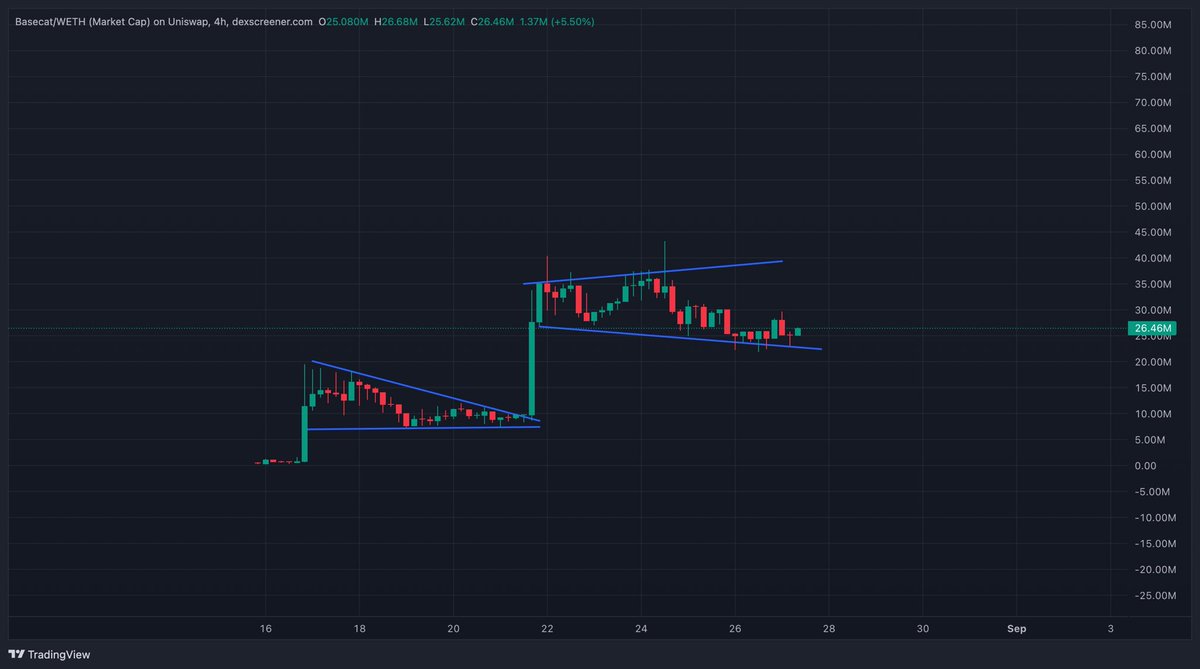
129950 粉丝
A weekly close above $2550 would make this $ETH setup very hard to ignore
it’s almost repeating the exact same weekly structure as last year
> bottom around $1500
> build a base below $2000
> then one huge weekly candle straight into the major MA cluster
> last time ETH reclaimed this area, it consolidated for a few weeks and then ran toward $4800
129950 粉丝
It was a nice little smoke break, bull market is back now.. https://twitter.com/Axel_bitblaze69/status/2092894626411941948/photo/1
中文: 这是一次不错的小烟消云散,牛市现在又回来了。

129950 粉丝
X is the best place to spot a new memecoin getting traction before it trends on Pumpfun or Fomo
cuz the attention usually starts here first:
- few early accounts find it
- ppl start discussing it
- same ticker keeps appearing
- then it’s everywhere
Grok can scan all of this for u instead of manually scrolling
Prompt:

129950 粉丝
valuation-wise:
$PUMP: $1.8B market cap and $3.8B FDV
$PONS: around $96M market cap
129950 粉丝
With the growing activity on Robinhood chain $PONS is probably a good bet imo
it is basically the Pumpfun of Robinhood Chain, and $PONS is the token capturing part of its activity.
part that makes PONS interesting is where the fees go..
on current launches, creators receive 70% of trading fees.
the protocol keeps 30%, then around 80% of that share is used to buy PONS from the market and burn it.
so creators are incentivized to launch and promote more coins..
and every coin traded through the platform creates buy pressure for PONS, whether that coin survives or dies.
the numbers are already pretty serious for something launched last month:
- 324K+ tokens launched
- $15.6M in fees and $3.5M in protocol revenue over the past 30 days
- nearly 288M PONS burned from the original 1B supply
that means almost 29% of the entire supply is already gone.
so that’s the thesis pretty simple...
129950 粉丝
RT @Axel_bitblaze69: Same thing that happened to $ETH in 2021 might now be happening to $SOL
high fees pushed attention toward Solana, BSC, SUI and etc.. and ETH was no longer the only chain ppl wanted to train on
and eventually competitors gave much bigger returns because they were capturing the activity leaving Ethereum.
$SOL is now in a similar position.
it no longer has everyone’s attention to itself.
Robinhood first and now HyperEVM has the attention and a much easier retail frontend through Pumpfun.
And if @cobie manages to revive Base, that becomes another serious competitor.
the interesting part here is Pumpfun.. it started as a Solana only launchpad.
now the same app lets people trade tokens across Ethereum, Base, BNB Chain, Robinhood Chain and HyperEVM.
so the traders and KOLs Pumpfun built on Solana can now take their attention into another ecosystem without rebuilding everything from zero.
Pumpfun has basically made the Solana trenches portable..
great for $PUMP because it can follow the activity wherever it goes but maybe not so great for SOL..
129950 粉丝
RT @Axel_bitblaze69: Ok i’m ready.. lets see what comes first $100,000 or to $0
follow me on my this journey: https://join.pump.fun/HSag/mcz1gvxz https://twitter.com/Axel_bitblaze69/status/2092766687775129899/photo/1
中文: RT @Axel_bitblaze69:好吧,我准备好了......看看前10万美元或0美元
关注我的这段旅程:

129950 粉丝
Ok i’m ready.. lets see what comes first $100,000 or to $0
follow me on my this journey: https://join.pump.fun/HSag/mcz1gvxz https://twitter.com/Axel_bitblaze69/status/2092766687775129899/photo/1
中文: 好了,我准备好了......看看前10万美元或0美元有什么
关注我的这段旅程:
129950 粉丝
Same thing that happened to $ETH in 2021 might now be happening to $SOL
high fees pushed attention toward Solana, BSC, SUI and etc.. and ETH was no longer the only chain ppl wanted to train on
and eventually competitors gave much bigger returns because they were capturing the activity leaving Ethereum.
$SOL is now in a similar position.
it no longer has everyone’s attention to itself.
Robinhood first and now HyperEVM has the attention and a much easier retail frontend through Pumpfun.
And if @cobie manages to revive Base, that becomes another serious competitor.
the interesting part here is Pumpfun.. it started as a Solana only launchpad.
now the same app lets people trade tokens across Ethereum, Base, BNB Chain, Robinhood Chain and HyperEVM.
so the traders and KOLs Pumpfun built on Solana can now take their attention into another ecosystem without rebuilding everything from zero.
Pumpfun has basically made the Solana trenches portable..
great for $PUMP because it can follow the activity wherever it goes but maybe not so great for SOL..
中文: 2021年在 $ETH 上发生的同样的事情,现在可能也发生在 $SOL 上
高额费用使索拉纳、BSC、SUI等备受关注,而ETH已不再是唯一希望继续训练的连锁公司
最终,竞争对手获得了更大的回报,因为他们正在捕捉离开以太坊的活动。
SOL 现在处于类似的位置。
它不再让每个人关注自己。
Robinhood 先到,现在 HyperEVM 通过 Pumpfun 拥有了备受关注的零售业务。
如果@cobie成功重振了Base,那将成为另一个严肃的竞争对手。
有趣的部分是Pumpfun......它最初只是作为索拉纳的发射台。
现在,同一款应用允许人们在以太坊、Base、BNB Chain、Robinhood Chain 和 HyperEVM 上交易代币。
因此,基于Sorana构建的交易员和KOLs Pumpfunn现在可以将注意力带入另一个生态系统,而无需从零开始重建所有东西。
Pumpfun 基本上使索拉纳沟槽变得便携。
非常适合 $PUMP,因为它可以随时随地关注该活动,但对 SOL 来说可能并不那么出色。
129950 粉丝
RT @Axel_bitblaze69: What if i give Grok Bot a wallet with the seed phrase, fund it with an amount and give it complete freedom to trade on its own ?
maybe even build a small team of bots where one finds trades using X research, one checks risk and one executes..
I already gave Grok Bot access to my @fomo account and let it copy trade for me..
and surprisingly, it actually did pretty well.
i’ve paused it for now while i build a better strategy for it..
but now i’m curious how far it can go with its own wallet and no human approval before every trade.
should i run the whole experiment publicly?
中文: RT @Axel_bitblaze69:如果我给Grok Bot一个带有种子短语的钱包,用一定金额来资助,并给予它完全自由独立交易,该怎么办?
甚至可能组建一个小型机器人团队,通过X研究找到交易,一个通过风险来检查,然后执行。
我已经让Grok Bot访问我的@fomo账户,并让它为我复制交易。
令人惊讶的是,它实际上表现相当不错。
我暂时暂停了,同时为它制定了更好的策略。
但现在我很好奇,在每次交易之前,它都能用自己的钱包和人类的认可来走多远。
我应该公开运行整个实验吗?

129950 粉丝
What if i give Grok Bot a wallet with the seed phrase, fund it with an amount and give it complete freedom to trade on its own ?
maybe even build a small team of bots where one finds trades using X research, one checks risk and one executes..
I already gave Grok Bot access to my @fomo account and let it copy trade for me..
and surprisingly, it actually did pretty well.
i’ve paused it for now while i build a better strategy for it..
but now i’m curious how far it can go with its own wallet and no human approval before every trade.
should i run the whole experiment publicly?
中文: 如果给Grok Bot一个带有种子短语的钱包,用金额进行资金并给予它完全自由独立交易,该怎么办?
甚至可能组建一个小型机器人团队,通过X研究找到交易,一个通过风险来检查,然后执行。
我已经让Grok Bot访问我的@fomo账户,并让它为我复制交易。
令人惊讶的是,它实际上表现相当不错。
我暂时暂停了,同时为它制定了更好的策略。
但现在我很好奇,在每次交易之前,它都能用自己的钱包和人类的认可来走多远。
我应该公开运行整个实验吗?
129950 粉丝
ETH/ BTC is squeezing right below resistance while some alts red..
a break above 0.0315 could be all it takes for this entire dip to get bought back quickly..
still bullish. i still think dips are for buying.. https://twitter.com/Axel_bitblaze69/status/2092692283347128636/photo/1
中文: 比特币(ETH)正低于阻力,而有些则呈红色。
突破0.0315可能就是整个下跌迅速被回购所需的全部时间。
仍然看涨。我仍然认为下跌是用于买入的。

129950 粉丝
On average Alts are down 10-15% while BTC and ETH are barely down 2%..
looks bad, but i think this is mostly uncertainty..
BTC is stuck below $80K
and ETH below $2500.
both are at major psychological levels, and alts are just waiting for them to pick a direction.
so if BTC and ETH break above, i think this alts bottoms and reclaim their key levels within hours as the momentum is still there.
if they reject, alts obviously have more downside..
中文: 平均而言,阿尔茨下跌了10%至15%,而比特币和以太坊几乎下跌了2%。
看起来很糟糕,但我认为这主要是不确定性。
比特币价格低于8万美元
且以太坊低于2500美元。
两者都处于主要的心理层面,而alts只是在等待他们选择方向。
因此,如果比特币和以太坊突破,我认为这会在数小时内突破底部,并在关键时刻恢复至关键水平。
如果他们拒绝,显然会有更多的缺点。
129950 粉丝
Perfect timing for Pumpfun to add HyperEVM
$HYPE is at an ATH, so the attention is at its eco.. And Robinhood trenches are starting to feel crowded too
imo next big memecoin winners come from hype eco..
$PUMP is becoming a bet on the entire onchain trenches. higher
中文: 为Pumpfun添加HyperEVM提供绝佳时机
$HYPE 处于 ATH 状态,因此其关注点位于其生态环境中。罗宾汉的战壕也开始感到拥挤
下一个大型memecoin赢家来自炒作生态。
PUMP 正成为整个链沟的赌注。
129950 粉丝
I think this is how an ideal portfolio should be built..
it should not just around what you own, but what you can still do after the market moves.. like:
- core spot for the main exposure.
- a smaller futures short to reduce risk and potentially collect funding.
- options when they’re priced well.
so if the market drops, you can close the short and become more long at lower prices without adding fresh cash.
and if it pumps, your spot still wins and you can hedge again higher..
don’t be the one with the portfolio that have no decisions left except hold or sell when a market moves either way.. have flexibility
中文: 我认为这应该如何建立一个理想的投资组合。
它不仅应该围绕你拥有的东西,还应该在市场波动后还能做些什么......比如:
- 主要曝光的核心位置。
- 小时期货短,可降低风险并可能筹集资金。
- 价格合理时可选。
因此,如果市场下跌,你可以关闭空价,在不增加新现金的情况下,以更低的价格变长。
如果它能泵送,你的位置仍然会胜负,并且你还能再次对冲。
不要成为投资组合中那些除了持有或出售市场时,要么拥有灵活性,否则没有决策的人
129950 粉丝
For memecoins traders, this is pretty much the only tab you need open throughout the day..
i just went to Geckoterminal and set my mega filter once based on the kind of coins i want to trade.
mine only shows coins launched within 48 hours, with over $30k liquidity, 300+ buys in 24 hours and less than 40% held by the top 10 wallets.
nothing scientific about these numbers, just lessons learned the hard way:
- 48h because that's where the asymmetry lives.. older than that and the move usually found its crowd without me
- $30k liquidity because thin pools fold on one decent exit, and i've been the exit before so..
- 300+ buys because volume can be faked but a real crowd showing up is harder to spoof
- under 40% in the top 10 because if a few wallets own the supply, they own my exit too
then i leave that tab open.
whenever a new coin passes the filter, i open its page and everything is already there.. the chart, liquidity, holders, GT score, bundled buys, top traders and security flags.
most get closed immediately.. the few that look interesting go on my watchlist until i find an entry. that’s basically the whole workflow.
one tab to find new coins, remove most of the junk and research what’s left.
you can use my exact filter here as shown in the video:
🎬
视频
129950 粉丝
I have a feeling we’re entering that phase where a few altcoins pull a 10x within a month and make everyone feel stupid for missing them..
September could be the month that produces some ridiculous winners..
129950 粉丝
This line still feels painfully relevant
“We’re becoming a culture that worships the jackpot and increasingly prices survival at zero.”
Look at where speculative energy keeps flowing:
Memecoins. Perps. Casinos. Prediction markets.
Millions of people are chasing the next jackpot, while most are slowly bleeding money to the house.
So maybe the interesting trade isn’t becoming a better gambler… Maybe it’s owning the house.
You can’t own Stake or a casino.
But you can own $HYPE, $PUMP and the tokens sitting at the center of these increasingly casino-like economies.
That’s what makes them interesting to me.
The same degen activity on both HL and Pumpfun directly accrues value to the token through buybacks.
So to me the biggest asymmetric bet might not be finding the next jackpot.
It might be owning the machine that sells everyone else the dream of finding it.
Much higher for $HYPE, $PUMP and equity perps imo.

129950 粉丝
RT @Mantle_Official: Mantle Vault proved itself in CeFi. Today, it opens to everyone in DeFi.
After crossing $200M on @Bybit_Official, a new vault is now live on @Fluxion_network with @grovedotfinance and @CIAN_protocol, giving millions access to RWA yield with stablecoins on Mantle.
Here's how ↓ https://twitter.com/Mantle_Official/status/2092265901689376797/photo/1

129950 粉丝
RT @Axel_bitblaze69: $W is the biggest VC dump schemes retail has ever been sold.. 🤡
Pretty damn sure many people have got rekt on this one.. jfc
W opened with a $16.5B FDV while only 18% of the supply was circulating..
today W is down 99.4% trading at 95M FDV
this is exactly how it works..
- VCs get cheap tokens.
- market makers help create the launch price.
- exchanges give them liquidity and retail distribution.
then everyone else spends years absorbing the unlocks.. token did exactly what it was designed to do.. transfer wealth.
129950 粉丝
biggest coordinated fraud by VC’s + MMs + CEX has pulled on retail in recent times..
129950 粉丝
$W is the biggest VC dump schemes retail has ever been sold.. 🤡
Pretty damn sure many people have got rekt on this one.. jfc
W opened with a $16.5B FDV while only 18% of the supply was circulating..
today W is down 99.4% trading at 95M FDV
this is exactly how it works..
- VCs get cheap tokens.
- market makers help create the launch price.
- exchanges give them liquidity and retail distribution.
then everyone else spends years absorbing the unlocks.. token did exactly what it was designed to do.. transfer wealth.
129950 粉丝
if you want exposure to the tokenization narrative, don’t only buy the assets being tokenized..
own the rails moving them across chains. that’s basically the $ZRO vs $W trade.
Wormhole has moved over $60B across 40+ chains and processed more than 1B messages..
it already powers assets from Securitize, BlackRock and Ripple.
And $W is around $60M market cap with 64% circulating, so it’s clearly the cheaper bet.
but its link to benefit $W holders is still weak… there’s staking and a reserve, but no fixed share of fees constantly buying W
LayerZero on the other hand has moved around $290B across 160+ chains.
$ZRO is closer to $400M with only 35% circulating, so it’s more expensive with worse dilution.
but ATLAS takes the thesis beyond moving tokenized assets.. it wants to become the backend where those assets actually trade.
venues stake ZRO, Zero uses it for gas, and 75% of remaining ATLAS fees buys and burns it
so if u ask me:
$W is exposure to crosschain growth at a cheaper valuation..
$ZRO is exposure to crosschain growth plus the future trading of tokenized assets.
i pick ZRO and you ?
129950 粉丝
$ZRO is one of the few alts refusing to care that the market is red..
it’s up around 50% in a week and still sitting near the highs and i think the market is repricing ATLAS.
LayerZero was mostly seen as tech for moving assets across chains. right?
ATLAS wants to become the backend exchanges use to run spot, perps, stocks, bonds and prediction markets without building the matching, clearing and settlement themselves.
and this time ZRO actually sits inside the loop.. venues stake ZRO for better fee rebates.
ZRO secures Zero and pays for gas.
then 75% of the trading fees left after venue rebates and market-creator payouts buys and burns ZRO.
that’s really a much cleaner token thesis than “governance for a bridge.”
ATLAS only launches later this year, so this is still the market pricing the idea before the revenue. but yeah, if it gets real volume..
$ZRO becomes another toll booth on everything people trade.
129950 粉丝
I like $ZRO… at the moment, it is one of the few alts refusing to care that the market is red..
it’s up around 50% in a week and still sitting near the highs and i think the market is repricing ATLAS.
LayerZero was mostly seen as tech for moving assets across chains. right?
ATLAS wants to become the backend exchanges use to run spot, perps, stocks, bonds and prediction markets without building the matching, clearing and settlement themselves.
and this time ZRO actually sits inside the loop.. venues stake ZRO for better fee rebates.
ZRO secures Zero and pays for gas.
then 75% of the trading fees left after venue rebates and market-creator payouts buys and burns ZRO.
that’s really a much cleaner token thesis than “governance for a bridge.”
ATLAS only launches later this year, so this is still the market pricing the idea before the revenue. but yeah, if it gets real volume..
$ZRO becomes another toll booth on everything people trade.
129950 粉丝
RT @Axel_bitblaze69: $HYPE is up 300% and $PUMP 263% from this exact same setup..
and i have been telling you this since last month..
look the chart below, both retraced their 10/10 crash wick, spent weeks forming a base there and then ripped..
like $PENGU and $LINK are now doing the same thing and already up nicely from their bases.
so, pretty simple pattern i’m watching now:
- 10/10 wick gets reclaimed
- weekly base forms
- volume returns
then i start paying attention.
🎬
视频
129950 粉丝
BTC is back at $78K and alts are down 5-10%..
finally something i was waiting for.. this is the first proper test of the market move we saw
if the breakout was real, strong alts should hold their reclaimed levels and this dip should get bought quickly.
will be adding to the coins that were leading before the dip, at bids i already placed.
129950 粉丝
I’ve been deep in the Robinhood Chain trenches for weeks now..
watched hundreds of coins launch and most of them die almost instantly.
sure, its great that now the launching tokens takes one transaction and costs around $5. anyone can do it..
but one big problem with it is that once the coin is live, the creator has nothing to do and traders have no reason to come back.. hmmmm
so what does Robinhood Chain actually need imo is a launchpad that helps a coin keep attention after the launch..
that’s why i think @rallypadfun is a great solution.. i came across this just yesterday so thought of sharing more about it.
so.. on rallypad, trading gives you entries into a daily draw, while creator fees continue for as long as the coin stays active.
so the creator has a reason to keep showing up and traders have a reason to return. right ?
and the launch itself is simple too..
one transaction takes the coin from curve to breakout and then into a locked pool... no presale or team bag.
now lets see whether Rally coins stay alive longer than everything else i’ve watched launch there...
it live now: https://rallypad.fun/
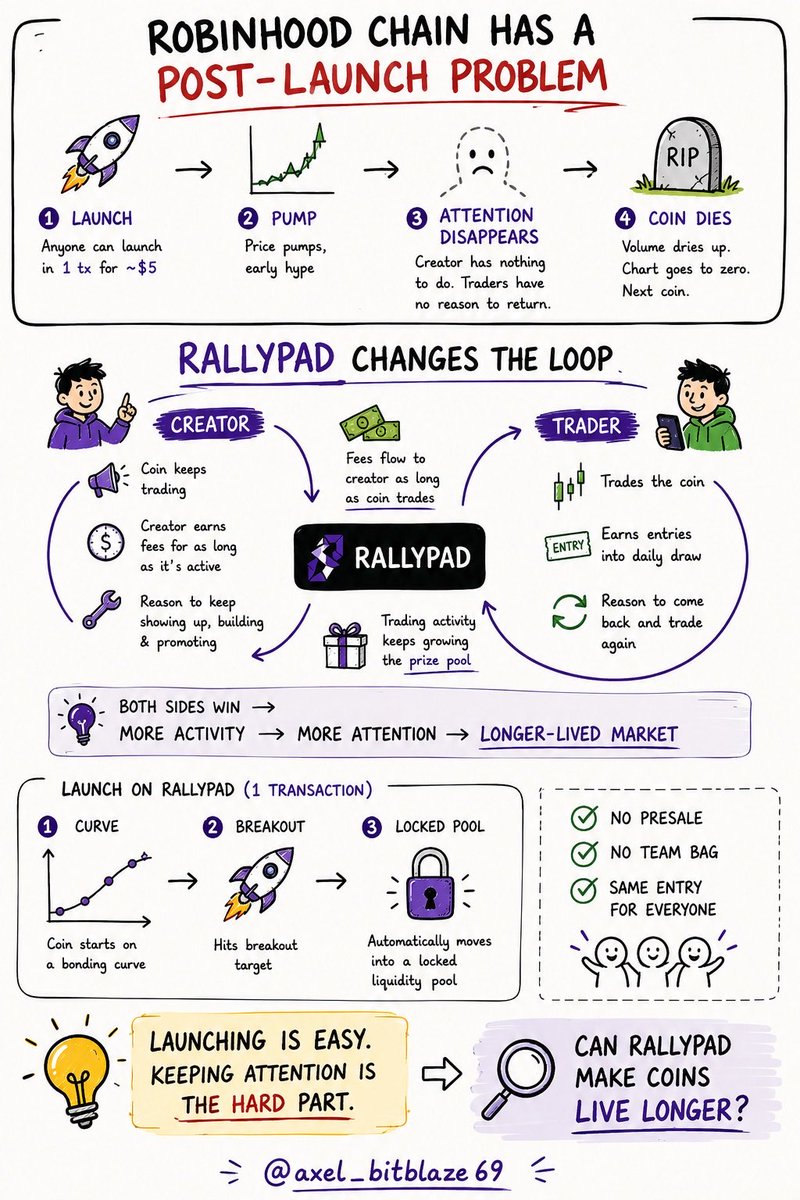
129950 粉丝
Memes might be more washed than CT wants to admit..
After all this hype on Robinhood chain and support to memes shown by Vlad himself..
And plus after Fomo and Pumpfun made trading memes one tap and easy copy trade winning wallets
- yet $CASHCAT is still the only native meme that has crossed $100M now around 200M
- $PONS peaked around $70M
- $STONKBROKER around $59M
- $INDEX barely touched $23M
and what else ?
if this much distribution can’t produce a second $100M meme means there just aren’t enough buyers willing to hold them after the first pump.
Utility coins season
129950 粉丝
lowkey glad we went through such a brutal bear market since 10/10
i was kinda left with no option but to learn something new.. and so glad i chose AI
now i’ve been building cool shit ever since. like u have seen this Ai integrated portfolio tracker..
been using AI to track smart wallets, scan live market data, test my theses, find crowded trades, monitor risk and automate parts of my execution..
love it
129950 粉丝
I just built this AI integrated portfolio tracker for myself..
and bro… this is just next level, it shows me:
- My drawdown
- Portfolio volatility
- Sharpe ratio
- And whether my returns are even worth the risk i’m taking
i can also ask the AI questions about my holdings.. and run Monte Carlo simulations to see where it could realistically end up across thousands of possible market paths.
🎬
视频
129950 粉丝
RT @Axel_bitblaze69: Solana is washed.. and the days of $SOL outperforming $ETH are over
$ETH will outperform $SOL from here..
lemme explain why:
$PUMP has done almost 4x from the lows.
Pumpfun and Fomo apps are going viral.. CT is completely obsessed with copying wallets and chasing callouts again.
but barely any memes are struggling to even reach $50M
- $CASHCAT listed on Robinhood listing and is still aroun $200M
- $BASECAT listed on Coinbase and couldn’t even break $50M
- $ANSEM had one of the biggest creators @blknoiz06 on CT shilling it daily and still struggled to hold above $400M
barely any new meme is crossing $50M, forget producing another clean billion dollar runner.
copy trading made it worse.. everyone now receives the same entry and races toward the same exit.
the casino is winning, not the gamblers.
so for Solana exposure, i’d only hold $PUMP and $PENGU
otherwise, i’d rather own ETH and the ecosystem around it.
129950 粉丝
I’ll admit i’m wrong if…
firstly, $80K rejection changes nothing..
losing $77K-$78K and failing to reclaim it would be the first warning..
then a weekly close below $72.6K would invalidate my bull market thesis...
above $77K, i’m buying dips… below $72.6K, i stop defending the thesis.
129950 粉丝
Bears are giving their everything to defend $80K, but $BTC is not moving down. 👀
so if this is truly a bull market, tight consolidation below resistance is usually bullish..
and since.. majority of sidelined money is waiting for the pullback now to get in..
makes me believe max pain might simply be BTC breaking $80K, holding above it and forcing everyone to take entries at higher prices..
correction comes later imo.. once the breakout turns the timeline fully bullish.
tldr: imp the pressure is still building upward.
129950 粉丝
Solana is washed.. and the days of $SOL outperforming $ETH are over
$ETH will outperform $SOL from here..
lemme explain why:
$PUMP has done almost 4x from the lows.
Pumpfun and Fomo apps are going viral.. CT is completely obsessed with copying wallets and chasing callouts again.
but barely any memes are struggling to even reach $50M
- $CASHCAT listed on Robinhood listing and is still aroun $200M
- $BASECAT listed on Coinbase and couldn’t even break $50M
- $ANSEM had one of the biggest creators @blknoiz06 on CT shilling it daily and still struggled to hold above $400M
barely any new meme is crossing $50M, forget producing another clean billion dollar runner.
copy trading made it worse.. everyone now receives the same entry and races toward the same exit.
the casino is winning, not the gamblers.
so for Solana exposure, i’d only hold $PUMP and $PENGU
otherwise, i’d rather own ETH and the ecosystem around it.
129950 粉丝
In a bull market.. $AAVE may be one of the few coins that directly benefits when everyone gets greedy again…
because in a bull market, people don’t want to sell their $ETH
they deposit it into Aave, borrow stablecoins against it and use that money to buy more coins, farm yields or fund other positions…
more greed means more borrowing.. and more borrowing means more fees for Aave.
and this is already a serious business.. Aave has processed over $1T in lifetime borrows, while lenders have earned around $1.9B in interest.. crazy
the problem was always the token. Aave could grow while $AAVE remained mostly a governance coin with barely any reason to buy it..
that part is now finally changing.
the DAO has already spent around $42M buying more than 205K AAVE from the market.. That is roughly 1.28% of the entire supply acquired in under a year.
so the loop now looks much better now:
- people borrow more
- Aave earns more
- part of that money buys AAVE
and lower emissions mean less AAVE coming back onto the market
then you have V4, which makes it easier to launch new lending markets without splitting liquidity everywhere.
Horizon lets institutions borrow stablecoins against tokenized real-world assets.
and GHO gives Aave its own stablecoin, creating another source of revenue for the protocol.
so its product has already proven itself.. now i believe in this bull market.. the token finally has a reason to follow.
129950 粉丝
$HYPE is up 300% and $PUMP 263% from this exact same setup..
and i have been telling you this since last month..
look the chart below, both retraced their 10/10 crash wick, spent weeks forming a base there and then ripped..
like $PENGU and $LINK are now doing the same thing and already up nicely from their bases.
so, pretty simple pattern i’m watching now:
- 10/10 wick gets reclaimed
- weekly base forms
- volume returns
then i start paying attention.
🎬
视频
129950 粉丝
moral: buy $PUMP and chill.
barely any meme is crossing $20M atm, so you need to find the winner below $1M and sell before everyone else.
good luck doing that against coordinated callouts where influencers get instant buyers and followers become the exit.
$PUMP doesn’t need you to pick the winning meme…
every launch and trade feeds Pumpfun, then 50% of its revenue buys and burns PUMP.
yes, i’ll still gamble on memes, but the casino looks like the safest and clearest bet.
129950 粉丝
$PENGU MORNING to every penguin 🐧 https://twitter.com/Axel_bitblaze69/status/2092103965924327659/photo/1

129950 粉丝
Few things i’m convinced about at the moment:
we’re in a bull market, and the next proper dip will get bought quickly.. so we won’t have much time to buy.. be ready.
$ETH and high caps will lead before money moves further down the curve. so position accordingly..
perps will remain the strongest crypto business, so $HYPE and $LIT stay my main picks there…
not so confident that memes will still produce huge winners, as rn most are just forced trades fighting for the same liquidity.
and $PUMP may outperform the memes themselves because it earns from all of them..
that’s pretty much how i’m positioned.
129950 粉丝
RT @Axel_bitblaze69: Seeing people make 4-5 fig easy from Pumpfun callouts on their app made me realise how viral this app could get..
> creators earn from launching coins.
> callers earn when their picks generate volume
> traders can discover coins and copy wallets without leaving the app.
these normies will see the leaderboard and assume copying trading the most profitable traders is free money..
im sure many will get rekt, but they will still onboard..
and more users means more trades, more fees and more $PUMP buybacks.
this application itself may become $PUMP’s biggest catalyst..
129950 粉丝
Seeing people make 4-5 fig easy from Pumpfun callouts on their app made me realise how viral this app could get..
> creators earn from launching coins.
> callers earn when their picks generate volume
> traders can discover coins and copy wallets without leaving the app.
these normies will see the leaderboard and assume copying trading the most profitable traders is free money..
im sure many will get rekt, but they will still onboard..
and more users means more trades, more fees and more $PUMP buybacks.
this application itself may become $PUMP’s biggest catalyst..
129950 粉丝
Soon you will see $NEAR everywhere on your timeline like $ZEC
Cuz it has a peak bull market use case for perps traders with serious size
As we all know one big problem with onchain perps is that every whale trade becomes public content..
wallet, size, direction and liquidation price. the entire market can trade around you.
but NEAR’s Confidential Intents hides the order while it executes across chains.
with this whales could move size without revealing the trade first..
that could become one of NEAR’s best products in a bull market.
129950 粉丝
Am i the only one who feels memecoins are becoming forced trades again ?
i’m watching coordinated pumps all day on Fomo and Pumpfun, yet barely anything can hold $30M, forget $50M
too many coins are fighting for the same liquidity..
i still hold a few memes, but they’re no longer my main bet.
if majors keep breaking out while memes struggle, the cleaner rotation from here is probably high caps..
129950 粉丝
Saylor might be preparing the next $1.6B Bitcoin bid imo..
Strategy sold BTC near $64K while the market was panicking… and BTC is now almost $80K
looked horrible, but the sale wasn’t really a bearish call on Bitcoin.
STRC had fallen below $100, which meant Strategy couldn’t issue more of it efficiently.
so the machine changed direction.. instead of raising money to buy BTC, Strategy started selling MSTR shares and some BTC to pay preferred dividends, buy back STRC and build its dollar reserve.
and this week it sold another 18.26M MSTR shares for around $2B.
still no Bitcoin purchase.
$136M went toward buying back STRC
$300M went into the dividend reserve
and $1.59B went into a new flexible cash pool
that last part is what i’m watching.
unlike the reserve, this cash can actually be used to buy Bitcoin. so my read is pretty simple..
Saylor wasn’t selling because he stopped believing in BTC. but cuz he was repairing the financing machine that allows Strategy to keep buying it..
once gets back above $100 and the preferred market starts working again, i expect Strategy to return as a net buyer.
maybe even before that if Bitcoin confirms the breakout and they deploy this new cash..
but there’s another side to it.. Strategy keeps issuing common shares while buying no BTC.
that means more MSTR shares are chasing the same 840,447 Bitcoin, so BTC per share gets diluted.
good setup for another Saylor BTC bid.
not necessarily good for MSTR holders until the Bitcoin buying actually restarts.
i’m watching 2 things now:
- STRC reclaiming $100 ( at $97 rn )
- and where that new $1.59B cash pool goes
if both turn toward Bitcoin, Saylor’s bid could be back much sooner than people expect..
129950 粉丝
There will be a major Dip again soon..
but before deciding whether to buy it, you need to answer one thing:
are you convinced we’re in a bull market, or do you still think this was just a relief rally?
because the same dip is an opportunity in a bull market and a trap in a bear market.
im clear with myself... i think the bull market is here.
BTC and ETH reclaimed important levels, the breakouts came with real volume and money is finally rotating across the market
instead of pumping one isolated coin.
so when the dip comes, i’m buying it. but i’m also expecting it to be scary.. alts can easily correct 30-40% and convince everyone that the breakout was fake.
that’s why i’d be very careful with leverage here.. being right about the bull market won’t save you if a normal correction liquidates you first.
and i don’t expect the dip to last very long either..
too much money is still waiting for an entry. if this move is real, good alts should get bought up quickly..
so your trade depends on your own conviction. but my plan is already made..
and the alts are selected, the prices are decided and the bids are sitting there.
now i’m hoping the dip actually comes.
lets go
129950 粉丝
$BASECAT just got listed on Coinbase..
Almost same PA like $CASHCAT when it got listed on Robinhood. 👀
betting on basecat to pull a cashcat like rally… matter of time https://twitter.com/Axel_bitblaze69/status/2091921416191201441/photo/1


129950 粉丝
What i’d rather hold from here..
$BTC or $ETH ? BTC
$HYPE or $PUMP ? PUMP
$LINK or $ZEC ? LINK
$ZEC or $NEAR ? NEAR
$LIT or $ASTER ? LIT
$SOL or $ETH ? ETH
$AAVE or $MORPHO ? AAVE
$ENA or $SKY ? ENA
$TAO or $VIRTUAL ? TAO
$DOGE or $PENGU ? PENGU
$LDO or $ETHFI? ETHFI
$ARB or $OP? neither
this list is like just where i’d rather put fresh money at current valuations..
129950 粉丝
Can someone explain why my entire timeline is trying to sell me $ZEC at a $14.5B market cap.. ????
while barely anyone is talking about $LINK below $9B ?
genuinely asking because see,
ZEC gives you private money with a fixed 21M supply.. shielded supply has grown from around 11% to 30%, most transactions are now shielded and Zashi has processed over $600M through swaps.
And The flywheel is mostly narrative driven:
- ZEC pumps
- privacy gets attention
- more people buy and shield it
- liquidity improves
- the market gives it a larger monetary premium
that can work extremely well.
but there’s no protocol revenue buying ZEC, no fee switch and no growing business underneath every transaction.
the bet is simply that private money becomes more valuable..
then look at $LINK
Chainlink currently secures around $39B across 526 protocols. another $15B of DeFi value recently migrated to its infrastructure.
CCIP moves assets between chains, its oracles price lending markets and tokenized assets, while banks and financial institutions are using it to test onchain settlement.
Chainlink also generated around $4.8M in fees over the last 30 days. and unlike before, there is finally a visible path from usage to the token:
- more assets move onchain
- more demand for data, CCIP and compliance
- more fees get paid
- Payment Abstraction converts those fees into LINK
- LINK enters the Reserve or gets used to secure the network
the token capture is still small. i’m not saying every bank pilot creates instant buying pressure.
but at least LINK has a business flywheel being built around actual usage.
so what am i missing here?
ZEC is worth almost $6B more than LINK right now. if LINK traded at ZEC’s current market cap, it would be around $19.
or maybe the answer is much simpler..
ZEC doubled this week, LINK did 23%, and CT usually discovers the thesis after the candle..
129950 粉丝
Some thoughts on how i think a crypto portfolio should be built..
not just which coins to buy, but how much exposure to take, where the real risk sits and what actually counts as diversification.
the first thing i’d look at is portfolio size.
if i have $10K, i can take more risk because protecting it like a pension fund probably won’t change my life..
if i have $1M, the job is different. i no longer need every position to 10x. avoiding a 70% drawdown matters more.
and for an aggressive bull-market portfolio, this is roughly how i’d structure it:
35% BTC + ETH.. this is my base exposure.
if crypto goes up but i choose the wrong narratives, i still participate.
25% conviction alts.. not more than 10 though..
conviction alts for me is:
products with users, revenue, growing distribution and some way for that growth to create demand for the token.
i’d also avoid putting the entire bucket into one ecosystem.
like owning ETH, ENA, LDO, ETHFI and an ETH L2 may look like 5 coins, but they can all get hit by the same trade unwinding.
15% asymmetric bets
memes, new launches and smaller caps.
these are positions where the entire amount can go to zero, but one winner can still move the portfolio.
if i put 2% into something and it dies, i lose 2%.. if it does 10x, it adds 18% to the portfolio.
that makes more sense to me than putting 15% into one memecoin and calling it conviction.
15% stables
not because i’m bearish.
but because stables give me the ability to buy a crash, farm yield or enter something new without selling another position first.
being fully deployed feels great until the market gives you the opportunity you were waiting for.
10% tactical exposure and hedges.. this can be perps, options or short-term trades.
but i wouldn’t keep a permanent hedge open just to feel protected. funding and option premiums can slowly eat the portfolio while nothing happens.
i’d hedge when the book becomes too one-sided. and the hedge needs to match what i own.
if my portfolio is mostly high-beta alts, a 5% BTC short won’t protect much when those alts fall 30%.
sometimes the cleanest hedge is simply reducing exposure and holding more stables.
i’d also track gross exposure, not just account balance.
if i have $100K in spot, borrow $20K against ETH and use that as margin for a 3x perp, i’m carrying $180K of market exposure.
it doesn’t become safer because the spot is onchain, the loan is on Aave and the perp is on Binance.
all three can still unwind from the same move. and position size should depend on liquidity too.
a $50M market-cap coin with thin liquidity cannot be sized like ETH just because both are “spot.”
market cap tells me what the project is worth.
liquidity tells me whether i can actually leave.
when one of the smaller bets runs hard, i’d move some profit back into BTC, ETH or stables.
otherwise one winner slowly becomes the entire portfolio, and a position that started as a 2% gamble is controlling my future.
so yeah, i don’t think a good portfolio is the one holding the most promising coins.
it’s one where i know:
what each position is doing there, which positions depend on the same thesis
how much i can lose if that thesis fails
and where the money comes from when the next opportunity appears
the exact percentages can change ofc.. a proper structure is important..
ok post got long.. i will continue to share more thoughts on portfolio building with time..
129950 粉丝
Portfolio update:
Added a Fatty Fat bag of $PENGU 🐧 https://twitter.com/Axel_bitblaze69/status/2091838988332273748/photo/1
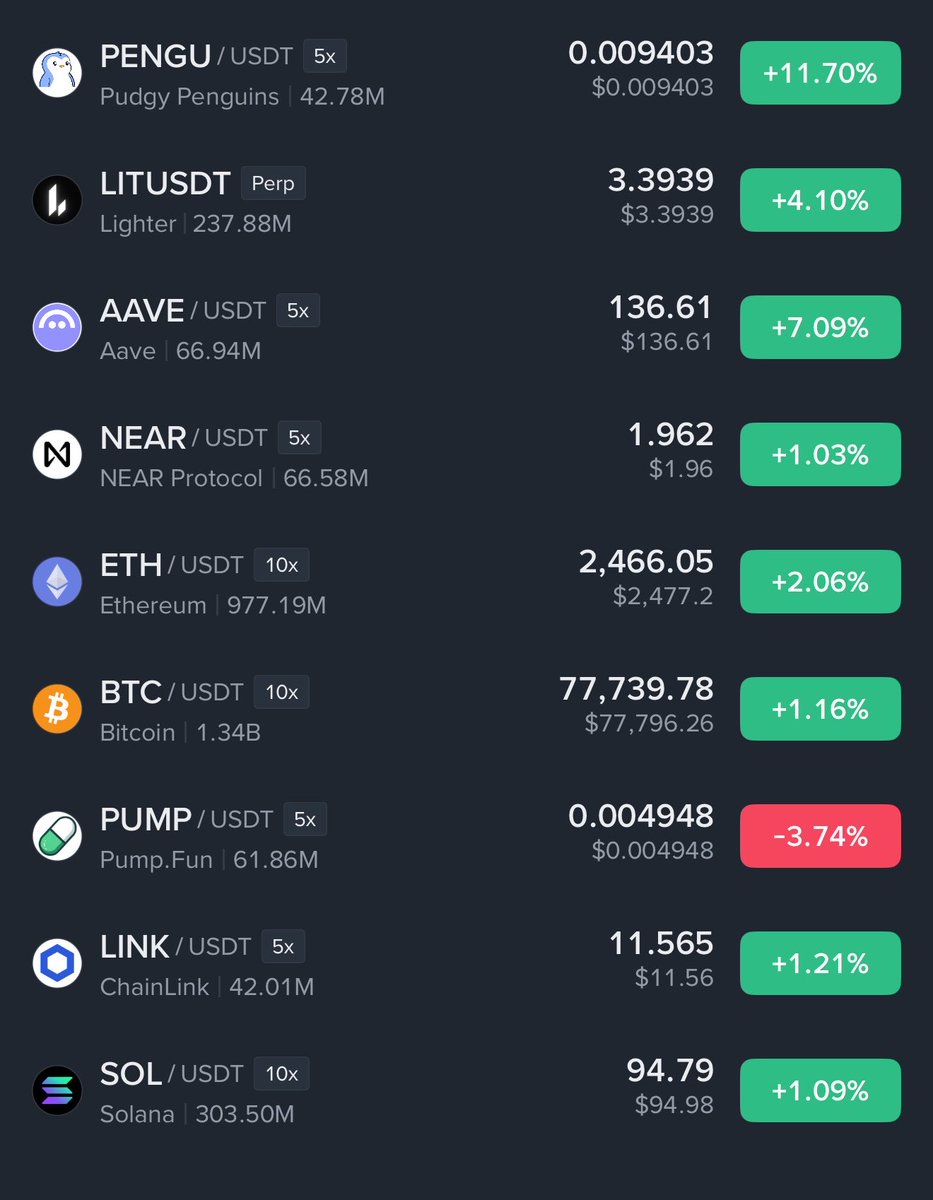
129950 粉丝
$LIT finally got the breakout it needed above $3.50
now the skies are clear.. and the gap with $ASTER is looking stupid.
at around $3.70:
LIT FDV: $3.6B
ASTER FDV: $5.4B
yet over the last 30 days, Lighter still did:
$38B perp volume
$1.1B open interest
$3.6M fees
$2M used to buy back LIT
if LIT only reaches Aster’s current FDV, it trades around $5.35.
if it reaches Aster’s circulating market cap, LIT trades around $7.40.
for me $5 to $5.50 looks like the first real repricing zone.
and if Lighter keeps taking volume while the Robinhood distribution grows, i wouldn’t be surprised to see it go way beyond 5B and 10B FDV totally achievable..
hold it, and skies look pretty clear until the December unlocks become the next headache.

129950 粉丝
The best setup for alts might actually be BTC and ETH doing nothing for a while..
BTC is still inside the range.
ETH has already reached the top of its range.
so, if both start chopping here instead of breaking down, money will get bored and move further down the risk curve.
first into stronger alts.. then the laggards.
then probably complete garbage because this is crypto.
so i’m not wasting energy trying to declare whether the bottom is officially in..
i’m watching which coins keep moving while BTC and ETH stop.
that’s usually where the next rotation is already starting..
understood ?
129950 粉丝
RT @Axel_bitblaze69: If you have a small portfolio in a bull market, leverage feels like the obvious answer..
you have $10K but want the purchasing power of $50K.. a 5x perp gives you that instantly. right?
but the problem is you’re not just borrowing more money.. you’re also giving the exchange permission to close your entire position if price moves roughly 20% against you..
so i’ve been thinking about other ways to increase exposure without putting the whole account behind one liquidation price.
▫️One option is calls..
you pay a fixed amount upfront for the right to benefit if the coin pumps before a certain date..
there’s no liquidation, and you can’t lose more than what you paid.
but timing matters. you can be right about ETH going higher and still lose because it didn’t happen before expiry.
▫️Another option is a DeFi loop.
deposit wstETH, borrow ETH against it, buy more wstETH, deposit that again and repeat.
this can turn the same capital into much larger ETH exposure while the staking yield helps cover some of the borrowing cost.
but it’s not free money. you’re betting that wstETH stays close to ETH, the oracle works properly, borrow rates remain reasonable and your health factor never gets too close to liquidation.
and if you borrow USDC against ETH to buy more ETH or alts, let’s call it what it is..
a leveraged long with extra steps.
ETH falls, your collateral loses value while the dollar debt stays the same. eventually the protocol sells your ETH for you.
so tbh i don’t think the answer is finding a magical replacement for leverage. it’s deciding which risk you understand best.
- perps give you the cleanest exposure, but one liquidation price controls everything.
- calls remove liquidation risk, but add expiry..
- DeFi loops give you more flexibility, but add depeg, oracle, borrowing and protocol risk.
personally, i’d keep most of the portfolio in spot and use a smaller fixed amount for the aggressive bet.
something like $8K spot and $2K in a call or isolated perp makes more sense to me than putting the full $10K behind a 5x position.
if the aggressive trade works, it still moves the account.. if it dies, i still have enough capital to take the next trade.
because a small portfolio doesn’t usually die from having too little leverage.. it dies when one trade is allowed to take everything.
129950 粉丝
If you have a small portfolio in a bull market, leverage feels like the obvious answer..
you have $10K but want the purchasing power of $50K.. a 5x perp gives you that instantly. right?
but the problem is you’re not just borrowing more money.. you’re also giving the exchange permission to close your entire position if price moves roughly 20% against you..
so i’ve been thinking about other ways to increase exposure without putting the whole account behind one liquidation price.
▫️One option is calls..
you pay a fixed amount upfront for the right to benefit if the coin pumps before a certain date..
there’s no liquidation, and you can’t lose more than what you paid.
but timing matters. you can be right about ETH going higher and still lose because it didn’t happen before expiry.
▫️Another option is a DeFi loop.
deposit wstETH, borrow ETH against it, buy more wstETH, deposit that again and repeat.
this can turn the same capital into much larger ETH exposure while the staking yield helps cover some of the borrowing cost.
but it’s not free money. you’re betting that wstETH stays close to ETH, the oracle works properly, borrow rates remain reasonable and your health factor never gets too close to liquidation.
and if you borrow USDC against ETH to buy more ETH or alts, let’s call it what it is..
a leveraged long with extra steps.
ETH falls, your collateral loses value while the dollar debt stays the same. eventually the protocol sells your ETH for you.
so tbh i don’t think the answer is finding a magical replacement for leverage. it’s deciding which risk you understand best.
- perps give you the cleanest exposure, but one liquidation price controls everything.
- calls remove liquidation risk, but add expiry..
- DeFi loops give you more flexibility, but add depeg, oracle, borrowing and protocol risk.
personally, i’d keep most of the portfolio in spot and use a smaller fixed amount for the aggressive bet.
something like $8K spot and $2K in a call or isolated perp makes more sense to me than putting the full $10K behind a 5x position.
if the aggressive trade works, it still moves the account.. if it dies, i still have enough capital to take the next trade.
because a small portfolio doesn’t usually die from having too little leverage.. it dies when one trade is allowed to take everything.
129950 粉丝
I like $PENGU and it could be the cleanest memecoin play right now..
almost every memecoin tries to build a brand after the token pumps..
Pengu already has the brand.
toys in Target and Walmart, games, trading cards, comics, millions of people seeing the character outside crypto.. and a team that has kept it relevant for years.
it even got far enough for Canary to file a PENGU ETF..
that filing was later withdrawn, so no, there isn’t an ETF approval coming atm.. i mean idk @LucaNetz hinted just today that something coming up soon..
many are now speculating it to be ETF Approval..
so tell me how many memecoins have even reached the point where Wall Street tried wrapping the token and its NFTs into an ETF?
probably the biggest part of the thesis is how easy PENGU is to understand.
- DOGE is the internet dog.
- PENGU can become the internet penguin.
and when normies comes back, they’re not researching token revenue or reading governance forums..
they buy the character they already know. so ?
- their NFT is expensive.
- their toy is not a trade.
but PENGU is the liquid way to bet on the entire brand..
more toys and games
→ more people recognize Pengu
→ more attention reaches PENGU
→ price runs
→ CT gives the brand even more free distribution
all this makes me believe that the market is not pricing it like a global consumer IP yet.
if memecoins really get another proper cycle of few months like we saw in 2021
i’d rather buy $PENGU already sitting inside the world’s biggest retailers than another animal coins whose entire roadmap is posting memes on X.
129950 粉丝
$PUMP is the reason i bought some $XPL just now..
yeah, i know it might sound stupid because the 2 projects are completely different..
but let me first take you back when they both launched:
1) Pumpfun:
- huge hype before launch
- product already had users and revenue
- opened at a massive valuation
- sold off almost immediately
- CT called it insider exit liquidity
- then everyone waited for the unlock to kill it
2) Plasma:
- huge hype before launch
- $2B liquidity and 100+ partners from day one
- opened at a massive valuation
- sold off almost immediately
- CT called the liquidity rented and the token another farm
- and now people are pricing in the September unlock
so for both we saw.. same launch euphoria, same brutal unwind, same hated token and same obvious unlock short.
but when PUMP’s unlock finally arrived, price did the exact opposite.
the selling had already been front-run. everyone who wanted out was out, everyone who wanted to short was already positioned and the unlock became a clearing event.
then price moved up and shorts had to buy back.
but yeah PUMP also had one thing helping it massively.. Pumpfun was making real revenue and using 50% of it to buy PUMP.
so the unlocked supply had a constant buyer waiting underneath.
now XPL has around 1.67B team + investor tokens unlocking at its one-year cliff in September.
maybe the same thing happens again.
the market spends months pricing the dump, the unlock finally arrives, supply gets absorbed and everyone waiting to short becomes the fuel.
that’s why i bought some.
but i’m not saying XPL is another PUMP yet.
Plasma has shipped the chain and Plasma One, but XPL still doesn’t have a Pumpfun-sized revenue machine constantly buying the token.
PUMP had the unlock setup and the cash flow.
XPL currently only has the setup. let’s see if that’s enough for the first move.
129950 粉丝
Take a look at $XPL chart.. if you’re feeling FOMO on altcoins right now
it is up almost 50% from the bottom and this is what that pump looks like when you zoom out..
barely anything…
same with most alts right now. open the 4H chart and it feels like you missed the entire move..
now open the weekly or monthly and the last few green candles are still tiny compared to the damage before them..
this is what lower timeframes do.. they turn the first bounce after a brutal downtrend into an emergency.
so, before convincing yourself that alts have already pumped too much, zoom out and check how much they have actually recovered..
a coin down 95% needs a 100% pump just to become down 90%.
you getting my point?
yes the market can now pull back at anytime.. but on higher timeframes, most alts haven’t even started repairing the chart yet.

129950 粉丝
I just built a trading desk that will trade spot and perps for me on Binance..
the setup uses 4 bots, a few live data sources and one shared trade memory..
1) Scout
Tools it will use: Nansen + X plugin + Binance market data
Nansen tracks smart-money inflows, exchange deposits, fresh wallets and what profitable addresses are buying.
the X plugin watches project accounts, founders and breaking catalysts.
Binance supplies live volume, order book, open interest, funding and liquidations.
Scout combines it all and only forwards a coin when multiple signals agree.
2) Analyst
Tools it will use: Binance candles + TradingView + Scout’s data
Analyst decides whether the setup belongs in spot or perps. it writes the bull case, bear case, entry, invalidation and expected holding time.
then it gives the trade a score based on:
- price structure
- onchain accumulation
- positioning
- liquidity
- catalyst strength
- how late the entry already is
3) Risk
Tools: Binance account data + my risk-rules file
Risk sees every spot holding and open perp together. so ETH spot, an ETH long and five ETH betas don’t appear as seven trades..
they appear as one heavily correlated ETH bet.
it calculates position size from volatility, maximum loss and liquidation distance.
if the trade pushes my total exposure above the limit, it rejects it even when Analyst likes the setup.
4) Trader
Tools: Binance Agent OS
this is the only bot connected to my Binance agentic subaccount. it receives the approved setup, checks live liquidity and prepares the order with:
- spot or futures
- limit price
- position size
- stop
- slippage cap
- take-profit plan
after every close, the result goes into a shared journal:
which signal found it, entry quality, maximum drawdown, maximum upside
fees and slippage, why it worked or failed
so the bots aren’t only tracking PnL..they’re building a record of which wallets, catalysts and positioning signals have actually produced good trades for me before.
- Scout finds it.
- Analyst builds it.
- Risk tries to reject it.
- Trader executes it on Binance after i approve.
How’s it ?

129950 粉丝
well.. $ENA pumped before the 3 things i was waiting for actually happened.
$ENA is up 71% this month while USDe supply grew only 2.95%.
even the $124M increase in open interest looks less bullish after opening it up..
$88.2M came from ENA itself becoming more expensive.
only $35.8M came from traders adding more contracts, and ENA-denominated exposure was actually cut.
the fee switch is still off.
and another 171.875M ENA continues to vest every month.
so yeah, Ethena’s product is still interesting and the FalconX facility could eventually grow USDe..
but capital first needs to enter those loans before it earns anything.
right now the token has front-run the product by a lot tbh..
129950 粉丝
Like many of you, the 10/10 crash hit me hard..
on leverage alone, i lost around $80k when my position on Lighter got liquidated during the outage. i kept replaying it for weeks.
what if i used less size, what if i closed earlier, what if the close button had actually worked
but at some point that frustration had to go somewhere.. right?
so i promised myself i’d make back much more than i lost, without trying to win all $80k back in one stupid revenge trade.
since then i’ve been fully locked in.
tracking every major move, studying narratives, testing new tools, building my own systems with Ai.. and staying active even when CT felt completely dead.
bear markets have usually been good to me for this reason.
they give you time to learn while everyone is bored. then when the market wakes up again, you’re already prepared..
sure i lost a lot of money on 10/10.. but quitting would’ve made that loss permanent in my head.
now that crypto is finally moving again and i still remember the promise i made to myself..
i’m going to make it all back and much more.. just not from one oversized trade.
129950 粉丝
Now the Prompt i’d start with:
“ Use Nansen to scan BNB Chain for tokens receiving meaningful Smart Money inflows over the last 24 hours.
Check the buyers, sellers, holder concentration, liquidity and whether the activity comes from independent wallets or one connected cluster.
Give me the 5 strongest candidates with the exact evidence.
Then use Binance MCP to check which candidates have an active Binance spot market.
For those tokens, compare price, volume, recent candles and order-book depth.
Prepare one spot setup with an entry, invalidation and maximum position size, then wait for my approval.”
that’s the setup..
@nansen_ai finds what is moving onchain. Binance shows whether the trade is actually there.
the AI does the digging and prepares the order.. you still decide whether it gets sent.
like @cz_binance said.. Let Ai do the trading for you. its that simple:
https://x.com/cz_binance/status/2090533681769161201
129950 粉丝
5/5
Now the onchain angle..
Nansen’s AI agent can analyze and trade directly on BNB Chain..
[ If you don’t know how to set this up Nansen with Binance.. don’t worry wait for my next guide ]
so i’d use both sides differently:
Nansen checks Smart Money, fresh inflows, holder concentration, liquidity and connected wallets on BNB Chain.
Binance Agent OS checks the live CEX market, order-book depth and prepares the actual Binance order.
if the token is only available onchain, trade it through Nansen.
if it is listed on Binance, Agent OS can handle the CEX side.
same AI workflow, two completely different places of execution.
129950 粉丝
Pay attention to this if you’re a serious Trader..
Binance launched Agent OS..
And it’s something you should learn right now because this is the future of trading: Agentic trading
basically, with Agent OS,
you can now connect any Ai directly to Binance, and give the AI its own funded subaccount and place real trades from the chat..
spot, margin, convert and futures.
what it is, how it works and the setup i’m building around it:
1/5 🧵👇
129950 粉丝
What finishing top 1000 on @commonsmade could actually get ?
lets see:
first thing, there’s no public tokenomics yet.. i couldn’t find any confirmed funding, valuation, token supply or percentage being given to this airdrop.
so, im just guessing. Firstly, what we do know is:
- 46K+ accounts have joined
- only the top 1000 qualify
- rewards are distributed based on score, not equally
- so barely 2% of participants get anything.
Now let’s just play with the numbers..
1) If Commons launches at a $100M FDV:
20% supply airdrop = $20M pool
30% supply = $30M
40% = $40M
50% = $50M
an equal split would average $20K to $50K each..
2) At a $300M FDV:
20% supply= $60M pool
30% supply = $90M
40% = $120M
50% = $150M
average would be $60K to $150K each.
3) At a $500M FDV:
20% supply= $100M pool
30% = $150M
40% = $200M
50% = $250M
average would be $100K to $250K each.
4) And at a $1B FDV:
20% = $200M pool
30% = $300M
40% = $400M
50% = $500M
average would be $200K to $500K each.
yeah obviously, that isn’t what everyone will receive..
Commons says rewards are based on score, so rank 10 should get much more than rank 1000.
FDV is also not liquidity. having $100K worth of tokens on paper doesn’t mean there will be enough buyers for everyone to sell $100K
vesting could matter too. same with circulating supply, launch price and how aggressively people dump the moment claims open.
so i’m not saying this will be a five-figure airdrop. i’m saying the structure gives it that possibility if the allocation is meaningful and the token launches well.
because they have 46K+ accounts publicly advertising Commons, fighting for vouches and dragging more people into it..
while keeping the actual reward group limited to 1000. almost everyone markets it. barely anyone gets paid.
that’s either going to produce a surprisingly large airdrop for the winners..
or become the funniest unpaid marketing campaign CT has done this year.
let’s see.
You can either vouch or slash me based on my analysis.. upto you!

129950 粉丝
Commons might be the best CT friendship test ever made lmao..
people who vouched for you without being asked, while you were nowhere near the top 1000.. keep them close
and the ones saying.. Oh get near the top 1000 first and then i’ll vouch.. aren’t backing you.
they’re just waiting to bet on a winner.
thanks to everyone who vouched for me so far.. i’ll remember..
129950 粉丝
How long can $NEAR keep ignoring the $ZEC rally ?
ZEC has nearly doubled in last few days while NEAR has barely moved.
and part of ZEC’s growth is already running through NEAR tech..
Zashi uses NEAR Intents so users can swap $BTC, stablecoins and other assets directly into ZEC..
more than $1.5B of Zcash volume has already passed through it.
that flow generates fees, and part of those fees buys NEAR.
yes, the token capture is still small atm..
but if ZEC keeps running and this volume keeps growing, NEAR eventually has some serious catching up to do..
129950 粉丝
No wonder why $PUMP is already going so violent right now..
and the higher it goes, the more attention comes back to Pumpfun.
and more attention brings more traders.
more traders launch and trade more memes. that creates more fees.
then 50% of those fees buy and burn $PUMP.
then $PUMP pumps harder and brings even more attention back to the app.
man.. the whole thing is one big attention flywheel..
129950 粉丝
These are the only coins im holding with size right now..
If we get another 10-15% pullback, I’ll be looking to add more..
so yeah, expect me to talk about these a lot more from here. https://twitter.com/Axel_bitblaze69/status/2091418705846825337/photo/1

129950 粉丝
RT @Axel_bitblaze69: My memecoins trading bot on FOMO isn’t doing that bad tbh..
only been 2 hours.. results: https://twitter.com/Axel_bitblaze69/status/2091304113057493011/photo/1


129950 粉丝
RT @Axel_bitblaze69: $ZEC has been everywhere on my timeline and now everyone is comparing it with $BTC
so i was trying to understand how much of that comparison actually makes sense..
both have a 21M max supply, both use proof of work and both follow a halving schedule.
Zcash was also built from Bitcoin’s original code and one ZEC currently trades around 1% of one BTC..
because the supplies are almost identical, that 1% comparison isn’t completely stupid.. but the same supply doesn’t give them the same value.
Bitcoin has far more liquidity, security, distribution and trust behind it.
ZEC also had 10% of its total supply allocated through the founders’ reward, so the launch wasn’t exactly Bitcoin-like either.
the part that does interest me is the privacy flywheel..
around 4.5M ZEC, nearly 27% of the supply, is now shielded. the more ZEC that moves inside the shielded pool, the larger the crowd becomes and the harder every transaction is to trace.
more users actually make the product better here.. and distribution is finally improving too..
Grayscale expects its Zcash ETF to begin trading on NYSE Arca around August 25, subject to approval.
ZODL + Flexa lets ZEC be spent at thousands of retailers, while CrossPay lets you pay from shielded ZEC into other crypto assets.
so i don’t think ZEC needs to replace Bitcoin.. it just needs the market to decide that private digital cash is worth more than 1% of Bitcoin.
but after pumping 68% this week and reaching a $14B market cap, this trade is no longer early.
i’d now watch actual ETF inflows, whether the shielded supply keeps growing and whether network activity remains after the hype cools down.
if those keep growing, the BTC comparison has some weight.
if they don’t, “private Bitcoin” is just a very good story attached to a vertical candle.
129950 粉丝
RT @Axel_bitblaze69: Is Grok @bot good at trading memecoins ?
lets see:
i gave it $150 and told it to trade without me
it basically tries to figure out which good traders are worth copying, then executing the trades 24/7
account is public. link to follow on @fomo :
https://fomo.family/user?userHandle=grok_bot&r=axelbitblaze&source=share_link https://twitter.com/Axel_bitblaze69/status/2091283542995329528/photo/1

129950 粉丝
My memecoins trading bot on FOMO isn’t doing that bad tbh..
only been 2 hours.. results: https://twitter.com/Axel_bitblaze69/status/2091304113057493011/photo/1
129950 粉丝
either it finds an edge or speedruns the account to zero.. both will be entertaining.
129950 粉丝
Is Grok @bot good at trading memecoins ?
lets see:
i gave it $150 and told it to trade without me
it basically tries to figure out which good traders are worth copying, then executing the trades 24/7
account is public. link to follow on @fomo :
https://fomo.family/user?userHandle=grok_bot&r=axelbitblaze&source=share_link https://twitter.com/Axel_bitblaze69/status/2091283542995329528/photo/1
129950 粉丝
. @frankdegods made $1.06M in last 30 days on Fomo..
i pulled every trade and built a complete record of how he actually made it.
- 2,946 trades
- $41.86M volume
- +$2.02M all-time PnL
- around 43% win rate https://twitter.com/Axel_bitblaze69/status/2091270684769210377/video/1
🎬
视频
129950 粉丝
$ZEC has been everywhere on my timeline and now everyone is comparing it with $BTC
so i was trying to understand how much of that comparison actually makes sense..
both have a 21M max supply, both use proof of work and both follow a halving schedule.
Zcash was also built from Bitcoin’s original code and one ZEC currently trades around 1% of one BTC..
because the supplies are almost identical, that 1% comparison isn’t completely stupid.. but the same supply doesn’t give them the same value.
Bitcoin has far more liquidity, security, distribution and trust behind it.
ZEC also had 10% of its total supply allocated through the founders’ reward, so the launch wasn’t exactly Bitcoin-like either.
the part that does interest me is the privacy flywheel..
around 4.5M ZEC, nearly 27% of the supply, is now shielded. the more ZEC that moves inside the shielded pool, the larger the crowd becomes and the harder every transaction is to trace.
more users actually make the product better here.. and distribution is finally improving too..
Grayscale expects its Zcash ETF to begin trading on NYSE Arca around August 25, subject to approval.
ZODL + Flexa lets ZEC be spent at thousands of retailers, while CrossPay lets you pay from shielded ZEC into other crypto assets.
so i don’t think ZEC needs to replace Bitcoin.. it just needs the market to decide that private digital cash is worth more than 1% of Bitcoin.
but after pumping 68% this week and reaching a $14B market cap, this trade is no longer early.
i’d now watch actual ETF inflows, whether the shielded supply keeps growing and whether network activity remains after the hype cools down.
if those keep growing, the BTC comparison has some weight.
if they don’t, “private Bitcoin” is just a very good story attached to a vertical candle.
129950 粉丝
$ZEC is up 70% this week and i think the market is front-running one clear change..
ZEC is becoming the privacy coin Wall Street can actually buy.
the privacy tech itself isn’t new but what changed is Grayscale reaching its 5th amendment to turn a trust already holding 2.3% of circulating ZEC into an NYSE-listed ETF.
then there’s the actual usage..
ZODL just added Flexa payments at thousands of retailers, while CrossPay already lets you spend shielded ZEC into other crypto assets.
- 21M max supply.
- 16.8M already circulating.
- around 4.5M sitting shielded.
- no ugly VC unlocks waiting either.
so yeah.. i understand the move.
but ZEC is now worth around $14B, almost 2x $XMR, after pumping 68% in one week.
the ETF isn’t live yet. the proposed 200K ZEC contribution hasn’t happened. and the chain generated only around $2K in fees over the last 24h..
price is moving much faster than usage. maybe it keeps ripping anyway.. but i’m not buying this candle..
i want the ETF to actually go live, real inflows to appear and the first proper pullback to hold.
if that happens, ZEC has probably become the coin institutions use to trade the privacy narrative..
whether $XMR holders like it or not.
129950 粉丝
RT @Axel_bitblaze69: I took a huge onchain loan last cycle and used the money to farm airdrops..
Yes lol..
every bull market i somehow find a new way to take an unhealthy amount of risk..
this cycle already my life is one big ETH loop. here’s what i’m doing:
(DON’T FOLLOW)
i stake my ETH through etherfi and receive weETH.
then i deposit that weETH on Aave as collateral and borrow USDC against it.
i use the borrowed USDC to buy more ETH.
that ETH gets staked into more weETH and deposited back into Aave.
the new collateral gives me more borrowing power, so i borrow again, buy more ETH and repeat the process..
every loop gets smaller, but the position keeps growing. so the same original ETH now gives me exposure to more ETH without me selling anything or adding fresh capital..
i haven’t created free money btw. i’ve created debt.
when ETH moves up, my collateral becomes more valuable, the loan becomes safer and more borrowing power opens up..
when ETH moves down, my collateral shrinks while the USDC debt stays exactly where it is..
keep falling and Aave eventually starts selling my ETH to repay itself.
i still prefer this over opening some stupid high-leverage perp..
there’s no expiry, i can repay the debt in parts and one normal wick isn’t supposed to close the entire position..
but now my money depends on etherfi, weETH holding its value against ETH, Aave, its oracle, USDC and the borrowing rate all behaving properly.
so i never use the maximum borrowing power. i keep the health factor far away from liquidation, hold stables separately for repayment and start unwinding if borrowing becomes too expensive.
still very significant risk.
just more controlled than staring at a perp liquidation price and hoping the next candle doesn’t touch it..
last cycle i used borrowed money to farm half the market. this cycle my ETH is borrowing money to buy more ETH.
will come to this tweet later when i make some changes in the loop which im already exploring..
129950 粉丝
In a bull market, lower your iq a little.. and keep your bias aside
if something new is taking over the timeline and people are genuinely having fun with it, don’t wait for it to make sense
@commonsmade is one of those things rn..
you get 5 vouches and 5 slashes. use them on other accounts, move their score up or down and the top 1,000 get the airdrop.
that’s basically it..
one useful detail: every vouch or slash carries 35% of the sender’s base score, so don’t waste yours randomly..
still no clear details on what the reward will actually be worth.. could be good, could be dust..
but it takes 2 minutes and the timeline is already playing.
so if you keep seeing Commons posts, stop scrolling past them. check your rank, use your vouches and slashes and see where it goes.
again.. not everything new needs to make complete sense before you act.
btw i appreciate those who vouch for me. legends! i see you ♥️

129950 粉丝
I took a huge onchain loan last cycle and used the money to farm airdrops..
Yes lol..
every bull market i somehow find a new way to take an unhealthy amount of risk..
this cycle already my life is one big ETH loop. here’s what i’m doing:
(DON’T FOLLOW)
i stake my ETH through etherfi and receive weETH.
then i deposit that weETH on Aave as collateral and borrow USDC against it.
i use the borrowed USDC to buy more ETH.
that ETH gets staked into more weETH and deposited back into Aave.
the new collateral gives me more borrowing power, so i borrow again, buy more ETH and repeat the process..
every loop gets smaller, but the position keeps growing. so the same original ETH now gives me exposure to more ETH without me selling anything or adding fresh capital..
i haven’t created free money btw. i’ve created debt.
when ETH moves up, my collateral becomes more valuable, the loan becomes safer and more borrowing power opens up..
when ETH moves down, my collateral shrinks while the USDC debt stays exactly where it is..
keep falling and Aave eventually starts selling my ETH to repay itself.
i still prefer this over opening some stupid high-leverage perp..
there’s no expiry, i can repay the debt in parts and one normal wick isn’t supposed to close the entire position..
but now my money depends on etherfi, weETH holding its value against ETH, Aave, its oracle, USDC and the borrowing rate all behaving properly.
so i never use the maximum borrowing power. i keep the health factor far away from liquidation, hold stables separately for repayment and start unwinding if borrowing becomes too expensive.
still very significant risk.
just more controlled than staring at a perp liquidation price and hoping the next candle doesn’t touch it..
last cycle i used borrowed money to farm half the market. this cycle my ETH is borrowing money to buy more ETH.
will come to this tweet later when i make some changes in the loop which im already exploring..
129950 粉丝
I bought a fat bag $NEAR today after seeing $ZEC rip again..
$ZEC is now worth around $13B.
$NEAR is still sitting near $2.5B.
and apparently more than $1.5B of ZEC volume has already gone through NEAR Intents..
so there’s an actual connection between them now beyond the charts moving together.
Zashi uses NEAR Intents to let users swap $BTC, stablecoins and other assets directly into ZEC.
Intents collects fees from that flow, then uses the protocol’s share to buy NEAR and remove it from circulation.
last 30 days it did around $2.76M in fees and kept $557K as protocol revenue.
not massive for a $2.5B coin.. but finally something real to track.
NEAR has also cut inflation from 5% to 2.5%, the supply is fully unlocked and the fee switch is already live..
they’re even discussing a sovereign fund that could eventually move NEAR toward fixed supply, but that’s only a proposal atm so i’m not giving it any value yet.
the part i’m trying to figure out now is pretty simple..
if privacy keeps running and more people move money into ZEC, how much of that activity ends up becoming NEAR buybacks?
because NEAR’s own chain revenue is still barely around $1.5K a day, and nobody needs to hold NEAR to use Intents.
so the token capture still has a lot to prove.
but with ZEC at $13B and NEAR at $2.5B, i think the gap is wide.. especially if Intents revenue starts moving with the ZEC volume.
129950 粉丝
$BASECAT at $35M is basically a bet that Coinbase wants its own $CASHCAT
Thesis:
Cashcat was around $40M before Robinhood listed it.. then it ran toward $220M within 3 days and still sits around $115M
now Coinbase has added Basecat to its roadmap only 6 days after it launched.
not live trading yet. that still needs a separate announcement… and in that anticipation imo $100M and beyond

129950 粉丝
RT @Axel_bitblaze69: The most interesting play for me rn is $PUMP
because the best part about it pumping is what it can do to the entire Pumpfun ecosystem..
lemme explain:
$PUMP goes up and CT starts watching Pump again. more attention brings traders back to the app.
more traders attract more creators and new launches. those coins trade through the bonding curve, PumpSwap and Terminal.
that creates more fees. and 50% of Pumpfun’s protocol revenue is then used to market-buy and burn $PUMP.
so the loop becomes:
- $PUMP pumps
- attention returns
- more coins launch
- more trading happens
- Pump earns more fees
- more $PUMP gets bought and burned
and the effect doesn’t stop with $PUMP.. Pump native coins get more attention.
creators earn 0.30% from every bonding-curve trade on their coins.
PumpSwap gets more volume. Terminal gets more traders.
livestreams and communities get more viewers.
basically a strong $PUMP turns into free marketing for every product underneath it.
129950 粉丝
RT @Axel_bitblaze69: Pumpfun App is another thing that makes the flywheel of $PUMP much more bigger..
before, a meme trade looked like this:
see it on X
check Dexscreener
copy the CA
open a bot
buy
now Pump puts discovery, trader profiles, PnL, alerts and execution inside one feed.
see a trend. see who bought it. buy it yourself.
every trade creates fees. half the protocol revenue buys and burns $PUMP
even the “sent from my Pumpfun app” screenshots pull more traders into the same loop.
so the bigger $PUMP thesis is no longer just launching memes.. but yeah safe to say it’s also owning everything from discovery to the buy button..
129950 粉丝
Machi turning his last $100K into $15M in 2 days is crazy..
but it also makes me think how differently money starts feeling at that level..
i mean he has already lost over $80M on Hyperliquid and been liquidated more than 300 times.
so i don’t think this $15 - $20M feels like a win to him…
he’s probably just thinking about the other $70M he still needs to make back.
man.. tbh just give me $10M and i’m done with leverage…. give me $50M and i’m done with almost everything.
take care of my family, put the money somewhere boring and live peacefully.
but Machi probably won’t stop here. he’ll keep trying to recover it all.
that’s kinda sad tbh..
you can still have an amount that would change someone else’s entire life and somehow feel broke because you’re comparing it to what you once had..
129950 粉丝
Pumpfun App is another thing that makes the flywheel of $PUMP much more bigger..
before, a meme trade looked like this:
see it on X
check Dexscreener
copy the CA
open a bot
buy
now Pump puts discovery, trader profiles, PnL, alerts and execution inside one feed.
see a trend. see who bought it. buy it yourself.
every trade creates fees. half the protocol revenue buys and burns $PUMP
even the “sent from my Pumpfun app” screenshots pull more traders into the same loop.
so the bigger $PUMP thesis is no longer just launching memes.. but yeah safe to say it’s also owning everything from discovery to the buy button..
129950 粉丝
The most interesting play for me rn is $PUMP
because the best part about it pumping is what it can do to the entire Pumpfun ecosystem..
lemme explain:
$PUMP goes up and CT starts watching Pump again. more attention brings traders back to the app.
more traders attract more creators and new launches. those coins trade through the bonding curve, PumpSwap and Terminal.
that creates more fees. and 50% of Pumpfun’s protocol revenue is then used to market-buy and burn $PUMP.
so the loop becomes:
- $PUMP pumps
- attention returns
- more coins launch
- more trading happens
- Pump earns more fees
- more $PUMP gets bought and burned
and the effect doesn’t stop with $PUMP.. Pump native coins get more attention.
creators earn 0.30% from every bonding-curve trade on their coins.
PumpSwap gets more volume. Terminal gets more traders.
livestreams and communities get more viewers.
basically a strong $PUMP turns into free marketing for every product underneath it.
129950 粉丝
129950 粉丝
This wallet almost perfectly caught the local top on $ETH
opened a 25x short on 3,000 ETH at $2,542.70, right at the wick.
with ETH at $2,439 now:
position: $7.3M
unrealized pnl: +$311K
return on margin: +106%
and it still hasn’t reduced the position.. the full 3,000 ETH short remains open.
wallet worth watching:
0x341892ca9af16ff90c91bb4a119655dfffb0e5d3
129950 粉丝
The only alts im watching:
$ETH
$SOL
$LINK
$HYPE
$PUMP
$LIT
$NEAR
$ONDO
$AAVE
$ENA
129950 粉丝
woke up to late longs getting hunted… just a routine checkup..
good part is we’re already seeing strong bids across the market.
good morning y’all https://twitter.com/Axel_bitblaze69/status/2091033643963785560/photo/1
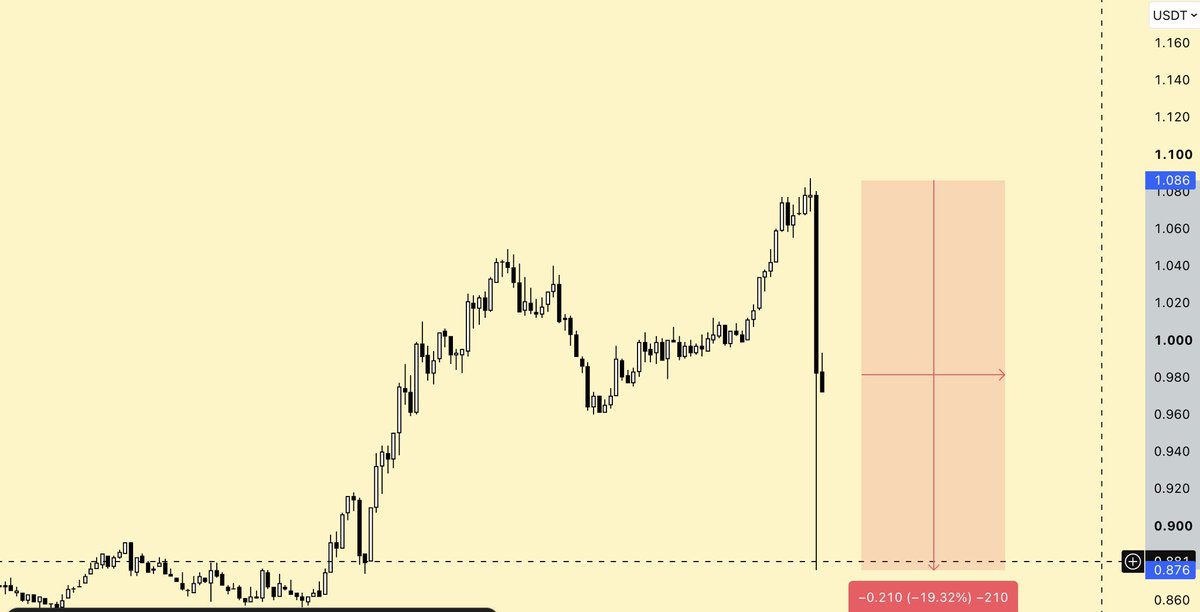
129950 粉丝
RT @Axel_bitblaze69: A few ways to earn yield on your ETH while holding it..
the returns range from 2.2% to 23%.. but they’re obviously not carrying the same risk..
here’s how each one works, where the yield comes from and what i’m doing with mine:
1) simple staking
you stake ETH and receive an LST that continues earning staking rewards while you hold it. current rates:
- native staking: 2.64%
- stETH: 2.21%
- weETH: 2.37%
- rETH: 2.17%
- WBETH: 2.32%
- cbETH: 2.43%
Lido takes 10% of the staking rewards, while Coinbase takes 25%..
WBETH and cbETH also add exchange custody risk..
but there’s no liquidation here.
this is the simple option if you want to keep holding ETH and earn around 2.2% to 2.6%.
2) The Aave loop
this is the only large ETH lending loop still paying something:
- deposit weETH on Aave
- borrow WETH against it
- use that WETH to buy more weETH
- deposit it again
- repeat
so weETH earns 2.37% while WETH currently costs 2.14% to borrow.
the difference is only 0.23%, so the higher return comes from repeating the loop with leverage.
at 90% LTV, the return becomes roughly 4.4%.
at 93% LTV, it becomes around 5.4%.
there’s already $3.35B of weETH deposited and $4.42B of WETH debt in this market.
but 93% LTV leaves only around 2% room before liquidation.
the median health factor across the largest weETH accounts is only 1.06.
in March, a 2.85% Aave oracle error liquidated 34 leveraged wstETH accounts.
so yes, you can double the staking yield..
but you’re adding liquidation, oracle and weETH/ETH price risk for another 2% to 3%.
3) LPs and vaults
GMX ETH/ETH on Arbitrum:
- 8.6% currently
- 4.8% over 30 days
- $19M deposited
you remain exposed to ETH and earn trading fees. but the pool also pays profitable traders, so this yield can move quickly.
Uniswap ETH/stablecoin pools:
- 7% to 23% average over 30 days
- $40M to $100M inside the larger pools
the fees are real, but half your position is held in stablecoins and you take impermanent loss if ETH moves hard.
Upshift HGETH:
- 5.5% to 6%
- $16M deposited
but this includes rsETH and airdrop exposure.
etherfi Liquid ETH vault:
- 2.9%
- $330M deposited
only around 0.5% more than holding weETH directly..
4) what currently doesn’t look worth it
Spark and Aave wstETH/WETH loops pay around 2.9% to 3.5%.
Fluid’s $226M wstETH/ETH loop is currently negative 2.7%.
Pendle ETH PTs have around $6M left and pay roughly 2.1%. simple staking pays more.
borrowing USDT or USDC against wstETH isn’t an ETH yield loop either.
you’re paying around 3.9% to make a leveraged ETH bet.
restaking has also faded:
- EigenLayer TVL: $22B peak to around $6.5B
- extra yield: roughly 0.1% to 0.6%
- weETHs: 3.5% with only $18M deposited
- rsETH: 2.29% with $1.1B deposited
normal weETH is now basically a plain LST after etherfi removed its EigenLayer exposure.
i’m also avoiding new rsETH positions after the Kelp bridge hack..
Ethena, HLP and Lighter LLP are stablecoin strategies, not ETH-in and ETH-out strategies..
ETHB and Coinbase staking routes only pay around 1.7% to 1.75%.
Aura, Karak and Aevo ETH vaults are mostly faded or too small.
so if i had 10 ETH to farm today:
- 8 ETH into stETH or weETH
- 1 ETH into GMX ETH/ETH or an ETH LP
- 1 ETH stays liquid
- 0 ETH inside a 90% to 93% Aave loop
yeah thats it… lemme know what y’all think
129950 粉丝
RT @Axel_bitblaze69: A few ways to earn yield on your ETH while holding it..
the returns range from 2.2% to 23%.. but they’re obviously not carrying the same risk..
here’s how each one works, where the yield comes from and what i’m doing with mine:
1) simple staking
you stake ETH and receive an LST that continues earning staking rewards while you hold it. current rates:
- native staking: 2.64%
- stETH: 2.21%
- weETH: 2.37%
- rETH: 2.17%
- WBETH: 2.32%
- cbETH: 2.43%
Lido takes 10% of the staking rewards, while Coinbase takes 25%..
WBETH and cbETH also add exchange custody risk..
but there’s no liquidation here.
this is the simple option if you want to keep holding ETH and earn around 2.2% to 2.6%.
2) The Aave loop
this is the only large ETH lending loop still paying something:
- deposit weETH on Aave
- borrow WETH against it
- use that WETH to buy more weETH
- deposit it again
- repeat
so weETH earns 2.37% while WETH currently costs 2.14% to borrow.
the difference is only 0.23%, so the higher return comes from repeating the loop with leverage.
at 90% LTV, the return becomes roughly 4.4%.
at 93% LTV, it becomes around 5.4%.
there’s already $3.35B of weETH deposited and $4.42B of WETH debt in this market.
but 93% LTV leaves only around 2% room before liquidation.
the median health factor across the largest weETH accounts is only 1.06.
in March, a 2.85% Aave oracle error liquidated 34 leveraged wstETH accounts.
so yes, you can double the staking yield..
but you’re adding liquidation, oracle and weETH/ETH price risk for another 2% to 3%.
3) LPs and vaults
GMX ETH/ETH on Arbitrum:
- 8.6% currently
- 4.8% over 30 days
- $19M deposited
you remain exposed to ETH and earn trading fees. but the pool also pays profitable traders, so this yield can move quickly.
Uniswap ETH/stablecoin pools:
- 7% to 23% average over 30 days
- $40M to $100M inside the larger pools
the fees are real, but half your position is held in stablecoins and you take impermanent loss if ETH moves hard.
Upshift HGETH:
- 5.5% to 6%
- $16M deposited
but this includes rsETH and airdrop exposure.
etherfi Liquid ETH vault:
- 2.9%
- $330M deposited
only around 0.5% more than holding weETH directly..
4) what currently doesn’t look worth it
Spark and Aave wstETH/WETH loops pay around 2.9% to 3.5%.
Fluid’s $226M wstETH/ETH loop is currently negative 2.7%.
Pendle ETH PTs have around $6M left and pay roughly 2.1%. simple staking pays more.
borrowing USDT or USDC against wstETH isn’t an ETH yield loop either.
you’re paying around 3.9% to make a leveraged ETH bet.
restaking has also faded:
- EigenLayer TVL: $22B peak to around $6.5B
- extra yield: roughly 0.1% to 0.6%
- weETHs: 3.5% with only $18M deposited
- rsETH: 2.29% with $1.1B deposited
normal weETH is now basically a plain LST after etherfi removed its EigenLayer exposure.
i’m also avoiding new rsETH positions after the Kelp bridge hack..
Ethena, HLP and Lighter LLP are stablecoin strategies, not ETH-in and ETH-out strategies..
ETHB and Coinbase staking routes only pay around 1.7% to 1.75%.
Aura, Karak and Aevo ETH vaults are mostly faded or too small.
so if i had 10 ETH to farm today:
- 8 ETH into stETH or weETH
- 1 ETH into GMX ETH/ETH or an ETH LP
- 1 ETH stays liquid
- 0 ETH inside a 90% to 93% Aave loop
yeah thats it… lemme know what y’all think
129950 粉丝
A few ways to earn yield on your ETH while holding it..
the returns range from 2.2% to 23%.. but they’re obviously not carrying the same risk..
here’s how each one works, where the yield comes from and what i’m doing with mine:
1) simple staking
you stake ETH and receive an LST that continues earning staking rewards while you hold it. current rates:
- native staking: 2.64%
- stETH: 2.21%
- weETH: 2.37%
- rETH: 2.17%
- WBETH: 2.32%
- cbETH: 2.43%
Lido takes 10% of the staking rewards, while Coinbase takes 25%..
WBETH and cbETH also add exchange custody risk..
but there’s no liquidation here.
this is the simple option if you want to keep holding ETH and earn around 2.2% to 2.6%.
2) The Aave loop
this is the only large ETH lending loop still paying something:
- deposit weETH on Aave
- borrow WETH against it
- use that WETH to buy more weETH
- deposit it again
- repeat
so weETH earns 2.37% while WETH currently costs 2.14% to borrow.
the difference is only 0.23%, so the higher return comes from repeating the loop with leverage.
at 90% LTV, the return becomes roughly 4.4%.
at 93% LTV, it becomes around 5.4%.
there’s already $3.35B of weETH deposited and $4.42B of WETH debt in this market.
but 93% LTV leaves only around 2% room before liquidation.
the median health factor across the largest weETH accounts is only 1.06.
in March, a 2.85% Aave oracle error liquidated 34 leveraged wstETH accounts.
so yes, you can double the staking yield..
but you’re adding liquidation, oracle and weETH/ETH price risk for another 2% to 3%.
3) LPs and vaults
GMX ETH/ETH on Arbitrum:
- 8.6% currently
- 4.8% over 30 days
- $19M deposited
you remain exposed to ETH and earn trading fees. but the pool also pays profitable traders, so this yield can move quickly.
Uniswap ETH/stablecoin pools:
- 7% to 23% average over 30 days
- $40M to $100M inside the larger pools
the fees are real, but half your position is held in stablecoins and you take impermanent loss if ETH moves hard.
Upshift HGETH:
- 5.5% to 6%
- $16M deposited
but this includes rsETH and airdrop exposure.
etherfi Liquid ETH vault:
- 2.9%
- $330M deposited
only around 0.5% more than holding weETH directly..
4) what currently doesn’t look worth it
Spark and Aave wstETH/WETH loops pay around 2.9% to 3.5%.
Fluid’s $226M wstETH/ETH loop is currently negative 2.7%.
Pendle ETH PTs have around $6M left and pay roughly 2.1%. simple staking pays more.
borrowing USDT or USDC against wstETH isn’t an ETH yield loop either.
you’re paying around 3.9% to make a leveraged ETH bet.
restaking has also faded:
- EigenLayer TVL: $22B peak to around $6.5B
- extra yield: roughly 0.1% to 0.6%
- weETHs: 3.5% with only $18M deposited
- rsETH: 2.29% with $1.1B deposited
normal weETH is now basically a plain LST after etherfi removed its EigenLayer exposure.
i’m also avoiding new rsETH positions after the Kelp bridge hack..
Ethena, HLP and Lighter LLP are stablecoin strategies, not ETH-in and ETH-out strategies..
ETHB and Coinbase staking routes only pay around 1.7% to 1.75%.
Aura, Karak and Aevo ETH vaults are mostly faded or too small.
so if i had 10 ETH to farm today:
- 8 ETH into stETH or weETH
- 1 ETH into GMX ETH/ETH or an ETH LP
- 1 ETH stays liquid
- 0 ETH inside a 90% to 93% Aave loop
yeah thats it… lemme know what y’all think
129950 粉丝
If ETH keeps pumping like this then
the money probably won’t stop at ETH.
it starts moving through the ecosystem.
some holders deposit ETH on Aave and borrow stablecoins against it…
those stablecoins move into Ethena and Pendle looking for yield..
more money moving around means more trading on Uniswap..
Ondo brings stocks and treasuries onchain.
Chainlink provides the prices and data these protocols need.
Lighter for degens to trade with leverage..
so the $ETH trade i’m watching is:
$AAVE: lending
$ENA: stablecoins
$PENDLE: yield
$UNI: trading
$ONDO: tokenized assets
$LINK: data
$LIT: Perps
ETH brings the money in.
these protocols give it somewhere to go.
now i want to find which tokens actually benefit when that activity grows…
129950 粉丝
$HYPE made a new ATH.
$LIT is sitting just below its ATH.
$PUMP is back around its ICO price.
$ENA is mooning.
$LINK is finally breaking out.
and $ETH is knocking on $2,500.
this is what i wanted to see since 2021 bull cycle.. not just one random coin pumping while everything else watches.
perps, DeFi, infrastructure and memes are all waking up together..
i genuinely don’t think i’ve ever been this bullish on Ethereum.
if ETH takes $2,500 and holds it, this probably stops being just an ETH rally..
the entire ecosystem gets its turn..
NEXT UP NFTs ?
129950 粉丝
$ENA is basically a bet that this market gets more leveraged..
here’s how it works in simple words:
Ethena creates USDe and protects it from market moves by opening short positions.
when traders become bullish and pile into leveraged longs, they pay funding fees to those shorts..
Ethena collects that money.
more funding means better yield for sUSDe holders..
better yield attracts more deposits.
more deposits grow USDe, which gives Ethena more capital to earn from.
that’s why a strong crypto market is usually good for Ethena..
USDe already has around $3.9B in supply and the protocol has generated over $1B in fees since launch..
but but but.. the catch..
that revenue does not currently create direct demand for ENA.
there’s no active fee switch, no ongoing protocol buyback and around 267M ENA still unlocks every month.
so i’m watching 3 things:
1) funding rates staying positive
2) USDe supply growing again
3) and Ethena finally using some revenue to benefit ENA.
if all 3 happen while ETH keeps moving, ENA becomes one of the more interesting ETH ecosystem trades.
until then, i must say the product is stronger than the token..
129950 粉丝
ethereum:0x514910771af9ca656af840dff83e8264ecf986ca moving.. send it
129950 粉丝
@commonsmade @mztacat @FastLife @vanshuETH hey @commonsmade vouch for @iamgaurangdesai
129950 粉丝
@commonsmade @mztacat @FastLife hey @commonsmade vouch for @vanshuETH
129950 粉丝
@commonsmade @mztacat hey @commonsmade vouch for my bro @FastLife
129950 粉丝
btw hey @commonsmade i vouch for @mztacat
129950 粉丝
I just came across this @commonsmade thing and.. i still don’t fully know where it goes.
but it’s new, and in a bull market sometimes you lower your iq a little and try the weird stuff before it makes complete sense.
the idea is pretty simple:
what would an airdrop look like if you couldn’t farm it for yourself?
so instead of clicking tasks, collecting points and grinding your own wallet.. someone else has to decide you deserve a place..
everyone gets 5 vouches and 5 slashes, but you can only give them to other people.
the top 1000 qualify.
your reputation is basically the farm.
no idea how big the bag is, what it’ll be worth or if it’s even worth anything.
but i haven’t seen an airdrop work like this before..
so let’s see..
129950 粉丝
RT @Axel_bitblaze69: $ASTER at $5.6B FDV exposed what might be the 2 cheapest catch up trades left rn..
$LIT and $PUMP lemme explain:
ASTER now sits at a $5.68B FDV.
first, Lighter. same business, so the comparison is simple:
• $35B vs $41B monthly volume
• $2.9M vs $4.5M monthly fees
• $1.07B vs $2.18B open interest
Lighter already does 85% of Aster’s volume and 65% of its fees.. at half the FDV.
Pumpfun is a different business, so comparing trading volume would be useless. compare the money instead:
• PUMP FDV: $3.45B
• ASTER FDV: $5.68B
• Pump launchpad fees: $38M
• Aster fees: $4.5M
• PUMP buybacks: $21.5M
• ASTER holder revenue: $3.5M
Pump produced 8x the fees and 6x the token demand over the past 30 days.. at 61% of Aster’s FDV.
the gap here is just too wide..
129950 粉丝
From the ETH ecosystem names i posted earlier, $LINK is the one i’m looking at closer now..
My thesis is pretty simple:
if tokenization becomes the next major rotation, everything moving onchain will need prices, reserve data, compliance and a way to move across chains.
Chainlink already does all of that.
the usage is there too..
- $39B oracle TVS, $4.9B CCIP volume last quarter, DTCC using Chainlink for its Collateral AppChain.
and now fees paid in fiat or other assets can be converted into LINK and added to the Reserve..
5M+ LINK accumulated. 42M+ staked.
no burn and no fees paid directly to holders though.. so the token capture still needs to prove itself.
LINK already pumped 30% this week, which is a good sign it has a momentum..
and plus CLARITY coming to a vote in September and DTCC going live in October,
$LINK is probably the cleanest tokenization bet i see within the ETH ecosystem rn.
what y’all think?
129950 粉丝
10/10 crash destroyed lives of many people..
it didn’t respect a single support, gave no one time to react and wiped out many people’s portfolio within minutes
now it’s time for the market to return the favor.. the same violence, but in the other direction.
manifesting everyone reading this makes back everything 10/10 took from them.. and much more..
129950 粉丝
$ASTER at $5.6B FDV exposed what might be the 2 cheapest catch up trades left rn..
$LIT and $PUMP lemme explain:
ASTER now sits at a $5.68B FDV.
first, Lighter. same business, so the comparison is simple:
• $35B vs $41B monthly volume
• $2.9M vs $4.5M monthly fees
• $1.07B vs $2.18B open interest
Lighter already does 85% of Aster’s volume and 65% of its fees.. at half the FDV.
Pumpfun is a different business, so comparing trading volume would be useless. compare the money instead:
• PUMP FDV: $3.45B
• ASTER FDV: $5.68B
• Pump launchpad fees: $38M
• Aster fees: $4.5M
• PUMP buybacks: $21.5M
• ASTER holder revenue: $3.5M
Pump produced 8x the fees and 6x the token demand over the past 30 days.. at 61% of Aster’s FDV.
the gap here is just too wide..
129950 粉丝
Lighter is undervalued asf…
And Out of everything on my ETH watchlist, $LIT is probably the one i’m watching closest rn..
my thesis is simple:
Lighter doesn’t need to become the next Hyperliquid..
it only needs to prove it deserves more than one third of Aster’s valuation.
you can see right now:
1) Lighter
- $674M market cap
- $9.95B weekly perp volume
- $1.07B open positions
- $1.11M weekly fees
Aster
- $1.97B market cap
- $11.39B weekly perp volume
- $2.18B open positions
- $1.13M weekly fees
so Lighter is doing nearly 90% of Aster’s volume at one-third of its valuation.
the bet is simple.. Robinhood turns that discount into real distribution.
btw the first weekly points drop is today.
the product is also expanding beyond crypto perps.
stock-token margin is live, while XAUt, S&P 500 and QQQ assets were just registered.
options and pre-IPO markets could add more.. but i’m not counting them until they actually ship.
the only risk is Dec 30.
vesting begins on the 50% team + investor allocation at roughly 3.2M LIT per week.
current buybacks are nowhere close to absorbing that if recipients sell.
so i like $LIT as a multiple-reversion trade against Aster..
not as “the next Hyperliquid.”
129950 粉丝
Now comes the biggest test yet for $BTC
it’s once again testing the 50W & 100W EMAs around $77K–$78K
close the week above it and $94K is next.
get rejected and fall below $72K, and this was probably just a relief rally.
simple. all eyes on weekly close.. https://twitter.com/Axel_bitblaze69/status/2090763058205671933/photo/1

129950 粉丝
BTC ran from $63K straight into the only resistance that matters rn..
$77.2K–$78.5K:
- 50W EMA
- 100W EMA
- previous breakdown level
weekly close above → $94K next.
reject and lose $72.6K → probably just shorts getting cooked.
great pump.. now close it. https://twitter.com/Axel_bitblaze69/status/2090758036801655134/photo/1

129950 粉丝
its already 3:30 pm here.. 😭
- i woke up at 8
- opened X before even getting out of bed
- said i’ll shower after this candle.. like 12 candles ago
- missed the gym today
- haven’t eaten anything
- checked prices like 50 times
- already mentally spent profits i haven’t even made yet
- opened the same charts 20 times even though nothing changed
- convinced myself i’m monitoring the market when i’m basically just refreshing prices
- meal timing completely destroyed
- don’t think i will sleep on time tonight
bull market is so back and i already hate it
129950 粉丝
ETH is finally outperforming SOL on this move..
so yeah, i’m reopening my Ethereum ecosystem watchlist..
here’s what i’m actually watching:
1) ETH itself
$2,250 is the line for me.
lose it and this was probably another squeeze.
get acceptance above $2,500 and i’ll start moving further down the ETH beta curve.
2) ETF flows
Aug 20 printed roughly +$220M.
now i want the next 5 sessions.
one good day can be chasing.. a full week of inflows tells me there’s an actual bid.
3) $ENA / $LINK / $AAVE
$ENA
$LINK
$AAVE
they’re already leading ETH, so these are first on my pullback list.
ENA for synthetic-dollar beta.
LINK for the oracle + RWA trade.
AAVE because V4 is live and lending should benefit if capital returns onchain.
with AAVE, i’m also watching weETH and wstETH against ETH.
if these staked-ETH wrappers start trading 8–9% below ETH, leveraged positions can unwind very quickly.
4) Robinhood Chain
i’m watching activity here.. not inventing a token.
gas subsidies end Sep 29.
if trading and mints remain active after that, Robinhood may have brought real users onchain.
if activity disappears with free gas.. we know what it was.
5) $LIT
Lighter is already near $1B in TVS
one of the few newer Ethereum L2s where the token has size and the product has actual usage.
6) the institutional bid
BitMine owns roughly 4.8% of the ETH supply and is still buying toward 5%.
ETHB has also taken in around $607M since launch.
i’ll be watching ETHB against ETHA now.
if institutions start choosing staking yield over plain spot exposure, that’s a much bigger signal than another roadmap announcement.
7) tokenization
$ONDO only becomes a serious watch if BUIDL and USDS keep growing with it.
otherwise it’s just the ticker catching the narrative.
WHAT IM NOT WATCHING:
- OP / ARB / STRK / ZK just because ETH moved
- restaking until the TVL actually stabilizes
- Glamsterdam as a September catalyst
without a confirmed mainnet date
- Fusaka as “upcoming” when it already shipped
- Base creator coins
for now i need 3 things:
ETH above $2,500.
another week of ETF inflows.
Robinhood activity surviving the end of gas subsidies.
if those confirm, then i’ll start digging much deeper into the Ethereum ecosystem.
129950 粉丝
i think the easiest way to mess up this move is waiting for the perfect retest..
months of down only trained CT to sell the first ugly red candle
now those same wipeouts are getting bought and V reversing before you even finish drawing the support..
so i’m keeping it simple.
$ETH is leading the majors.
$HYPE perps will continue to get hot in the green market. so higher
$PUMP continues to generate more revenue each day so higher
$LIT and $LINK another ones i have a position..
i don’t need 20 trades here.
i just need to stop getting shaken out of the few trades i actually want..
129950 粉丝
Anthropic IPO could be the biggest stress test for this crypto rally..
it’s exactly the kind of event that should pull attention and speculative money back into AI.. and many will want to chase the new shiny thing.
so i’ll be watching crypto more than Anthropic that day.
if BTC, ETH and alts hold up without money rotating out to chase the IPO, i’d take that as a strong sign that the AI trade has already peaked and crypto now has the stronger bid..
if crypto survives that, i’ll be even more bullish on this rally continuing..
lets see
129950 粉丝
Ok so, how long does this crypto rally keep going ?
imo the longer the CLARITY Act takes, the longer the market has something to keep running towards..
remember the ETF trade.. ?
crypto pumped for months on every filing, meeting and approval rumour.
once the approval finally came, the trade had already been front-run and we got the sell the news move.
could be similar here.
every delay keeps the CLARITY Act ahead of us, while every White House meeting and “almost there” headline gives the market another reason to stay bid.
so weirdly, i’m not in a rush for it to pass.
as long as approval feels close but hasn’t arrived yet, crypto may keep pumping in anticipation.
what y’all think?
129950 粉丝
RT @Axel_bitblaze69: I will post one useful crypto market workflow every day.
MCPs, plugins, skills, repos, automations.. whatever actually helps us read the market better and faster..
every post will include the setup + exact prompt so you can build it with me inside Claude.
i’m gonna share a lot of alpha./
and yeah.. expect even more inside my X subscriptions, so feel free to join me there too..
see you tomorrow.
GN everyone
129950 粉丝
$5.3B in spot Bitcoin ETF volume today..
and $4.44B of it came from BlackRock alone.
that’s 83% of all the volume through one fund.
sounds bullish as hell.. but this is where most of you on CT gets caught.
volume is not inflow.
it tells you how much traded, not whether institutions were net buying or selling.
which is exactly why our first workflow tomorrow won’t just see a big ETF number and scream “institutional demand.”
we’re making Claude cross check ETF flows with spot buying, OI, funding and liquidations..
129950 粉丝
I will post one useful crypto market workflow every day.
MCPs, plugins, skills, repos, automations.. whatever actually helps us read the market better and faster..
every post will include the setup + exact prompt so you can build it with me inside Claude.
i’m gonna share a lot of alpha./
and yeah.. expect even more inside my X subscriptions, so feel free to join me there too..
see you tomorrow.
GN everyone
129950 粉丝
You can now long SpaceX with USD1..
Aster just listed a SpaceX perp, along with gold, oil, SanDisk and SK Hynix. all priced and settled in USD1..
this is probably more important for USD1 than SpaceX
why because,
USDT became difficult to replace because traders already keep it on exchanges and most markets are quoted in it.
you don’t buy USDT before every trade.. it’s already sitting there..
USD1 is trying to create that same habit.
and for that World Liberty is putting 250M WLFI behind these markets and Aster is adding $12.5M USD1, right after World Liberty Trust Company received preliminary OCC approval.
man.. if traders start keeping USD1 ready before they even know what they want to trade next, that’s when it becomes a real USDT competitor.. lets see
129950 粉丝
RT @Axel_bitblaze69: Kaito came back a few days ago and crypto finally woke up yesterday..
CT might actually be fun again.
btw how’s my Aura score looking on Kaito? https://twitter.com/Axel_bitblaze69/status/2090400815550980302/photo/1
129950 粉丝
RT @Axel_bitblaze69: This cycle won’t be you vs another trader.
it’ll be you manually refreshing 20 tabs vs another with 10 AI bots watching the market for him..
- wallets move.
- funding flips.
- news drops.
- narratives rotate.
and by the time you connect it all, the second already got pinged.
pretty obvious who eats this cycle.
i’m building my setup in public over the next few weeks.
most of it stays free… but subscribers on X get the actual bots, prompts, workflows and alpha for a small fee.
no $999 course bullshit.
129950 粉丝
@WatcherGuru Ai tops here..
no wonder why rotation to crypto started yesterday… this likely continues
129950 粉丝
RT @Axel_bitblaze69: Things i’m interested in
and things i’m avoiding during this bull market..
Starting with what i’m not interested in:
1) another general purpose L1 promising faster and cheaper transactions..
2) most L2 tokens. the network can succeed without creating any meaningful demand for the token itself.
3) low float, high-FDV launches where retail gets a tiny part of the supply and spends the next two years absorbing unlocks.
4) coins with no working product, no users and a roadmap doing all the work.
5) protocols where most of the activity disappears the moment points, emissions and incentives stop..
6) governance tokens with no utility, fee claim or reason to hold them beyond hoping someone else pays more.
7) buybacks being used to make a weak product look investable. buybacks only matter when sustainable revenue is funding them.
8) old-cycle coins relying entirely on a catch-up trade. being 90% below ATH doesn’t automatically make something cheap..
What i’m interested in:
1) retail-native products. Pumpfun is the easiest example. it takes seconds to understand, already owns distribution and makes money whenever speculation returns.
2) Onchain trading and perps. Hyperliquid and Lighter offer something traders already want: leverage, speed and markets that never close.
3) stablecoins and payments. probably the clearest path toward crypto reaching users who don’t care about crypto itself.
4) tokenized stocks and RWAs. bringing traditional assets onchain creates real demand for data, liquidity, credit and settlement.
5) prediction markets. easy to understand, useful beyond crypto and naturally better as more liquidity enters.
6) AI and robotics. specifically where crypto coordinates payments, compute, training data or physical machines. not another chatbot with a token.
7) DeFi credit. lending becomes much more interesting as stablecoins, tokenized assets and institutions move onchain.
8) privacy and identity. AI agents and onchain finance will eventually need private payments and ways to verify users without exposing everything.
basically,
i want products retail can understand without reading a thread, distribution that isn’t rented and tokens that benefit directly when the product grows..
129950 粉丝
RT @Axel_bitblaze69: My thesis on crypto from here is pretty simple..
The move crypto just pulled especially ETH is quite something…
After months of terrible sentiment, majors started moving and alts printed double digits while barely anyone was positioned for it.
that alone will bring attention back.
AI was already starting to lose the timeline.
new models keep launching, benchmarks improve slightly, but nothing feels new enough to hold attention for long.
and the S&P rally was beginning to feel extended too..
so crypto is sitting in the perfect place for the next rotation..
it has volatility, fresh catalysts, underpositioned traders and finally some price action people can chase again.
imo crypto becomes the main risk-on trade again from here.. and once the timeline notices where the money is being made, attention will follow very quickly.
129950 粉丝
and yeah this cycle is going to be brutally unfair to anyone trying to track crypto manually..
there’s too much happening at once..
the traders who eat will have AI bots watching all of it, connecting the dots and sending the alert before they even open X.
i’m building these systems rn and will share the exact bots, MCPs, prompts and workflows
129950 粉丝
This cycle won’t be you vs another trader.
it’ll be you manually refreshing 20 tabs vs another with 10 AI bots watching the market for him..
- wallets move.
- funding flips.
- news drops.
- narratives rotate.
and by the time you connect it all, the second already got pinged.
pretty obvious who eats this cycle.
i’m building my setup in public over the next few weeks.
most of it stays free… but subscribers on X get the actual bots, prompts, workflows and alpha for a small fee.
no $999 course bullshit.
129950 粉丝
Things i’m interested in
and things i’m avoiding during this bull market..
Starting with what i’m not interested in:
1) another general purpose L1 promising faster and cheaper transactions..
2) most L2 tokens. the network can succeed without creating any meaningful demand for the token itself.
3) low float, high-FDV launches where retail gets a tiny part of the supply and spends the next two years absorbing unlocks.
4) coins with no working product, no users and a roadmap doing all the work.
5) protocols where most of the activity disappears the moment points, emissions and incentives stop..
6) governance tokens with no utility, fee claim or reason to hold them beyond hoping someone else pays more.
7) buybacks being used to make a weak product look investable. buybacks only matter when sustainable revenue is funding them.
8) old-cycle coins relying entirely on a catch-up trade. being 90% below ATH doesn’t automatically make something cheap..
What i’m interested in:
1) retail-native products. Pumpfun is the easiest example. it takes seconds to understand, already owns distribution and makes money whenever speculation returns.
2) Onchain trading and perps. Hyperliquid and Lighter offer something traders already want: leverage, speed and markets that never close.
3) stablecoins and payments. probably the clearest path toward crypto reaching users who don’t care about crypto itself.
4) tokenized stocks and RWAs. bringing traditional assets onchain creates real demand for data, liquidity, credit and settlement.
5) prediction markets. easy to understand, useful beyond crypto and naturally better as more liquidity enters.
6) AI and robotics. specifically where crypto coordinates payments, compute, training data or physical machines. not another chatbot with a token.
7) DeFi credit. lending becomes much more interesting as stablecoins, tokenized assets and institutions move onchain.
8) privacy and identity. AI agents and onchain finance will eventually need private payments and ways to verify users without exposing everything.
basically,
i want products retail can understand without reading a thread, distribution that isn’t rented and tokens that benefit directly when the product grows..
129950 粉丝
RT @Axel_bitblaze69: Yesterday’s, White House crypto meeting gave me a much clearer idea of which alts i want on my watchlist right now
Trump met with some of the biggest names across crypto and traditional finance.
Coinbase, Ripple, Robinhood, Chainlink, Kraken, Gemini, a16z, Paradigm, Nasdaq and ICE/NYSE were represented, alongside the SEC and CFTC chairs..
what actually came out of it:
- Trump pushed for a “fair” CLARITY Act
- the SEC is working on easier rules for token launches
- the CFTC is exploring how to bring perps onshore
- bringing Hyperliquid into the US legally was mentioned
- buying sizable amounts of BTC and other crypto has been discussed
so these are the coins i’m watching around it:
$HYPE : the clearest direct play. legal US access could bring new users and institutional products, while protocol fees continue buying and burning HYPE.
$LIT - Lighter’s founder sits on the CFTC Innovation Advisory Committee. add Robinhood distribution and daily fee-funded buybacks that are later burned.
$LINK - Sergey was in the room. stablecoins, tokenized stocks and funds all need reliable data and connectivity, while network revenue is now accumulating LINK through the Chainlink Reserve.
$ETH - most stablecoins, DeFi and tokenized assets still settle around Ethereum. staking ETFs and Glamsterdam give it separate catalysts too.
$SOL - the higher-beta ecosystem bet. Alpenglow, growing stablecoin activity and tokenized assets, plus the retail and memecoin activity that usually returns when risk appetite improves.
$ONDO - probably the cleanest pure tokenization narrative. its products are already expanding into the regulated US market, although direct value capture for ONDO still needs work.
$AAVE - V4 is now live and better suited for institutional and RWA-backed credit. i’d become more interested in the token if its paused buybacks return.
$PUMP - the pure risk-on bet. 50% of protocol fees currently buy and burn PUMP, so another memecoin wave would feed directly into token demand. unlocks remain the main risk.
for now $HYPE / $LIT / $PUMP are the 3 i’m watching closest..
will keep adding names only when i find a real catalyst behind them.
129950 粉丝
Pumpfun chart is screaming that airdrop is near.. https://twitter.com/Axel_bitblaze69/status/2090417109755138285/photo/1

129950 粉丝
Kaito came back a few days ago and crypto finally woke up yesterday..
CT might actually be fun again.
btw how’s my Aura score looking on Kaito? https://twitter.com/Axel_bitblaze69/status/2090400815550980302/photo/1
129950 粉丝
My thesis on crypto from here is pretty simple..
The move crypto just pulled especially ETH is quite something…
After months of terrible sentiment, majors started moving and alts printed double digits while barely anyone was positioned for it.
that alone will bring attention back.
AI was already starting to lose the timeline.
new models keep launching, benchmarks improve slightly, but nothing feels new enough to hold attention for long.
and the S&P rally was beginning to feel extended too..
so crypto is sitting in the perfect place for the next rotation..
it has volatility, fresh catalysts, underpositioned traders and finally some price action people can chase again.
imo crypto becomes the main risk-on trade again from here.. and once the timeline notices where the money is being made, attention will follow very quickly.
129950 粉丝
Yesterday’s, White House crypto meeting gave me a much clearer idea of which alts i want on my watchlist right now
Trump met with some of the biggest names across crypto and traditional finance.
Coinbase, Ripple, Robinhood, Chainlink, Kraken, Gemini, a16z, Paradigm, Nasdaq and ICE/NYSE were represented, alongside the SEC and CFTC chairs..
what actually came out of it:
- Trump pushed for a “fair” CLARITY Act
- the SEC is working on easier rules for token launches
- the CFTC is exploring how to bring perps onshore
- bringing Hyperliquid into the US legally was mentioned
- buying sizable amounts of BTC and other crypto has been discussed
so these are the coins i’m watching around it:
$HYPE : the clearest direct play. legal US access could bring new users and institutional products, while protocol fees continue buying and burning HYPE.
$LIT - Lighter’s founder sits on the CFTC Innovation Advisory Committee. add Robinhood distribution and daily fee-funded buybacks that are later burned.
$LINK - Sergey was in the room. stablecoins, tokenized stocks and funds all need reliable data and connectivity, while network revenue is now accumulating LINK through the Chainlink Reserve.
$ETH - most stablecoins, DeFi and tokenized assets still settle around Ethereum. staking ETFs and Glamsterdam give it separate catalysts too.
$SOL - the higher-beta ecosystem bet. Alpenglow, growing stablecoin activity and tokenized assets, plus the retail and memecoin activity that usually returns when risk appetite improves.
$ONDO - probably the cleanest pure tokenization narrative. its products are already expanding into the regulated US market, although direct value capture for ONDO still needs work.
$AAVE - V4 is now live and better suited for institutional and RWA-backed credit. i’d become more interested in the token if its paused buybacks return.
$PUMP - the pure risk-on bet. 50% of protocol fees currently buy and burn PUMP, so another memecoin wave would feed directly into token demand. unlocks remain the main risk.
for now $HYPE / $LIT / $PUMP are the 3 i’m watching closest..
will keep adding names only when i find a real catalyst behind them.
129950 粉丝
yeah the markets are pumping..
but the edge is knowing if the move is real, where money rotates next and when the trade gets overcrowded ?
so, i’m building an AI crypto trading desk..
one task a day.
would you be interested?
129950 粉丝
This $ETH move looks very similar to what followed the April 2025 bottom
both times ETH bottomed around $1500 spent weeks coiling below $1950
then gave its first impulse into almost exact same $2.4K area
imo some sideways chop here.. maybe one trap lower before next leg up https://twitter.com/Axel_bitblaze69/status/2090352344513106415/photo/1

129950 粉丝
RT @Axel_bitblaze69: Next stop is THE MOON..
i created this using @newtake_kr
#nextscenechallenge #newtake https://twitter.com/Axel_bitblaze69/status/2090167936980021555/video/1
🎬
视频
129950 粉丝
RT @Axel_bitblaze69: Are you on the train to the moon yet ?
cuz BTC was handed every reason to lose $60K.. and refused..
Strategy alone sold 6,916 BTC worth around $429M from late June through August 9.
most of it was sold around the $59K to $64K area, directly into the most important support on the chart..
then Bitcoin ETFs saw another $385M leave in one week.
sentiment was back at extreme fear and retail interest was near its lowest level in years..
$60K had every reason to break.
sellers kept hitting the market and BTC just kept absorbing it.
that was the sign.
when genuinely bad news and hundreds of millions in forced selling can no longer push price lower, the market is telling you something.
now BTC has reclaimed $69K for the first time in nearly 3 months and more than $1B of crypto shorts got liquidated in an hour.
ETH is back above $2,100.
ETH/BTC has also broken out of the weekly downtrend it was stuck in for almost a year.
and the background is finally helping instead of fighting us..
the US Treasury just doubled its long-term bond buybacks to at least $4B per operation starting in September.
yields dropped, the dollar weakened and risk assets immediately moved higher.
Trump hosted crypto executives at the White House today and pushed Congress to pass the CLARITY Act.
the SEC is proposing easier rules for projects to issue tokens and raise money.
and the CFTC is apparently working on bringing Hyperliquid into the US in a fully legal and compliant way.
think about how different that is from where we were..
so now we have BTC absorbing massive selling around support, shorts getting trapped, ETH beginning to outperform and the regulatory side turning into an actual catalyst..
Higher!
129950 粉丝
RT @Axel_bitblaze69: ETH/BTC doing what i was waiting for before taking the altseason talk seriously..
ETH going up in USD is good sign
next big test is 0.032
but we already seeing majors moving.. up 5% on average.. almost every major. 👀 https://twitter.com/Axel_bitblaze69/status/2090137980069687670/photo/1

129950 粉丝
Are you on the train to the moon yet ?
cuz BTC was handed every reason to lose $60K.. and refused..
Strategy alone sold 6,916 BTC worth around $429M from late June through August 9.
most of it was sold around the $59K to $64K area, directly into the most important support on the chart..
then Bitcoin ETFs saw another $385M leave in one week.
sentiment was back at extreme fear and retail interest was near its lowest level in years..
$60K had every reason to break.
sellers kept hitting the market and BTC just kept absorbing it.
that was the sign.
when genuinely bad news and hundreds of millions in forced selling can no longer push price lower, the market is telling you something.
now BTC has reclaimed $69K for the first time in nearly 3 months and more than $1B of crypto shorts got liquidated in an hour.
ETH is back above $2,100.
ETH/BTC has also broken out of the weekly downtrend it was stuck in for almost a year.
and the background is finally helping instead of fighting us..
the US Treasury just doubled its long-term bond buybacks to at least $4B per operation starting in September.
yields dropped, the dollar weakened and risk assets immediately moved higher.
Trump hosted crypto executives at the White House today and pushed Congress to pass the CLARITY Act.
the SEC is proposing easier rules for projects to issue tokens and raise money.
and the CFTC is apparently working on bringing Hyperliquid into the US in a fully legal and compliant way.
think about how different that is from where we were..
so now we have BTC absorbing massive selling around support, shorts getting trapped, ETH beginning to outperform and the regulatory side turning into an actual catalyst..
Higher!
129950 粉丝
Next stop is THE MOON..
i created this using @newtake_kr
#nextscenechallenge #newtake https://twitter.com/Axel_bitblaze69/status/2090167936980021555/video/1
🎬
视频
129950 粉丝
Trump says the SEC chair is working to bring Hyperliquid into the US
means onchain perps have a White House narrative.
and plus.. majors are already moving.. market conditions are favourable to trade again
perps are about to get stupidly hot
$HYPE and $LIT gets the direct bid https://twitter.com/Axel_bitblaze69/status/2090160871297437861/photo/1


129950 粉丝
Now that majors are moving again and market conditions are getting more favorable for trading…
expecting perps to get super hot from here.
$HYPE STRAIGHT BACK TO ATH WE GO.
Hyperliquid. https://twitter.com/Axel_bitblaze69/status/2090156624782704829/photo/1

129950 粉丝
RT @Axel_bitblaze69: BTC and ETH and majors suddenly started pumping just now so i gave Grok Bot one job..
figure out if a bottom is forming or if i’m about to chase another random bounce.
i made it set up 5 agents:
1) one tracks spot volume and CVD to see if real buyers are coming in
2) one watches open interest, funding and liquidations to catch short squeezes
3) one checks exchange flows, stablecoin inflows and whale wallets
4) one compares the setup with the last 10 local bottoms
5) and one is told to stay bearish and find every reason the move could fail
every 30 minutes, Grok Bot pulls their findings into one report and gives the bounce a score from 0 to 100..
it shows me what is driving the move, what changed since the last report, where the bounce breaks down and whether the entry is already too late.
i also told it to ping me only if the score changes by 15 points or BTC/ETH breaks one of the levels it is watching.
so no constant notifications every time a candle turns green.
so yeah it can watch the market, question the move and alert me..
every random pump like this has to survive the same test before i touch it.

129950 粉丝
ETH/BTC doing what i was waiting for before taking the altseason talk seriously..
ETH going up in USD is good sign
next big test is 0.032
but we already seeing majors moving.. up 5% on average.. almost every major. 👀 https://twitter.com/Axel_bitblaze69/status/2090137980069687670/photo/1
129950 粉丝
BTC and ETH and majors suddenly started pumping just now so i gave Grok Bot one job..
figure out if a bottom is forming or if i’m about to chase another random bounce.
i made it set up 5 agents:
1) one tracks spot volume and CVD to see if real buyers are coming in
2) one watches open interest, funding and liquidations to catch short squeezes
3) one checks exchange flows, stablecoin inflows and whale wallets
4) one compares the setup with the last 10 local bottoms
5) and one is told to stay bearish and find every reason the move could fail
every 30 minutes, Grok Bot pulls their findings into one report and gives the bounce a score from 0 to 100..
it shows me what is driving the move, what changed since the last report, where the bounce breaks down and whether the entry is already too late.
i also told it to ping me only if the score changes by 15 points or BTC/ETH breaks one of the levels it is watching.
so no constant notifications every time a candle turns green.
so yeah it can watch the market, question the move and alert me..
every random pump like this has to survive the same test before i touch it.
129950 粉丝
$ETH back above $2000
Life isn’t that tough afterall https://twitter.com/Axel_bitblaze69/status/2090094238784725475/video/1
🎬
视频
129950 粉丝
This is how i would automate my life with Grok Bot from scratch..
first i’d spend some time writing down everything i keep doing.. like my daily routine from morning to night..
it could be:
- what i check every morning
- messages i send repeatedly
- files i keep updating
- things i usually forget
- any decision where i follow almost the same rules every time
for every task, i’d note what starts it, which apps i use, what information it needs and what the finished result looks like..
then i’d give that list to Grok Bot with this prompt:
“study everything i did this week and find what is worth automating. for every task, tell me:
how often i do it
how much time it takes
what triggers it
which apps or plugins it needs
what could go wrong
whether i should keep doing it myself, let AI prepare it, approve it before AI acts, or automate it fully
rank the safest tasks that would save me the most time first.”
then i’d pick one boring task i do constantly.
i’d tell Grok Bot exactly when to start, what to check, what result i expect, when it must ask me and where it should save the work.
then run it manually 5 times.
every time it makes a mistake, add that mistake to its instructions and run it again.
once it completes 5 clean runs, turn it into a routine and let it run in the background..
every sunday i’d ask Grok Bot which routines saved me time, which ones needed help and what i kept doing manually that could be next..
129950 粉丝
Wow this is actually big..
$WLFI is slowly building the bank behind USD1..
the OCC gave them conditional approval to open a national trust bank.
if they clear the remaining checks, they can issue USD1, hold its reserves, manage custody and handle conversions themselves…
BitGo handles the custody today.
this gives USD1 a much stronger pitch when WLFI talks to exchanges and corporate treasuries.
the full setup would sit under one company and one federal regulator.
WLFI also keeps more of the fees and gets more control over how USD1 moves.
approval is still conditional though. they need $20M in capital, audits, compliance systems and final OCC checks.
but the direction looks obvious..
they’re building USD1 for much bigger flows than people swapping stables onchain.
中文: 哇,这其实很大。
美元价值与银行正在逐步建立美元背后的银行。
OCC 给予他们有条件批准开设一家全国性信托银行。
如果他们清关剩余的支票,就可以发放1美元,持有其储备,管理托管权,并自行处理换算......
BitGo 负责处理今天的托管事宜。
当WLFI与交易所和企业国债进行交流时,这使1美元的推手更加强势。
完整的配置将由一家公司和一家联邦监管机构进行。
WLFI 还保留了更多费用,并对 USD1 的走势有更多控制。
批准仍然有条件,他们需要2000万美元的资本、审计、合规系统以及最终的OCC支票。
但方向看起来显而易见。
他们正在建设比人们更换链上马厩更大的流量。
129950 粉丝
This is actually big..
$WLFI is slowly building the bank behind USD1..
the OCC gave them conditional approval to open a national trust bank.
if they clear the remaining checks, they can issue USD1, hold its reserves, manage custody and handle conversions themselves…
BitGo handles the custody today.
this gives USD1 a much stronger pitch when WLFI talks to exchanges and corporate treasuries.
the full setup would sit under one company and one federal regulator.
WLFI also keeps more of the fees and gets more control over how USD1 moves.
approval is still conditional though. they need $20M in capital, audits, compliance systems and final OCC checks.
but the direction looks obvious..
they’re building USD1 for much bigger flows than people swapping stables onchain.
中文: 这其实很大。
美元价值与银行正在逐步建立美元背后的银行。
OCC 给予他们有条件批准开设一家全国性信托银行。
如果他们清关剩余的支票,就可以发放1美元,持有其储备,管理托管权,并自行处理换算......
BitGo 负责处理今天的托管事宜。
当WLFI与交易所和企业国债进行交流时,这使1美元的推手更加强势。
完整的配置将由一家公司和一家联邦监管机构进行。
WLFI 还保留了更多费用,并对 USD1 的走势有更多控制。
批准仍然有条件,他们需要2000万美元的资本、审计、合规系统以及最终的OCC支票。
但方向看起来显而易见。
他们正在建设比人们更换链上马厩更大的流量。
129950 粉丝
RT @Axel_bitblaze69: If you’re moving from Claude Code or Codex to Grok Bot, don’t dump your entire memory into one Bot..
you’ll end up with one confused agent carrying context it never needed..
i been stress testing Grok Bot for almost a week and i’m now moving my main workflow there with Cursor..
so i wrote a prompt that turns my current setup into separate context packs for each Bot..
one shared profile, one file per role, recurring routines, tool access and clear handoff rules.
it also leaves out every credential and private file.
paste this into Claude Code or Codex:
“Prepare my current setup for Grok Bot.
Inspect this project and my existing agent configuration files, including skills, memory files, CLAUDE.md, AGENTS.md, saved commands and workflow docs.
Do not read or include .env files, API keys, passwords, cookies, wallet data, private keys, seed phrases or session files.
Create a folder called grok-bot-migration containing:
1) shared-profile.md
My goals, preferences, writing style, business context and rules every Bot should know.
2) bot-roster.md
Suggest the smallest useful team of Bots based on my real workflows. Give each one a role, responsibility and clear boundary.
3) bots/
Create one markdown file per Bot containing its purpose, required context, recurring work, inputs, expected outputs, tools and when it should ask for approval.
4) routines/
Turn every recurring workflow into a separate file with its trigger, steps, frequency, success check and which Bot owns it.
5) skills/
Copy reusable skill files and remove duplicates. Do not rewrite instructions unless something is outdated or unclear.
6) tools.md
List the MCPs, connectors and tools I use, what each is for and which Bot needs it. Include names only, never credentials.
7) handoffs.md
Explain when Bots should message each other, what context they should pass and who owns the final result.
8) migration-checklist.md
Give me the exact order to create the Bots, add their context and test each workflow.
Do not modify or delete my original files.
Flag missing information instead of inventing it.
Keep shared context small. Put specialist information only inside the Bot that needs it.”
this should save me from rebuilding years of context one Bot at a time..
中文: RT @Axel_bitblaze69:如果你要从Claude Code或Codex迁移到Grok Bot,不要将整个内存丢弃到一个机器人中。
你最终会有一个困惑的代理人,它承载着它永远不需要的环境。
我一直在对Grok Boot进行压力测试,现在我正通过Cursor来推动我的主要工作流程。
因此,我编写了一个提示,将我当前的设置转换为每个机器人的独立上下文包。
一个共享配置文件,每个角色一个文件,循环程序,工具访问和清晰的交配规则。
它还会遗漏每个凭据和私密文件。
将此粘贴到克劳德代码或法典中:
为Grok Boot准备我的当前配置。
检查此项目以及我现有的代理配置文件,包括技能、内存文件、CLAUDE.md、AGENTS.md、保存的命令和工作流文档。
请勿读取或包含.env文件、API密钥、密码、Cookie、钱包数据、私钥、种子短语或会话文件。
创建一个名为 grok-bot-migration 的文件夹,其中包含:
1) 共享-profile.md
我的目标、偏好、写作风格、商业背景以及每个机器人都应该了解的规则。
2) bot-roster.md
根据我的真实工作流程,推荐最微小的实用机器人团队。给每个人一个角色、责任和明确的界限。
3)机器人/
为每个机器人创建一个标记下降文件,其中包含其目的、所需上下文、循环工作、输入、预期输出、工具,以及何时需要审批。
4) 日常习惯
将每个循环工作流程都变成一个独立的文件,并使用其触发器、步骤、频率、成功检查以及 Boot 拥有的文件。
5)技能/
复制可重用的技能文件并删除重复文件。除非内容过时或不明确,否则不要重写指令。
6) 工具。
列出我使用的 MCP、连接器和工具,每个工具的用途以及 Boot 需要哪些。仅包含姓名,绝不包含凭据。
7) 手接
说明机器人何时应该相互传递信息,应通过什么环境,以及最终结果的拥有者。
8) 迁移-检查列表
给我确切的顺序来创建机器人、添加上下文并测试每个工作流程。
请勿修改或删除我的原始文件。
标记缺失的信息,而不是发明它。
保持小而共享的语境。只将专业信息放入需要的机器人内部。
这应该会让我避免一次一次地重建多年的背景。
129950 粉丝
If you’re moving from Claude Code or Codex to Grok Bot, don’t dump your entire memory into one Bot..
you’ll end up with one confused agent carrying context it never needed..
i been stress testing Grok Bot for almost a week and i’m now moving my main workflow there with Cursor..
so i wrote a prompt that turns my current setup into separate context packs for each Bot..
one shared profile, one file per role, recurring routines, tool access and clear handoff rules.
it also leaves out every credential and private file.
paste this into Claude Code or Codex:
“Prepare my current setup for Grok Bot.
Inspect this project and my existing agent configuration files, including skills, memory files, CLAUDE.md, AGENTS.md, saved commands and workflow docs.
Do not read or include .env files, API keys, passwords, cookies, wallet data, private keys, seed phrases or session files.
Create a folder called grok-bot-migration containing:
1) shared-profile.md
My goals, preferences, writing style, business context and rules every Bot should know.
2) bot-roster.md
Suggest the smallest useful team of Bots based on my real workflows. Give each one a role, responsibility and clear boundary.
3) bots/
Create one markdown file per Bot containing its purpose, required context, recurring work, inputs, expected outputs, tools and when it should ask for approval.
4) routines/
Turn every recurring workflow into a separate file with its trigger, steps, frequency, success check and which Bot owns it.
5) skills/
Copy reusable skill files and remove duplicates. Do not rewrite instructions unless something is outdated or unclear.
6) tools.md
List the MCPs, connectors and tools I use, what each is for and which Bot needs it. Include names only, never credentials.
7) handoffs.md
Explain when Bots should message each other, what context they should pass and who owns the final result.
8) migration-checklist.md
Give me the exact order to create the Bots, add their context and test each workflow.
Do not modify or delete my original files.
Flag missing information instead of inventing it.
Keep shared context small. Put specialist information only inside the Bot that needs it.”
this should save me from rebuilding years of context one Bot at a time..
中文: 如果你要从Claude Code或Codex迁移到Grok Bot,不要将整个内存丢弃到一个机器人中。
你最终会有一个困惑的代理人,它承载着它永远不需要的环境。
我一直在对Grok Boot进行压力测试,现在我正通过Cursor来推动我的主要工作流程。
因此,我编写了一个提示,将我当前的设置转换为每个机器人的独立上下文包。
一个共享配置文件,每个角色一个文件,循环程序,工具访问和清晰的交配规则。
它还会遗漏每个凭据和私密文件。
将此粘贴到克劳德代码或法典中:
为Grok Boot准备我的当前配置。
检查此项目以及我现有的代理配置文件,包括技能、内存文件、CLAUDE.md、AGENTS.md、保存的命令和工作流文档。
请勿读取或包含.env文件、API密钥、密码、Cookie、钱包数据、私钥、种子短语或会话文件。
创建一个名为 grok-bot-migration 的文件夹,其中包含:
1) 共享-profile.md
我的目标、偏好、写作风格、商业背景以及每个机器人都应该了解的规则。
2) bot-roster.md
根据我的真实工作流程,推荐最微小的实用机器人团队。给每个人一个角色、责任和明确的界限。
3)机器人/
为每个机器人创建一个标记下降文件,其中包含其目的、所需上下文、循环工作、输入、预期输出、工具,以及何时需要审批。
4) 日常习惯
将每个循环工作流程都变成一个独立的文件,并使用其触发器、步骤、频率、成功检查以及 Boot 拥有的文件。
5)技能/
复制可重用的技能文件并删除重复文件。除非内容过时或不明确,否则不要重写指令。
6) 工具。
列出我使用的 MCP、连接器和工具,每个工具的用途以及 Boot 需要哪些。仅包含姓名,绝不包含凭据。
7) 手接
说明机器人何时应该相互传递信息,应通过什么环境,以及最终结果的拥有者。
8) 迁移-检查列表
给我确切的顺序来创建机器人、添加上下文并测试每个工作流程。
请勿修改或删除我的原始文件。
标记缺失的信息,而不是发明它。
保持小而共享的语境。只将专业信息放入需要的机器人内部。
这应该会让我避免一次一次地重建多年的背景。
129950 粉丝
RT @Axel_bitblaze69: if you’re copying traders on FOMO or Pumpfun, run this before putting another dollar behind them..
take their last 20 completed trades and use Claude + Dune to replay what happens when you enter 30 seconds, 1 minute and 5 minutes late..
i have a feeling a lot of these 70% win-rate wallets turn negative at the one-minute mark.
run it on the best trader you follow and share the result below..
中文: RT @Axel_bitblaze69:如果你在FOMO或Pumpfun上抄袭交易者,请先再投入一美元。
完成最后20次交易,然后使用克劳德+沙丘重放,当你进入30秒、1分钟和5分钟时会发生什么。
我感觉这些70%的赢钱钱包在一分钟内就变成了负数。
在您关注的最佳交易者处运行,并在下方分享结果。
129950 粉丝
@elonmusk yes.. fully moved to grok 4.6
中文: @elonmusk 是的......完全移动到 grok 4.6
129950 粉丝
Moving from Claude Code to Cursor feels obvious at this point..
Cursor + Grokbot will be my main setup from here… https://twitter.com/Axel_bitblaze69/status/2089744589502755009/photo/1
129950 粉丝
RT @Axel_bitblaze69: #6 Task: @Dune MCP x Claude
Let’s find out what would have happened if you actually copied the trader we audited yesterday..
Because a wallet can show a 70% win rate while being completely useless to follow..
because by the time its buy appears on FOMO app or Pumpfun and you enter, the price may already be 20% or much more higher..
today, Claude + Dune will replay up to 20 of that wallet’s completed trades and simulate you entering and exiting:
- 30 seconds late
- 1 minute late
- 5 minutes late
with the same $100 on every trade and 1% cost on both entry and exit..
by the end, we’ll know:
- how much of the wallet’s return a follower could keep
- how quickly its edge disappears
- which wins become losses after a delay
- how often the price runs before you enter
- whether copying it was ever realistic
1/4 🧵 👇

129950 粉丝
RT @Axel_bitblaze69: > Find a wallet up $2M on the leaderboard
> Start copying
> Lose money anyway
> Confused
> Audit it: $1.9M came from ONE lucky trade
> Strip that trade and your "top trader" is breakeven
> Leaderboards show who made money
> Not whether you'd have made money copying them
> but today claude runs that audit on any wallet you paste
one prompt, full trader x-ray 👇
129950 粉丝
Man this is just sad.. this public Dune query show how profitable the wallets on FOMO app are:
and damn.. out of 292,531 wallets, only 18,033 were profitable
6.16%
while a GambleAware study found that 16% of online gaming accounts finished the year in profit
so you literally had better odds gambling online than trading memecoins on FOMO.
isn’t this sad ?

129950 粉丝
if you’re copying traders on FOMO or Pumpfun, run this before putting another dollar behind them..
take their last 20 completed trades and use Claude + Dune to replay what happens when you enter 30 seconds, 1 minute and 5 minutes late..
i have a feeling a lot of these 70% win-rate wallets turn negative at the one-minute mark.
run it on the best trader you follow and share the result below..
129950 粉丝
4/4
Your homework today:
open day-6-copy-delay-backtest.md and ignore the trader’s original return for a minute.
look at the one-minute result.
if the wallet made money but a follower entering just one minute later lost money..
that wallet may be profitable, but it isn’t copyable.
then compare 30 seconds against five minutes.
this tells you how long the opportunity actually stays alive after the wallet buys.
some traders will still leave enough room for followers.
others are only “top traders” because everyone copying them becomes their exit.
save the backtest beside yesterday’s wallet audit.
now we’re no longer asking whether a trader made money.. we’re testing whether anyone arriving after them could too.
next, we’ll use @arkham to identify the labeled entities and whales behind the movements we’re tracking..
129950 粉丝
3/4
Now paste this prompt:
“ Use only the Dune MCP for onchain data. Do not use web results or invent missing prices.
Read day-5-wallet-audit.md and extract the Solana wallet address. If it is missing, ask me for it.
Backtest whether a follower could copy this wallet’s trades during the last 30 days.
Use dex_solana.trades and jupiter_solana.aggregator_swaps.
Inspect their schemas first and avoid double-counting Jupiter routes.
Select up to 20 tokens where the wallet made a DEX buy followed by a later DEX sell. Exclude SOL, stablecoins, transfers, open positions and trades without reliable USD data.
For each token:
- find the wallet’s first buy and first later sell
- calculate its entry price, exit price and ROI
- simulate a $100 follower entering and exiting 30 seconds, 1 minute and 5 minutes after the wallet
- use the first real DEX trade involving that token after each delayed timestamp as the simulated execution price
- allow a maximum five-minute window to find that price
- subtract 1% on entry and 1% on exit
- mark the trade unfilled if no valid market trade is available
Show every token separately, then compare each delay using win rate, total PnL, median ROI, unfilled trades, wins turned into losses and percentage of the wallet’s return retained.
This is a first-entry to first-exit test, not a complete reconstruction of every scaled buy or partial sell. State that clearly.
Before executing, estimate the query size, restrict all tables by time and partition columns, and optimise the SQL to avoid wasting credits.
Create the Dune query privately if supported. If it would be public, tell me before saving it.
Save the SQL locally as day-6-copy-delay-backtest.sql and the final report as day-6-copy-delay-backtest.md.”
129950 粉丝
2/4
For today, we’re connecting Dune’s official MCP..
Dune lets Claude search Solana’s historical DEX data, write the SQL, execute it and analyse the results without you knowing how to code.
create a free account:
https://dune.com/auth/register
the free plan currently includes 2,500 monthly credits.
query costs depend on how much data is scanned, so go to Dune’s subscription settings and set your extra-credit spending limit to $0 before starting.
now open your terminal and enter our folder:
cd ai-memecoin-desk
connect Dune:
claude mcp add --scope user --transport http dune https://api.dune.com/mcp/v1
Dune uses OAuth, so no API key needs to be pasted into the terminal.
complete the browser login when asked, then check the connection:
claude mcp list
if Dune shows as connected, start Claude:
claude
Dune’s Solana DEX data can lag by a few hours, so today we’re building a historical backtest..
not a live copy-trading bot.
129950 粉丝
#6 Task: @Dune MCP x Claude
Let’s find out what would have happened if you actually copied the trader we audited yesterday..
Because a wallet can show a 70% win rate while being completely useless to follow..
because by the time its buy appears on FOMO app or Pumpfun and you enter, the price may already be 20% or much more higher..
today, Claude + Dune will replay up to 20 of that wallet’s completed trades and simulate you entering and exiting:
- 30 seconds late
- 1 minute late
- 5 minutes late
with the same $100 on every trade and 1% cost on both entry and exit..
by the end, we’ll know:
- how much of the wallet’s return a follower could keep
- how quickly its edge disappears
- which wins become losses after a delay
- how often the price runs before you enter
- whether copying it was ever realistic
1/4 🧵 👇
129950 粉丝
For people finding memecoins only after they already appear on Pumpfun trending..
use Grok to find what the internet is starting to meme before CT turns it into a ticker..
open Grok and use this prompt:
“search public X posts from the last 6 hours.
find new memes, phrases, characters, images or news moments that are spreading across unrelated communities outside crypto.
ignore anything where most posts are already about a token, contract address or chart.
for every result:
- show me links to 5 posts from unrelated accounts
- show the earliest examples you found
- explain why people are spreading it
- tell me if it is growing across different communities or coming from one group
- flag anything that already looks saturated
- give me the exact words i should search on Pumpfun
don’t invent post counts or links. if there isn’t enough evidence, leave it out.”
then search each result on Pumpfun.
if the meme is spreading outside crypto but CT has barely noticed it yet.. start researching the coins attached to it.
if Grok’s evidence is mostly CA replies, KOL posts and chart screenshots, skip it.
this way you’re looking for the meme before everyone starts shilling the ticker.
129950 粉丝
> Find a wallet up $2M on the leaderboard
> Start copying
> Lose money anyway
> Confused
> Audit it: $1.9M came from ONE lucky trade
> Strip that trade and your "top trader" is breakeven
> Leaderboards show who made money
> Not whether you'd have made money copying them
> but today claude runs that audit on any wallet you paste
one prompt, full trader x-ray 👇
129950 粉丝
4/4
your homework today:
pick one wallet currently being called a “top trader” on Fomo or Pumpfun and open day-5-wallet-audit.md.
don’t get distracted by the headline PnL.
look at what happens after Claude removes its biggest winner.
if a wallet made $200K but loses money after one token is removed..
you didn’t find a repeatable edge. you found one winning lottery ticket wearing a wallet address.
also check whether the wallet exits so quickly that you would always become the person buying after it.
save every trader that survives the audit.
later, we’ll use those wallets to build our own tracked list instead of blindly trusting a public leaderboard..
next, we’ll use Dune to test whether the wallet signals we’re following actually held up across previous launches.
129950 粉丝
3/4
Now choose any Solana wallet you’re thinking of copying and paste this prompt:
“Use only the Nansen MCP for onchain data. If Nansen is unavailable or credits are insufficient, stop instead of guessing.
Audit this Solana wallet:
PASTE_WALLET_HERE
Analyse its performance over the last 7, 30 and 90 days.
Show:
- realized PnL, ROI and win rate
- tokens and trades completed
- largest wins and losses
- current holdings and unrealized PnL
- typical position size and holding time when available
- how much of its profit came from its best token and top three tokens
- its realized PnL after removing its biggest winner
- whether recent performance is improving or declining
Use labels, transactions and related-wallet data to flag tokens received without a visible purchase, missing cost basis or transfers that could distort the PnL.
Do not call the wallet an insider without direct evidence.
Explain whether its performance looks consistent, dependent on a few trades or difficult to copy because it enters and exits too quickly.
Finish with one verdict:
- CONSISTENT AND REASONABLY COPYABLE
- PROFITABLE BUT HARD TO COPY
- PROFITS CONCENTRATED IN A FEW TRADES
- NO REPEATABLE EDGE FOUND
- INSUFFICIENT DATA
Separate facts from interpretation, label missing data and do not recommend that I copy the wallet.
Keep API calls minimal and save the report as day-5-wallet-audit.md.”
129950 粉丝
#5 Task: @nansen_ai x Claude
Let’s use Claude + Nansen to audit any Solana trader before you copy their wallet.
paste a “top trader” from FOMO or Pumpfun app.. and Claude will check whether their profits are actually consistent and copyable..
or whether the leaderboard is hiding one lucky trade, unsold bags or tokens they never bought themselves..
by the end, we’ll know:
- realized PnL and win rate
- 7d, 30d and 90d performance
- how much profit came from one token
- PnL without their biggest winner
- current holdings and unrealized bags
- typical position size and holding time
- whether transfers or related wallets distort the result
- whether you could realistically copy their entries and exits
we are not just going to find whether the wallet made money.. but also it’s whether you could have made money copying it.
1/4 🧵 ⬇️
